

MCP Extras Free
Stablecoin turnover is cooling while USDC supply keeps growing: how to read the split
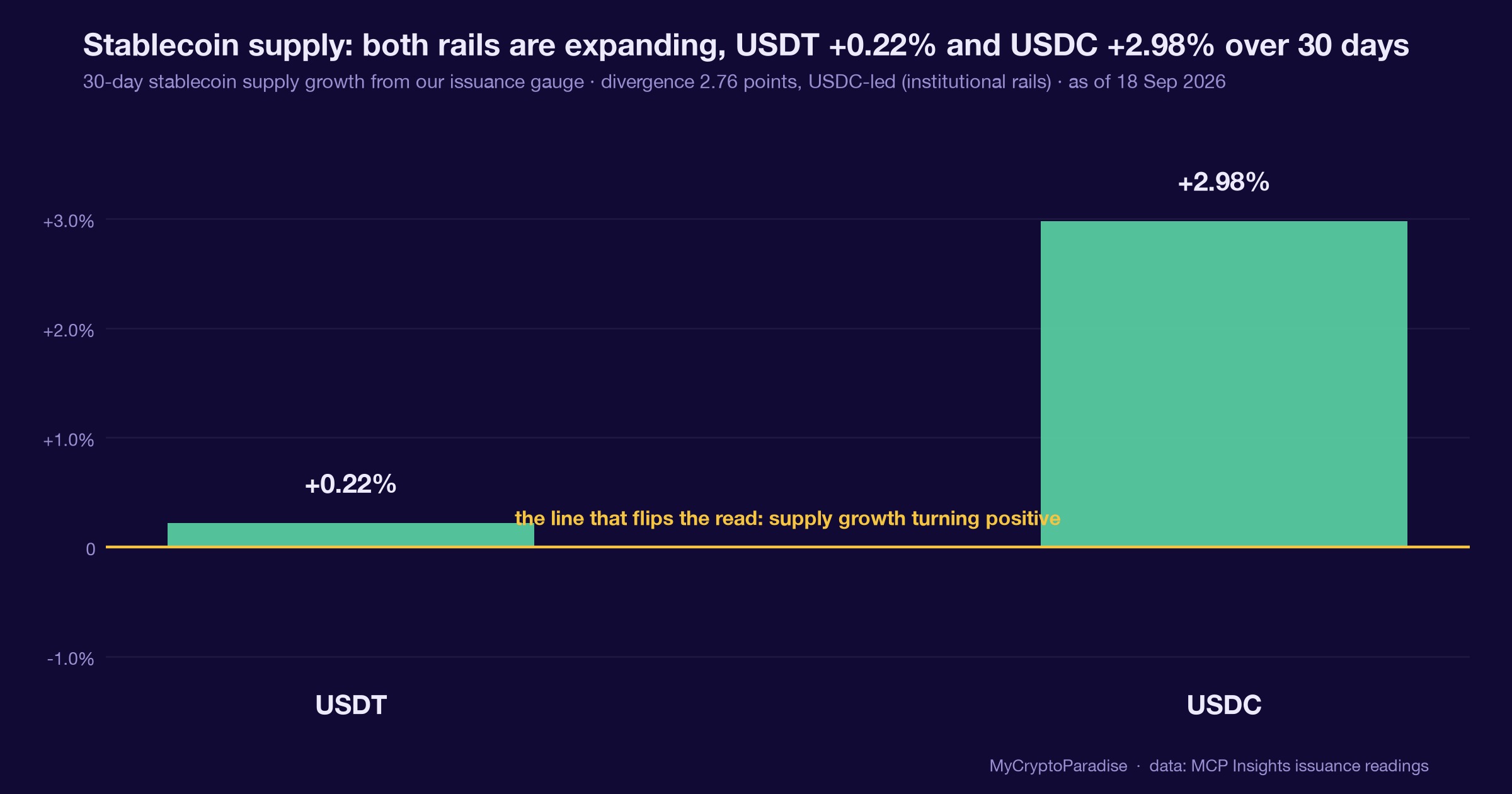
Stablecoin turnover is cooling while USDC supply keeps expanding. We read the split, name the invalidation, and refuse to call it a top.
Stablecoin turnover is cooling while USDC supply keeps expanding. We read the split, name the invalidation, and refuse to call it a top.
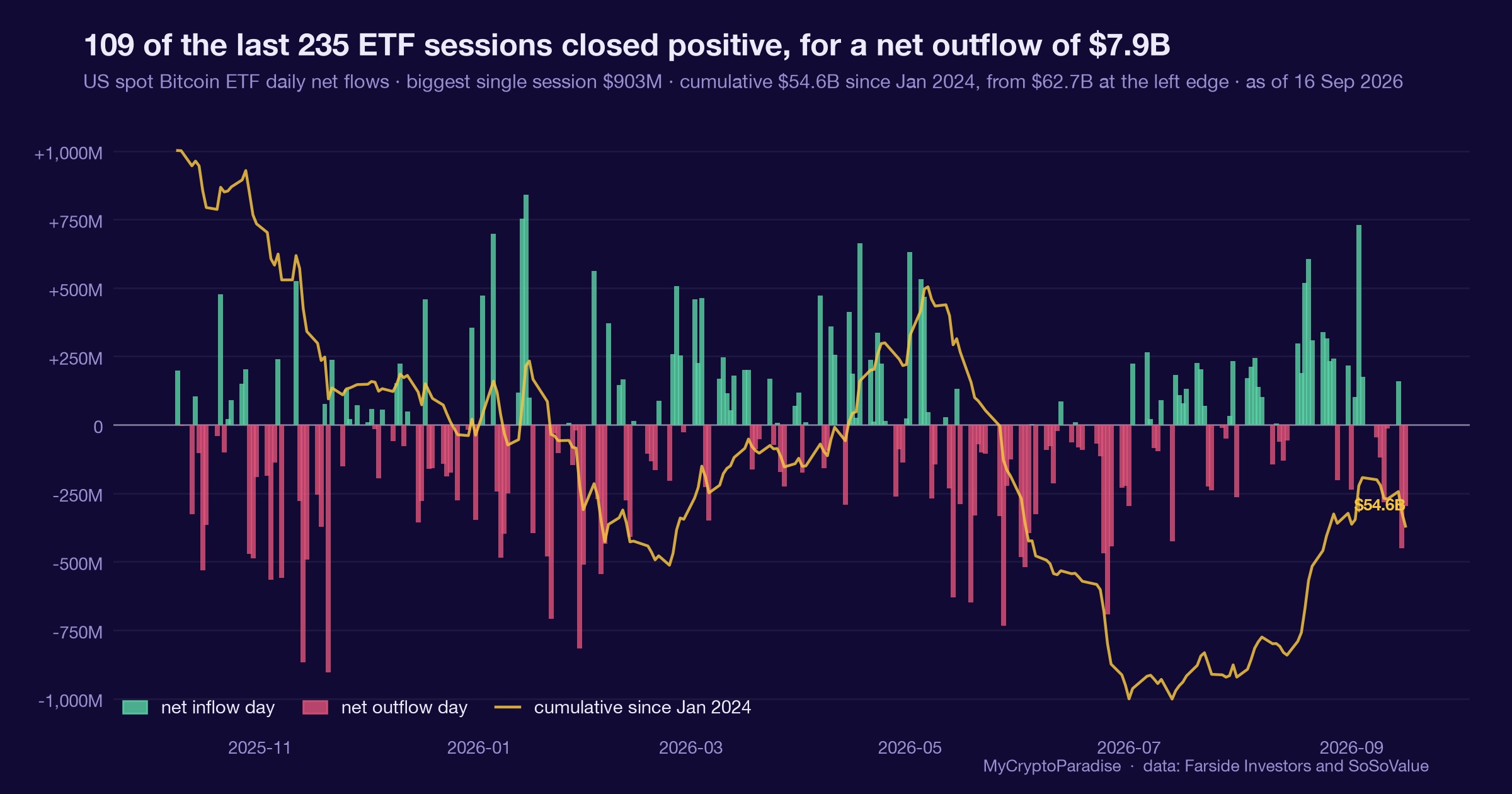
Bitcoin ETFs bled $296M on 16 September as BlackRock led the exit, but our ETF-tide grade slipped just three points to 47: a coin flip, not a top.
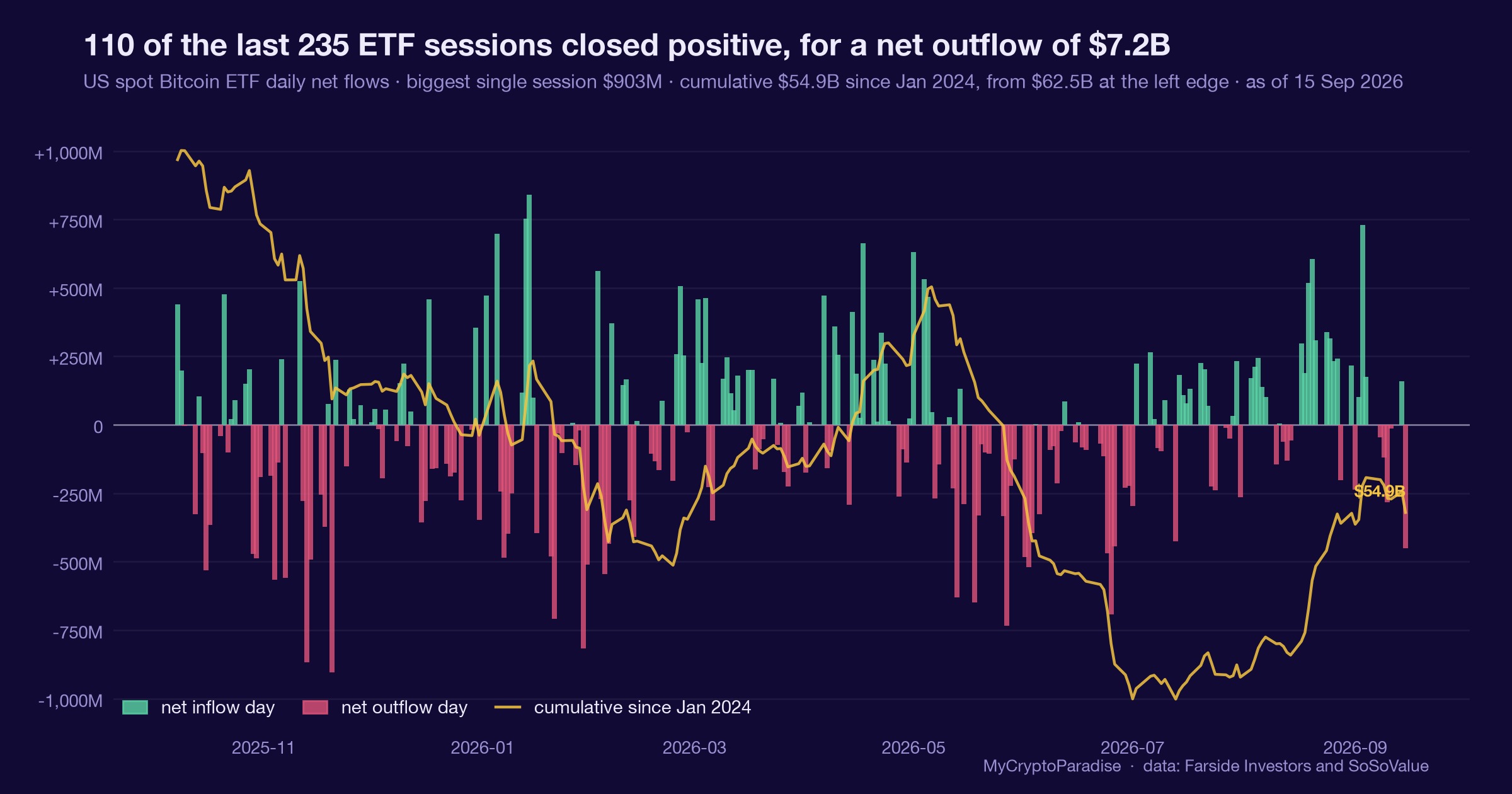
Bitcoin ETFs posted a one-day inflow, then our tide flipped to a 450M net outflow and a coin-flip grade of 50. Read ETF flows yourself.
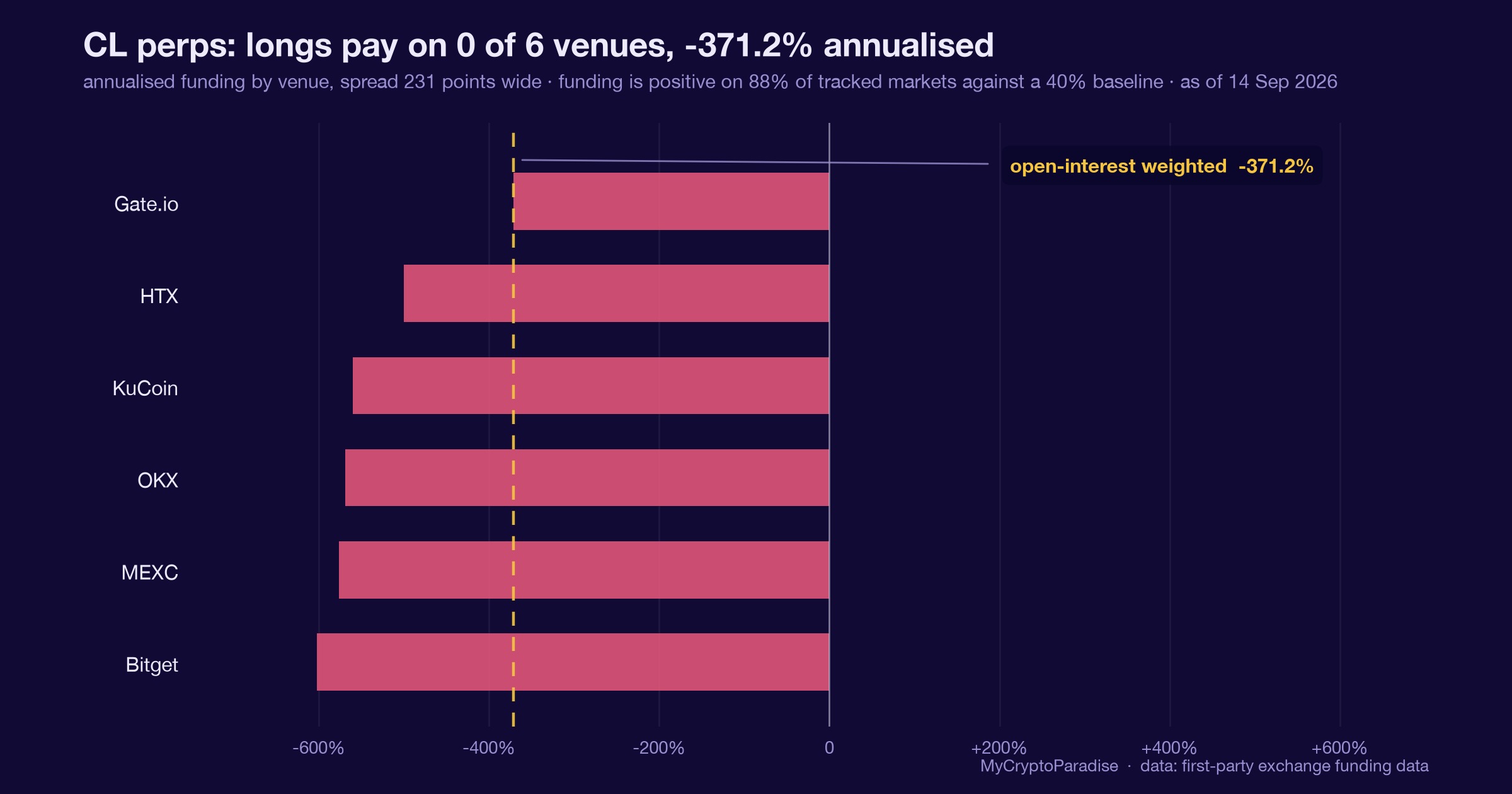
CL shorts are paying minus 385 percent APR, the most stretched funding in the market. Here is how to read a funding extreme, and where it misleads.
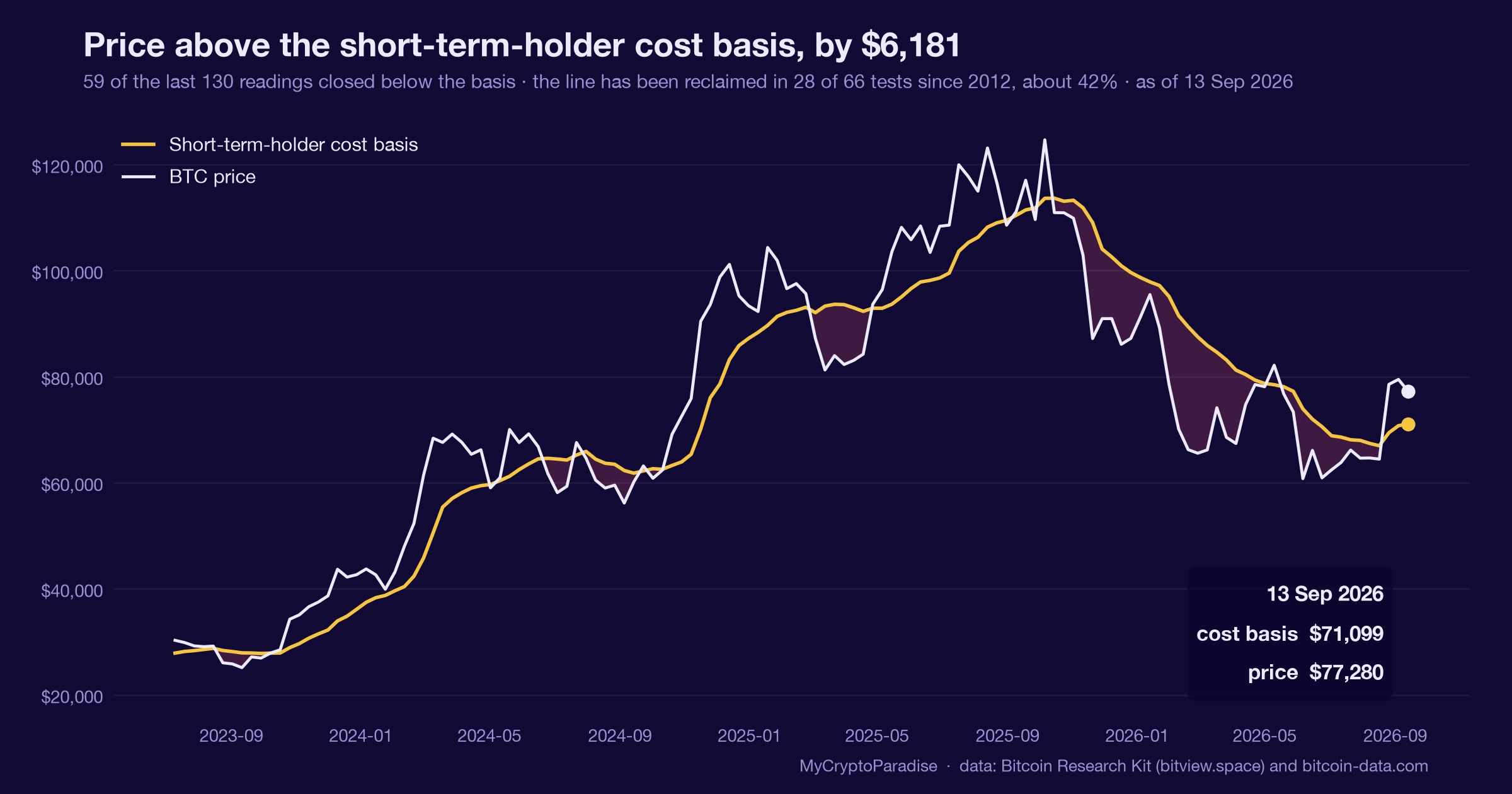
Bitcoin trades 45 percent above realized price on 13 September 2026, yet a third of short-term holders sit underwater. How to read the cushion.

US spot Bitcoin ETFs saw a third outflow day on 10 September 2026, yet the five-day tape stayed positive: how to read allocator absorption.
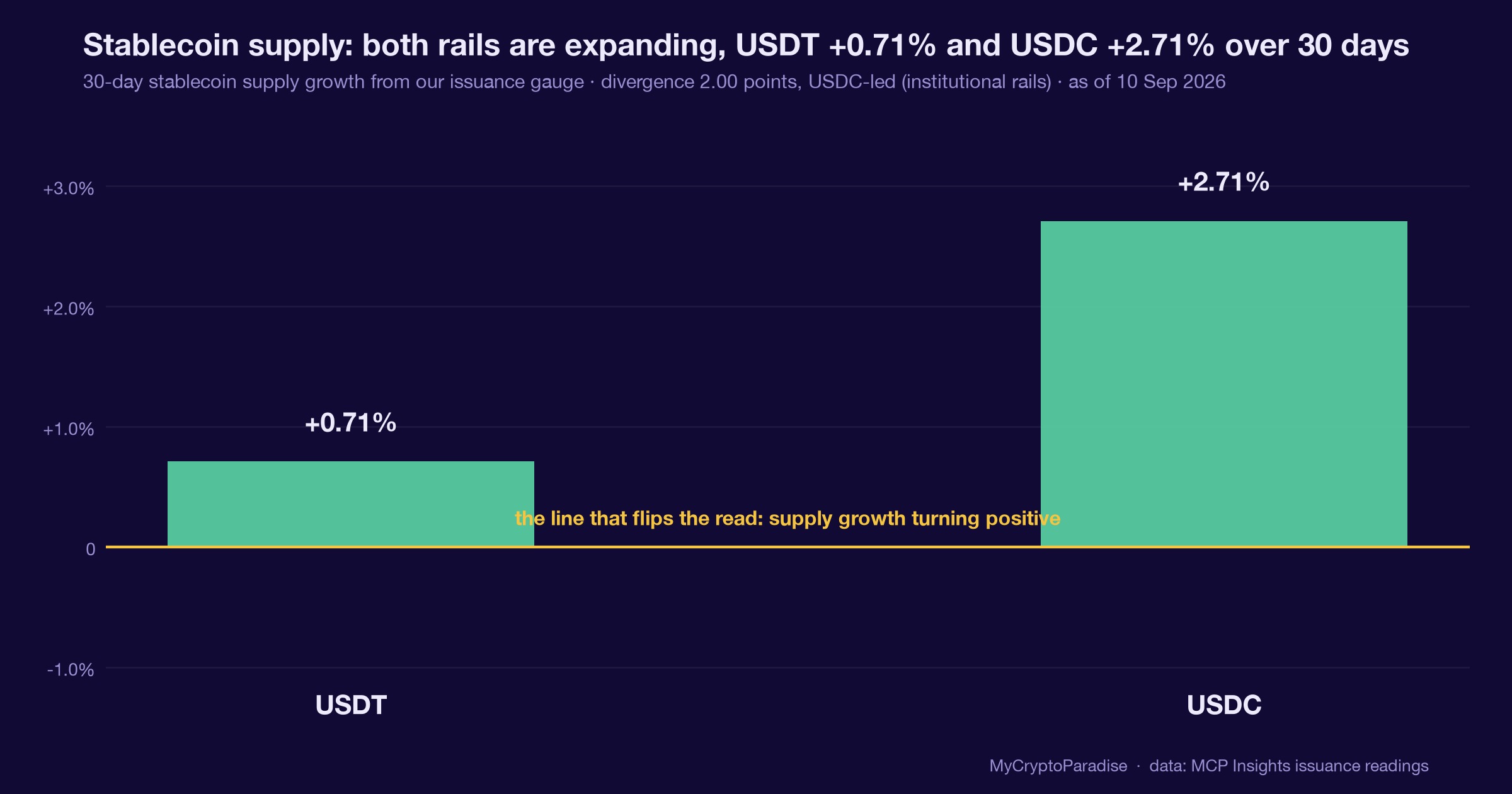
Bitcoin’s stablecoin reserves are refilling, but the 90-day change is still negative. How to read the demand vacuum and the Coinbase premium tell.
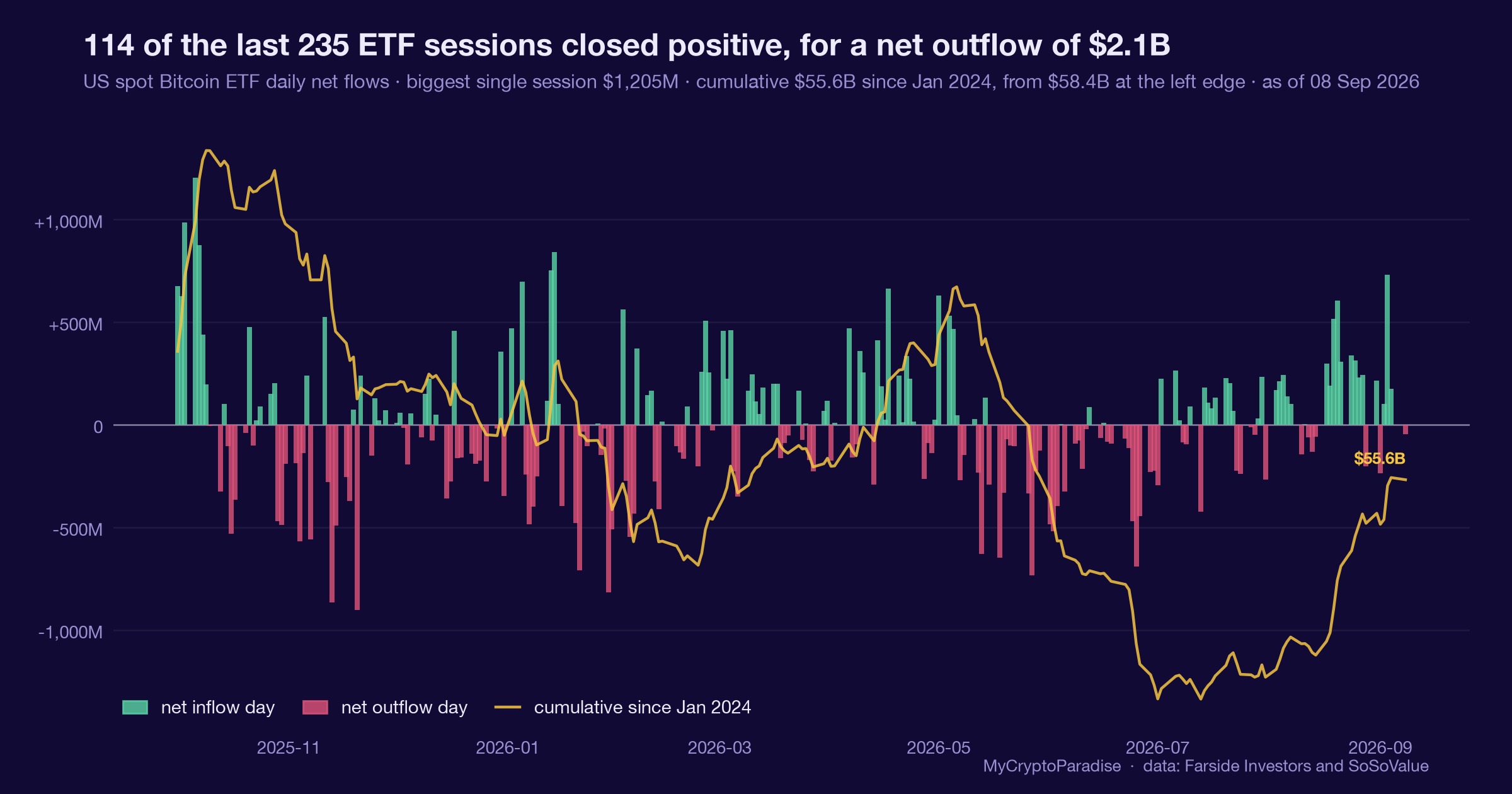
Bitcoin’s golden cross lags price. Our MCP Insights ETF-tide read shows funds absorbing the dip, plus what invalidates the constructive lean.
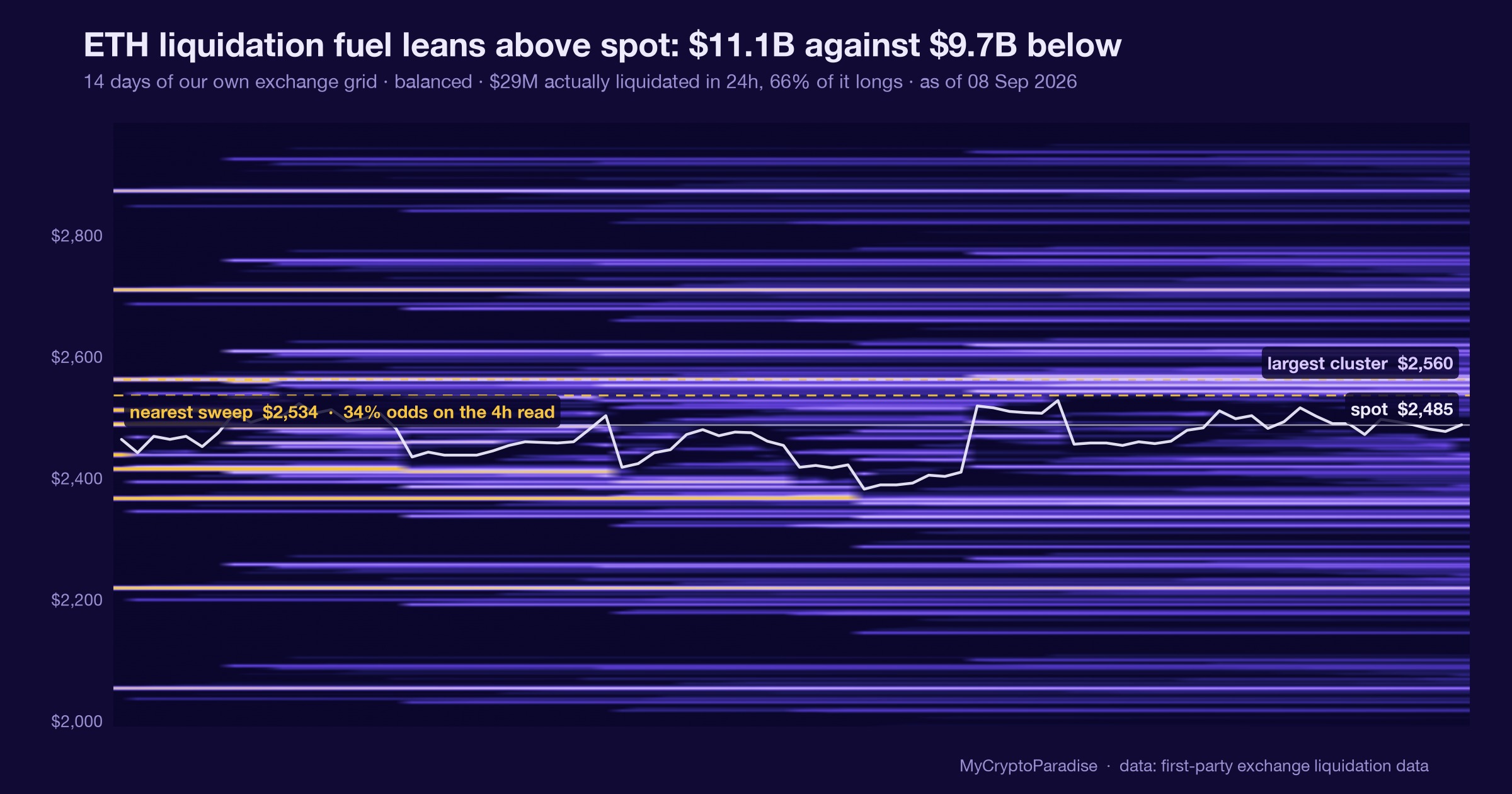
A whale opened a $111M Ether long on 6 September 2026. How to read a single liquidation level, and why one position is not a signal.
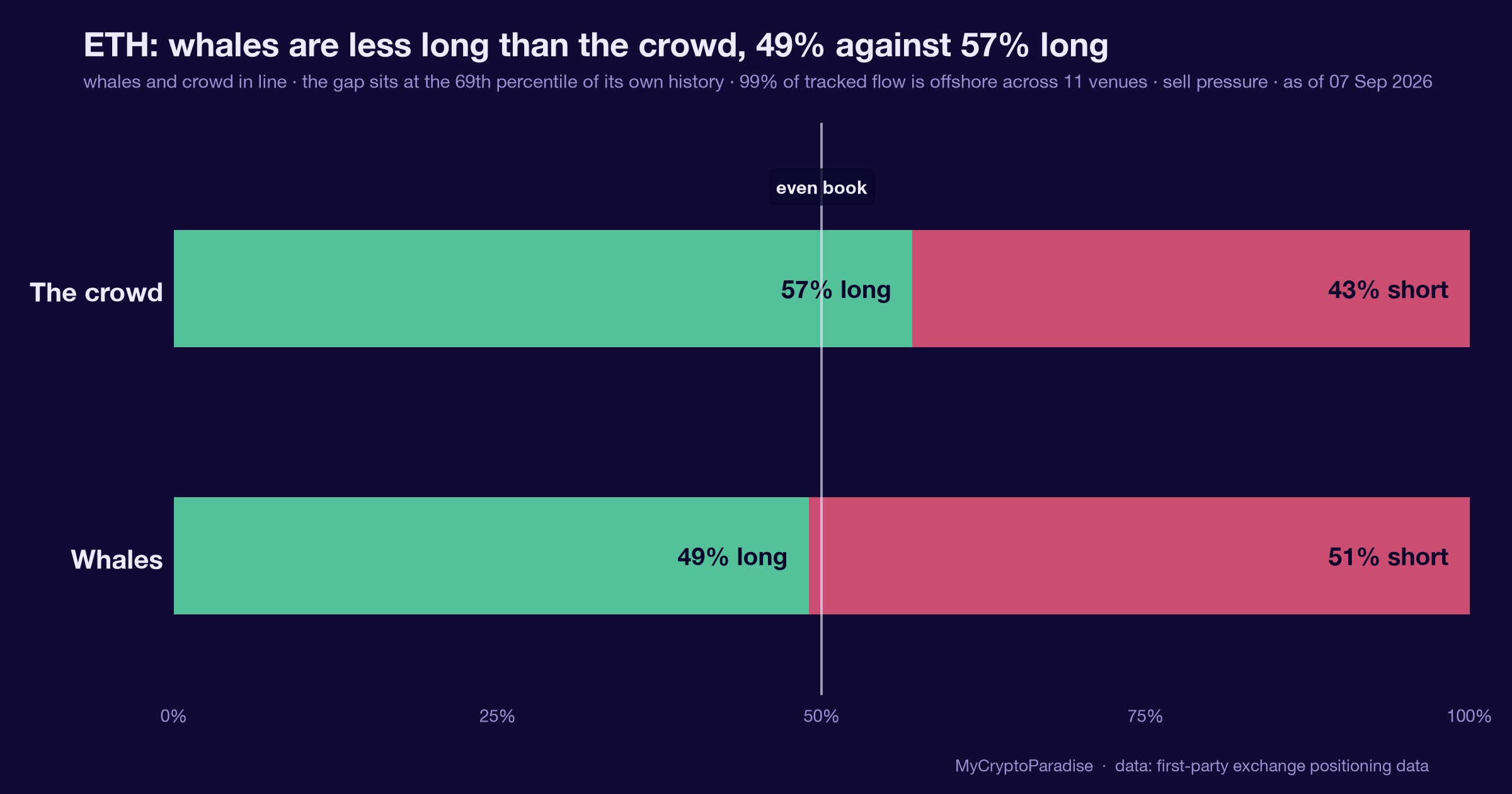
FET whale outflows hit a 2026 high, but the figure is a third-party claim we cannot verify. Here is how to read exchange flow honestly.
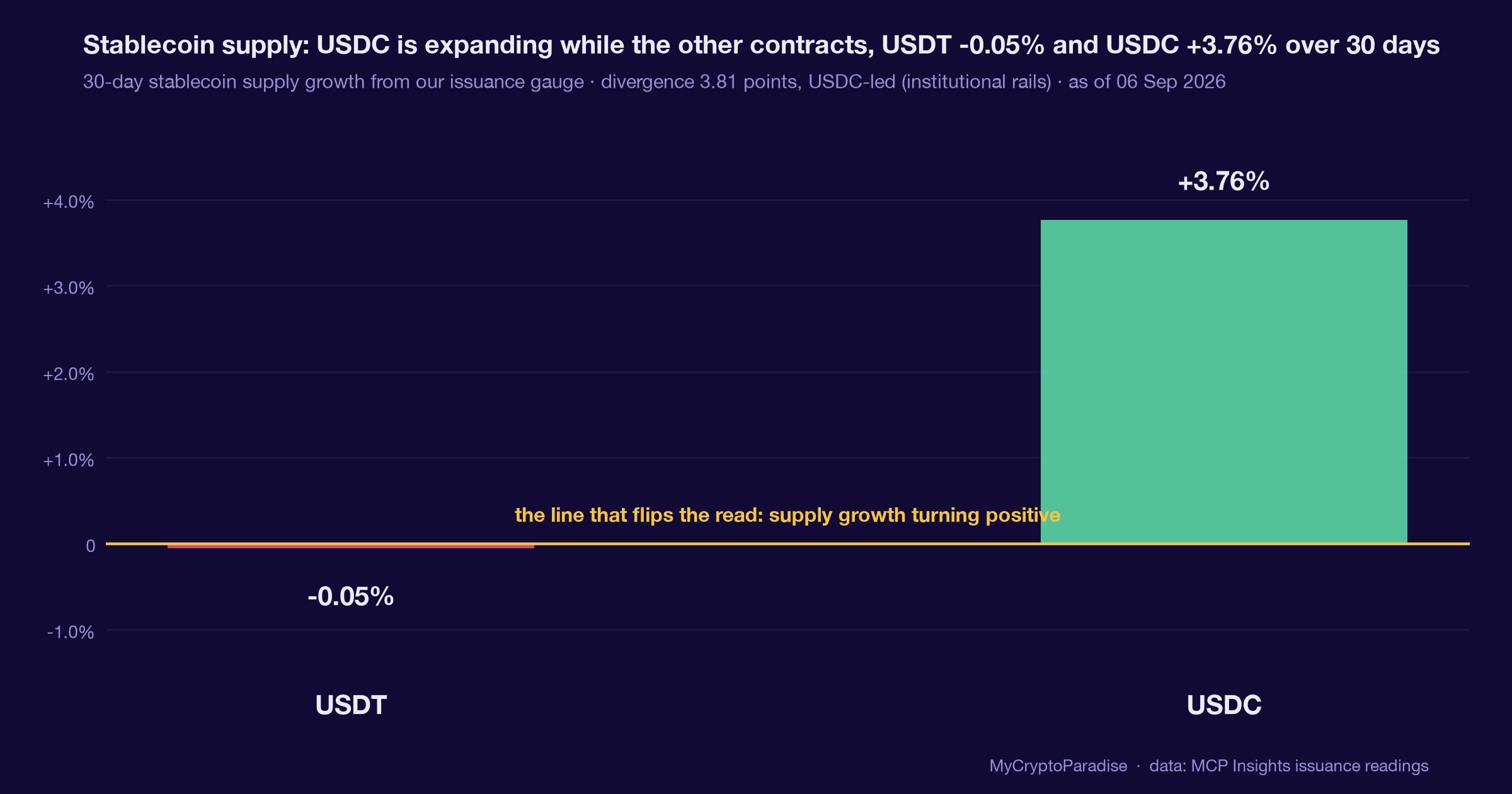
Stablecoin issuance split: USDC grew 3.76 percent while USDT stalled. A narrow, institution-only bid, and what would broaden it.
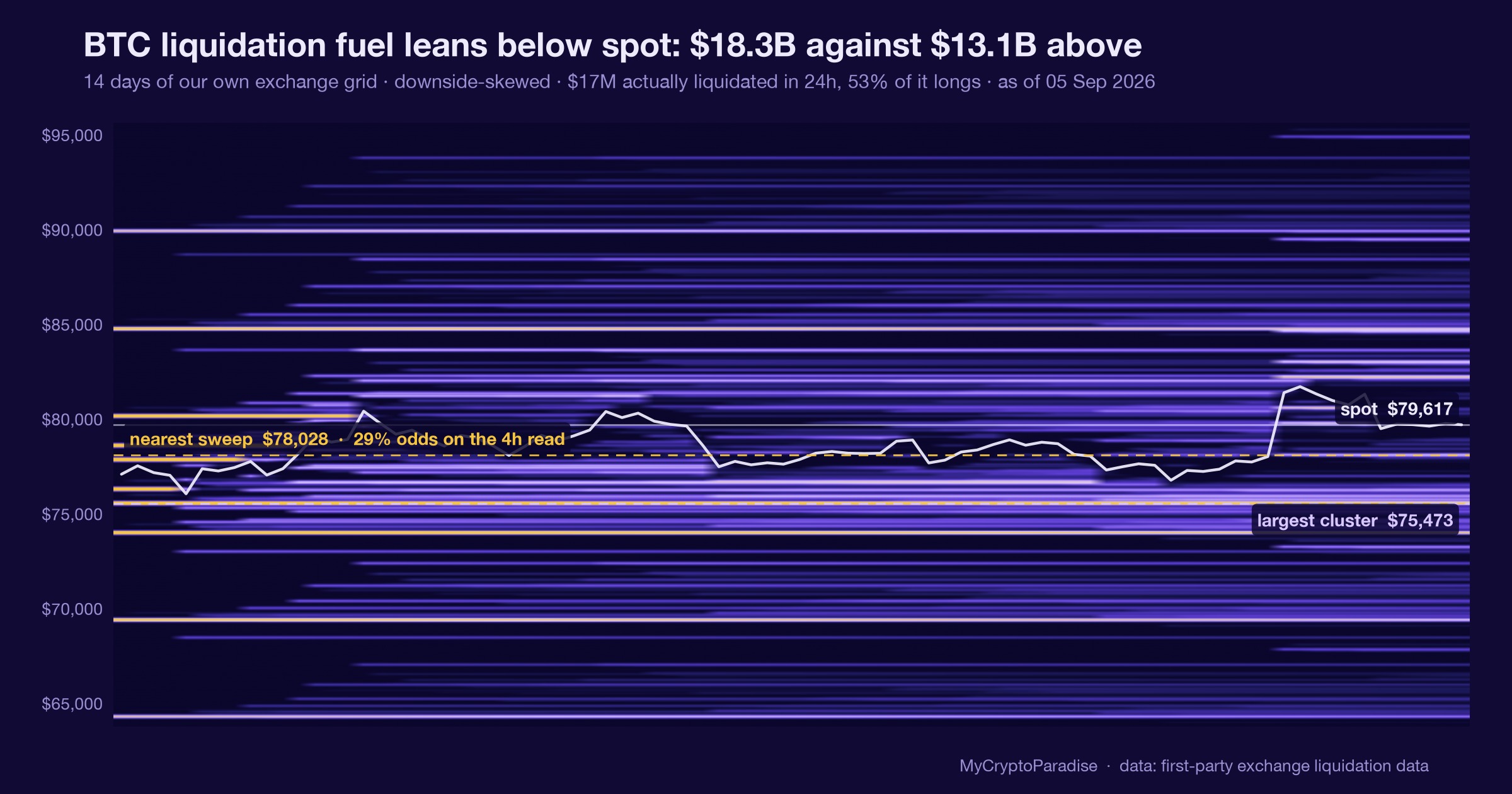
BTC short liquidations outran longs 2.6 to 1 on 4 September: why forced buying is spent fuel, and the level that flips the read.
 Chat with one of our tradersChat with a trader