

In short
Cryptocurrency free signals are trade ideas, an entry, a target, a stop, shared at no cost through Telegram channels, bots, or social feeds. They are a useful starting point, not a decision. Free sources vary wildly in quality, and many exist to sell you something later. Treat every free signal as a claim to verify, not an instruction to follow. Check who posts it, whether their past calls are public, and how much risk it asks of you. Size the position yourself, set your own stop, and never risk money you need. A signal begins the thinking; you finish it.
What are cryptocurrency free signals and where do they come from?
Cryptocurrency free signals are no-cost trade ideas naming a coin, a direction, an entry, a target, and a stop. They come from public Telegram channels, automated bots, X threads, and Discord groups. Some are genuine teaching samples. Many are marketing lures for a paid tier, an exchange referral, or a token the poster already holds.
A signal is a compressed opinion. It names the coin, the direction, roughly where to enter, where to take profit, and where to cut the loss. Free versions land in your feed with no invoice attached.
The source matters more than the format. A public channel run by named traders is a different animal from an anonymous bot promising daily wins. Both call themselves free. Only one shows you its record. If you are weighing the two models, our breakdown of free versus paid signals covers where each earns its keep.
What is different here
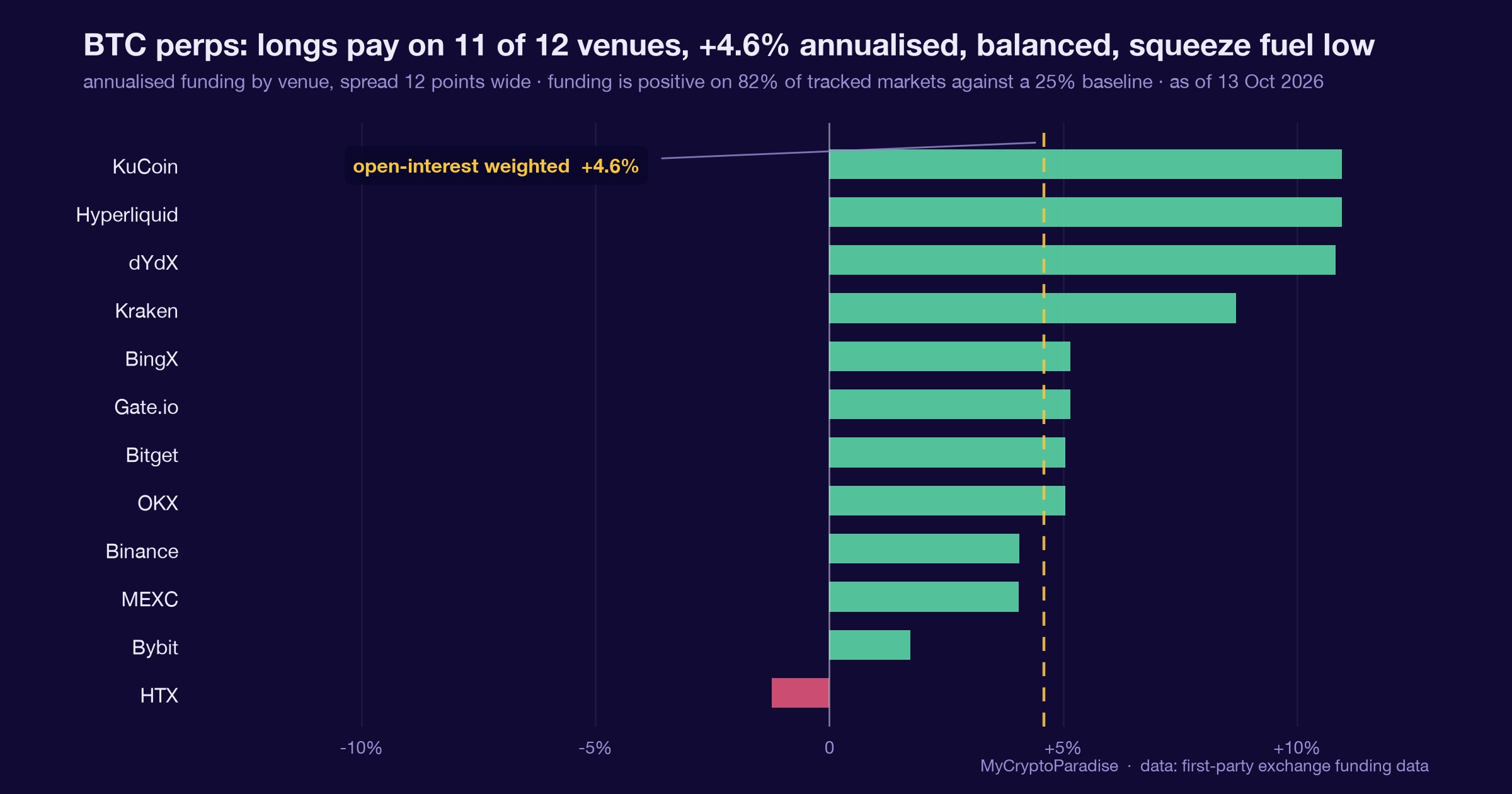
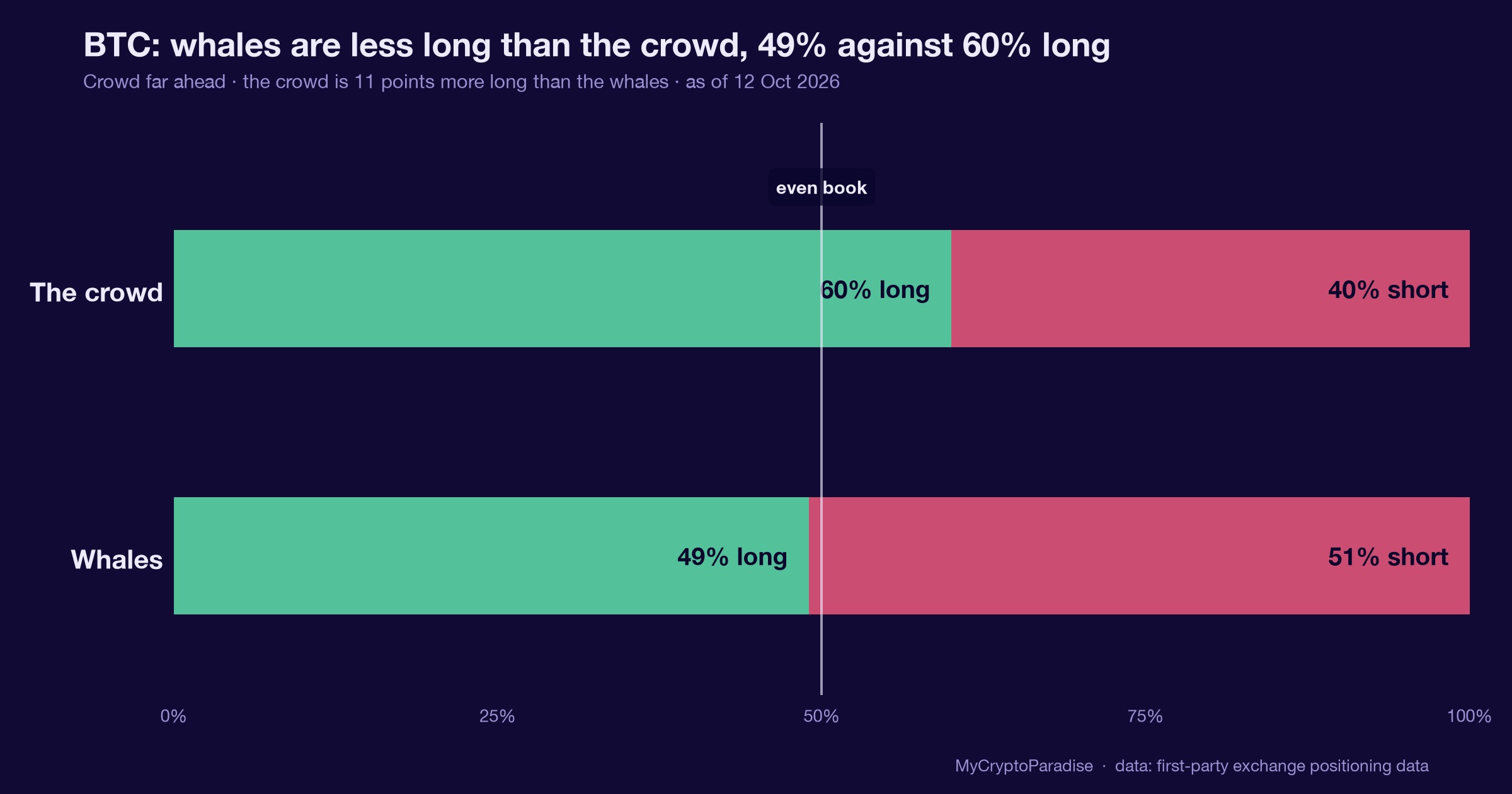
The ParadiseTeam reads positioning across all major exchanges before trusting a single free call, so one loud channel never sets the direction on its own.
The honest limits of anything labeled free
Free has a business model, even when you cannot see the invoice. Someone pays, usually with your attention, your referral sign-up, or your exit liquidity. Knowing the model tells you how far to trust the call.
- No verified track record, so wins are remembered and losses quietly deleted.
- Delayed posts, where the good entry is already gone.
- Pump groups that need your buy to sell into.
- Referral links that pay the poster whether you win or lose.
- No risk sizing, so identical calls hit very different accounts.
Financial regulators warn that signal groups are a common scam wrapper. The FCA’s consumer guidance on cryptoassets is worth reading before you act on any tip.
None of this makes free useless. It makes free conditional. A signal from a transparent, named source that keeps its losses on the page can genuinely be worth acting on. The label free tells you the price, not the quality.
How do you vet a free signal source fast?
Vet a free source in minutes by checking four things. Who runs it, and are they named? Do losing calls stay visible? How does the account actually earn money? Are entries posted before the move or after? If the operator is anonymous or the record is cherry-picked, treat the signal as marketing, not analysis.
Start with the record. A source that shows its losses is telling you something an anonymous bot never will. Our guide to evaluating trading signals goes deeper on reading a track record honestly.
Run a source through the same checks we use before trusting any outside call.
Turning a free signal into a risk-sized trade
A raw signal has no idea what your account can afford. That part is your job. Before you act, convert the tip into a position that risks a small, fixed slice of your capital, with a stop you set yourself.
- Decide the most you will lose on the trade, often one to two percent.
- Set your stop where the idea is wrong, not where it hurts less.
- Size the position from that stop, not from the target.
- Enter only if the reward clears the risk by a clear margin.
- Log the result, win or lose, so your own record grows.
A stop-loss order is the tool that enforces step two, and keeping one on every trade is basic hygiene. Our notes on disciplined risk management explain why sizing beats prediction over a full cycle.
Notice that none of these steps needed the signal to be right. They needed it to be survivable. Do this on every free call and a run of bad tips costs you a controlled amount, not your account.
When is free enough, and when is it not?
Free is enough when you are learning, testing a source, or trading tiny size while you build your own read. Free is not enough when real capital is on the line and you need context, timing, and risk guidance behind each call. At that point the gap is not price, it is accountability and depth.
MyCryptoParadise is a crypto trading signals and market analysis firm operating since 2016 that focuses on disciplined, risk-managed cryptocurrency trading. We treat free calls as a first look, not a verdict. If you want the full picture on where free fits, our overview of cryptocurrency free signals maps the honest trade-offs.
A free signal is a starting point, not a decision. Verify the source, size the risk, and finish the thinking yourself.
Frequently asked questions
Are free crypto signals worth following?
Free crypto signals are worth following as ideas to test, not orders to obey. A good free source teaches you how it thinks and shows its losses. A bad one hides its record and profits from your sign-up. Verify first, then decide with your own risk rules.
How can I spot a fake free signal channel?
Spot a fake free channel by its missing record and loud promises. Watch for guaranteed wins, deleted losing calls, anonymous operators, and pressure to buy fast. Referral-only profit and pump-style coordinated buys are red flags too. If you cannot check the past calls, assume the future ones are marketing.
What is the difference between free and paid crypto signals?
The difference is depth and accountability, not just price. Free signals give you a call and little context. Paid services usually add risk sizing, timing, market analysis, and a visible track record they answer for. Free suits learning and testing. Paid matters more once real capital is on the line.
How much should I risk on a free signal?
Risk only a small, fixed slice of your account on any single call, often one to two percent. Set the stop where the idea is proven wrong, then size the position from that stop. Never risk money you need. A free signal is not a reason to skip your own limits.
Crypto trading involves substantial risk and is not suitable for everyone. Nothing here is financial advice; it is education only. Never risk more than you can afford to lose.




Join the discussion
No comments yet. Members, share how you are reading this.