

Listen: the breakdown
Developing story update (September 14, 2026, 00:41 UTC):
A new detail has surfaced on the postponed Strait of Hormuz shipping talks: before the delay was announced, Oman’s foreign minister met directly with Iran’s Abbas Araghchi in Tehran. This signals the postponement was coordinated through active back-channel diplomacy rather than a breakdown, which points to a managed delay while a broader consensus is worked out.
For traders, the read is unchanged. Crypto has barely moved on this, with BTC and ETH both flat over the past hour, so the market is treating the Hormuz situation as background geopolitical risk rather than a live catalyst. The risk that matters is prolonged uncertainty keeping a lid on risk appetite, not a single headline. We continue to see this as one input into a cautious, correction-aware stance rather than a reason to reposition.
What to watch now: Whether a rescheduled date emerges from the Oman-Iran channel, and if Bahrain's absence widens the diplomatic gap.
Developing story update (September 13, 2026, 23:58 UTC):
Fresh detail has surfaced on who was set to attend the postponed Strait of Hormuz shipping talks. Iraq had publicly confirmed it would take part, while Bahrain said it would not join, citing the absence of diplomatic relations with Tehran. This underlines why the meeting was delayed in the interest of reaching a consensus rather than proceeding without one.
For traders, the takeaway is unchanged in direction. The split attendance signals that regional alignment on shipping security is still incomplete, which prolongs geopolitical uncertainty rather than resolving it. Based on our sources, this kind of unresolved risk tends to reinforce a cautious, probably defensive posture across risk assets rather than trigger a single sharp move.
What to watch now: Watch whether a new date is set and whether Bahrain shifts its position on attending.
Market briefing: Regional talks on safe shipping through the Strait of Hormuz were postponed in Oman, keeping a vital energy chokepoint unresolved. Bitcoin was trading near $76,691, down about 0.7 percent, as the wider risk-off tone held.
- Strait of Hormuz shipping talks set for September 14 in Salalah, Oman, were postponed by Oman's foreign minister.
- The stated reason was the interest of reaching consensus, so friction over a key energy artery stays unresolved.
- BTC sat near $76,691 and ETH near $2,475, small moves that fit a broader risk-off backdrop, not a single shock.
The Strait of Hormuz talks were postponed hours before delegates were due in Oman, leaving a vital energy artery unresolved. So does fresh Gulf friction change the crypto tape?
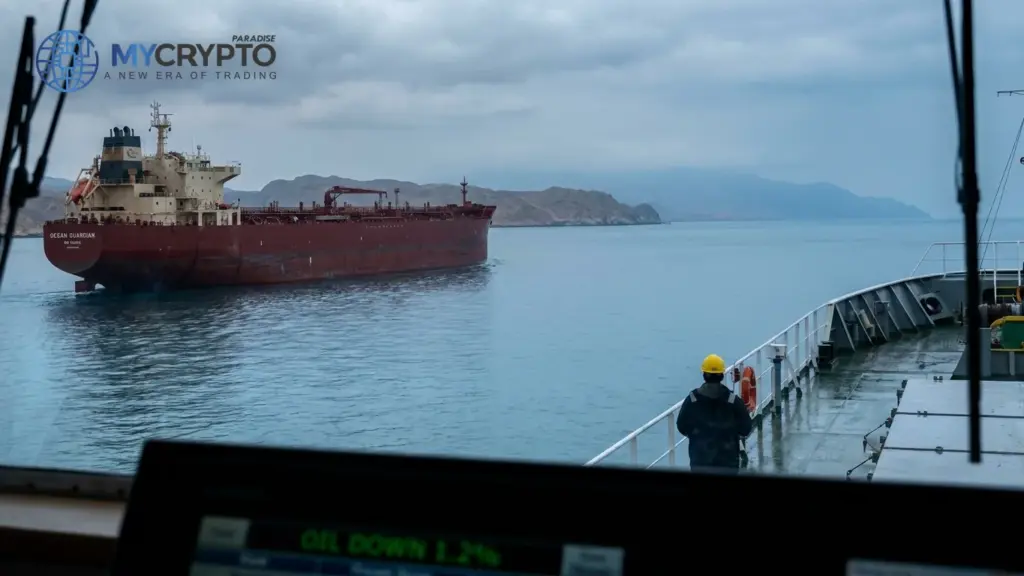
Regional talks over safe shipping through the Strait of Hormuz were postponed this week. Delegates from Iran, Oman, Iraq, and other Gulf nations were due in the southern Omani city of Salalah on September 14. Oman's foreign minister confirmed the delay. The stated reason was the interest of reaching consensus.
The Strait of Hormuz is not a minor waterway. A large share of the world's seaborne oil and gas moves through it. When the nations bordering it cannot agree on safe passage, energy markets pay attention. So does anyone pricing global risk.
A postponement is not a conflict. But it is not a resolution either.
That distinction matters for crypto. Markets had hoped these talks would cool the temperature in the Gulf. Instead the temperature simply stays where it was. Bitcoin was trading near $76,691, down roughly 0.7 percent on the day, while Ethereum sat near $2,475, down about 1.9 percent.
We will be honest about causation here. This was not a single-catalyst move, and pretending otherwise would insult the reader. The Strait of Hormuz talks being postponed did not drag crypto lower by itself.
What it does is feed a story that was already running. It fits a wider risk-off backdrop, the same backdrop smart money has been leaning on for weeks. Unresolved friction in a critical energy region rarely helps risk assets, and it never helps them quietly.
Why an energy chokepoint pressures crypto liquidity
The transmission runs through energy, not through crypto directly. The Strait of Hormuz is one of the most important oil and gas passages on the planet. Uncertainty around its safety keeps a risk premium baked into energy prices. That premium is not an unearned advantage for markets, it is a tax on everything downstream.
Higher and stickier energy costs complicate the inflation picture. That, in turn, keeps central banks cautious and keeps real yields elevated. Elevated yields drain liquidity from the far end of the risk curve. Crypto sits at the very far end.
So a delayed set of talks does more than annoy diplomats. It removes a chance to lower the geopolitical risk premium. The premium stays, the caution stays, and the liquidity that speculative assets crave stays scarce.
Here is the part worth sitting with. The market did not want a headline, it wanted a resolution. A resolution would have loosened one small screw in the global risk machine.
Instead the screw stays tight. Every forecast that assumed a calmer Gulf now carries a little more doubt, which is usually how these things quietly reprice. For crypto, that means the wind stays in its face rather than at its back. None of this is dramatic on the day. It is the slow accumulation of reasons for capital to stay defensive.
Risk-off pressure filters from oil to alts
The liquidity effect flows in a familiar order. Bitcoin absorbs the first wave, because it is the deepest and most watched crypto asset. When global risk stays elevated, BTC tends to trade heavy rather than crash, and that is roughly what we saw near $76,691.
Ethereum sits one step further out on the risk curve. Its 1.9 percent slide against Bitcoin's 0.7 percent tells the usual story. When caution rises, the market sells the higher-beta asset harder. ETH near $2,475 reflects that pecking order.
Alts sit furthest out of all. They have the thinnest order books and the fastest exits. In a risk-off tape, liquidity leaves them first and returns to them last.
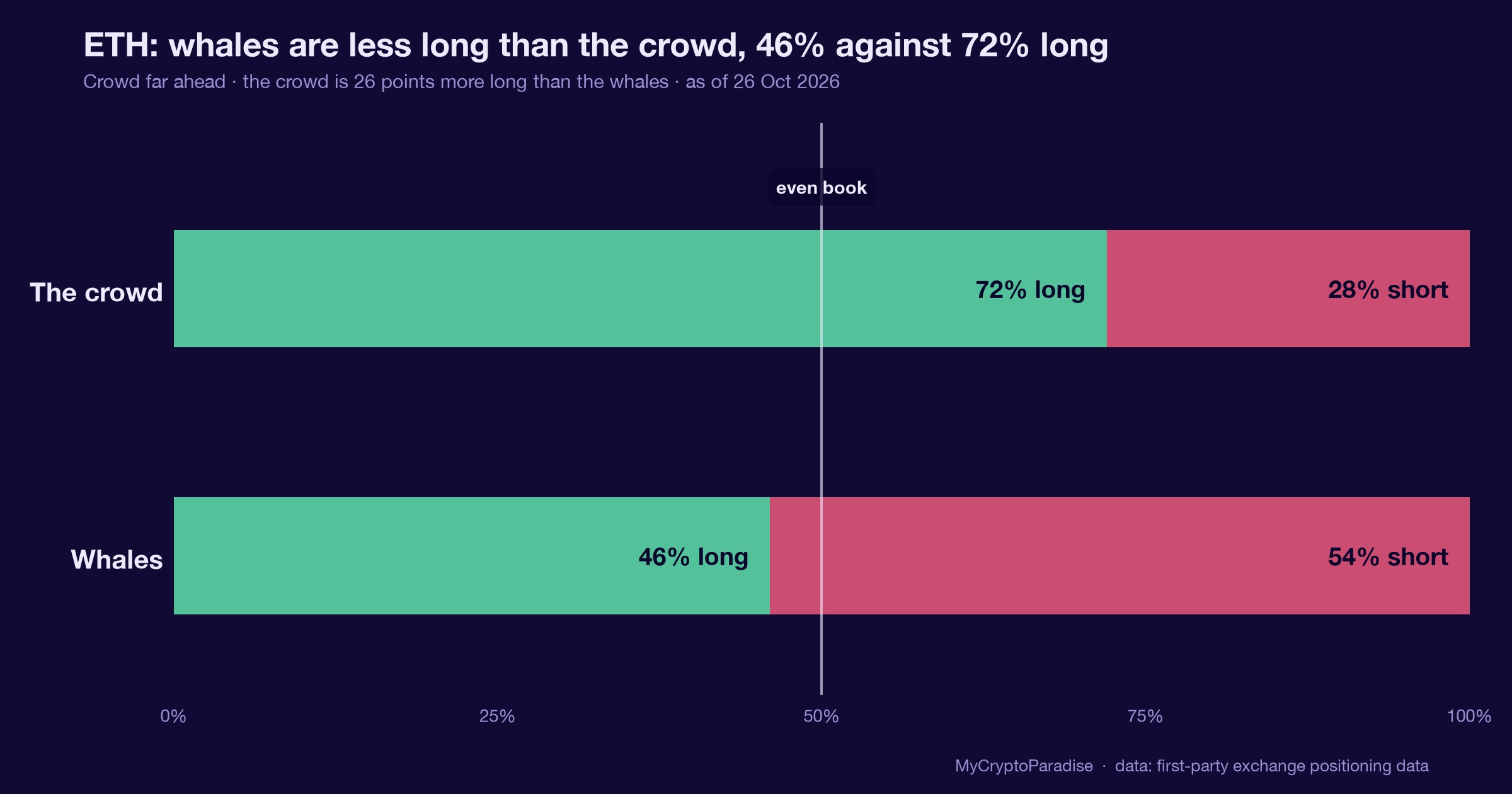
The key point is who is on each side of these prints. Retail has been showing fear through ETF outflows, and fear at these levels usually means selling into weakness. That is the crowd doing what the crowd reliably does.
Smart money reads the same headlines differently. A postponed set of talks is not a reason to panic for them. It is one more justification to keep distributing into strength and to keep waiting for lower prices. So the modest red candles are not the story. The story is a market where uncertainty stays unresolved, liquidity stays defensive, and every fresh piece of friction gives patient sellers another excuse.
Which levels decide the bounce or the break
The near-term tell is the daily candle, not the diplomatic calendar. A bearish engulfing print on the daily would confirm that sellers still control the tape. Confluence with the recent shooting star patterns near the highs would strengthen that read.
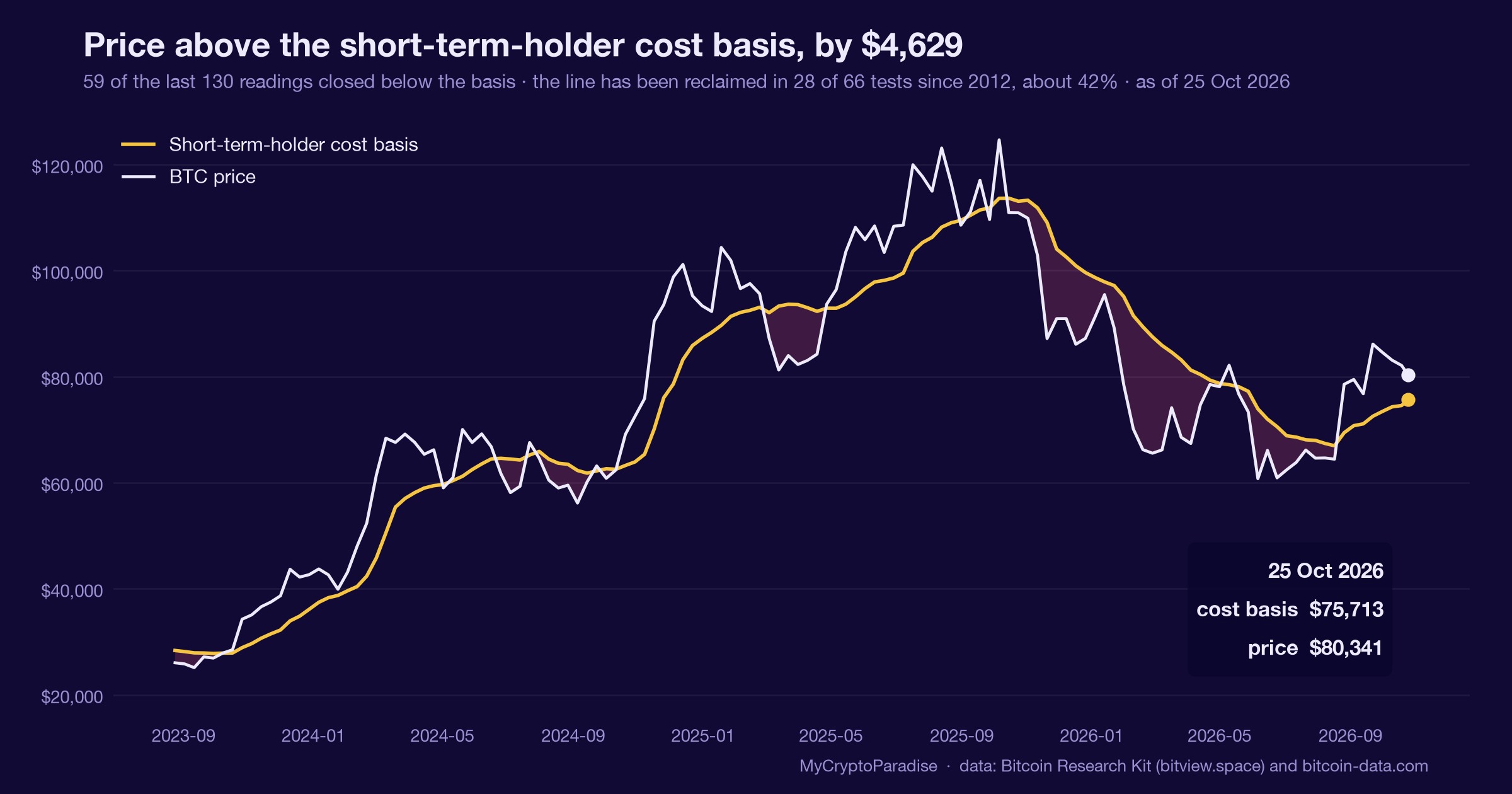
The first zone to watch above is $79,000. That level acted as a distribution area on the way up. If price stalls there and rolls over, it validates the idea that rallies are being sold, not bought.
Invalidation lives higher. A clear reclaim of the $82,000 to $88,000 band as support would force a rethink of the bearish structure on the weekly timeframe. Until that happens, the burden of proof sits with the bulls.
Watch how the Gulf story evolves too, but hold it loosely. A rescheduled set of talks with real momentum toward consensus would ease the energy risk premium. That would be a genuine risk-on nudge, not a headline to fade.
On the downside, the levels are clear. A loss of $61,000 opens the door toward $58,000, and a break there points toward the deeper $44,000 region over time.
The honest framing is this. Geopolitics adds conviction to a trend already in place, it does not start one. So watch price confirm or reject these levels, and let the tape, not the headline, cast the deciding vote.
What prolonged Gulf friction means for positioning
The ParadiseTeam reads this postponement as fuel for an existing bias, not a fresh catalyst. Our higher timeframe stance stays bearish, with a possible final short-term bounce before a deeper correction. This delay simply removes a reason for the risk premium to fall.
With BTC near $76,691, the map above is unchanged. The $79,000 area remains the zone where we have been distributing, and it is the level we watch for another rejection. A short-term push toward the 0.786 Fibonacci retracement would still fit a truncated final bounce rather than a trend change.
On the downside our attention sits at $61,000, then $58,000, with $44,000 as the longer-term region where aggressive reaccumulation becomes interesting. We are not there, and we are not forcing it.
The smart-money-versus-retail read is the core of it. Retail is exiting through ETF outflows while unresolved friction feeds their fear. That fear is exactly what patient sellers distribute into and later reaccumulate from.
Confirmation for us is a daily bearish engulfing candle stacking on the recent shooting stars. Invalidation is a clean weekly reclaim of the $82,000 to $88,000 band.
Until one of those prints, we treat this Hormuz headline as background noise that reinforces caution. The edge is not in trading the diplomacy. The edge is in knowing which side of these levels the crowd is trapped on.
The read behind this: we framed this story through our own market analysis, Bitcoin ETF Outflows Near $500M: Crash Next?
Track it live: our Crypto Fear and Greed Index and the live crypto funding rates both update in real time, so you can watch this shift for yourself.
Related coverage
For exact entries, targets, and stop losses with full risk management, that is what ParadiseFamilyVIP is for. New to reading these moves? Start with our crypto trading strategies guide.
ParadiseTeam is monitoring the market situation closely, and we are taking these developments into consideration while building our trading tactics inside ParadiseFamilyVIP.
Crypto trading involves substantial risk. Prices are volatile and you can lose money. This article is educational and is not financial advice. Past performance does not guarantee future results.
After the Hormuz delay, what does BTC do next from 76.7k?
How 13 Paradisers are calling it
The first call is still open
Free account, no password. Members just sign in.


Join the discussion 2
i saw this kind of thing before with the ships waiting for passage, you dont want your inventory stuck out there
Postponement here means the relevant volatility alerts stay active for longer. It's about maintaining watch on the macro factors.