


Listen: the breakdown
Developing story: This story is still unfolding. We are tracking it and will update this article as more details are confirmed.
Market briefing: Ethereum lending risk is really two risks, and retail tends to see only the calm one. Bitcoin traded near 84,874 dollars as stablecoin velocity climbed, while liquid staking token discounts stayed the quieter danger.
- Stablecoin collateral stays near par, but a liquid staking token like stETH can slip, and a 6 percent discount already squeezed borrowers once.
- Stablecoin velocity is now exponential: 3.51 billion dollars moved across more than 201,000 gas-free transfers.
- No single catalyst has fired a liquidation cascade yet, so this risk is latent, not live.
Ethereum lending looks calm when stablecoins sit at par, yet a liquid staking token can slip 6 percent and drag borrowers toward forced selling. Who really pays when the drift hits?
Ethereum lending runs on two very different risk engines, and most retail users only notice the gentler one. Borrowing stablecoins against stablecoin collateral keeps liquidation lines slow, because the collateral barely leaves a dollar. Borrowing against a liquid staking token, or LST, is another animal entirely.
An LST like stETH tracks staked ETH plus a yield claim, so its price can drift from the asset it represents. In June 202x that drift reached roughly 6 percent, a discount wide enough to push leveraged positions toward forced selling.
ETH traded near 2,687 dollars as we wrote this, which keeps that collateral math live for anyone still carrying size against a staking token.
Stablecoins are the calm layer in the same system. Tether's USDT now carries a market capitalisation near 190 billion dollars, and its flow has turned exponential, with 3.51 billion dollars moving across more than 201,000 gas-free transfers. Fast money is efficient money, and it is also fragile money the moment confidence cracks.
There is a cross-chain thread too. USDT is set to return to the Bitcoin network this month, enabling private transfers, direct native BTC and USDT swaps, and lending against native Bitcoin without wrapping it first.
No single catalyst has fired a liquidation cascade today. This is a structural read, not a confirmed event, and we will treat it honestly as that. The yield pitch and the liquidation risk are simply the same coin, viewed from two sides.
Two risk engines hide inside one market
The transmission from DeFi stress to your portfolio runs through collateral, not headlines. Lending protocols pool deposits and let users borrow against them. When collateral holds value, the system hums. When a collateral token slips, liquidation engines sell it automatically, and that selling can feed on itself.
Stablecoins are the calm layer. USDT carries a market capitalisation near 190 billion dollars, and its only job is to stay at a dollar. When it does, borrowing against it barely moves a liquidation line.
LSTs are the restless layer. An LST derives its price from staked ETH plus a yield claim, so it can trade at a discount to the asset it mirrors. A roughly 6 percent stETH discount in June 202x was enough to squeeze leveraged positions. That is the quiet mechanism most yield-chasers underestimate.
Velocity is the amplifier. Stablecoin flow is now exponential, with 3.51 billion dollars moving across more than 201,000 gas-free transfers. Fast money is efficient money, and it drains just as fast when confidence cracks.
Why does this matter beyond DeFi? Because these pools are interconnected through collateral and liquidity. A depeg or exploit in one protocol can pull liquidity from many, and that withdrawal eventually reaches ETH spot and the wider market.
The high-yield pitch and the liquidation risk are the same coin. Retail reads the yield. The structure reads the exit.
LST discounts move faster than stablecoin pegs
Read through a neutral lens, this is a background risk, not a trigger pulled today. No single catalyst has lit a liquidation cascade. That honesty matters, because the chain from DeFi stress to price is real but currently latent.
Picture the cascade if it does fire. An LST discount widens, lending positions liquidate, and forced ETH selling hits spot. ETH traded near 2,687 dollars as we wrote this, so the collateral math stays sensitive but not stretched.
BTC usually absorbs the first shock best. It traded near 84,874 dollars, up on the day, which tells us the broader market is not pricing DeFi fear right now. A genuine contagion event would change that order quickly.
Alts sit at the end of the whip. DeFi governance tokens and smaller LST-linked names would fall hardest, because their liquidity is thin and their holders are often the same leveraged yield-seekers. When the music stops, they reach the door last.
Stablecoin velocity cuts both ways here. The 3.51 billion dollars across more than 201,000 transfers shows deep activity, which supports orderly markets while confidence holds. The same speed moves capital out just as fast if a depeg scare lands.
For now, the market treats these risks as manageable. That is a reasonable read, not a promise. Neutral does not mean safe. It means the fuse is laid but unlit.
Depegs and velocity are the real tells
The tells here are specific, and they sit upstream of price. Watch the stETH discount first. A drift back toward that June 202x level near 6 percent would signal LST stress building. A tight peg says the calm still holds.
Watch stablecoin behaviour next. USDT near 190 billion dollars staying at par is the anchor. Any sustained slip below a dollar, on any major exchange, is the depeg scare that could start the cascade this story describes.
Velocity is the third gauge. The 3.51 billion dollars across more than 201,000 gas-free transfers is healthy flow today. A sudden spike paired with falling LST prices usually means capital is fleeing, not arriving.
There is also a cross-chain thread worth tracking. USDT is set to return to the Bitcoin network this month, enabling private transfers, direct native BTC and USDT swaps, and lending against native Bitcoin without wrapping. More stablecoin rails can deepen liquidity, which cuts against contagion risk over time.
Confirmation of rising danger looks like widening LST discounts, a wobbling peg, and forced ETH selling together. Invalidation looks like pegs steady, discounts tight, and velocity supporting price.
Keep the order straight. Collateral stress shows before the headline, not after. By the time a liquidation cascade is obvious on the chart, the quiet exit has usually already happened. Patience beats prediction here.
Collateral stress beneath the climb to 90K
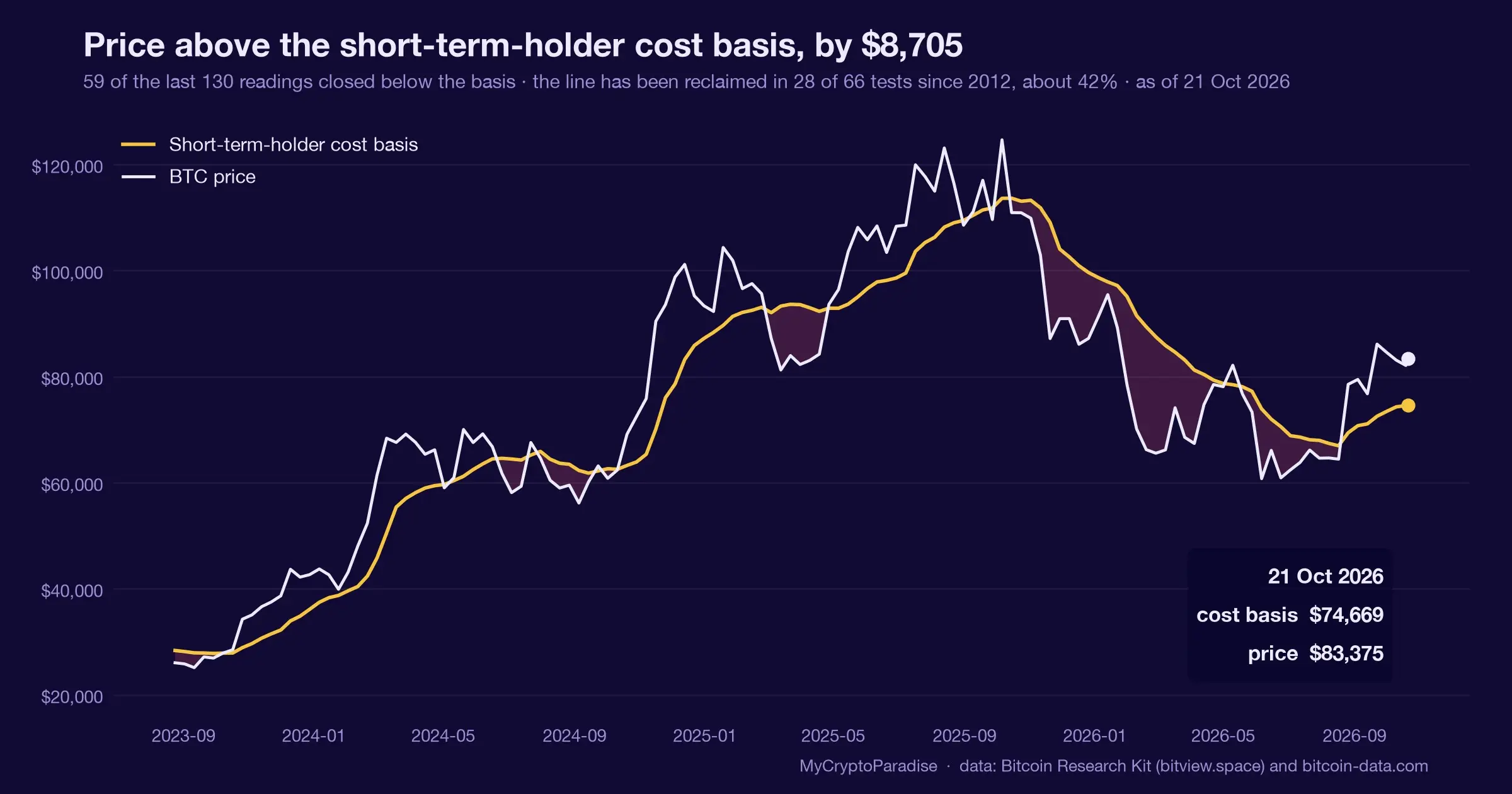
The ParadiseTeam frames this through Bitcoin structure, because BTC sets risk appetite for every LST and lending token below it. BTC traded near 84,874 dollars as we wrote this, inside the zone our latest read maps closely.
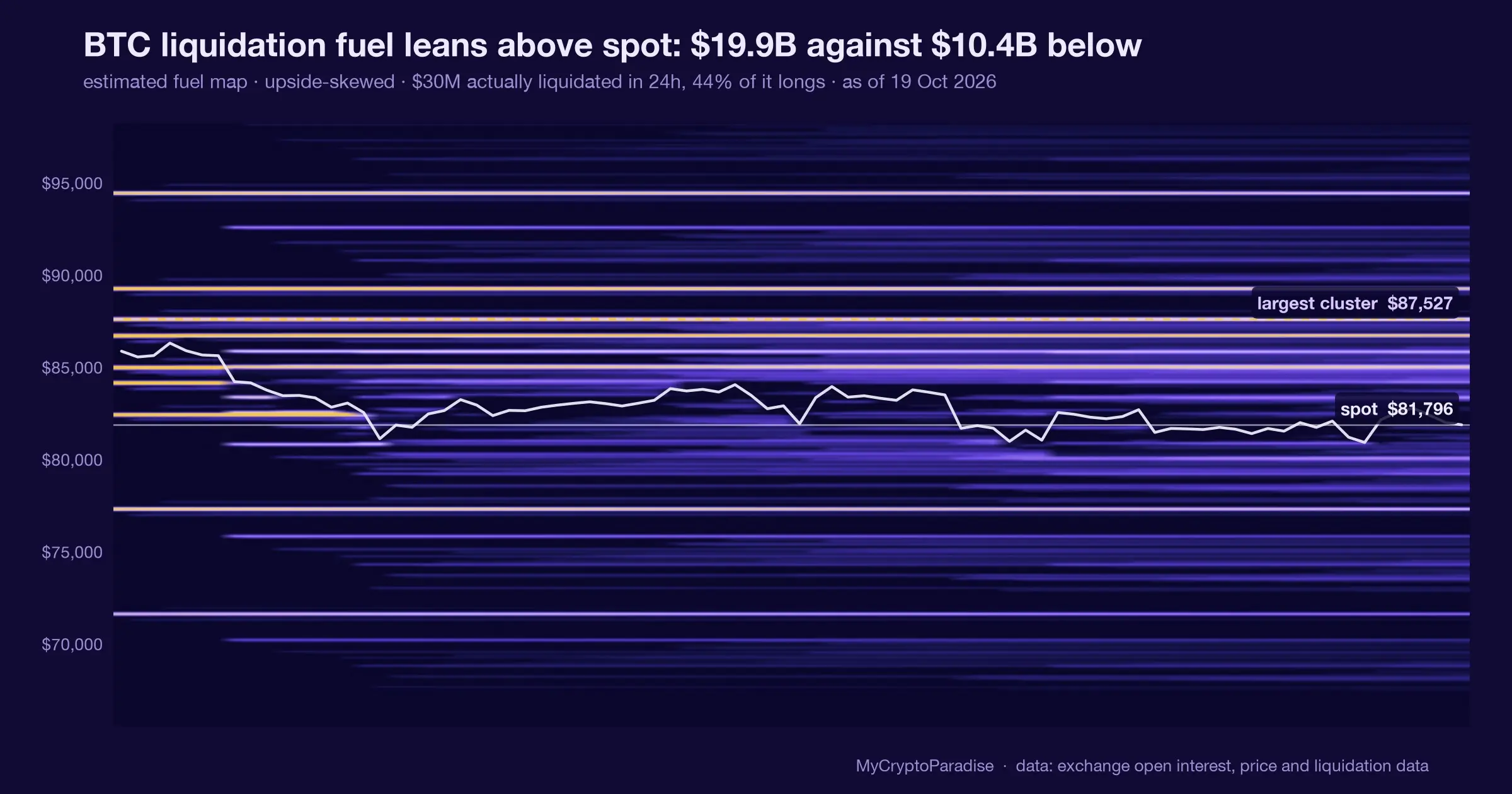
Our standing bias leans bullish toward 90,000 dollars, with 82,000 as the key defence and 85,000 as a near resistance that doubles as a liquidation cluster. That 85,000 shelf is the one to respect here. A clean push through the previous high near 87,000 would strengthen the case for 90,000.
Now connect that to DeFi risk. As long as BTC holds 82,000 and grinds higher, lending stress stays theoretical and yield strategies look safe. That is exactly when retail tends to add leverage into LST collateral, right as the ParadiseTeam turns more cautious.
A rejection at 90,000, where liquidity fades and RSI (relative strength index) is not confirming, is the scenario that could expose fragile collateral fast. A BTC drop back under 82,000 would be the real warning for every lending position downstream. So the read is balanced, not bearish. Strength can still carry BTC toward 90,000. But strength into resistance is where smart money tends to lighten, not chase, and retail usually does the opposite.
Size for the risk you can see, not the yield you want. The calm layer and the restless layer share the same collateral. Respect both.
The read behind this: we framed this story through our own market analysis, Bitcoin at $82K: Is $90K About to Trigger?
Track it live: our crypto liquidation heatmap and the live crypto funding rates both update in real time, so you can watch this shift for yourself.
Related coverage
For exact entries, targets, and stop losses with full risk management, that is what ParadiseFamilyVIP is for. New to reading these moves? Start with our crypto trading strategies guide.
ParadiseTeam is monitoring the market situation closely, and we are taking these developments into consideration while building our trading tactics inside ParadiseFamilyVIP.
Crypto trading involves substantial risk. Prices are volatile and you can lose money. This article is educational and is not financial advice. Past performance does not guarantee future results.
Will DeFi liquidation risk shake crypto prices before year end?
This is how 18 Paradisers are calling it. Tap your call.
No calls on this one yet. Tap yours to be the first.
Free account, no password. Members just sign in.
Follow this topic: Stablecoin news










Join the discussion 9
Reading this just reminds me how much faster 🙏 and cheaper 💰 my brother's transfers could be if everyone used stablecoins for actual payments, not just lending. That's the real magic ✨.
chasing yields is one thing but the split here is about leverage. you dont chase yields with borrowed money you just sign up for pain
Smart money" reading liquidation danger usually implies they're also creating it. The retail chasing yields point is fine, but who's providing that initial liquidity?!
mateusz, that's a good debit entry for liquidity provision 🤔 but the "smart money" also gets their own books cleared when retail gets liquidated, no? 😅
yeah man, the smart money always makes me wonder what I'm missing 😂. just trying to not get chopped up on these 1m plays, anyone else?! 🔪
Benny, liquidity decides what "smart" money is, not the other way around. Opinions get repriced fast when the bid disappears.
this framing of stablecoin risk as calm is naive mateusz you forget what a sustainable yield actually means after luna. its exchange flows tell a very different story about real money.
I'm sorry, Mei, but I'm confused about how exchange flows tell a story about real money and if it's different from the "smart money" Mateusz mentioned?
This is what I'm always watching, the split between the smart money and us 🤪 chasing those yields !! My portfolio's seen enough "yield farming" already lol 🚜📉😂