

Listen: the breakdown
Market briefing: Blast, an Ethereum Layer 2, is shutting down because its costs outrun its revenue, with a hard October 26 withdrawal deadline. BLAST has already crashed and ETH sits near $2,682 while Bitcoin trades around $84,870.
- Blast L2 is closing, with all funds to be withdrawn by October 26
- TVL collapsed from $2.2 billion and the BLAST token is down 98% from its peak
- Funds left after the deadline survive but require manual bridge contract exits on Ethereum
The Blast L2 shutdown hands users a hard October 26 deadline and a 98% token wreck. When a chain earns $110 a day, who was ever going to pay the bills?
Blast, an Ethereum Layer 2 network, is shutting down. The reason given is blunt: the economics of operating the chain no longer make sense, and the ongoing cost of running Blast now exceeds the revenue it generates.
Users have one clear instruction. Withdraw everything by October 26. Funds left behind after that date are not lost, but recovering them means interacting directly with Blast's bridge contracts on Ethereum, a step most casual users will dread.
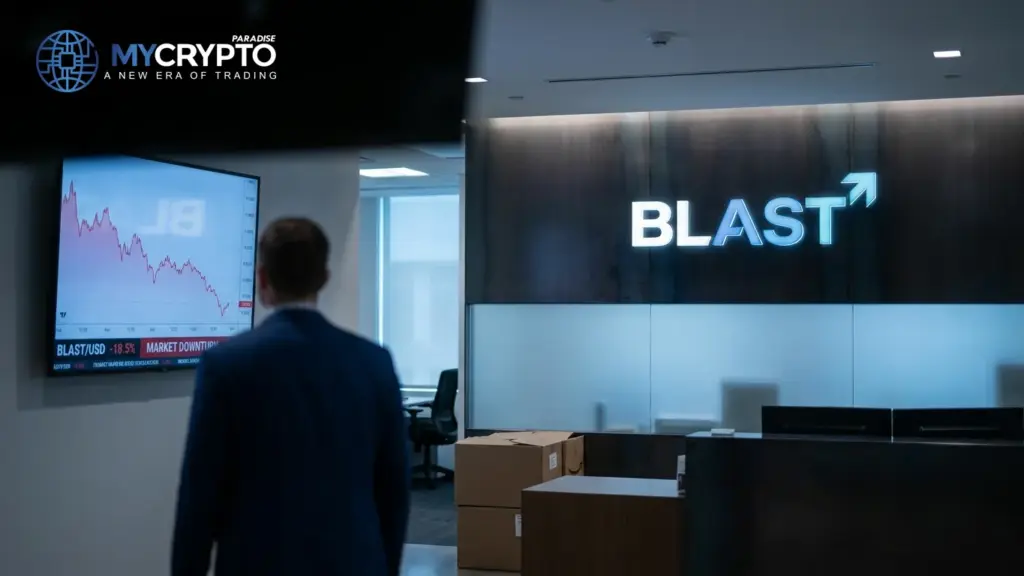
The numbers tell the story faster than any statement. Blast held $2.24 billion in Total Value Locked (TVL), meaning assets parked inside the chain, back in June 2024. That figure has since crashed. The BLAST token fell 19% on the shutdown news and now sits roughly 98% below its peak.
Then there is the detail that frames everything. In the day before the announcement, the entire chain earned $110 in revenue. A hundred and ten dollars. You could not staff a reception desk on that, let alone secure a billion-dollar settlement layer.
A security warning now circulating urges anyone who ever touched Blast to inventory every wallet, check liquidity provider positions, staking, and tied NFTs, and move before the window closes. That advice is sound. The harder truth is structural: this is what the end of a Layer 2 actually looks like when the subsidy stops and real costs remain.
When a chain's revenue stops covering its costs
A Layer 2 is a business before it is a technology. It pays for sequencers, data availability, and security, and it hopes fees and token incentives cover the bill. Blast's closure is the moment that equation broke in public.
$110 of daily revenue against the cost of maintaining a billion-dollar chain is not a rough patch. It is a verdict. The incentive flywheel that pulled in $2.24 billion of TVL spun down, deposits followed the incentives out, and the fixed costs did not shrink to match.
This is the transmission mechanism that matters for the whole sector. Capital does not vanish; it relocates. TVL leaving Blast flows back toward Ethereum mainnet or into Layer 2s with genuine usage, deeper funding, or a real reason to exist. Liquidity consolidates toward the survivors.
For the broader market, the signal is a shakeout, not a contagion. The Layer 2 field expanded faster than demand for block space, and marginal chains cannot all be subsidised forever. Blast is simply the one that said so out loud.
The quiet lesson sits in the withdrawal mechanics. A chain can promise your funds are safe while making their recovery inconvenient enough that some users never bother. The gap between a reassuring announcement and a smooth user exit is where the real risk lives.
How the damage splits across BTC, ETH and alts
Start with where this does not hit. Bitcoin, trading near $84,870 as of 12:41 UTC, has no mechanical link to one Layer 2 closing. Its 2.2% daily dip tracks the broader risk tone, not Blast.
Ethereum is closer to the blast radius but still largely insulated. ETH sits near $2,682, down 2.6% on the day. The market is reading this as an isolated L2 failure, not a crack in Ethereum's settlement role. Mainnet may even gain a trickle of returning liquidity as users bridge out.
The concentrated pain is in BLAST and the ecosystem tokens around it. A 19% drop on the news, stacked onto a 98% fall from the peak, is the price of being the unviable project in a crowded field. Holders who stayed for the airdrop narrative are the ones carrying the loss.
The cascade is narrow but instructive. Driver is the shutdown; the macro effect is L2 consolidation; the liquidity effect is capital fleeing a dead chain toward credible ones; and the asset effect runs almost entirely into BLAST and adjacent small caps rather than up the stack.
For traders, the read on other speculative L2 tokens is caution. Markets rarely price one failure in isolation. Expect a sympathy discount on chains with thin revenue and incentive-dependent TVL, because investors are now asking the one question that matters.
The October 26 clock and the next thin L2
The October 26 deadline is the hard date on the calendar. Confirmation that this is an orderly wind-down, not a scramble, looks like steady, declining TVL as users bridge out cleanly with no reports of stuck funds.
Invalidation of the calm read looks different. If withdrawals jam, if the bridge contract route proves hostile, or if a second mid-tier Layer 2 announces the same math in the same week, the market stops treating this as isolated and starts pricing a sector theme.
Watch where the exiting liquidity lands. Flows into Ethereum mainnet and the top handful of L2s would confirm consolidation toward quality. Flows into the next incentive-heavy chain would just reset the same unsustainable game one address over.
Keep an eye on ETH relative strength. If Ethereum holds near $2,682 and shrugs off a string of L2 troubles, that supports the view that the base layer benefits from the cull. Sustained ETH weakness alongside more closures would argue the opposite.
For BLAST specifically, the only honest watch item is withdrawal completion, not price. The token is a trailing indicator of a decision already made. The real question is whether this is one chain's problem or the first domino in a Layer 2 field that grew well ahead of the demand to fund it.
What a chain closing says about exit liquidity
The ParadiseTeam treats this less as a Blast event and more as a discipline lesson. Smart money almost certainly left when revenue fell to a rounding error and TVL began sliding; retail inherited the 19% news drop and the 98% drawdown (maximum drawdown, the fall from peak). That is exit liquidity in its purest form.
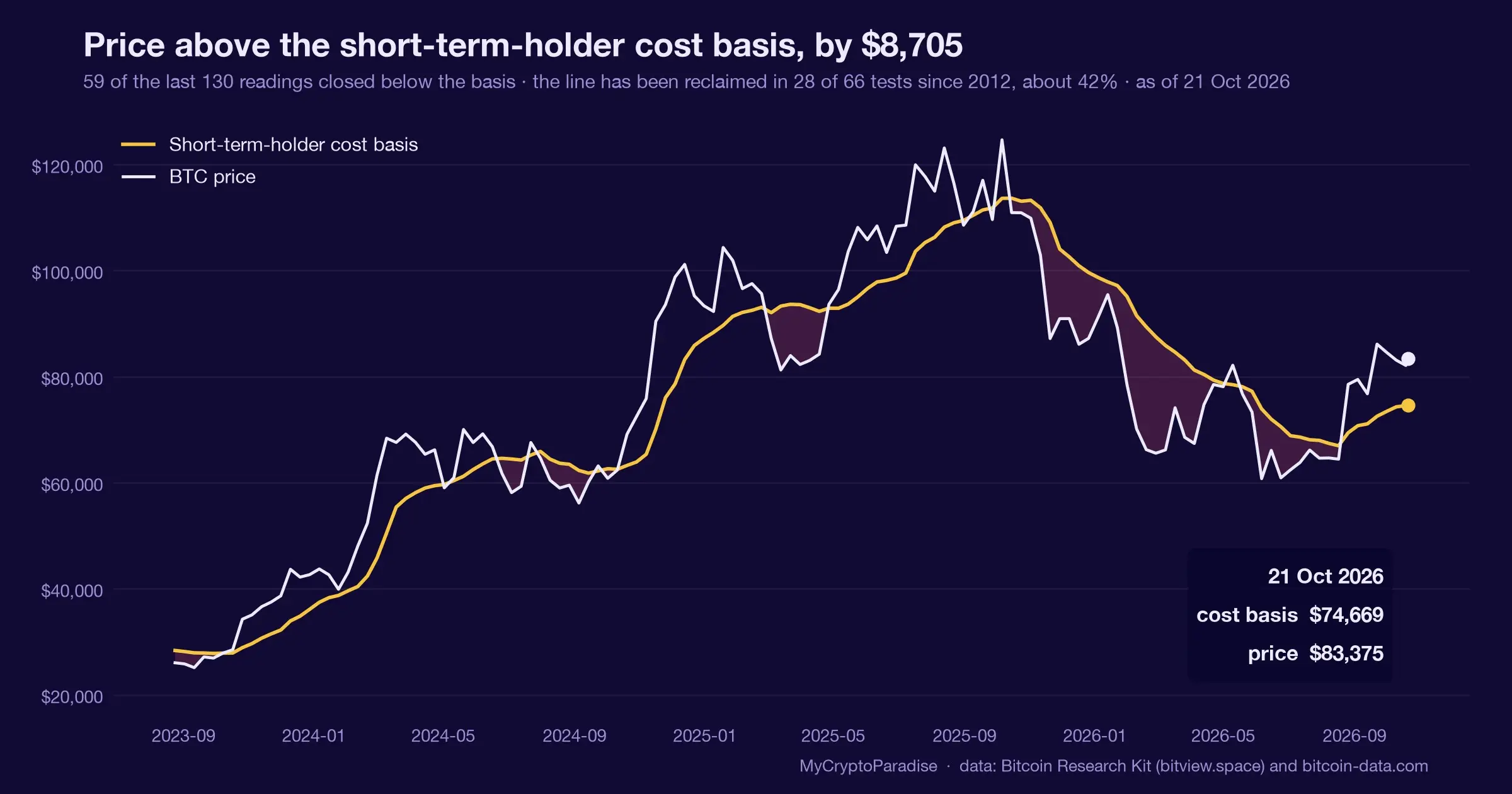
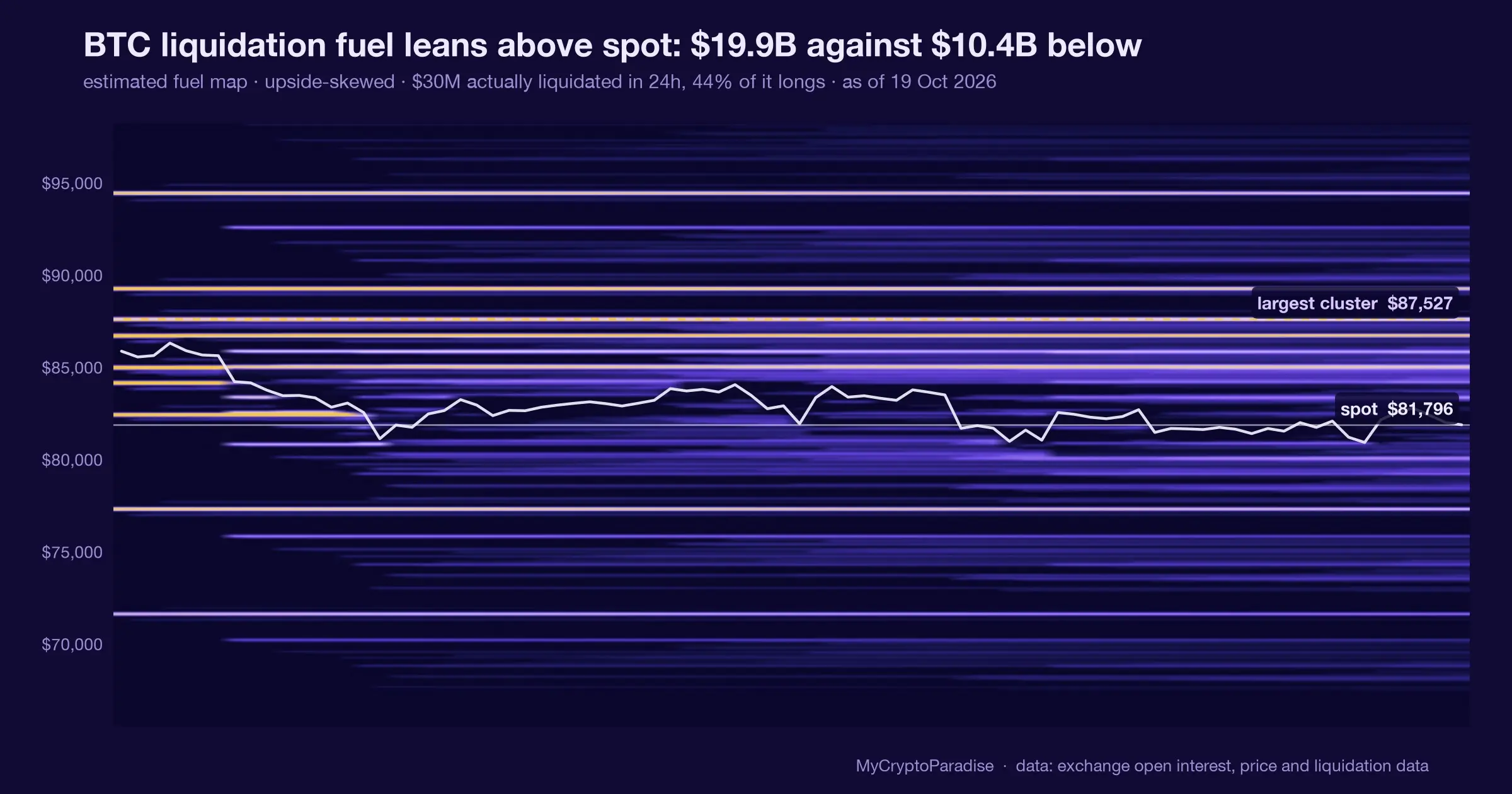
On Bitcoin, our standing lens stays constructive. We are watching for a push toward $90,000, with $82,000 as the key defence zone and $85,000 acting as a near-term resistance and liquidation cluster. The Blast shutdown does nothing to those levels; it is an altcoin structure story, not a BTC macro input.
We would flag one caution tied to that lens, not to this news. Strength into $90,000 can meet selling, with conflicting momentum signals hinting at a possible bear trap near the target. Blast does not change that map, so do not let an L2 headline pull your BTC thesis off its own levels.
The transferable edge is simple. Before holding any incentive-driven token, ask who funds the chain and what it earns. A project paying its bills on $110 a day was always a withdrawal notice waiting to be written. Size positions for the exit, not the airdrop, and respect R:R (risk-to-reward) on every speculative L2 bet.
The read behind this: we framed this story through our own market analysis, Bitcoin at $82K: Is $90K About to Trigger?
Track it live: our crypto liquidation heatmap and the live crypto funding rates both update in real time, so you can watch this shift for yourself.
Related coverage
For exact entries, targets, and stop losses with full risk management, that is what ParadiseFamilyVIP is for. New to reading these moves? Start with our crypto trading strategies guide.
ParadiseTeam is monitoring the market situation closely, and we are taking these developments into consideration while building our trading tactics inside ParadiseFamilyVIP.
Crypto trading involves substantial risk. Prices are volatile and you can lose money. This article is educational and is not financial advice. Past performance does not guarantee future results.
Is Blast's closure a one-off or the first of a wider L2 shakeout?
This is how 16 Paradisers are calling it. Tap your call.
No calls on this one yet. Tap yours to be the first.
Free account, no password. Members just sign in.









Join the discussion 5
yeah, that "what it means for traders" part is rough for anyone stuck in it, ouch. feels like a lot of folks are just getting chopped up here, huh? 💀💸
October 26 is cutting it close for some people they probly have to eat that loss. its like the bank freezing accounts in 75.
always watching for where that locked liquidity goes next.. opinions dont decide, flow does.
yeah, big fan of that Elif, gotta keep an eye on how teh whales move their capital next, that's where the real signals are 👀💰➡️
Totally, Elif! 🎯 Watching those whale wallets is key... I'm tracking the L2s too, see what chains they move to next.