

Listen: the breakdown
Developing story update (September 15, 2026, 00:02 UTC):
Alongside the oil move tied to the Saudi East-West pipeline shutdown, the 10-year Treasury yield has now topped 5%. That is the fresh data point here: the pipeline facts and the Brent crude levels (near $110 intraday, $109.7 high, a close of $105.68 after an almost 5% jump) are unchanged from what we already reported.
For traders the read is macro pressure, not a crypto-specific catalyst. A 5% 10-year yield tightens financial conditions and typically weighs on risk assets, so the current small moves in BTC and ETH likely reflect consolidation inside a broader cautious structure rather than a bullish response to the oil story.
What to watch now: Whether the 10-year yield holds above 5% and drags risk appetite, or eases back as oil supply fears settle.
Developing story update (September 14, 2026, 23:20 UTC):
Our sources confirm the Saudi East-West oil pipeline shutdown occurred on September 14. This provides a clear timeline for the event that initially sent Brent crude prices surging towards $110 per barrel.
The pipeline, which bypasses the Strait of Hormuz, remains out of service for several weeks following attacks. This ongoing disruption continues to support elevated oil prices, with Brent crude closing at $105.68 per barrel after an intraday jump of almost 5%.
While crypto markets show slight 24-hour gains, the broader macro environment, including rising oil prices, continues to present headwinds. Traders should monitor the duration of the pipeline outage and its sustained impact on global energy markets.
What to watch now: Traders should monitor the duration of the pipeline outage and its sustained impact on global energy markets.
Developing story update (September 14, 2026, 22:36 UTC):
Our sources now confirm the Saudi East-West oil pipeline shutdown was a direct result of recent attacks, adding a layer of geopolitical risk to the crude market. This new information provides critical context for the initial surge in Brent crude prices.
Meanwhile, the 10-year Treasury yield has topped 5 percent, intensifying the macro headwinds for risk assets. This development, alongside the ongoing oil price volatility, reinforces the challenging environment for crypto, despite its short-term resilience.
What to watch now: The impact of geopolitical tensions on oil supply and the continued rise in Treasury yields on broader market sentiment.
Developing story update (September 14, 2026, 21:54 UTC):
Following the Saudi East-West pipeline shutdown, Brent crude futures closed at $105.68 per barrel, after reaching an intraday high of $109.7. This provides more precise price action details than previously reported.
New reports indicate the critical East-West pipeline could remain out of service for several weeks. This extended potential downtime suggests a more prolonged impact on oil supply than initially understood, which could sustain upward pressure on crude prices.
Traders should monitor the official confirmation of the pipeline’s repair timeline and its ongoing effects on global energy markets. Continued supply disruptions could influence broader macro sentiment and liquidity for risk assets, including cryptocurrencies.
What to watch now: Monitor official updates on the pipeline repair timeline and its sustained impact on global oil supply and prices.
Market briefing: Saudi Arabia shut down its critical East-West pipeline after drone attacks, sending Brent crude surging towards $110 a barrel. This geopolitical event introduces significant macro headwinds for risk assets, even as Bitcoin trades near $78,891.
- Saudi Arabia's East-West pipeline ceased operations after drone attacks.
- Brent crude surged almost 5 percent, hitting $110 a barrel on Monday.
- Geopolitical risk and inflation concerns tighten global liquidity for risk assets.
Geopolitical tensions escalated as Saudi Arabia's critical East-West pipeline ceased operations following drone attacks, sending oil prices sharply higher. Will this fresh macro headwind finally break crypto's short-term resilience?
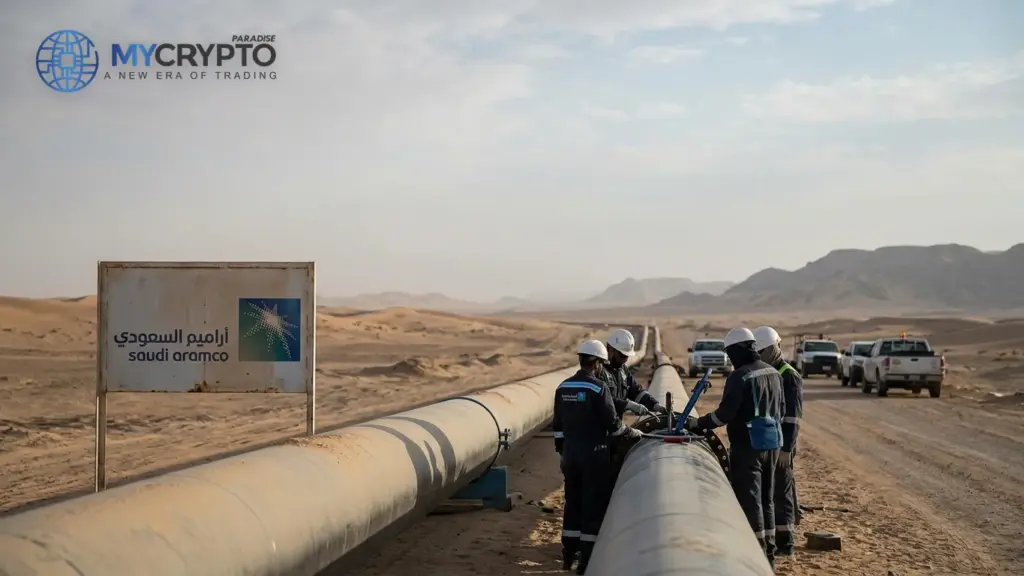
Saudi Arabia halted operations on its crucial East-West pipeline following multiple drone attacks on Thursday, September 10, 2026. This significant infrastructure, approximately 750 miles long, transports crude to the Red Sea port of Yanbu, bypassing the Strait of Hormuz.
The shutdown immediately impacted global energy markets, driving oil prices higher. Brent crude jumped almost 5 percent on Monday, surging towards $110 a barrel. This development, building on earlier reports of the pipeline's halt, introduces a substantial geopolitical risk premium into the market. While Bitcoin currently trades near $78,891, showing a +1.9% gain over 24 hours, and Ethereum near $2556.85, up +1.7%, their resilience faces a formidable macro challenge.
Such events often signal broader market caution, as investors weigh the implications of higher energy costs and potential global instability. The market is now evaluating whether crypto assets can genuinely decouple from these traditional economic pressures.
Geopolitical shock fuels inflation outlook
The shutdown of a major oil pipeline, especially one bypassing a critical chokepoint like the Strait of Hormuz, immediately creates a supply shock in global energy markets. This directly pushes crude oil prices higher, as evidenced by Brent's surge towards $110 a barrel.
Sustained higher oil prices inevitably fuel broader inflation concerns across economies worldwide. Central banks, already grappling with persistent inflationary pressures, may be compelled to adopt an even more hawkish stance.
Tighter monetary policy, characterized by higher interest rates and reduced liquidity, typically dampens overall risk appetite. This environment sees investors rotating out of speculative assets and into safer havens.
For crypto, this macro backdrop translates into significant headwinds. Even if the asset class shows short-term strength, the structural shift towards tighter global liquidity conditions can create a persistent drag on prices.
Higher energy costs ripple through liquidity
The immediate consequence of surging oil prices is a reduction in global liquidity available for risk assets. Higher energy costs mean consumers and businesses have less discretionary capital, which in turn can lead to slower economic growth.
For Bitcoin, this translates into potential selling pressure over the medium term, despite its current short-term bounce. The market often interprets such macro events as a signal for smart money to continue distributing at elevated levels.
Ethereum and the broader altcoin market typically amplify Bitcoin's movements during periods of macro uncertainty. If Bitcoin faces sustained pressure from reduced liquidity, altcoins are likely to experience more significant percentage drawdowns. This macro event provides fundamental justification for a more cautious outlook. Smart money tends to offload positions when broader economic signals point to tightening conditions, preparing for future reaccumulation at lower price levels.
Confirming breakdown amid macro headwinds
Traders should closely monitor the trajectory of Brent crude prices. A sustained rally above $110, or further geopolitical escalations, would confirm the inflationary pressures and likely reinforce a hawkish stance from central banks.
On the crypto front, watch for Bitcoin's reaction to key resistance levels. A clear rejection around the $79,000 to $82,000 zone, especially if accompanied by increased selling volume, would signal a confirmation of the bearish outlook.
Conversely, an unexpected rapid resolution to the pipeline issue or a significant de-escalation of geopolitical tensions could alleviate some macro pressure. However, such a scenario would need to be profound enough to shift the broader liquidity narrative.
Any sustained break and reclaim of the $82,000-$88,000 resistance zone on higher timeframes would invalidate the current bearish structure, but this remains a low-probability scenario given the prevailing macro environment.
Smart money perspective on oil's crypto impact
The ParadiseTeam frames this pipeline shutdown and subsequent oil surge as a reinforcement of our bearish long-term outlook for risk assets. Bitcoin's current resilience near $78,891 is precisely what smart money looks for to continue distribution. This price point sits close to the $79,000 distribution zone, which aligns with the 0.618 Fibonacci retracement level. Smart money has been offloading at these higher levels, anticipating a deeper correction.
The current crypto price action can be interpreted as the 'final short-term bounce' before a more significant crash, as outlined in our market lens. Retail fear, evident in ongoing ETF outflows, supports this narrative, suggesting capitulation as smart money establishes short positions or rebalances portfolios.
We are watching the next daily candle for a potential bearish engulfing pattern, which would provide a strong confirmation of downward momentum. Failure to push decisively above the $82,000-$88,000 resistance zone will likely keep targets like $61,000 and eventually $44,000 in play for reaccumulation.
The read behind this: we framed this story through our own market analysis, Bitcoin ETF Outflows Near $500M: Crash Next?
Track it live: our live crypto funding rates and the Crypto Fear and Greed Index both update in real time, so you can watch this shift for yourself.
Related coverage
For exact entries, targets, and stop losses with full risk management, that is what ParadiseFamilyVIP is for. New to reading these moves? Start with our crypto trading strategies guide.
ParadiseTeam is monitoring the market situation closely, and we are taking these developments into consideration while building our trading tactics inside ParadiseFamilyVIP.
Crypto trading involves substantial risk. Prices are volatile and you can lose money. This article is educational and is not financial advice. Past performance does not guarantee future results.
Will surging oil prices trigger a deeper crypto correction?
How 26 Paradisers are calling it
The first call is still open
Free account, no password. Members just sign in.









Join the discussion 1
Yikes 😬 more macro headwinds for the market eh? Is this gonna be a longer term thing with the oil price?! 🔥🥵 My portfolio is already like a roller coaster 📉⬆️ haha.