


Listen: the breakdown
Developing story update (September 14, 2026, 09:58 UTC):
Symbiosis says recovered 15 BTC from bridge hack, offers 20% bounty. Symbiosis is offering a 20% bounty for information leading to asset recovery after the hacker refused to return the stolen funds for the same white-hat bounty.
Developing story update (September 14, 2026, 02:28 UTC):
Update: Symbiosis says it is building a compensation framework for those affected by the Bitcoin Bridge exploit and plans to publish the eligibility criteria shortly. The recovered amount, the 20 percent white-hat bounty offer, and the halted BTC routes are unchanged from our earlier report.
For traders, the practical takeaway is unchanged. This remains a contained protocol-level incident with negligible read-through to BTC, which continues to trade in a tight range. Watch for the published compensation criteria as the next concrete signal on how the recovered funds will be handled.
What to watch now: Whether Symbiosis publishes its compensation criteria and how affected users are made whole.
Developing story update (September 14, 2026, 01:15 UTC):
Symbiosis says it recovered 15 BTC after Bitcoin bridge exploit, offers attacker 20% bounty Memes | GameDev | 𝕏 takes
Developing story update (September 14, 2026, 01:02 UTC):
Update: Symbiosis has said it is putting together a compensation framework for the liquidity providers affected by the Bitcoin Bridge exploit, and it plans to publish the eligibility criteria shortly. This is the first concrete step aimed at making affected LPs whole beyond the roughly 15 BTC already recovered into a team-controlled multisig.
For traders, the practical read is unchanged: BTC routes on the bridge remain halted while EVM chains, TRON, and TON stay operational, and Bitcoin itself was not compromised. Watch for the published criteria, since the size and structure of any compensation will signal how contained the protocol treats the damage.
What to watch now: The published compensation criteria for affected liquidity providers and whether BTC bridge routes resume.
Developing story update (September 13, 2026, 23:36 UTC):
Symbiosis now says it is building a compensation framework for those hit by the Bitcoin Bridge exploit and will publish the eligibility criteria shortly. This is a follow-on to the earlier recovery of about 15 BTC and the 20% white-hat bounty offer, and it signals the team is moving from containment toward making affected users whole.
For now the practical detail traders care about is still missing: affected liquidity providers do not yet have concrete compensation terms. Until the criteria are published, the size and timing of any reimbursement remain open, so anyone with exposure should treat the amount as unconfirmed. BTC routes on the protocol stay halted while EVM, TRON, and TON routes remain operational, and Bitcoin itself was not compromised.
What to watch now: Watch for Symbiosis to publish the compensation criteria and confirm which liquidity providers qualify and for how much.
Market briefing: Symbiosis says it recovered about 15 BTC after a Bitcoin Bridge exploit and offered the attacker a 20% white-hat bounty. Bitcoin was untouched and traded near $77,250, so the real pressure sits in DeFi confidence, not the BTC chart.
- Symbiosis recovered about 15 BTC after a Bitcoin Bridge exploit; the coins sit in a team-controlled multisig.
- The attacker minted roughly 46.1 billion syBTC but realized only about $336,000 in proceeds.
- Bitcoin was not compromised; BTC routes are halted while EVM, TRON, and TON routes stay live.
A Symbiosis bridge exploit saw the team recover 15 BTC while the attacker walked away with just $336,000. So does a contained DeFi hack still matter for your risk?
Symbiosis, a cross-chain bridge protocol, lost control of its Bitcoin Bridge this week after an attacker exploited it. The team says it clawed back roughly 15 BTC, now sitting in a team-controlled multisig wallet. Bitcoin itself was never touched. The damage stayed inside one protocol's plumbing.
The numbers tell a strange story. The attacker minted about 46.1 billion syBTC, a synthetic Bitcoin token. On paper that is an astronomical figure. In practice, the attacker appears to have realized only about $336,000 in actual proceeds.
That gap between minted and realized matters. Minting billions of a synthetic token means little if there is no liquidity to sell into. The exploit was loud, but the exit was quiet.
Symbiosis has halted BTC routes on the platform while it investigates. Its other routes, including EVM chains, TRON, and TON, remain operational and safe. So this was a targeted break, not a full collapse.
The team has offered the attacker a 20% white-hat bounty to return the rest. It is the now-familiar ritual: negotiating with the person who just walked through your front door.
The harder problem sits with liquidity providers. Symbiosis says it is building a compensation framework for those affected. For now, the affected providers still lack specific terms. That silence is where retail confidence tends to leak.
Bridge seams tear before markets notice
Bridges are the seams of crypto, and seams are where things tear. Every cross-chain bridge holds real assets on one side and issues claims on the other. When the mint function breaks, the claims outrun the collateral. That is exactly what 46.1 billion synthetic tokens against a tiny realized haul looks like.
For the wider market, the direct effect is small. Bitcoin was not compromised, and $336,000 in realized proceeds is a rounding error against daily volume. We want to be honest here: there is no single confirmed catalyst moving price today. This exploit is a sentiment input, not a mechanical one.
Where it does land is confidence. DeFi runs on trust that the code holds and that losses get made whole. Symbiosis halting BTC routes protects users, but it also freezes activity. Frozen activity means thinner liquidity across connected pools.
The compensation gap deepens the unease. Liquidity providers supplied capital expecting yield, not a haircut with no timeline. Until terms arrive, those providers sit in limbo.
This is how risk-off sentiment builds in a market already leaning cautious. It rarely arrives as one big shock. It accretes through small reminders that the plumbing can fail. Each reminder nudges nervous capital toward the exits, and toward the safety of simply holding spot.
Small BTC ripple, wider DeFi caution
Bitcoin barely registered the news. BTC was trading near $77,250 as of the latest read, flat on the day. The exploit sits far from BTC's core, so spot demand and derivatives stayed calm.
Open interest, the OI, or total value of outstanding derivatives contracts, showed no stress spike tied to this event. Traders are not pricing a Bitcoin risk here, and rightly so.
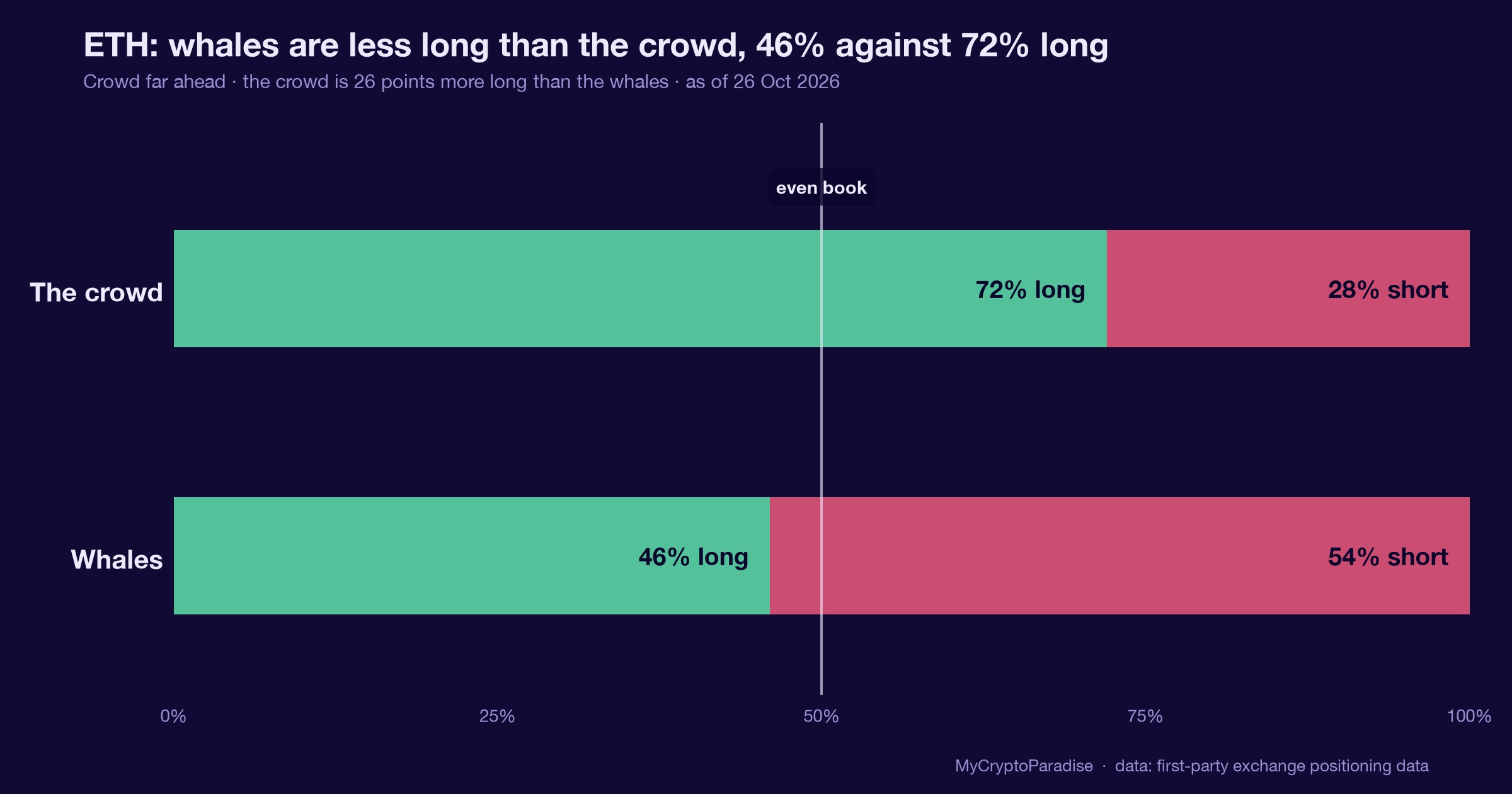
Ethereum feels a slightly closer draft. Bridges and synthetic assets live largely in the EVM world, and repeated bridge failures weigh on the trust premium that supports DeFi activity on ETH. The effect is mood, not mechanics.
The real pressure sits in DeFi and altcoin tokens. Synthetic-asset protocols, bridge tokens, and small-cap DeFi names carry the reputational tax when an exploit makes headlines. Capital in these pools is fastest to flee and slowest to return.
Liquidity providers reading about frozen routes and undefined compensation do the natural thing. They pull capital from adjacent pools first and ask questions later. That withdrawal thins order books across smaller tokens, which widens spreads and amplifies moves in both directions.
None of this rewrites the Bitcoin chart. But it reinforces the texture of a cautious market. When headlines lean toward broken infrastructure and absent make-whole terms, the marginal buyer hesitates. Hesitation at the edges tends to precede weakness at the core, especially when the core is already stalling under resistance.
Bounty answer and the LP terms ahead
The bounty response is the first thing worth tracking. If the attacker returns funds under the 20% white-hat offer, Symbiosis limits the damage and the story fades fast. If the offer is ignored, the loss crystallizes and the compensation question grows louder.
The compensation framework is the second marker. Specific terms for affected liquidity providers would restore some confidence quickly. Continued silence does the opposite, and silence has a way of stretching longer than anyone promises.
Watch whether BTC routes reopen. A clean restart with a public post-mortem signals the protocol found and fixed the flaw. A prolonged halt suggests the problem runs deeper than one broken function.
On the broader tape, the tell is contagion. If other bridge or synthetic-asset protocols see withdrawals or paused routes in the coming days, the sentiment spreads. If this stays contained to Symbiosis, the market correctly files it as isolated.
For Bitcoin specifically, this event changes nothing structural. The levels that matter still sit on the chart, not in a bridge contract. A reclaim of the $82,000 to $88,000 zone as support would invalidate the cautious read. A rejection at $79,000 with a bearish daily candle would confirm it.
The invalidation for the DeFi-fear thesis is simple. Fresh, transparent compensation terms plus a clean route restart would drain the risk premium quickly. Absent that, expect the caution to linger at the edges of the market.
Reading the exploit against $79k distribution
The ParadiseTeam files this exploit as a sentiment input, not a Bitcoin driver. With BTC near $77,250, the chart matters far more than one bridge failure. Still, small reminders of DeFi fragility feed a mood that our higher-timeframe read already reflects.
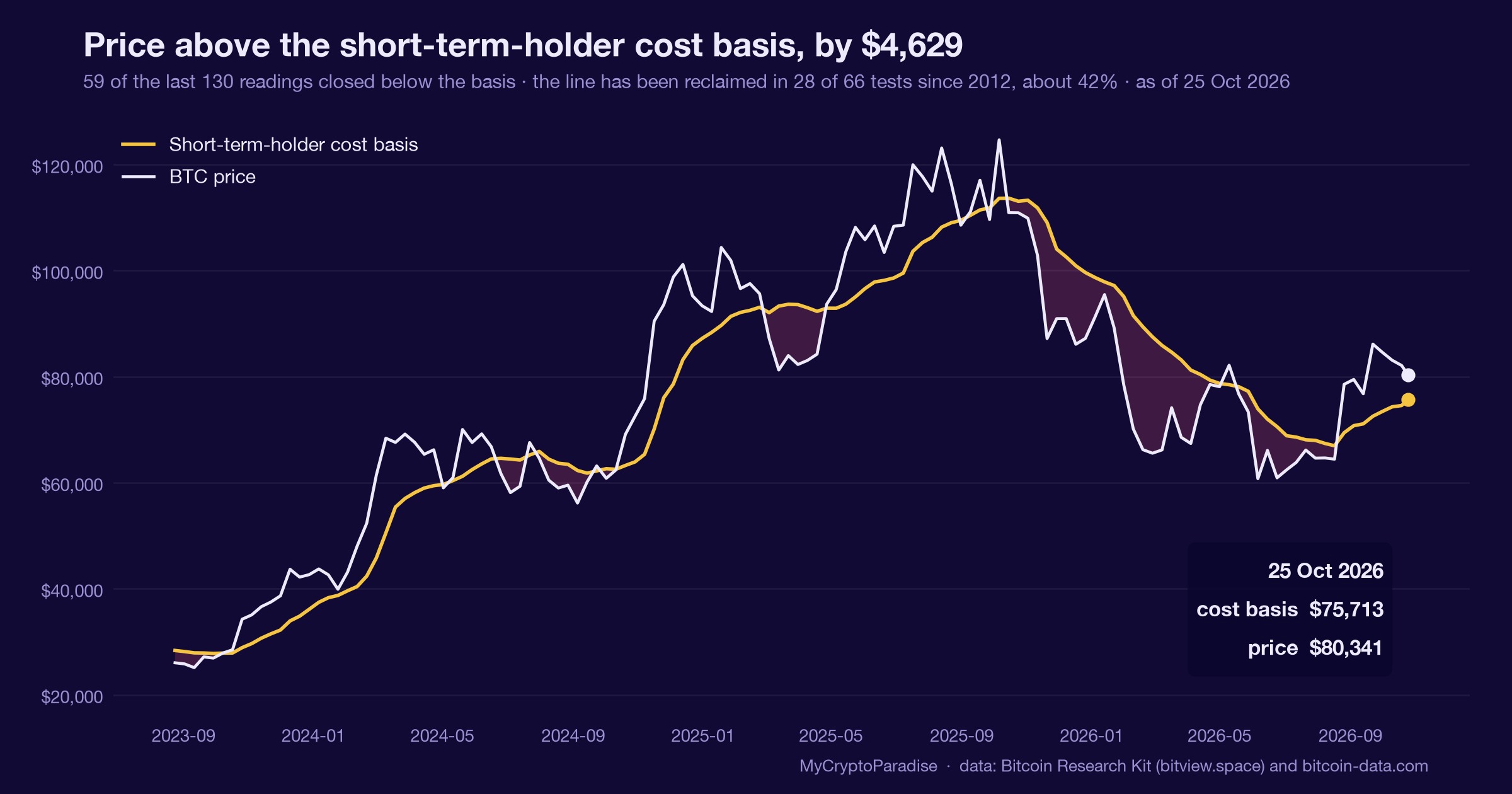
Our bias stays bearish on the weekly and daily. Smart money has been distributing into the $79,000 zone, a prior distribution area and the 0.618 Fibonacci retracement. Retail, meanwhile, is showing fear through ETF outflows nearing $500 million. Exploit headlines add to that fear, and fear near resistance usually helps distributors, not accumulators.
Here the mechanism runs the ordinary way, not the contrarian one. This is bearish DeFi news arriving while price stalls under resistance, not bearish news crashing into strong support. That distinction decides who benefits. Distribution into a nervous crowd is the base case, not accumulation.
We are watching the next daily candle for a bearish engulfing pattern. Confluence with the recent shooting-star wicks would strengthen the top signal considerably. A confirmed rejection near $79,000 keeps the path open toward $61,000, our prior reaccumulation zone.
Invalidation is clean and specific. A decisive reclaim of the $82,000 to $88,000 band as support would force us to reconsider the weekly structure. Until then, the ParadiseTeam treats bounces as distribution opportunities for smart money, not accumulation. This exploit does not move the levels. It simply reinforces the caution the levels already imply.
The read behind this: we framed this story through our own market analysis, Bitcoin ETF Outflows Near $500M: Crash Next?
Track it live: our Crypto Fear and Greed Index and the live crypto funding rates both update in real time, so you can watch this shift for yourself.
Related coverage
For exact entries, targets, and stop losses with full risk management, that is what ParadiseFamilyVIP is for. New to reading these moves? Start with our crypto trading strategies guide.
ParadiseTeam is monitoring the market situation closely, and we are taking these developments into consideration while building our trading tactics inside ParadiseFamilyVIP.
Crypto trading involves substantial risk. Prices are volatile and you can lose money. This article is educational and is not financial advice. Past performance does not guarantee future results.
Will the Symbiosis attacker take the 20% white-hat bounty and return the funds?
How 19 Paradisers are calling it
The first call is still open
Free account, no password. Members just sign in.











Join the discussion 1
It's encouraging to see a recovery and a bounty offer after an exploit like this. I always wonder how these events factor into wider market sentiment.