


Listen: the breakdown
Developing story update (September 16, 2026, 10:01 UTC):
The same holder vote has now been confirmed to also back launching the NU7 network upgrade as soon as possible, alongside the earlier support for 25-second block times and preserving the existing halving schedule. This adds a concrete near-term roadmap item on top of the governance signal we already reported.
For traders, the takeaway is unchanged in the short term. A faster upgrade timeline is a project-specific positive, but it is landing inside a weak broader market where the Clarity Act’s Senate failure has driven roughly 570 million dollars in long liquidations. Any localized strength from the upgrade news probably faces selling pressure while the macro backdrop stays soft.
What to watch now: Watch for an official NU7 activation date or timeline, and whether ZEC strength holds against broad market weakness.
Developing story update (September 16, 2026, 09:38 UTC):
The Zcash governance vote now has firm numbers behind the earlier read. Based on our sources, nearly 2.4 million ZEC took part, with 99.9% backing a move to 25-second blocks and 98.9% voting to keep the existing halving schedule in place. The support is close to unanimous rather than merely a majority.
For traders this sharpens the structural case for ZEC without changing the near-term picture. The margins confirm a coordinated holder base pushing for faster settlement, but the wider tape is still driven by the Clarity Act fallout and the roughly $570 million in liquidated longs, so any ZEC strength continues to trade against a heavy macro backdrop.
What to watch now: Whether the confirmed vote margins translate into a dev timeline for 25-second blocks, and if ZEC can hold its bid while BTC stays under pressure.
Developing story update (September 16, 2026, 09:15 UTC):
Zcash holders have voted to approve faster transactions and Bitcoin-style halvings. Powered by Bitunix Best non kyc futures exchange Save 30% lifetime on fees
Developing story update (September 16, 2026, 08:56 UTC):
Update: Zcash has extended its move higher since the governance vote, with the advance supported by rising derivatives activity and elevated market participation. That points to traders positioning around the faster-transactions and bitcoin-style halving proposals rather than the vote passing unnoticed.
The wider backdrop has not changed. The Clarity Act’s failure in the Senate still frames sentiment, with roughly $570 million in crypto longs wiped out, XRP down around 10%, and bitcoin holding near the mid $75,000s. ZEC strength is running against that macro pressure, so elevated derivatives positioning can cut both ways and probabilities favour sharp two-way moves.
What to watch now: Whether ZEC derivatives open interest keeps climbing or unwinds if the broader post-Clarity-Act selloff deepens.
Developing story update (September 16, 2026, 07:06 UTC):
Our sources confirm Zcash (ZEC) experienced a significant price surge, jumping 48% to trade above $800, surpassing its January 2018 peak. This move was accompanied by Zcash futures volume hitting billions of dollars, indicating heightened market participation.
This strong performance for ZEC appears to be catalyzed by a Grayscale filing, which showed progress toward converting its Zcash Trust into a spot ETF. This development provides a concrete driver for recent ZEC bullish sentiment.
While the broader market continues to grapple with the Clarity Act’s failure and subsequent liquidations, Zcash’s specific developments offer a distinct counter-narrative for traders focused on individual asset catalysts.
What to watch now: Watch for further developments on the Grayscale Zcash ETF filing and ZEC's price action relative to its new highs.
Market briefing: Zcash holders backed faster transactions and Bitcoin-style halvings, and ZEC jumped 48% above $800. But the Clarity Act failed in the Senate, $570 million in longs were wiped, and Bitcoin slid toward $76,000, trading near $75,956.
- Zcash holders overwhelmingly backed faster transactions and Bitcoin-style halvings, and ZEC jumped 48% above $800, past its January 2018 peak.
- The Clarity Act failed in the Senate, crypto longs worth $570 million were wiped, XRP sank 10%, and Bitcoin slid toward $76,000.
- A Grayscale filing showed fresh progress toward a spot Zcash ETF as ZEC futures volume hit billions, the kind of liquidity smart money sells into.
Zcash holders just voted for Bitcoin-style halvings and faster transactions, and ZEC ripped 48%. So why is the tape screaming caution instead of celebration?
Zcash holders did something rare this week. They overwhelmingly backed faster transactions and Bitcoin-style halvings, borrowing the scarcity model that made BTC the reserve asset of crypto. The market answered fast. ZEC jumped 48% to over $800, pushing above its January 2018 peak.
On its own, that is a strong fundamental story. A privacy coin importing a fixed, decaying issuance schedule is a coherent bid for the "digital gold" narrative. Futures volume swelled into the billions, and a Grayscale filing showed fresh progress toward converting its Zcash Trust into a spot ETF. But a single asset does not trade in a vacuum. While ZEC celebrated, the wider market was busy falling apart.
The Clarity Act failed in the Senate. That reopened the regulatory question the whole sector had been pricing as nearly settled, and risk appetite drained immediately. Crypto longs worth $570 million were liquidated. XRP sank 10%. Bitcoin slid toward $76,000 and was trading near $75,956, down 2.2% on the day.
So we have two stories fighting for the same headline. One is genuinely bullish for a single coin. The other is a broad, regulation-driven flush that hits every leveraged position on the board.
When a lone token rockets 48% into a red tape, the more useful question is not "how high", but "who is selling into that strength." A press release rarely moves against gravity for long. The vote is real. The timing is the problem.
A privacy coin borrows Bitcoin's scarcity model
The Zcash vote matters because it changes ZEC's monetary DNA, not its price for a week. Bitcoin-style halvings and faster settlement pull the token toward a fixed-supply, sound-money pitch. That is a structural upgrade to the story holders can tell, and stories drive multi-year flows.
But structure and timing are different things. A supply shock only bites over years of reduced issuance. A liquidation cascade bites in minutes.
That is why the Clarity Act failure overshadows the vote right now. A stalled regulatory framework reintroduces the single variable institutions hate most: uncertainty about what is legal to hold and trade. When that fog returns, allocators cut risk first and read the fine print later.
The transmission is simple. Regulatory setback raises the perceived cost of holding crypto exposure. Risk premiums widen. Leverage gets pulled. The $570 million long wipeout is that mechanism in real time, with XRP's 10% drop as the receipt.
Into that backdrop, a 48% single-coin rally is not a signal of health. It is a liquidity event. Grayscale ETF buzz and billions in futures volume create exactly the deep, eager order book that large holders need to exit without crushing the price themselves.
So the vote is a real bullish catalyst for ZEC's long-term identity. The market it launched into is a bearish one for near-term price. Both can be true. Confusing the timeframe is how retail ends up holding the top of a narrative it fell in love with too late.
Clarity Act failure drowns the Zcash rally
Start with Bitcoin, because it sets the tide. BTC slid toward $76,000 and traded near $75,956, down 2.2%, as the Clarity Act failure drained risk appetite. When the reserve asset bleeds, altcoin strength gets borrowed time, not a free pass.
The liquidity chain is visible. The regulatory setback hit sentiment, leverage came off, and $570 million in longs were forced out. Forced selling begets more forced selling as stops cascade beneath thinning bids.
ETH sits directly in that current. A weak, uncertain macro tape compresses the whole large-cap complex, and ETH tends to track BTC's risk signal closely rather than decouple on its own news.
Then the alts fan out. XRP's 10% drop shows how quickly a regulation-sensitive name gets punished when the legal question reopens. Higher beta means a harder fall when leverage unwinds.
ZEC is the outlier, and that is exactly what makes it suspect. A 48% pump above the 2018 peak, on billions in futures volume, while everything around it sinks, is textbook distribution conditions. The rally provides the exit door, and the crowd provides the buyers.
Here is the uncomfortable read. The very depth that makes ZEC look strong, huge volume and ETF-driven demand, is the same depth that lets larger holders offload into eager hands. Retail sees green and chases the "next Bitcoin" line. Smart money sees a bid it may not get again for a while, and uses it.
Signals that separate a real breakout from a trap
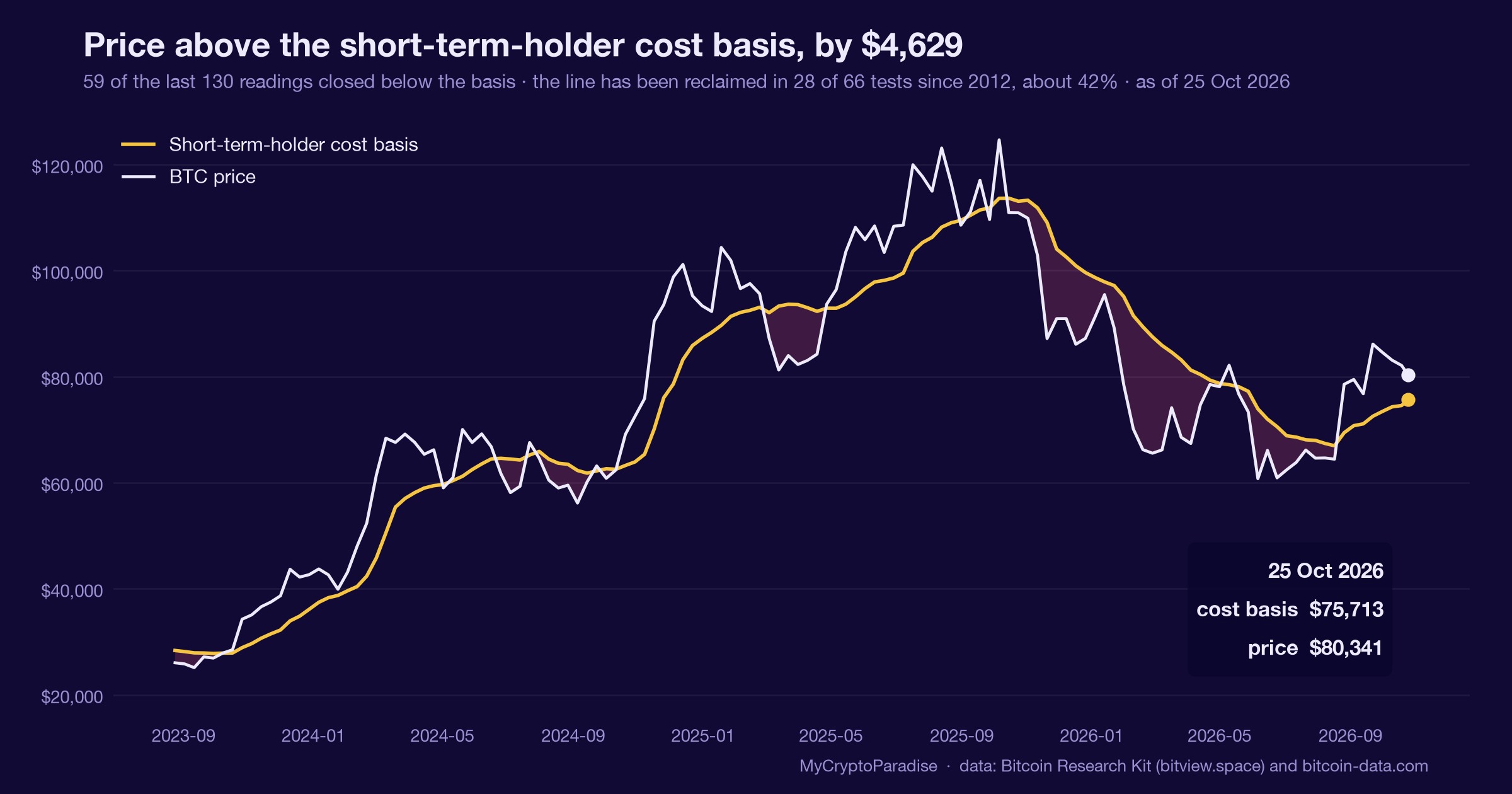
The first thing to track is whether Bitcoin can hold. BTC near $75,956 is the gravity for every alt on the board. If it loses the $58,000 prior low, the whole risk complex likely follows, and no single-coin vote will save it.
On the upside, reclaiming resistance would matter. A clean reclaim of $79,000, held with genuine buying volume rather than a thin wick, is the first thing that would soften the bearish case. Until then, strength is suspect.
For ZEC specifically, watch how the 48% pump behaves from here. A confirmation of real demand looks like higher lows and rising spot volume, not a single vertical candle on futures. Distribution looks like the opposite: price stalling above $800 while volume fades and open interest stays bloated.
Watch the ETF headline too. A Grayscale conversion is a slow bureaucratic process, not an overnight buy trigger. If the crowd trades the filing as if approval is imminent, that gap between the press release and the timeline is where late buyers usually get hurt.
Invalidation of our cautious read is straightforward and we will say so if it happens. If Bitcoin stabilizes, reclaims $79,000 with whale support, and ZEC holds its gains on expanding spot demand, the distribution thesis weakens.
Confirmation is the quieter, more likely path: BTC grinds lower toward the $55,000 to $44,000 zone, the ZEC pump bleeds out, and the vote becomes a footnote to a regulation-driven flush.
What a 48% pump means at these levels
The ParadiseTeam frames this through one lens: a bullish coin story landed inside a bearish macro. With BTC near $75,956 and the Clarity Act failure pulling risk lower, we read the ZEC spike as retail providing exit liquidity, not the start of a trend.
On the macro map, $79,000 is resistance and $82,000 the prior high we do not expect to break. The $58,000 prior low looks vulnerable, with a downside zone of $55,000 to $44,000 in view. That backdrop caps how much a single-coin rally can achieve.
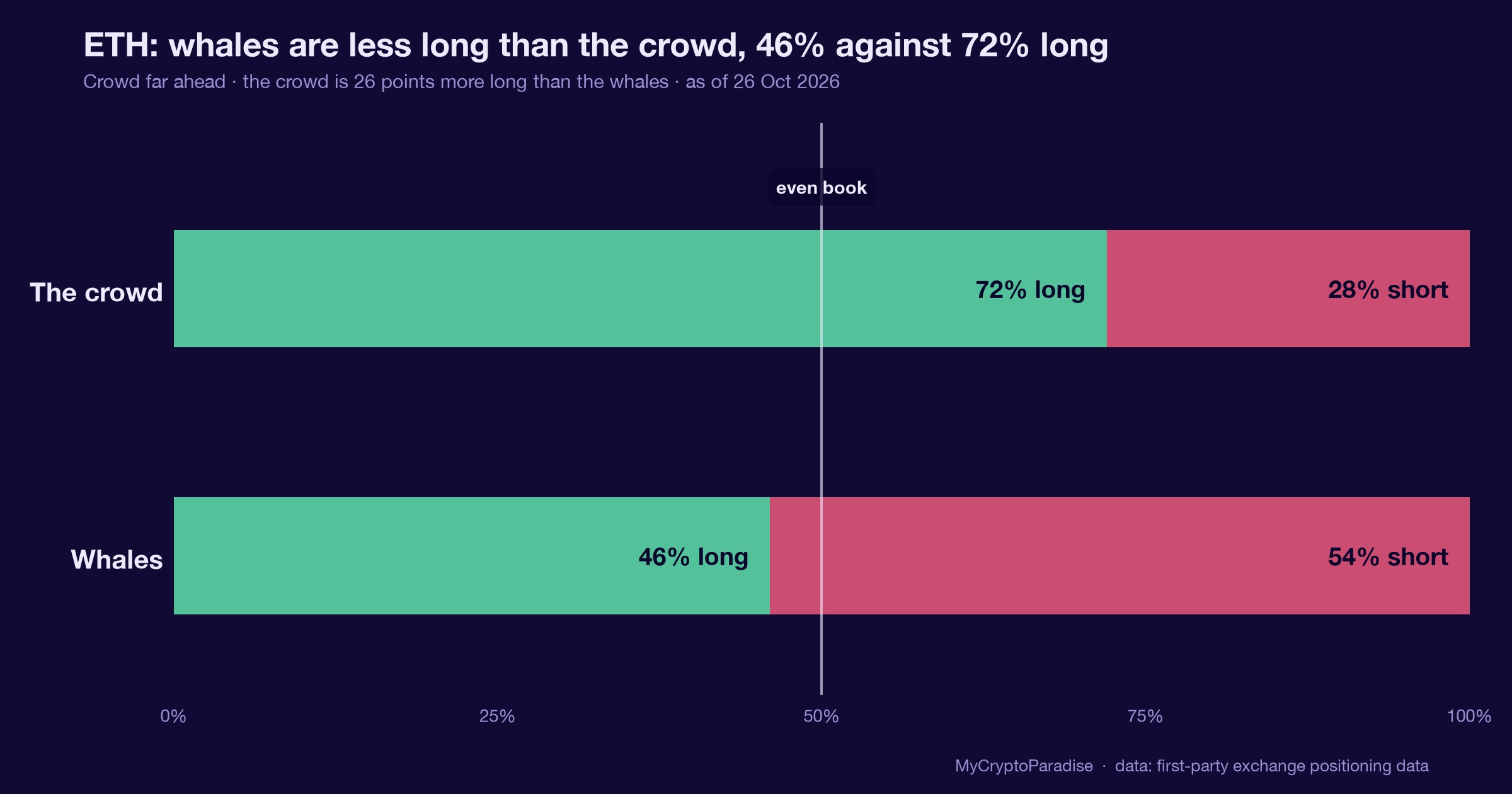
Here is the mechanism. Whales distributed heavily on the higher timeframes and are selling into strength. A 48% ZEC pump above its 2018 peak, on billions in futures volume, is precisely the deep, eager book that lets large holders offload. The crowd feels fear on BTC but greed on the "next Bitcoin" line, and that split is the fuel.
Stops tell the story. Late longs chasing ZEC parked their risk just below the breakout, a tidy pool of liquidity beneath price. On BTC, longs clustered above support just got wiped for $570 million.
We are not calling a top on ZEC, and we do not chase pumps into a falling market. The vote is a real long-term positive. Near term, we treat strength as suspect until Bitcoin reclaims $79,000 with genuine whale support. Probabilities, not certainty, and risk first.
The read behind this: we framed this story through our own market analysis, Can Bitcoin Rally From Extreme Fear?
Track it live: our live crypto funding rates and the crypto liquidation heatmap both update in real time, so you can watch this shift for yourself.
Related coverage
For exact entries, targets, and stop losses with full risk management, that is what ParadiseFamilyVIP is for. New to reading these moves? Start with our crypto trading strategies guide.
ParadiseTeam is monitoring the market situation closely, and we are taking these developments into consideration while building our trading tactics inside ParadiseFamilyVIP.
Crypto trading involves substantial risk. Prices are volatile and you can lose money. This article is educational and is not financial advice. Past performance does not guarantee future results.
After the 48% pop, where does ZEC go from here as the macro tape stays heavy?
How 19 Paradisers are calling it
The first call is still open
Free account, no password. Members just sign in.









Join the discussion 4
The ZEC pump feels super sus 🤨 how can it jump so much on a vote outcome when the Clarity Act failure hit BTC hard? Something is not adding up 🤔.
ZEC's pump after that vote seems like pure speculation trying to front-run the halving narrative.. it doesn't add real purchasing power.
Nah Carlos, it's not sus. 🙅🏾♀️ ZEC holders actually voted for changes that improve tokenomics, making it more scarce, thats why it pumped 🚀. Big difference from Clarity Act noise affecting BTC. 🤷🏾♀️
seen this before... a temporary high... brings me back to the noisy rigs in the garage.