

Listen: the breakdown
Developing story update (September 16, 2026, 22:24 UTC):
Our sources confirm new details in the Orlen-Venezuela oil deal. An additional $100 million was transferred to Horizon Global, one of the Dubai-based intermediaries involved in the transactions. This expands the scope of the funds under investigation beyond the initial $230 million loss by Orlen.
Further clarification indicates that while Orlen’s $230 million advance payment was made in USDT, Venezuela’s state oil company PDVSA never received these funds. This suggests the money was lost to intermediaries rather than reaching the intended seller, highlighting the risks in complex, sanction-circumventing transactions.
This development reinforces the ongoing concerns regarding stablecoin usage in high-risk, unregulated environments. Traders should continue to monitor regulatory responses to such incidents, as they contribute to the broader narrative of crypto’s challenges in illicit finance and sanction evasion.
What to watch now: Traders should monitor for further investigations into the flow of these additional funds and any subsequent regulatory actions impacting stablecoin usage in cross-border transactions.
Developing story update (September 16, 2026, 22:03 UTC):
Samer Awad, the former Orlen Trading Switzerland executive who orchestrated the $230 million Venezuelan oil deal, along with other former OTS executives, has now been formally charged with criminal mismanagement. This development moves the case beyond initial investigation into active prosecution.
This legal action confirms a significant escalation in the fallout from the failed transaction, highlighting the personal accountability being sought for the substantial financial loss incurred by the Polish state energy company.
Traders should monitor the progression of these charges, as they underscore the increasing scrutiny on transactions involving stablecoins in environments impacted by international sanctions.
What to watch now: The progression of the criminal mismanagement charges against the former Orlen Trading Switzerland executives.
Developing story update (September 16, 2026, 21:22 UTC):
New details have emerged regarding the $230 million USDT payment by Orlen Trading Switzerland for undelivered Venezuelan oil. Samer Awad, a former OTS executive, has been identified as the orchestrator of the trade, with OTS transferring $230 million to Hannon International and an additional $100 million to Horizon Global.
Venezuela’s state oil company PDVSA has now explicitly confirmed that it never received the funds, reinforcing the non-delivery aspect of the deal. This direct statement from PDVSA adds a critical layer of confirmation to the ongoing investigation.
These developments underscore the inherent risks associated with large-scale, cross-border stablecoin transactions, particularly when navigating sanction environments. Traders should continue to monitor regulatory responses and the broader implications for stablecoin adoption and oversight.
What to watch now: Further details from the Polish investigation and any potential international regulatory responses to the use of stablecoins in such transactions.
Developing story update (September 16, 2026, 21:01 UTC):
Our sources confirm the $230 million advance payment for Venezuelan oil that was never delivered is part of a larger financial hit for Poland’s state energy company Orlen. Total losses for Orlen related to failed oil deals have now reached $424 million.
Additionally, another Dubai-based intermediary, Horizon Global, has been identified as involved in the deal, alongside Hannon International. This expands the network of entities under scrutiny in the ongoing investigation.
What to watch now: Traders should monitor for further details on the $424 million in total losses and any new entities implicated in the broader investigation.
Developing story update (September 16, 2026, 20:41 UTC):
In a new development, Venezuela’s state oil company PDVSA has officially stated it never received the $230 million in USDT paid by Poland’s Orlen for oil that was never delivered. This clarifies the chain of events, indicating the funds were lost or diverted before reaching the intended seller.
For traders, this reinforces the narrative of significant mismanagement and potential fraud within the Orlen deal. It suggests the funds may have been misappropriated by intermediaries rather than being lost in a failed transaction with PDVSA directly.
This update, while significant to the investigation, is unlikely to be a direct catalyst for major market movements in BTC or ETH. The incident continues to highlight counterparty risks in less regulated cross-border transactions.
What to watch now: Watch for further details from Polish prosecutors and any additional statements from PDVSA or Orlen regarding the missing funds.
Developing story update (September 16, 2026, 20:00 UTC):
Our sources confirm new details regarding the $230 million advance payment for Venezuelan oil that was never delivered. Dubai-based intermediary Hannon International received the full $230 million, while Horizon Global received an additional $100 million related to the deal.
This clarifies the distribution of funds among the intermediaries involved in the transaction, which was largely conducted in Tether USDT due to US sanctions on Venezuela’s state oil firm PDVSA.
What to watch now: Watch for further investigations into the flow of funds to these intermediaries and potential recovery efforts.
Developing story update (September 16, 2026, 19:39 UTC):
Our sources confirm new details regarding the failed Orlen oil deal. An additional Dubai-based intermediary, Horizon Global, has been identified as involved in the transactions.
Further investigation reveals there was no prior relationship between Orlen Trading Switzerland (OTS) and Hannon International, the primary trader, highlighting a significant lack of due diligence in the $230 million advance payment.
What to watch now: Watch for further details on the ongoing investigation and any additional parties implicated in the deal's execution.
Developing story update (September 16, 2026, 18:37 UTC):
An update on this story: Venezuela’s state oil company PDVSA has now stated it never received the money at all. That is a meaningful detail. It means the roughly $230 million did not simply buy oil that failed to ship, it appears to have gone missing somewhere in the chain of Dubai based intermediaries the funds were routed through, with the seller side saying nothing ever arrived on its end.
For traders the takeaway is unchanged in direction but sharper in tone. This is an isolated fraud and mismanagement case, not a live catalyst moving major coins, and near term price action stayed flat on the hour we checked. Based on our sources it is the kind of headline regulators will keep citing when they argue for tighter stablecoin oversight, so treat it as slow burn regulatory fuel rather than a reason to change positioning today.
What to watch now: Whether prosecutors trace where the wired USDT actually ended up once PDVSA is on record denying receipt.
Developing story update (September 16, 2026, 18:16 UTC):
Update: the scope of the loss is now larger than the headline figure. The failed Venezuelan oil deal has left the Polish state energy company with total losses of about $424 million, with the $230 million paid in USDT representing only the upfront advance portion.
For traders, the takeaway is unchanged in direction but heavier in weight. A bigger confirmed loss gives regulators more reason to scrutinize stablecoin settlement and large off-chain transfers, which probably keeps this story alive as a source of headline risk rather than a one-day event.
What to watch now: Watch whether the larger $424M figure draws formal regulatory comment on stablecoin settlement rather than just prosecutor action.
Developing story update (September 16, 2026, 17:55 UTC):
Update: based on our sources, the exposure in this case appears larger than the original $230 million figure. Orlen’s trading arm reportedly wired a further $100 million to a second intermediary, named Horizon Global, separate from the $230 million advance sent to Hannon.
That would put total funds moved through these intermediaries at roughly $330 million. The core facts are unchanged: the Venezuelan oil was never delivered, PDVSA says it never received the money, and Polish prosecutors continue to investigate the crypto transfers and the charged former executives.
What to watch now: Whether prosecutors confirm the $100 million Horizon Global leg and whether total exposure climbs beyond $330 million.
Developing story update (September 16, 2026, 17:33 UTC):
New detail has surfaced on the flow of the $230 million. Based on our sources, Orlen’s trading subsidiary wired the full advance to a Dubai-based entity, Hannon, with no collateral and no parent-company guarantee behind it. That structure is what left the funds fully exposed once the oil failed to arrive.
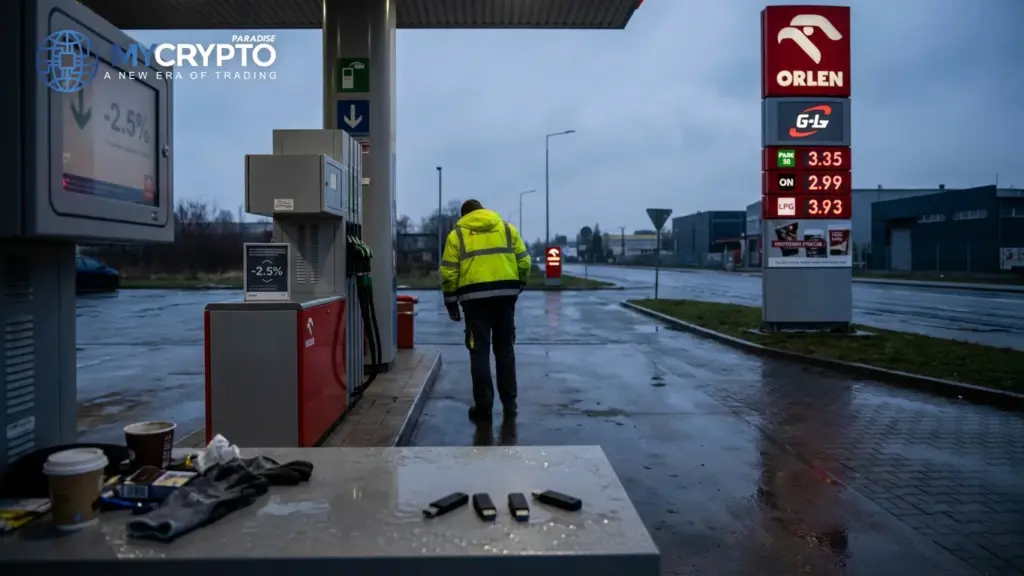
Venezuela’s state oil firm PDVSA has now stated it never received the money at all, which points to the value leaking somewhere between the Dubai intermediary and the intended seller rather than being a straightforward buyer-seller dispute. The USDT is reported to have changed hands physically on USB drives in Caracas hotel rooms.
For traders the takeaway is unchanged in direction but sharper in degree: this is another high-profile case tying stablecoin rails to sanctions-evasion and outright loss, which probably strengthens the case for tighter stablecoin scrutiny. It is unlikely to be a direct driver of BTC or ETH price, but it feeds the regulatory-risk narrative smart money is already leaning on.
What to watch now: Whether prosecutors trace where the USDT actually went after leaving the Dubai entity, and any move toward broader stablecoin oversight.
Developing story update (September 16, 2026, 16:50 UTC):
An additional detail has surfaced on the structure of this failed oil transaction. Based on our sources, the funds moved through more than one Dubai-based intermediary: alongside the previously named Hannon, a second entity called Horizon Global was part of the chain that handled the arrangement orchestrated by former OTS executive Samer Awad.
For traders the read is unchanged. This remains an illicit-finance and sanctions-evasion story attached to stablecoins rather than a direct market catalyst, and price action stayed flat with Bitcoin near $75.7k and Ethereum near $2.39k. The added intermediary widens the surface area a Polish prosecution can pursue, which probably keeps regulatory-scrutiny headlines on stablecoins alive in the near term.
What to watch now: Whether prosecutors name further intermediaries or freeze funds tied to Horizon Global or Hannon.
Developing story update (September 16, 2026, 16:07 UTC):
UPDATE: The case has moved beyond investigation. Polish prosecutors have now formally charged the former Orlen Trading Switzerland executive who orchestrated the deal, along with other ex-executives, with criminal mismanagement over the failed $230 million advance payment.
Separately, Venezuela’s state oil company PDVSA has stated it never received the money, deepening the dispute over where the stablecoin transfer actually landed. For traders, this hardens the regulatory narrative around stablecoins in sanctions-adjacent flows, a story that could be leaned on to justify tighter oversight.
What to watch now: Whether the criminal charges or the PDVSA denial trigger any fresh stablecoin regulatory commentary.
Developing story update (September 16, 2026, 15:02 UTC):
Update: the previously unnamed Dubai counterparties in this deal have now been identified. Based on our sources, the failed oil trade ran through Dubai-based intermediaries and brokers named as Hannon and Horizon Global, giving the $230 million in USDT a clearer path off Poland’s books and into an unregulated broker network.
A former Orlen Trading Switzerland executive, Samer Awad, is now named as the person who orchestrated the trade. For traders this sharpens rather than changes the lesson: large stablecoin settlements routed through opaque brokers with no bank guarantee or collateral carry counterparty risk that only becomes visible once names attach to the losses. Nothing here changes the sanctions backdrop or the fact that the oil was never delivered.
What to watch now: Whether Polish prosecutors extend charges to the named Dubai brokers and executive as the crypto trail is traced.
Developing story update (September 16, 2026, 14:41 UTC):
The Polish case has moved past the investigation stage. Based on our sources, prosecutors have now charged former Orlen Trading Switzerland executives with criminal mismanagement tied to the $230 million payment for Venezuelan oil that was never delivered. This shifts the story from an open probe to formal criminal exposure for the individuals who signed off on the deal.
For traders the read is unchanged but reinforced: the legal fallout keeps a spotlight on stablecoins being routed around sanctions, which likely keeps regulatory-risk sentiment elevated around USDT. Price action stays muted for now, with BTC near $75,600, so this reads as a background sentiment factor rather than an immediate catalyst.
What to watch now: Whether charges widen to counterparties or trigger fresh stablecoin sanctions-compliance scrutiny.
Developing story update (September 16, 2026, 13:17 UTC):
Update: the case has moved from investigation to formal charges. Polish prosecutors have now charged a former executive of the trading unit behind the deal, along with other former executives, with criminal mismanagement, based on our sources. The individuals deny the allegations.
New detail on the money trail also emerged: the $230 million was wired to a counterparty with no collateral, no parent guarantee, and no prior trading relationship, which is central to the mismanagement case rather than a failure of the stablecoin itself.
For traders the read stays the same. This is looking like alleged fraud and internal control failure, not a systemic crypto breakdown, but the USDT-on-USB-drives angle keeps stablecoins in the regulatory crosshairs and can feed short-term FUD that smart money uses for liquidity.
What to watch now: Whether the criminal case widens to new named parties or triggers fresh regulatory action on stablecoin controls.
Developing story update (September 16, 2026, 12:13 UTC):
Update: the scope of this case is larger than first reported. Beyond the $230 million advance, a further $100 million was routed to a separate Dubai-based entity, Horizon Global, according to our sources, widening the total exposure tied to the failed Venezuelan oil deal.
The Polish probe has also hardened into action. Prosecutors have now formally charged Samer Awad, the former Orlen Trading Switzerland executive who orchestrated the trade, along with other former OTS executives, with criminal mismanagement. For traders, this shifts the story from an isolated scandal toward a live legal case, the kind of stablecoin-in-the-grey-zone narrative that tends to feed regulatory pressure rather than ease it.
What to watch now: Watch whether the charges expand to name additional intermediaries or trigger fresh stablecoin oversight rhetoric from EU regulators.
Developing story update (September 16, 2026, 11:51 UTC):
Update: Venezuela’s state oil company PDVSA has now publicly stated it never received the roughly $230 million payment tied to the failed oil deal, according to our sources. That places the funds somewhere between the Polish payer and the intermediaries handling the Tether transfers, rather than with the intended oil supplier.
For traders, the takeaway is unchanged but sharper: a named state actor distancing itself from the money raises the odds of a wider probe into the stablecoin trail. Treat this as added regulatory-narrative risk around USDT settlement in sanctioned trade, not a direct price catalyst.
What to watch now: Whether prosecutors trace where the $230M in USDT actually landed after leaving PDVSA's expected path.
Developing story update (September 16, 2026, 10:46 UTC):
The scale of the outflow looks larger than first reported. Beyond the $230 million wired to the Dubai intermediary Hannon, an additional $100 million was moved to a second Dubai-based entity, Horizon Global, based on our sources. That puts the total funds routed offshore through this failed oil trade well above the headline loss figure.
Venezuela’s state oil firm PDVSA has now stated it never received the money, sharpening the fraud picture: the payments left in stablecoin, the oil never shipped, and the supposed seller says the cash never arrived. For traders the read is unchanged but reinforced. This remains an isolated due-diligence and counterparty failure rather than a flaw in the asset itself, though it likely adds to the case regulators are building around stablecoin flows tied to sanctioned entities.
What to watch now: Whether prosecutors trace or freeze the additional $100 million sent to Horizon Global, and any move toward stablecoin-transfer rules.
Developing story update (September 16, 2026, 10:24 UTC):
Update: The case has moved from investigation into a formal charge. Samer Awad, the former Orlen Trading Switzerland executive who arranged the $230 million Venezuelan oil advance, has now been charged with criminal mismanagement over the failed deal. Prosecutors continue to examine the crypto transactions tied to the payment.
Based on our sources, the money trail is also wider than first reported. Alongside the Dubai intermediary Hannon, a second Dubai-based entity, Horizon Global, is now named as a recipient of funds from the deal. For traders this keeps the theme squarely on stablecoin flows used to route around sanctions, and it likely feeds the case for tighter scrutiny of crypto intermediaries rather than any direct price catalyst.
What to watch now: Whether charges or asset-freeze actions extend to the Dubai intermediaries and widen the stablecoin sanctions-evasion probe.
Developing story update (September 16, 2026, 08:55 UTC):
Update: the traced outflow on this failed oil deal is now larger than first reported. Alongside the $230 million wired to the Dubai intermediary Hannon, a further $100 million was routed to a second Dubai-based intermediary, Horizon Global, based on our sources. That lifts the total funds that left the Polish state trader to roughly $330 million.
Separately, Venezuela’s state oil company PDVSA has now stated it never received the expected payments, which sharpens this as a funds-in, oil-out failure with money missing on both ends. For traders the read is unchanged: this is an isolated fraud and sanctions-evasion case, not a direct BTC or ETH catalyst, but it adds to the regulatory-risk narrative around stablecoins that smart money can lean on.
What to watch now: Whether prosecutors trace the additional $100 million and name where the combined $330 million ultimately settled.
Developing story update (September 16, 2026, 08:11 UTC):
An update to this story: a former executive at the Polish energy firm’s Swiss trading arm has now been named as the person who orchestrated the failed oil trade. This puts a specific individual at the center of the $230 million loss for the first time, rather than only the Dubai intermediaries previously identified.
For traders, the takeaway is unchanged but sharper. When a named insider is tied directly to a USDT settlement that vanished, expect regulators and the press to lean harder on the stablecoin angle. That keeps illicit-finance headlines in play as a slow-drip pressure on sentiment, even if it is unlikely to be a same-day catalyst for BTC or ETH.
What to watch now: Whether prosecutors formally charge the named executive or trace the USDT further downstream.
Developing story update (September 16, 2026, 07:48 UTC):
Update: Venezuela’s state oil company PDVSA has now publicly stated that it never received the roughly $230 million tied to the failed oil deal. That claim sharpens the picture of the funds disappearing somewhere between the Polish buyer and the intended seller, with the USDT having moved through Dubai-based intermediaries.
For traders, the takeaway is unchanged but reinforced: this is a case of alleged fraud around sanction-adjacent flows, not a failure of the stablecoin itself. It is likely to keep feeding the regulatory-scrutiny narrative around large stablecoin transfers rather than act as a direct price catalyst.
What to watch now: Whether the Polish investigation names where the $230M in USDT ultimately settled after the Dubai intermediaries.
Developing story update (September 16, 2026, 07:03 UTC):
Prosecutors have now formally charged Samer Awad, the former Orlen Trading Switzerland (OTS) executive who orchestrated the failed Venezuelan oil deal, along with other former OTS executives, with criminal mismanagement. This escalation from investigation to formal charges signals a more serious legal consequence for those involved.
New information also confirms that Venezuela’s state oil company, PDVSA, did not receive the expected payments, highlighting the complete failure of the $230 million USDT transaction from both the buyer’s and seller’s perspectives.
This development further underscores the inherent risks of using stablecoins in complex, opaque international trade deals, potentially fueling increased scrutiny and calls for enhanced regulatory frameworks around digital assets.
What to watch now: Monitor the legal proceedings against the former OTS executives and any further regulatory responses concerning stablecoin use in international trade.
Developing story update (September 16, 2026, 05:58 UTC):
The investigation has now put a name to the person who set up the failed deal. A former executive at the Polish trading subsidiary, Samer Awad, is identified as having orchestrated the oil trade that cost the state group roughly $230 million in stablecoin advances for barrels that never arrived.
For traders the takeaway is unchanged but sharper: this remains a localized fraud story, not a structural problem with stablecoins themselves. Naming an individual moves it from anonymous scandal toward accountable prosecution, which is the direction that tends to defuse blanket regulatory overreaction rather than provoke it.
What to watch now: Whether prosecutors move from investigation to formal charges against the named former executive.
Developing story update (September 16, 2026, 05:37 UTC):
Update: Venezuela’s state oil company PDVSA has stated it never received the expected payments for the cargo, based on our sources. That detail matters because it places the missing $230 million with the Dubai-based intermediaries rather than at the seller’s end, meaning both the buyer and the sanctioned producer say they saw neither the oil nor the money.
For traders the read is unchanged. This remains a localized fraud and sanctions-evasion case rather than a systemic stablecoin failure, and the small moves in BTC around $75.8k and ETH near $2,402 are not attributable to this story. The likely second-order risk is regulatory rhetoric around stablecoin misuse, which probably keeps headline pressure on sentiment without a direct price catalyst.
What to watch now: Watch for any regulator or Orlen official statement naming Tether or the intermediaries, as that would be the first real escalation catalyst.
Developing story update (September 16, 2026, 04:56 UTC):
The failed Venezuelan oil deal now has a named figure attached to it. Based on our sources, a former Orlen Trading Switzerland executive, Samer Awad, is identified as having helped orchestrate the trade that saw roughly $230 million routed out in stablecoin and never returned. The reporting also places the loss in late 2023, giving the timeline a firmer anchor.
For traders the read does not change materially. A named insider tightens the counterparty-risk story around large stablecoin settlement in sanctioned trade flows, and it keeps the compliance and scrutiny narrative alive, but it is not a fresh market catalyst on its own.
What to watch now: Whether prosecutors move from investigation to named charges against former OTS personnel.
Developing story update (September 16, 2026, 04:14 UTC):
Based on our sources, the exposure on this failed Venezuelan oil deal is larger than the headline $230 million. On top of that first advance, the Polish energy firm’s trading arm wired a further $100 million to a second Dubai-based intermediary for crude that also never arrived, bringing the combined loss well above the figure first reported.
For traders the read is unchanged but reinforced: this is a governance and due-diligence failure at a state-controlled buyer, not a flaw in the stablecoin itself, though the growing dollar figure gives regulators more to point at when arguing for tighter oversight of stablecoins in cross-border settlement. Expect the story to keep feeding compliance-driven caution rather than a direct price catalyst.
What to watch now: Watch whether Polish prosecutors trace the additional $100 million and name further intermediaries.
Developing story update (September 16, 2026, 03:54 UTC):
There is now a legal escalation in the case tied to the vanished $230 million Venezuelan oil payment. Based on our sources, former executives at Orlen Trading Switzerland, including the executive who ran the deal, have been charged with criminal mismanagement. That moves the matter from an internal probe into formal criminal proceedings.
For traders, the takeaway is that regulatory and legal exposure around large USDT-settled cross-border deals is hardening into named charges, not just an open investigation. This keeps stablecoin scrutiny in the headlines and adds to the case regulators cite when pushing tighter oversight, a factor that can weigh on sentiment even without a direct price catalyst.
What to watch now: Whether the criminal charges widen to name additional parties or trigger fresh statements from Orlen, PDVSA, or Polish prosecutors.
Developing story update (September 16, 2026, 03:33 UTC):
Update: the failed Venezuelan oil deal is now tied to a specific named actor. The trade was orchestrated by Samer Awad, a former executive at Orlen Trading Switzerland, according to what we are seeing. This puts a name on the misconduct that Polish prosecutors have been probing after charging former OTS executives with criminal mismanagement.
For traders the core facts are unchanged: roughly 230 million dollars, largely in Tether USDt converted to dollars and loaded onto USB drives in Caracas, plus a further 100 million to a second Dubai intermediary, all for oil that never loaded. The new detail sharpens the sanctions-evasion and stablecoin-misuse narrative that regulators can point to, which likely keeps pressure on the compliance debate around USDT rather than moving price directly.
What to watch now: Whether Polish prosecutors formally name Samer Awad in charges and whether more intermediaries surface.
Developing story update (September 16, 2026, 03:12 UTC):
The case has moved past the investigation stage. Based on our sources, Polish prosecutors have now charged former executives of the Orlen trading subsidiary with criminal mismanagement over the $230 million that was paid in USDT for crude oil that never arrived. A move from probing to formal charges is the kind of escalation that keeps regulatory attention on stablecoin settlement of large, opaque transactions.
Separately, Venezuela’s state oil company PDVSA has stated it never received the expected payments, which sharpens the picture that the funds went to the Dubai-based intermediaries rather than the oil supplier itself.
What to watch now: Whether the criminal charges expand to the Dubai intermediaries and any tracing of the $230 million in USDT.
Developing story update (September 16, 2026, 02:51 UTC):
Based on our sources, the exposure in the failed Venezuelan oil deal is larger than the headline $230 million. Beyond the payment routed to the first Dubai-based intermediary, a further $100 million was sent to a second Dubai-based intermediary, Horizon Global, for crude that also never arrived.
For traders, this widens the scope of the loss and the compliance story around it. A second failed transfer to a separate offshore intermediary points to a pattern rather than a one-off, which likely deepens the Polish prosecutors’ probe into the crypto transactions and reinforces the regulatory scrutiny risk around stablecoin settlement in sanctions-adjacent deals.
What to watch now: Whether prosecutors expand the probe to trace the additional $100M to Horizon Global and any further intermediaries.
Developing story update (September 16, 2026, 02:30 UTC):
The story has moved from investigation into charges. Based on our sources, former executives at the Polish trading subsidiary, including one named Samer Awad, have now been charged with criminal mismanagement tied to the failed $230 million Venezuelan crude payment that used USDT. This is the first time named individuals face criminal liability rather than the matter sitting at the prosecutor inquiry stage.
For traders the read is unchanged but reinforced: this is an institutional due-diligence failure, not a flaw in the stablecoin itself. It does, however, add fresh material to the regulatory-scrutiny narrative around large, sanctions-adjacent stablecoin settlement, which can keep cautious sentiment elevated at the margins.
What to watch now: Whether charges widen to more named individuals or trigger new stablecoin settlement scrutiny in the EU.
Market briefing: A Polish state energy firm lost $330 million on Venezuelan oil paid largely in USDT that never arrived. Bitcoin was trading near $75,549, down 3.1% on the day, with the market already nervous.
- Orlen's Swiss trading arm paid $230M, largely in USDT, for Venezuelan crude that never shipped.
- A second $100M went to another Dubai intermediary for oil that also failed to arrive.
- Polish prosecutors have charged former executives; the USDT angle feeds fresh stablecoin scrutiny.
A Polish state energy firm's USDT oil deal turned into a $330 million hole with nothing delivered. Does a fraud this large actually move Bitcoin, or just the headlines?
A Polish state energy company just learned an expensive lesson about paying up front. Orlen's Swiss trading arm, OTS, wired $230 million for Venezuelan crude oil. The oil never arrived.
Most of that advance was made in Tether's USDT. The money went to a Dubai-based intermediary named Hannon. A further $100 million went to a second Dubai firm, Horizon Global, for a shipment that also never materialised. The running total is a $330 million loss.
Why pay in stablecoins at all? US sanctions had blocked Venezuela's state oil company, PDVSA, from ordinary dollar transactions. So the deal reached for crypto rails to move value that banks would not touch. PDVSA, for its part, says it never received the expected payments.
Polish prosecutors are now investigating the crypto transfers tied to the failed trade. A former OTS executive, Samer Awad, is named as the person who orchestrated it. Prosecutors have charged him and other former executives with criminal mismanagement. They deny the allegations.
The structural point matters more than the theatre. A state-controlled entity sent hundreds of millions across borders in USDT, on trust, to a counterparty founded barely two and a half years earlier. There was no delivery, and there was no easy recourse.
That is the story regulators will remember. Not the yacht, not the couriers, but a nine-figure loss that ran through a stablecoin because the traditional system was closed. For a market already defensive, it is one more brick in the "crypto and illicit finance" wall.
Why regulators will seize on the USDT angle
The mechanism here is scrutiny, not price. A state entity losing $330 million through USDT is exactly the case study regulators use to justify tighter stablecoin rules. It links crypto rails directly to sanctions circumvention and a nine-figure fraud.
That framing travels. When policymakers debate stablecoin oversight, they reach for concrete disasters, and this one arrives gift-wrapped. Expect the story to surface in future hearings on custody, transaction transparency, and cross-border flows.
The transmission to markets is slow and indirect. Harder rules do not hit Bitcoin's price this week. They raise the perceived compliance cost of using crypto for large institutional value transfer, which cools one adoption channel over quarters, not days.
There is also the sentiment layer, and it is the faster one. Retail reads "$330 million lost in crypto oil scam" and hears confirmation of every fear. That feeds the "crypto is dangerous" narrative just as ETF outflows near $500 million signal people already want the exit.
So the honest read is this. The fraud itself did not move Bitcoin. There is no single confirmed same-day catalyst behind today's drop. But the event thickens a bearish mood that was already forming, and mood is what smart money trades against.
How the fear feeds an already defensive tape
Bitcoin was trading near $75,549, down 3.1% on the day, with Ether off 4.9% near $2,394. This news did not cause that. It arrives into it.
The liquidity path runs through sentiment first. A high-profile crypto fraud gives cautious institutions one more reason to slow allocation and one more headline to point at internally. That trims the marginal buyer at the top of the book.
Bitcoin absorbs that pressure first, because it is the reference asset and the deepest market. When confidence thins, capital defends BTC and abandons the edges. Ether's steeper drop today shows that hierarchy in action.
Alts sit at the bottom of the cascade. They rely on risk appetite spilling down from BTC, and stories like this shut that tap. Thin order books mean small outflows produce outsized moves, so the tail of the market feels the fear most.
Stablecoins carry a quieter, specific risk here. USDT is the plumbing for most crypto liquidity. Any narrative tying it to sanctions evasion invites headline risk, even when the token functioned exactly as designed and the humans failed around it.
The blunt truth: money was lost by people, not by the technology. USDT moved the value it was told to move. The oil is the part that never showed up. But markets rarely pause to make that distinction when the number has nine figures.
The signals that turn scrutiny into policy
Watch the regulatory response, because that is where this story either grows or fades. Concrete follow-through, formal stablecoin proposals, subpoenas to exchanges, or coordinated action across jurisdictions, would confirm the scrutiny narrative and keep pressure on sentiment.
If the case stays a Polish criminal matter about mismanagement, the market impact stays local. A fraud prosecution is not the same as a policy shift, and traders should not conflate the two.
On price, the levels do the confirming. A clean daily close back above $79,000 would say the bearish narrative has not captured the tape, and that this headline had no lasting bite.
Invalidation of the broader bearish structure is higher up. A weekly reclaim of the $82,000 to $88,000 zone into support would flip the medium-term read and strip this story of any weight it borrowed from the mood.
The downside confirmation is cleaner to spot. A daily bearish engulfing candle, then a loss of the $61,000 reaccumulation zone, would open the path toward $58,000 and, on the extreme, the longer-term $44,000 target.
Also watch stablecoin flows and any wobble in USDT's peg or redemption chatter. There is no sign of stress today. But headline risk around the plumbing is worth monitoring, because that is the one channel where this story could turn from noise into something structural.
What the loss signals for liquidity and positioning
The ParadiseTeam treats this as sentiment, not structure. With Bitcoin near $75,549 and Ether under $2,400, nothing about our levels changes because a Polish oil trade collapsed. What changes is the emotional weather, and that is the part worth reading.
Smart money distributed into the $79,000 zone, the previous distribution area and the 0.618 retracement, and is now waiting for confirmation. Stories like this do the waiting for us. They keep retail defensive, which is precisely the backdrop that lets larger players sell strength without a chase.
The reframe matters. Bearish headlines land hardest when the crowd is already scared, and ETF outflows near $500 million tell you it is. That is not a reason to short blindly. It is a reason to respect that fear can be manufactured and harvested.
Our near-term map allows a final bounce, potentially toward the 0.786 retracement, before the higher-timeframe picture reasserts itself. A reclaim of $76,000 into support would fit that script. It would not invalidate the broader caution.
The line in the sand sits above $82,000 to $88,000 on the weekly. Reclaim that as support and the bearish case weakens materially. Lose $61,000 with a daily bearish engulfing, and the path toward $58,000 and eventually $44,000 opens.
Probabilities, not promises. This headline is a mood input, and mood is exactly what disciplined positioning is built to survive.
The read behind this: we framed this story through our own market analysis, Bitcoin ETF Outflows Near $500M: Crash Next?
Track it live: our Crypto Fear and Greed Index and the live crypto funding rates both update in real time, so you can watch this shift for yourself.
Related coverage
For exact entries, targets, and stop losses with full risk management, that is what ParadiseFamilyVIP is for. New to reading these moves? Start with our crypto trading strategies guide.
ParadiseTeam is monitoring the market situation closely, and we are taking these developments into consideration while building our trading tactics inside ParadiseFamilyVIP.
Crypto trading involves substantial risk. Prices are volatile and you can lose money. This article is educational and is not financial advice. Past performance does not guarantee future results.
Will the Orlen USDT scandal push tougher stablecoin rules soon?
How 44 Paradisers are calling it
The first call is still open
Free account, no password. Members just sign in.
Follow this topic: Stablecoin news





Join the discussion 1
thats a lot of money to lose over a bad trade its hard to see how a stablecoin makes you more vulnerable to this scam though