

In short
A squeeze is a fast forced move when crowded traders get liquidated and their exits push price the same way. Funding rates are small recurring payments between long and short holders of perpetual futures, and they reveal crowd bias. A 4-part signal entry splits one trade into four staged entries, so you buy across a zone instead of one price. Together these three ideas explain why price moves violently, where the crowd is leaning, and how to enter without betting everything on a single level. Each one is a risk tool first.
Three terms do most of the heavy lifting in leveraged crypto trading: squeeze, funding rate, and the 4-part signal entry. Each one is a risk lens. Learn them once, and the daily noise gets far easier to read.
What is a squeeze in crypto markets?
A squeeze is a sharp, forced price move that happens when heavily crowded traders are liquidated at once. Their forced exits push price further in the same direction, feeding the move. A short squeeze rips price up; a long squeeze flushes it down. It is momentum built from pain, not fresh conviction.
Picture a crowded lift. When too many traders lean one way, the exit becomes narrow. A short squeeze happens when short sellers are forced to buy back, and their buying lifts price fast.
A long squeeze is the mirror image. Over-leveraged buyers get liquidated, their positions are sold, and price drops harder than the news alone would justify. The move is mechanical, not emotional.
The classic definition of a short squeeze, documented in this reference on short squeezes, comes from equities, yet crypto amplifies it with high leverage.
We watch these setups closely. Our recent reads on a large bitcoin short and a whale liquidation line show how a single crowded position can prime a squeeze.
Why does a squeeze matter for your risk?
A squeeze punishes late, over-sized entries. If you chase a vertical candle, you often buy the exact liquidity the squeeze needed. Size small, and treat a squeeze as a warning that leverage is stretched.
How do funding rates work in perpetual futures?
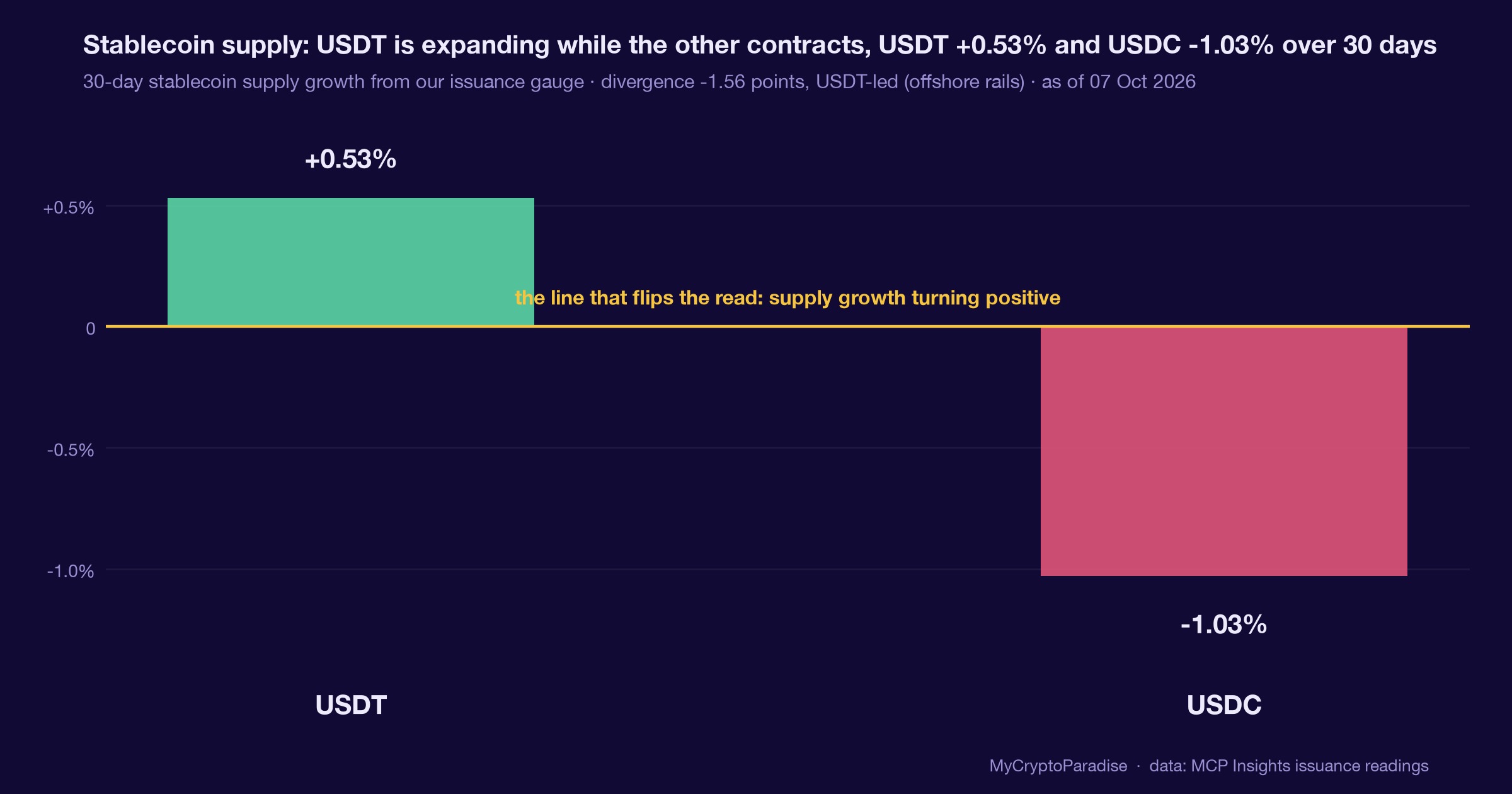
Funding rates are small periodic payments exchanged between long and short traders on perpetual futures. They keep the perpetual price close to spot. When funding is positive, longs pay shorts, which signals crowded bullish bias. When funding is negative, shorts pay longs, signalling crowded bearish bias. The rate is a crowd-positioning gauge, not a price prediction.
What is different here
The ParadiseTeam reads funding and positioning across all major exchanges before building any setup, so a single venue’s noise never decides the trade.
Most exchanges settle funding every eight hours, as set out in Binance’s funding rate documentation. The payment is tiny per cycle. Its value is as a crowd positioning signal, not a fee to fear.
| Funding rate | Who pays | Crowd signal |
|---|---|---|
| Positive | Longs pay shorts | Bullish crowding, squeeze-down risk |
| Negative | Shorts pay longs | Bearish crowding, short-squeeze fuel |
| Near zero | Minimal transfer | Balanced positioning |
When funding turns sharply negative, shorts are crowded, which can feed an upside squeeze. We unpack that link in funding and short squeezes.
What is a 4-part signal entry?
A 4-part signal entry splits one planned trade into four separate buy orders across a price zone. Instead of committing everything at one level, you scale in as price moves into your range. This lowers the cost of being early, smooths your average entry, and keeps capital in reserve if the setup needs patience.
The four staged entries usually look like this across your chosen zone:
- Entry 1: a small starter near the top of the zone.
- Entry 2: a larger add as price confirms the level.
- Entry 3: a further add deeper in the zone.
- Entry 4: a final tranche near your invalidation.
The point is not to predict the exact bottom. It is to accept that you will not, and to plan around that uncertainty. Each tranche has its own risk, so no single fill can wreck the account.
Staged entries only work with a fixed stop and pre-set size, which we cover in disciplined risk management.
If you are comparing providers, our notes on evaluating trading signals show why entry structure matters more than a flashy call.
Try mapping a squeeze, its funding backdrop, and a staged entry on a live example below.
Frequently asked questions
Is a squeeze the same as a normal breakout?
No. A breakout is driven by fresh buyers choosing to enter above a level. A squeeze is driven by trapped traders forced to exit, often through liquidation. Breakouts can hold; squeezes often reverse once the forced flow is exhausted. Treat a sharp squeeze as fragile momentum, not confirmed strength.
Does a high funding rate mean I should trade against the crowd?
Not automatically. A high positive funding rate shows crowded longs, which raises squeeze-down risk, but crowds can stay wrong for a while. Use funding as one input beside price structure and liquidity. It flags where pain is building; it does not time the reversal for you.
Why use four entries instead of one?
Because you cannot reliably pick the exact turning point. Four staged entries let you build a position across a zone, so an early fill does not force a panic exit. Your average price improves if price dips further, and reserved capital keeps you calm. It is structure that protects discipline.
Can funding rates predict a short squeeze?
They can hint at one, not guarantee it. Deeply negative funding means shorts are crowded and paying to hold, which is the fuel a short squeeze needs. If price then pushes up, those shorts may be forced to buy back. Funding shows the setup; price action confirms whether it fires.
Crypto trading involves substantial risk and is not suitable for everyone. Nothing here is financial advice; it is education only. Never risk more than you can afford to lose.






Join the discussion
No comments yet. Members, share how you are reading this.