

In short
SoFiUSD (SOFID) is a dollar-named crypto token that aims to track one US dollar in value. Its issuer decides what backs it, how you redeem it, and which rules apply. That makes it only as safe as the entity behind it. Before you hold any token like this, ask who returns your dollar and whether they can. Check the stated reserves, the redemption path, and the legal home of the issuer. Treat the dollar in its name as a claim, not a guarantee. This guide shows the exact questions to ask, in plain order.
What is SoFiUSD (SOFID) in plain terms?
SoFiUSD (SOFID) is a token designed to equal one US dollar. You hold it in a crypto wallet, and its issuer promises to honour that value. Think of it as a digital IOU for a dollar. Its strength rests entirely on who stands behind that promise.
A token like this belongs to the family of assets known as stablecoins. A stablecoin tries to stay pinned to a reference asset, usually a fiat currency. The design is simple to describe and hard to do well. Many have held their peg for years. Others have broken it in a single afternoon.
So the name tells you the goal, not the outcome. The dollar in SOFID is a target the issuer defends, not a balance in a bank you control.
What is different here
The ParadiseTeam reads a new token’s redemption terms and issuer disclosures before it ever sits near a setup. We care less about the ticker and more about who gives the dollar back.
Who issues SoFiUSD, and what backs it?
The issuer is the company or protocol that creates SOFID and promises to redeem it. What backs it could be cash, short-term government debt, other crypto, or nothing you can verify. You cannot assume. The only reliable answer comes from the issuer’s own disclosures and any independent attestation.
Strong issuers publish a reserve report and name the firm that checked it. A reserve report lists what the issuer holds against every token in circulation. An attestation is that report, reviewed by an outside accountant. Read the date. A report from last quarter tells you little about today.
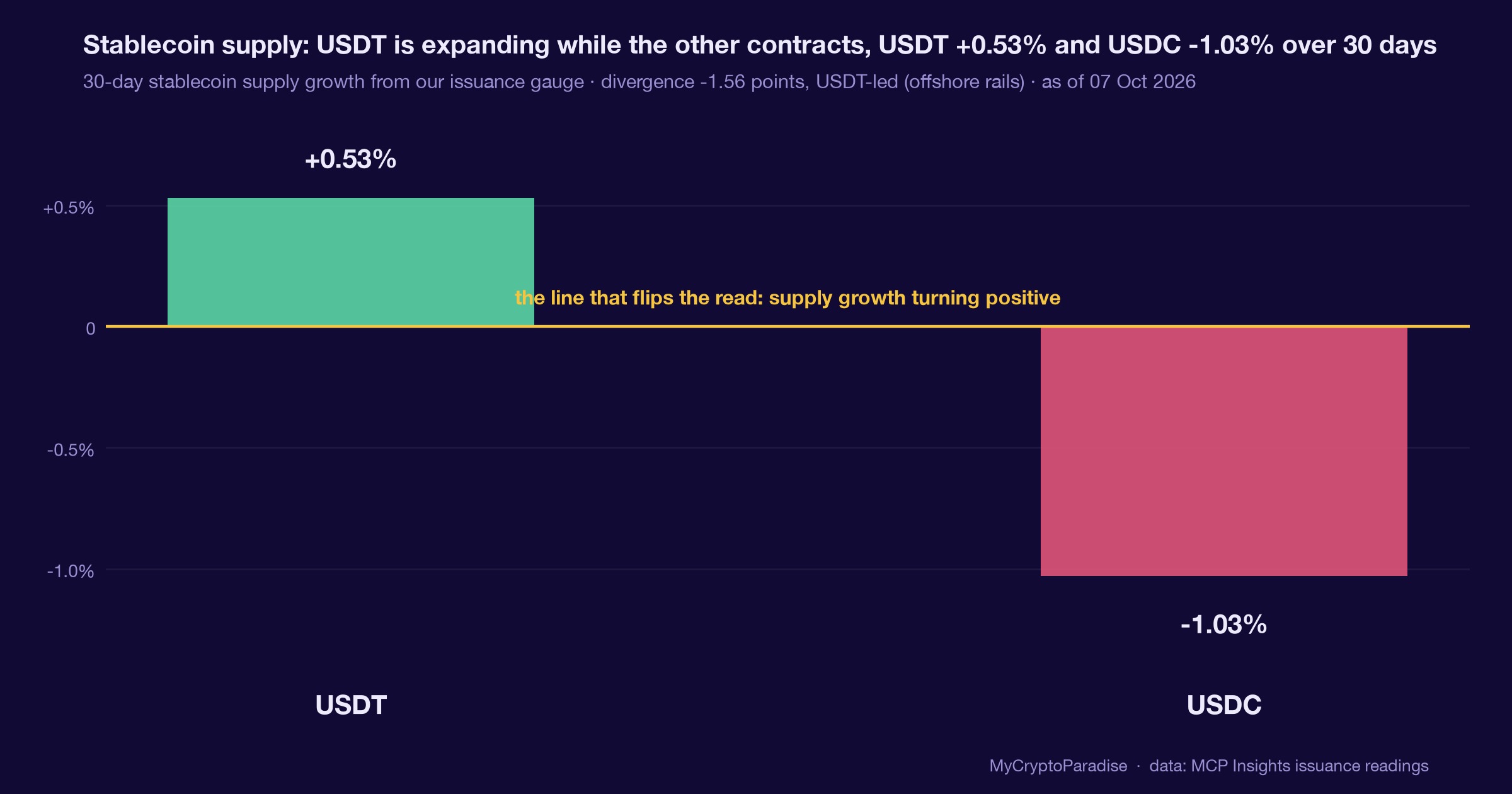
The entity behind the token is also a risk in itself. If the issuer runs thin on capital, your claim weakens even when the token still trades near a dollar. This is why we read a provider’s balance sheet risk before trusting any peg. It also helps to watch broader stablecoin supply trends, since a shrinking token can signal holders quietly leaving.
How is SoFiUSD meant to hold its value?
Most dollar tokens hold value through backing plus redemption. The issuer claims to hold a dollar of assets for each token. Traders can create or redeem tokens at that dollar, so the market price stays close. When the link works, arbitrage pulls any gap shut quickly.
That mechanism only works if redemption is real and open. If only a few large partners can redeem, ordinary holders depend on the open market instead. In calm times the price barely moves. In stress, a thin market can let the price drift from the dollar before anyone steps in.
The risks: backing, redemption, depeg and counterparty
Four risks matter most, and they feed each other. Weak backing makes a depeg more likely. A slow redemption path makes a depeg last longer. A fragile issuer turns a wobble into a failure.
Depeg risk is the headline one. A pegged token can trade below one dollar if holders doubt the backing or rush to exit at once. It often happens fast, in a single session, the way crowds react around round-number levels in any market. Counterparty risk is quieter. It is the chance the issuer cannot pay, freezes transfers, or simply disappears. You hold a promise, and a promise is only as good as the party making it.
Where does regulation fit?
Regulation decides who watches the issuer and what they must disclose. A supervised issuer faces reserve rules, reporting, and audits. An unsupervised one answers to no one but itself. That gap changes your real risk far more than any feature on a website.
Rules differ sharply by country and keep shifting. In the United States, review the SEC’s crypto asset guidance to see how a token may be treated. New venues and token types draw fresh scrutiny, as our note on SEC guardrails for new venues shows. If you cannot tell which regulator, if any, covers SOFID, treat that silence as a red flag rather than a detail.
A diligence checklist before you hold any new token
MyCryptoParadise is a crypto trading signals and market analysis firm operating since 2016 that focuses on disciplined, risk-managed cryptocurrency trading. That same discipline applies to tokens. Run this short checklist before you hold SOFID or anything like it.
- Name the issuer and its country of registration.
- Find the reserve report and its auditor.
- Confirm how redemption works and who can use it.
- Check whether a regulator oversees the issuer.
- Read the terms for any freeze or pause clause.
If you cannot answer three of these, you do not understand the token yet. That is not a reason to panic. It is a reason to size small, or to wait for the disclosures to catch up.
Converting SOFID and USD: know the current rate
Even a well-behaved dollar token rarely sits at exactly one dollar, so check the live rate before you trade.
A rate near one dollar is normal. A rate noticeably below it can mean a thin market, stress, or doubt about the backing. For how live pricing moves second by second, see our explainer on real-time conversion rates. Treat any wide, persistent gap as a question to answer, not a bargain to grab.
Frequently asked questions
Is SoFiUSD (SOFID) safe to hold?
No token is simply safe or unsafe. SOFID is as safe as its issuer and reserves. If the issuer discloses audited backing and a clear redemption path, risk is lower. If it hides those details, treat the dollar in its name as unproven and size any holding small.
What backs SoFiUSD?
Only the issuer can confirm this. A credible stablecoin holds cash or short-term government debt equal to tokens issued. Weaker designs rely on other crypto or vague promises. Always read the latest reserve attestation, and check that an independent firm, not the issuer alone, verified it.
Can SoFiUSD lose its dollar peg?
Yes. Any pegged token can trade below one dollar if holders doubt the backing or rush to exit. This is called a depeg. It often happens fast, during stress, when redemption slows. A peg is a target the issuer defends, never a law of nature.
How do I convert SOFID to USD?
You redeem through the issuer if you qualify, or you sell on an exchange that lists it. The rate should sit near one dollar, but it moves with supply and demand. Always check the live rate first, since a thin market can widen the gap.
Crypto trading involves substantial risk and is not suitable for everyone. Nothing here is financial advice; it is education only. Never risk more than you can afford to lose.






Join the discussion
No comments yet. Members, share how you are reading this.