

In short
A complete crypto trading alert is more than a coin and a direction. It names the asset and the side, whether spot or futures. It gives an entry zone, not one fragile price. It sets an invalidation stop that defines your risk before any target. It shows position size logic and a reward to risk ratio. On futures it adds leverage and a liquidation reference. Read the risk first, then the reward. An alert missing the stop or the size is a tip, not a plan. Those missing fields are where accounts quietly bleed out.
What is a crypto trading alert, and how does spot differ from futures?
A crypto trading alert is a structured trade idea: an asset, a side, an entry, a stop, and a target. Spot alerts buy the coin outright, so your risk is the money you commit. Futures alerts use leverage and a liquidation price, which can force the position closed early.
Think of the alert as a plan you can audit, not a hunch. A good one lets you check the risk before you ever click buy. The direction is the least useful part.
The core split is simple. Spot means you own the coin, and the worst case is the capital you put in. Futures means you borrow exposure, so a small move against you can end the trade before your stop. The fields an alert needs change with that split.
What is different here
The ParadiseTeam writes the invalidation stop before the target, then sizes the position to it. We read positioning across all major exchanges first, so the entry zone reflects where the crowd actually sits, not a single hopeful number.
The anatomy of a complete alert: every field explained
A complete alert carries the same fields every time, so nothing important is left to memory. The table below shows what each field tells you, and where it applies. Read it top to bottom before you judge any signal.
| Field | What it tells you | Where it applies |
|---|---|---|
| Asset | The exact coin and pair, like BTC or ETH | Spot and futures |
| Side | Long or short, buy or sell | Spot and futures |
| Order type | Market or limit, how you get filled | Spot and futures |
| Entry zone | The price range where the setup is valid | Spot and futures |
| Invalidation stop | The price that proves the idea wrong | Spot and futures |
| Targets | Where to take profit, often in steps | Spot and futures |
| Position size | How much to commit, tied to the stop | Spot and futures |
| Reward to risk | Reward compared against the risk taken | Spot and futures |
| Leverage | How much exposure is borrowed | Futures only |
| Liquidation reference | The price that force closes the trade | Futures only |
The order type field matters more than it looks. A market fill chases price, while a limit fill waits for your zone. Knowing which one an alert expects saves you from a bad entry, and there are several order types most traders underuse for exactly this.
If you want to pull a real example apart field by field, this is the place to try it.
Entry zone or single price: why does the difference matter?
A single price is a fragile target the market rarely touches cleanly. An entry zone gives a range where the setup stays valid, so you can scale in. It also stops you chasing a candle that already moved. The zone reflects where value sits, not one hopeful number.
Prices move in bands, not on exact numbers. When an alert says one price, you either miss the fill or force a worse one. A zone lets you enter in parts, keep your average sensible, and stay calm if price wicks past the edge, because the fill no longer needs anybody watching the chart.
The stop and invalidation: the field that protects your account
The stop is the most important field in any alert. It marks the price where the idea is simply wrong, so you exit before a small loss becomes a large one. An alert without a stop is not a trade plan. It is a wish with a coin attached.
Set the stop from structure, not from how much you are willing to lose emotionally. A stop placed at an obvious level gets hunted, which is often why stops keep getting hit. A complete alert explains the level, so you know what would have to break for the trade to fail.
How do position size and reward to risk work together?
Position size comes from the stop, not the other way round. You risk a fixed slice of your account, often one to two percent, on each idea. The distance to your stop then sets how many coins you buy. Reward to risk compares the target distance against that risk before you commit.
Here is the discipline in one line. Decide your risk in money first, measure the stop distance, then let the math set the size. A setup that risks one to make two is written as two to one. That reward to risk ratio keeps you profitable even with more losers than winners.
Leverage and liquidation context on futures alerts
Futures alerts add two fields spot never needs: leverage and a liquidation price. Leverage multiplies both gain and loss, so five times leverage turns a small move into a big one. The liquidation price is where the exchange force closes you, and a complete alert always shows it.
Leverage is not free size. It moves your liquidation price closer, which means the market can end the trade before your stop ever triggers. This is why a serious futures alert states the liquidation reference next to the entry. You can read more on how forced liquidation works at the exchange level.
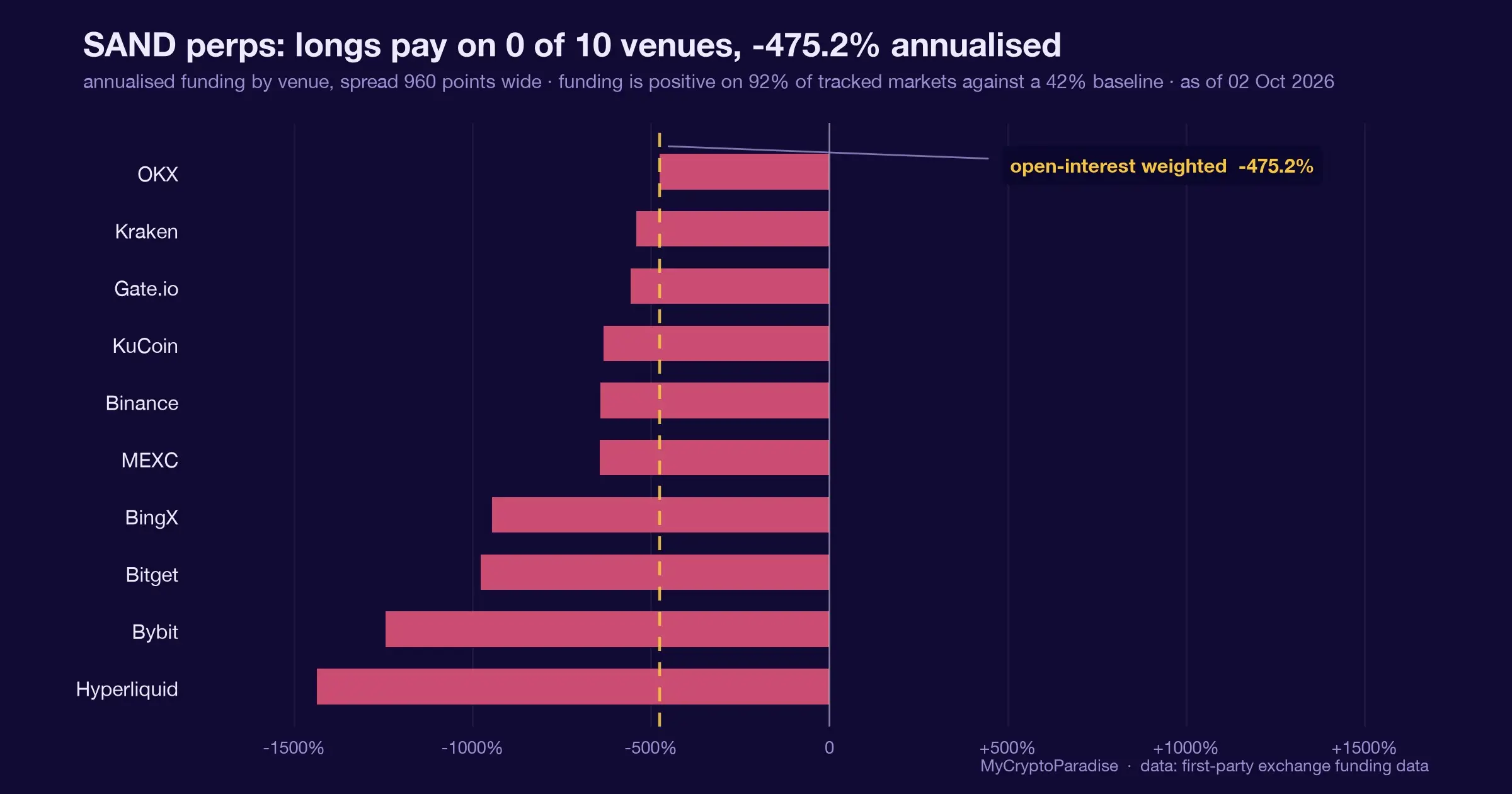
Positioning also shapes the read. Crowded leverage on one side tends to unwind fast, and a funding rate flip often marks that moment. A good futures alert accounts for where the crowd already sits.
What does a weak or incomplete alert leave out?
A weak alert gives a coin and an arrow, then goes quiet. It skips the stop, so you never know where the idea fails. It omits size, so one bad trade can wreck the account. It rarely shows reward to risk. On futures it hides leverage and the liquidation price.
The missing fields are the tell. Watch for these red flags before you trust any source:
- No stop or invalidation level
- No position size or risk percentage
- No reward to risk ratio
- Leverage shown with no liquidation price
- Claims of certain wins or no risk at all
Any one of these should slow you down. Two or more, and the alert is a gamble dressed as a plan.
How do you pressure-test an alert before you act?
Before you act, check the alert carries every field: asset, side, entry zone, stop, targets, and size logic. Confirm the reward to risk is worth it, usually at least two to one. On futures, find the liquidation price. If any field is missing, treat it as a tip, not a trade.
Run the same short checklist every time, so no alert gets a free pass:
- Confirm the asset, side, and order type
- Locate the entry zone, not a single price
- Find the stop and understand the level
- Check size fits your one to two percent risk
- Verify reward to risk of two to one or better
- On futures, read the leverage and liquidation price
The point is repetition, not talent. Judging a source over time is a skill of its own, and evaluating a signal’s track record matters as much as reading one alert well. A complete alert simply gives you the fields to make that judgement.
Frequently asked questions
What is the difference between a spot and a futures alert?
A spot alert tells you to buy or sell the coin itself, so your risk is capped at what you invest. A futures alert uses leverage and carries a liquidation price, which can close the position before your stop. Futures need tighter risk control.
What is the most important field in a trading alert?
The invalidation stop matters most, because it defines where the idea is wrong before you enter. Without it, you have no fixed risk and no exit plan. Everything else, including position size and reward to risk, is calculated from that stop level.
How much of my account should a single alert risk?
Most disciplined traders risk one to two percent of the account on a single idea. The stop distance then decides your position size, not your excitement about the coin. This keeps one wrong trade small and survivable, so a losing streak stays survivable too.
Do I need reward to risk on every alert?
Yes, because reward to risk tells you whether the trade is worth taking at all. A setup risking one to make two, written as two to one, keeps you profitable even with many losers. An alert without it hides whether the math works.
What is a liquidation price on a futures alert?
The liquidation price is where the exchange force closes your leveraged position because the margin is gone. It sits closer as leverage rises. A complete futures alert shows it, so you know the price that ends the trade before your chosen stop does.
Crypto trading involves substantial risk and is not suitable for everyone. Nothing here is financial advice; it is education only. Never risk more than you can afford to lose.






Join the discussion 16
Risk first" is always the right order, good to see it stressed. Monthly DCA into cold storage after covid rebuilt everything for me. 📈 Slow and steady!
A full alert includes more than just the basics. For futures, a simple open interest spike or percentage change can be misleading without a baseline of historical volume at that level.
It's so nice to see risk mentioned first! 🐱 Makes me feel much safer trading with my tiny account. Thanks! ✨
Risk ain't about feeling safe... it's about not being surprised.
While it's good to be risk-aware, futures trading itself fundamentally introduces risk, regardless of how thorough an alert is. It's best to stick to stacking sats on spot.
Risk is always present, Ben, even on spot if you're holding. I appreciate knowing what a complete alert entails because I can trade *safer* with my small account on futures, not avoid risk entirely. My point stands! ✨
i wonder if volume really needs to be a separate field in all cases.. i've seen enough cases where it just follows price action with a lag that its not always independent.
yeah it makes sense to nail risk first, felt good when i started getting that right. but its all about the stop right, thats the one level that matters.
you can list all the fields you want, but this still feels like a dangerous path to encourage. futures trading is not investing, it's a zero-sum game that preys on peoples hopes.
For me, it's about the liquidity of the pair 💧 and how much the volume spikes compared to the moving averages. 📈 That's the real alert for me! 🚨
I think that's a fair point, Carlos. Beyond volume, considering the order book depth in sats for your chosen exchange can also be useful.
i dunno this feels a bit like over-engineering an alert, like back in 2020 a simple open interest spike or perp basis inversion was often all you needed to get an edge before the herd
Honestly, seeing "leverage amount" listed like this always makes me a bit nervous. It just feels designed for quick liquidations, you know? 🙄 Four-hour noise is not a signal.
For perp alerts, the basis differential between various exchanges seems key to me, especially when considering funding rate arbitrage potential. It's often the first thing I check before even looking at open interest.
Futures are not a "field" to be listed and traded; they are a structural weakness. Too many have treated volatility like a foundation, and it has cost them dearly.
The risk field is indeed paramount. I find it useful to log my pre-trade rationale there, even if only a brief summary, to keep the discipline.