

Listen: the breakdown
Developing story: This story is still unfolding. We are tracking it and will update this article as more details are confirmed.
Market briefing: South Korea and the United States meet in Busan this week to discuss a possible South Korean deployment to the Strait of Hormuz. It is a slow geopolitical drip, not a shock, and Bitcoin sat near 76,883 dollars, down about one percent on the day.
- Senior Korea-US defense talks run September 16 to 18 in Busan, with a possible Strait of Hormuz deployment on the agenda.
- Washington has pressed allies for Hormuz support since the war with Iran began this year, and Seoul insists nothing has been decided.
- BTC held near $76,883 (-1.0% on the day) and ETH near $2,473, a muted reaction that marks this as a slow risk factor, not a catalyst.
Hormuz deployment talks between Seoul and Washington add another risk-off thread to a fragile tape. Does a slow geopolitical drip actually move crypto, or is smart money already positioned for it?
South Korea and the United States will sit down this week for senior-level defense talks in Busan, running from Wednesday through Friday, September 16 to 18. On the agenda sits a sensitive question: whether South Korean military forces could deploy to the Strait of Hormuz.
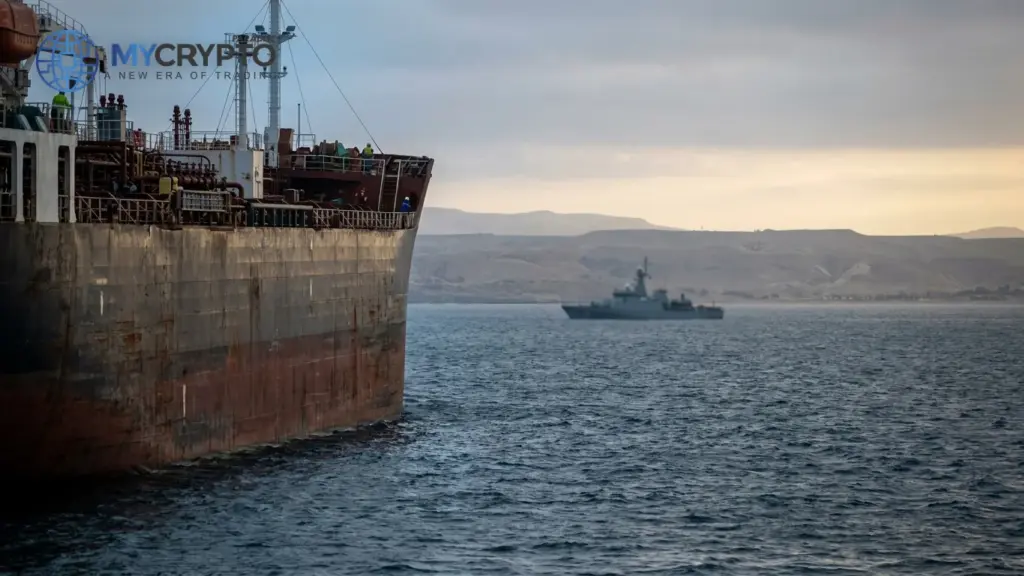
This is not a new ask. Washington has repeatedly pressed allies, South Korea among them, to help secure the strait since war with Iran broke out earlier this year. The strait is one of the most important oil chokepoints on the planet, so any talk of foreign troops there travels straight into the macro conversation.
Seoul, for its part, is keeping the door open and the commitment vague. The government line is that nothing has been decided. Yet actions speak louder: South Korea recently sent a field survey team to the United Arab Emirates to assess port facilities, military bases, and security on the ground. That gap between the official denial and the survey team is worth noting. Governments rarely dispatch inspectors to evaluate bases for a deployment they have ruled out.
For crypto, the price reaction has been quiet. Bitcoin was trading near $76,883, down about one percent on the day, with Ethereum near $2,473. No shock, no cascade, just another line in an already nervous macro backdrop. The structural point is simple: this feeds risk-off sentiment, but it does not create it alone.
A shipping chokepoint feeds risk-off macro
Geopolitics reaches crypto through one channel above all others: risk appetite. The Strait of Hormuz carries a large share of the world's seaborne oil, so any headline about troops there raises the perceived probability of supply disruption and higher energy prices.
Higher energy costs are inflationary. Inflation risk keeps central banks cautious and real yields firmer, and firmer yields drain liquidity from the far end of the risk curve. Crypto sits at that far end. So the transmission runs like this: deployment talk raises instability, instability raises the risk premium on every asset, and a higher risk premium pulls capital toward cash and short-dated safety. Bitcoin and Ethereum feel that pull last but hardest, because they are the assets investors trim first when they want to reduce exposure.
Honesty matters here. There is no single confirmed catalyst that moved the market today, and the price action confirms it. This is our interpretation of a slow-building risk factor, not proof of a cause.
That framing is the whole point. Markets do not need a crash headline to grind lower. They need a steady accumulation of reasons to hold less risk, and a possible Hormuz deployment is one more reason on a growing pile. Retail tends to notice these threads only after they have already been priced.
How the risk premium reaches BTC then alts
Start with the tape. Bitcoin near $76,883 and down about one percent tells you this news did not trigger forced selling. A geopolitical shock would show up as a fast wick and a spike in liquidations, and we did not get that.
Instead, treat this as pressure on the ceiling rather than a hole in the floor. In a risk-off drift, BTC struggles to reclaim overhead levels because every bounce meets sellers who want less exposure. The move is quiet, but the character is heavy.
Ethereum, near $2,473 and down about one and a half percent, tells the same story with a slightly higher beta. ETH usually leads on the way down when liquidity thins, because it is the first large-cap traders rotate out of when they want to de-risk without fully leaving.
Alts sit at the end of this chain and feel it most. Thin order books mean a modest macro headwind produces outsized drawdowns once BTC and ETH stop supporting the complex. When liquidity leaves the top, the bottom of the market gets no bid.
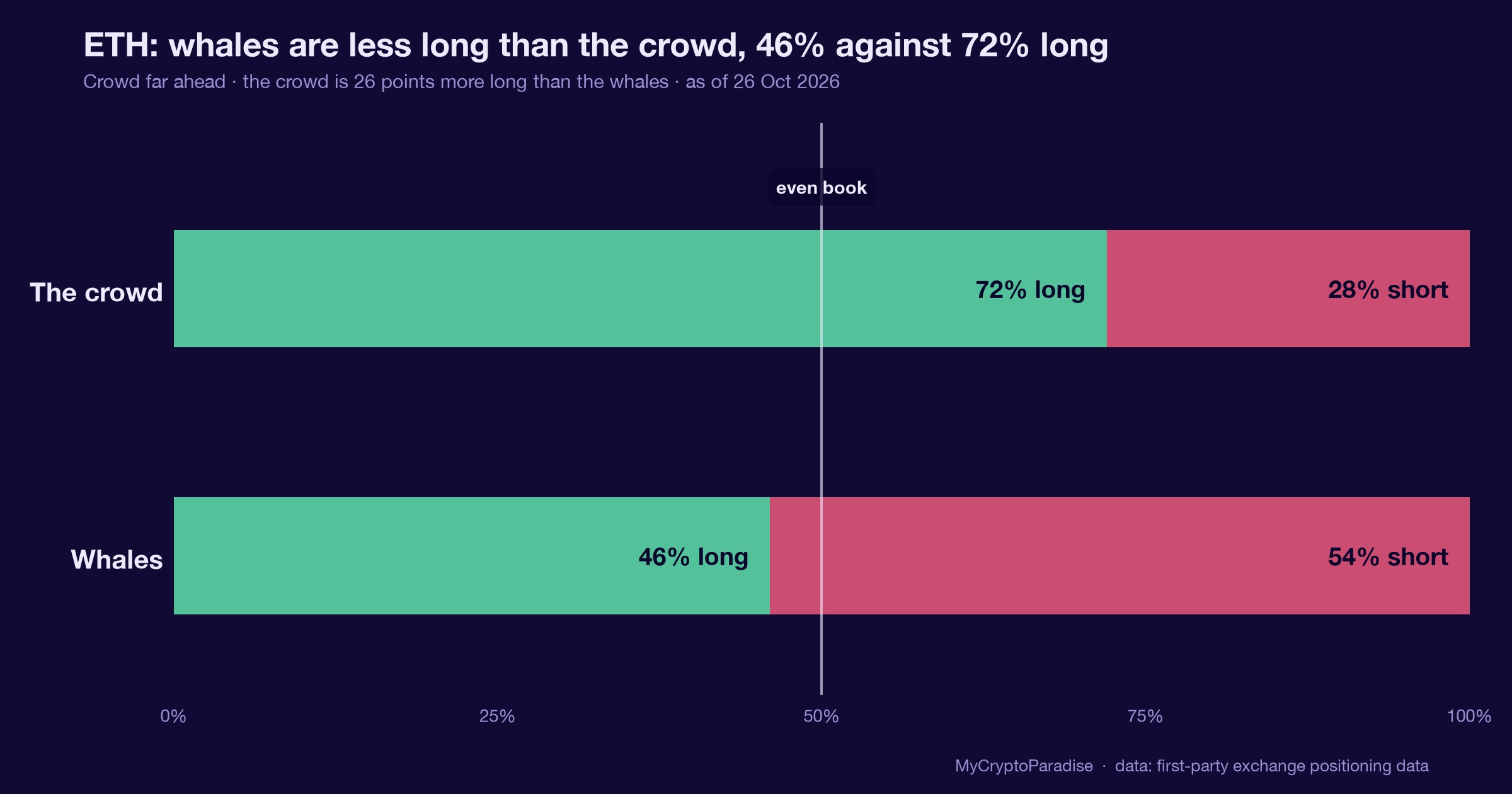
The key read is who benefits. A slow, fear-tinted grind is exactly the environment smart money uses to distribute into strength and reload lower. Retail, already trimming through ETF outflows, reads each geopolitical headline as one more reason to sell, which supplies the exits that larger players lean on.
The daily candle decides the next leg
The near-term tell is the daily candle, not the Busan headlines. Talks that run through Friday will produce statements, but a non-committal readout changes very little for price. Watch the chart, not the podium.
Confirmation of weakness would be a bearish engulfing daily candle that closes back below the $76,000 area and follows the recent shooting star prints. That sequence would suggest the market is accepting the risk-off tone rather than shrugging it off, and it would open room toward the $61,000 reaccumulation zone.
Invalidation looks different. A firm reclaim of the $82,000 to $88,000 resistance band, held as support on the daily and weekly, would tell us the geopolitical thread is being absorbed and buyers still control the structure. That would neutralize this whole read.
Watch open interest, or OI, the total value of outstanding derivatives positions. If OI climbs while price stalls, late longs are building into resistance, and that is fuel for a downside flush.
Also track the ETF flow picture. Continued outflows would confirm retail fear, while a decisive return of inflows would undercut the bearish macro story.
A concrete deployment decision, rather than more discussion, is the one headline that could turn this slow drip into a genuine event. Until then, treat Hormuz as a background risk that raises the bar for any bounce, not a trigger on its own.
What Hormuz risk means for positioning here
The ParadiseTeam frames this Hormuz talk as background pressure, not a standalone driver, and the muted move near $76,883 supports that. One quiet risk headline does not break structure, but it does make the ceiling heavier.
On our lens, price sits just under the $79,000 distribution zone that lines up with the 0.618 retracement, the level where larger players have already been redistributing. A geopolitical drip into that resistance is the kind of context that favors distribution into strength, not a fresh breakout. That is our edge read: bullish-sounding relief rallies into $79,000 look like exits, not entries.
Stops matter here. A cluster of sell-stops sits beneath the recent range toward $76,000, and a sweep of that area on a bearish engulfing close would fit the smart-money pattern of pushing fear before any deeper move toward $61,000.
The invalidation is clean and worth respecting. A weekly reclaim of the $82,000 to $88,000 band flips this bearish structure, and at that point the Hormuz thread becomes noise rather than confluence.
Probabilities, not certainty. The honest read is that this event is minor on its own, which is why our stance is neutral into the current level with a bearish lean on any low-quality bounce. Retail selling geopolitical headlines near support is usually who smart money buys from, so patience beats chasing either direction. Manage risk-to-reward, or R:R, before conviction.
The read behind this: we framed this story through our own market analysis, Bitcoin ETF Outflows Near $500M: Crash Next?
Track it live: our Crypto Fear and Greed Index and the live crypto funding rates both update in real time, so you can watch this shift for yourself.
Related coverage
For exact entries, targets, and stop losses with full risk management, that is what ParadiseFamilyVIP is for. New to reading these moves? Start with our crypto trading strategies guide.
ParadiseTeam is monitoring the market situation closely, and we are taking these developments into consideration while building our trading tactics inside ParadiseFamilyVIP.
Crypto trading involves substantial risk. Prices are volatile and you can lose money. This article is educational and is not financial advice. Past performance does not guarantee future results.
With Hormuz talks in the background, where does BTC go from $76.9K next?
How 39 Paradisers are calling it
The first call is still open
Free account, no password. Members just sign in.






Join the discussion 2
My fuel levels have been set for a while now... but this does make me double-check my inventory, the way I do every Tuesday.
Trouble in these straits always reminds me to check my fuel levels... and maybe add a little extra to the stablecoin part of the hold.