


Listen: the breakdown
Market briefing: An automated bot named Yoink front-ran a hacker and walked off with a $7.8 million Ethereum exploit. Dramatic on-chain, but ETH sat near $2,399 and BTC near $75,895, both pressured by the wider risk-off tape, not by this.
- A hacker drained roughly 2,900 rsETH, about $7.8 million, from an Ethereum whale's Gnosis Safe wallet on Tuesday.
- The Yoink bot spotted the attack in the mempool, executed first in the same block, and captured the full proceeds after paying nearly 19 ETH in gas.
- It is an isolated technical event with no measurable impact on BTC, ETH, or alt liquidity.
An MEV bot called Yoink just front-ran a hacker and stole the entire $7.8 million exploit for itself. Wild story, but does it move the market at all?
A hacker broke into an Ethereum whale's Gnosis Safe wallet on Tuesday. The target was roughly 2,900 rsETH, worth about $7.8 million. The attacker used a custom Uniswap V4 hook to unwrap the staked position into freely transferable tokens. The plan was clean. The execution was not.
Then the attack transaction hit the public mempool, the waiting room where pending transactions sit before a block confirms them. An automated bot called Yoink was watching. It read the exploit, copied the logic, and executed first in the very same block.
The result was almost comic. The hacker did the hard work of breaking the wallet. Yoink walked off with the entire $7.8 million.
This is MEV (maximal extractable value) in its rawest form. Bots compete to reorder or insert transactions inside a block for profit. Yoink paid nearly 19 ETH in gas fees to win the race, and the proceeds landed at a single anonymous address.
Multiple independent security teams flagged and confirmed the sequence within hours, so the facts are not in dispute. What is worth stating plainly is the scale. This was a private duel over one wallet, not a systemic breach of Ethereum, and the money never touched an exchange order book on its way out.
An exploit lost to a faster bot
Here is the uncomfortable truth for the drama. This event has almost no macro transmission at all. No coins were created or destroyed. No exchange froze. No liquidity left the system. The $7.8 million simply shifted from one anonymous address toward another.
That matters because traders routinely confuse activity with impact. A dramatic headline feels like a market driver, and this one is not. The rsETH involved is a fraction of a fraction of the daily volume moving across Ethereum, so it cannot bend price on its own.
The real signal sits one layer deeper, in Ethereum's plumbing. The mempool is a public battlefield. Any profitable transaction broadcast in the open can be seen, copied, and beaten by faster code. That is a structural feature of an open blockchain, not a bug introduced this week.
For builders and large holders, the lesson simply repeats. Private transaction routing and disciplined wallet hygiene are not optional at size, because bots price your mistakes in milliseconds. For the broader market, though, the transmission chain stops almost immediately. Driver to macro effect to liquidity effect all collapse toward zero.
A wild story can still be a small one.
No macro ripple from a mempool duel
Trace the usual cascade and it fizzles fast. A genuine driver moves BTC first, then ETH, then alts follow with a lag. This event moves none of them in any measurable way.
ETH was near $2,399, down about 3.1 percent on the day, while this story circulated. That decline is not the exploit. It fits the broader risk-off tape that has pressured the majors all week. The correlation here is coincidence, not causation.
BTC told the same story. It was trading near $75,895, down roughly 1.4 percent over 24 hours as of 10:24 UTC. A single wallet drama does not push a trillion-dollar asset in either direction. The macro current is doing that work.
Alts, including the liquid-staking corner where rsETH lives, showed no contagion either. There was no cascade of liquidations, no depeg, and no forced selling across correlated tokens. The captured funds sat at one address rather than hitting the books.
So the honest liquidity read is a flat line. If anything, the episode is a clean reminder that not every eye-catching on-chain event touches price. Most of them never do, and this one belongs firmly in that pile.
Keeping a sideshow from a real signal
Watch whether the funds ever move again. They currently rest at one address after the bot secured them. A return to the victim, a bounty split, or a quiet laundering path would each tell a very different story about intent.
Watch for copycats. Yoink's success advertises a strategy, and when a tactic pays $7.8 million once, more bots crowd the same mempool races. That raises gas competition and can briefly congest Ethereum during the next opportunity.
For the market that actually matters to positioning, keep your eyes on the majors rather than this headline. The macro tape is the driver. This exploit is noise layered on top of it.
Confirmation that the episode stays contained is simple. No depeg in liquid-staking tokens, no sustained spike in ETH gas, and no follow-on wallet drainings would all say the story is closed. Invalidation would be a wave of copycat exploits that genuinely stresses the network and its fees. That escalation has not happened. Until it does, this is a resolved case with an unusually theatrical ending, and it deserves a footnote rather than a front-row seat in your risk model.
The macro tape that dwarfs this drama
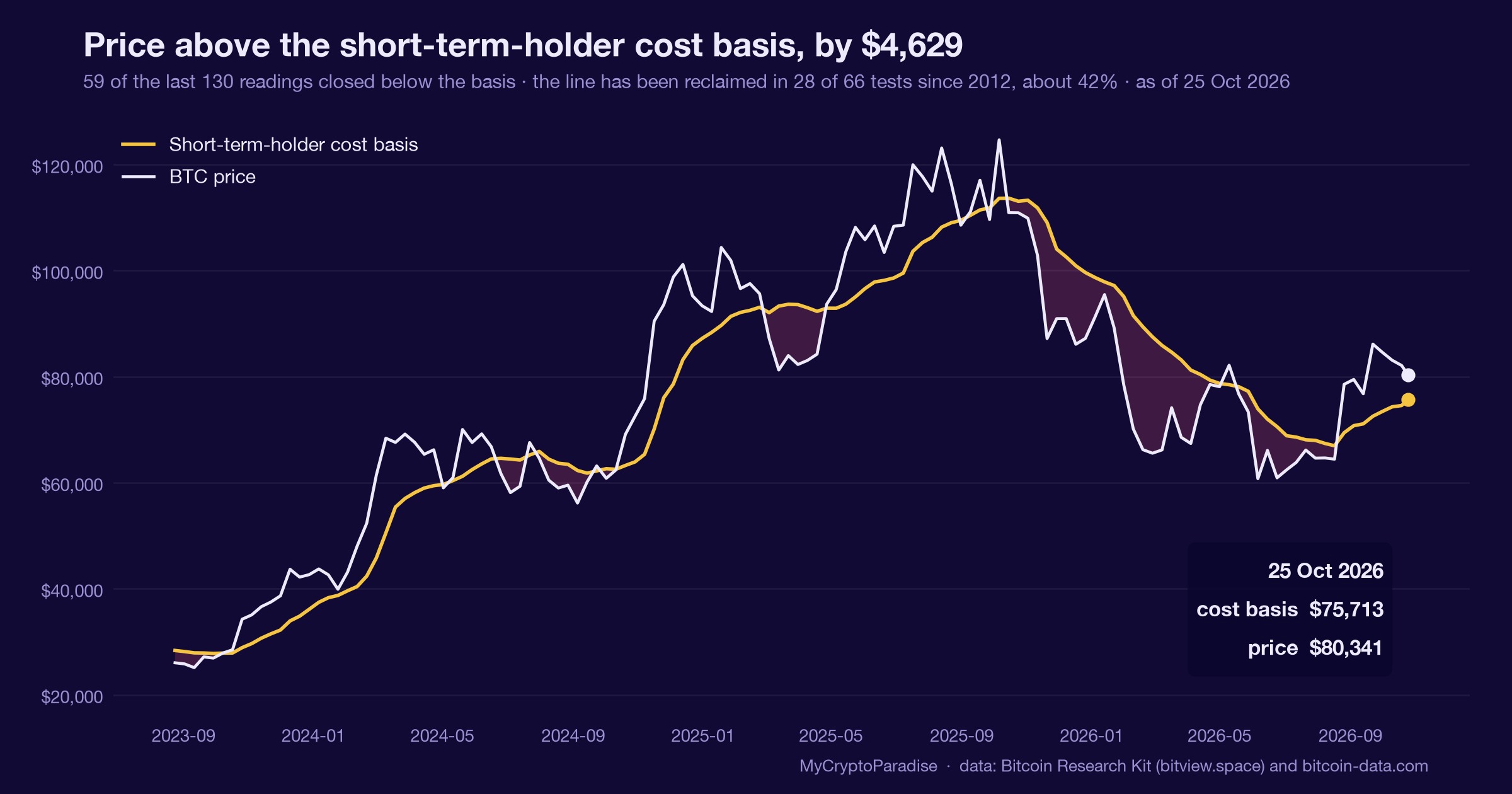
The ParadiseTeam view is blunt here. This event changes nothing about our bias. BTC was near $75,895 as of 10:24 UTC, and our macro read stays firmly bearish while price sits under the $79,000 resistance.
The levels that matter are not on any single wallet. They are on the BTC chart. We expect continuation toward the $55,000 to $44,000 zone, with the previous low near $58,000 more likely to break than to hold.
Who benefits from a story like this? Retail, emotionally. A heist-of-a-heist feels like a market that is alive and fun, and that small dose of positive sentiment is exactly what smart money uses to distribute into.
So the ParadiseTeam treats the noise accordingly. The $82,000 prior high looks unlikely to break. Bullish divergences and small hammer candles on lower timeframes read as offloading opportunities, not reversals, until whales visibly defend a reclaim above resistance.
None of this is a forecast dressed as certainty. It is a probability map. The exploit is a fascinating footnote, and the macro thesis still lives on the weekly and daily BTC structure. There, for now, it continues to point down.
The read behind this: we framed this story through our own market analysis, Can Bitcoin Rally From Extreme Fear?
Track it live: our crypto liquidation heatmap and the Crypto Fear and Greed Index both update in real time, so you can watch this shift for yourself.
Related coverage
For exact entries, targets, and stop losses with full risk management, that is what ParadiseFamilyVIP is for. New to reading these moves? Start with our crypto trading strategies guide.
ParadiseTeam is monitoring the market situation closely, and we are taking these developments into consideration while building our trading tactics inside ParadiseFamilyVIP.
Crypto trading involves substantial risk. Prices are volatile and you can lose money. This article is educational and is not financial advice. Past performance does not guarantee future results.
Which happens first for BTC from here?
How 26 Paradisers are calling it
The first call is still open
Free account, no password. Members just sign in.








Join the discussion 1
So wild how these bots operate! It's like a digital game of cat and mouse... I just try to keep my positions small and simple. 🐾