

Listen: the breakdown
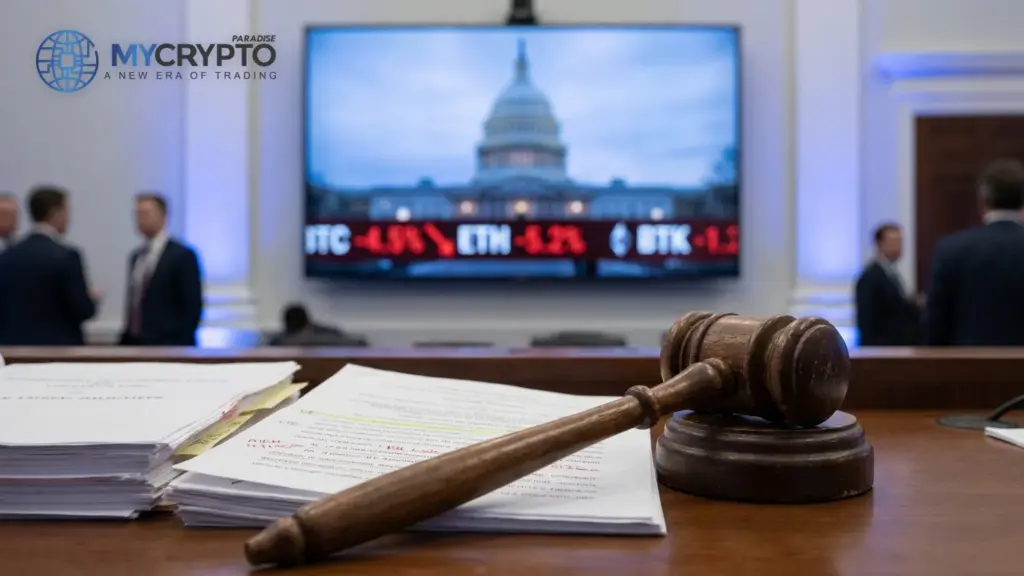
Market briefing: US crypto regulation faces a significant setback as the Clarity Act fails in the Senate, prompting a midterms payback warning from a Coinbase-backed group. Bitcoin was trading near $75,797 as of this report, reacting to heightened regulatory uncertainty.
- Clarity Act, aiming for US crypto rules, defeated in Senate.
- 'Stand With Crypto' warns of electoral consequences for senators.
- Regulatory uncertainty fuels investor caution and market weakness.
The U.S. crypto sector faces renewed regulatory uncertainty after the Clarity Act failed in the Senate, prompting a Coinbase-backed group to warn of electoral payback. What does this legislative setback mean for crypto's path forward?
The U.S. Senate delivered a significant blow to crypto regulatory efforts this week, with the defeat of the Clarity Act. This bill aimed to establish a clear set of rules for the burgeoning digital asset sector across the country.
In response, the Coinbase-backed crypto advocacy group 'Stand With Crypto' announced it would meticulously track senators' votes. The group explicitly warned of potential 'midterms payback' during the upcoming November elections, signaling a political fight ahead. This legislative setback arrives as crypto investors in the U.S. had already begun to scale back their demand. Bitcoin was notably trading at a discount on the Nasdaq-listed Coinbase exchange compared to offshore platforms like Binance, indicating cautious sentiment.
Bitcoin's price was $75,797, reflecting a 2.8% decline over the last 24 hours, while Ethereum also saw a 4.2% drop to $2403.52. This immediate market reaction underscores the sensitivity of digital assets to regulatory developments, especially those that amplify uncertainty.
Despite the bill's failure, Coinbase CEO Brian Armstrong stated that regulatory progress would continue, asserting that Coinbase would not need to temper its ambitions. This provides a long-term optimistic perspective amidst the immediate legislative disappointment.
Clarity Act failure and regulatory uncertainty
The failure of the Clarity Act creates a vacuum of regulatory clarity within the United States. This directly impacts domestic crypto businesses, raising their cost of capital due to an uncertain operating environment.
Without clear guidelines, many U.S. crypto firms may accelerate their offshore structuring efforts. This shift allows them to operate in jurisdictions with more defined or favorable regulatory frameworks, potentially draining talent and innovation from the U.S. market.
Senator Cynthia Lummis warned that failing to advance market-structure legislation now could push the next serious opportunity for comprehensive reform years into the future. Such a delay would prolong the current state of ambiguity, a significant hurdle for mainstream institutional adoption.
Galaxy CEO echoed this sentiment, cautioning that U.S. crypto rules might never fully materialize if the Clarity Act does not advance. This long-term regulatory paralysis could severely hamper the growth of a robust domestic crypto industry.
The 'midterms payback' warning from 'Stand With Crypto' highlights the growing political power of the crypto voter base. However, this is a long-term strategic play to influence future elections and does not immediately alleviate the market's structural uncertainty.
Market weakness amid US regulatory gridlock
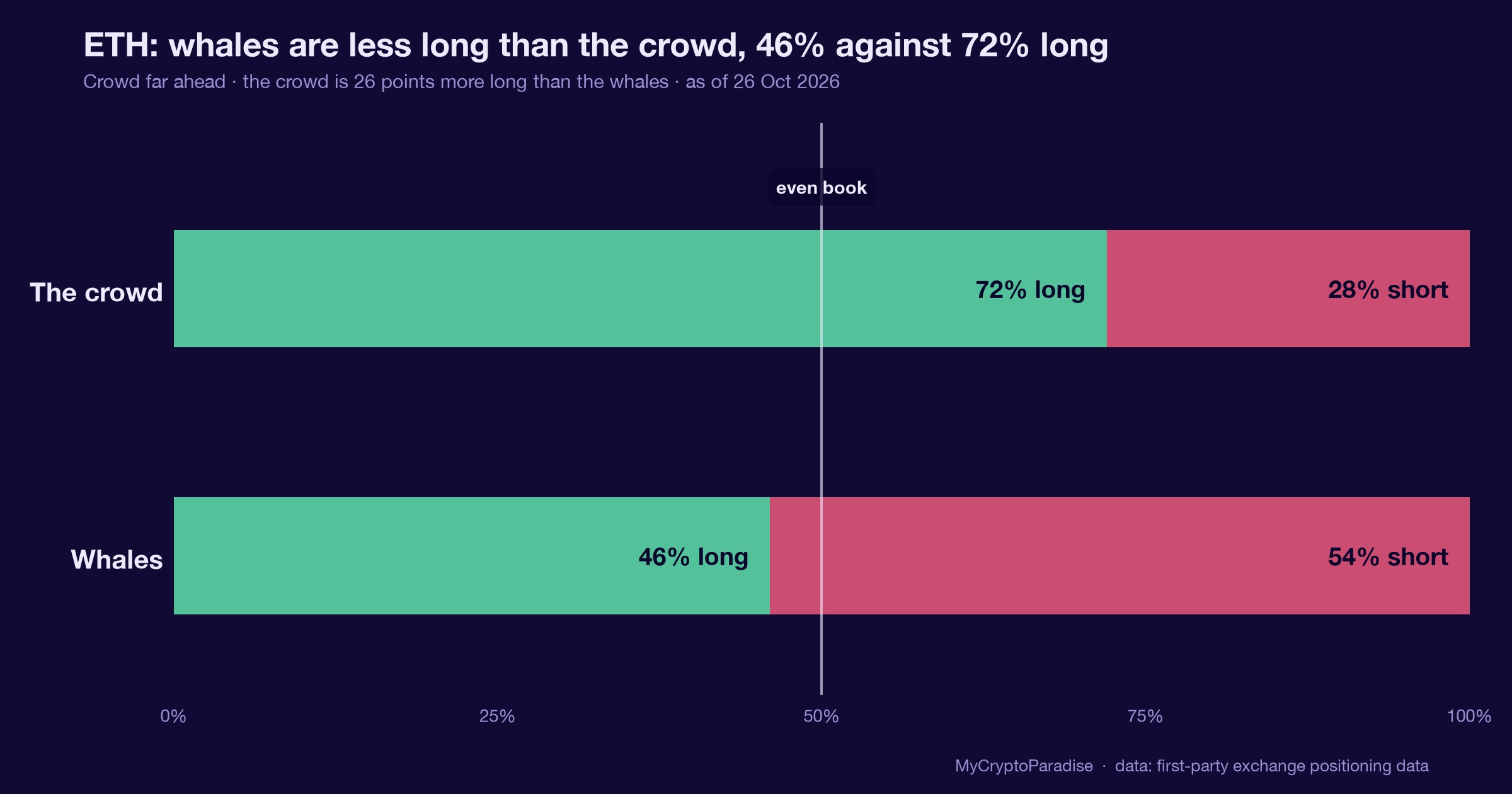
The defeat of the Clarity Act immediately contributed to negative market sentiment, with Bitcoin trading near $75,797, down 2.8% over 24 hours. Ethereum also experienced a significant decline, falling 4.2% to $2403.52. This immediate reaction is not surprising. Smart money has been in a distribution phase, and news of legislative gridlock provides further justification for caution. Retail investors, already showing fear through ETF outflows nearing $500 million, are likely to interpret this as a clear negative signal.
The observed discount of Bitcoin on Coinbase relative to offshore exchanges like Binance indicates a cooling of investor interest within the U.S. domestic market. This suggests capital is either exiting or seeking environments with greater regulatory predictability.
For altcoins, regulatory uncertainty generally amplifies risk. As Bitcoin and Ethereum face headwinds, the broader altcoin market typically experiences larger percentage drawdowns, as liquidity becomes even more constrained in a risk-off environment.
The lack of clear U.S. rules can deter institutional capital inflows, which rely on predictable legal frameworks. This legislative setback could therefore delay the next significant wave of institutional adoption, keeping broader market liquidity subdued.
Key levels to monitor after Clarity Act defeat
The ParadiseTeam is closely monitoring daily candlestick patterns for further confirmation of the current bearish structure. A bearish engulfing candlestick pattern on the daily timeframe, following recent shooting star patterns, would significantly reinforce the downside bias.
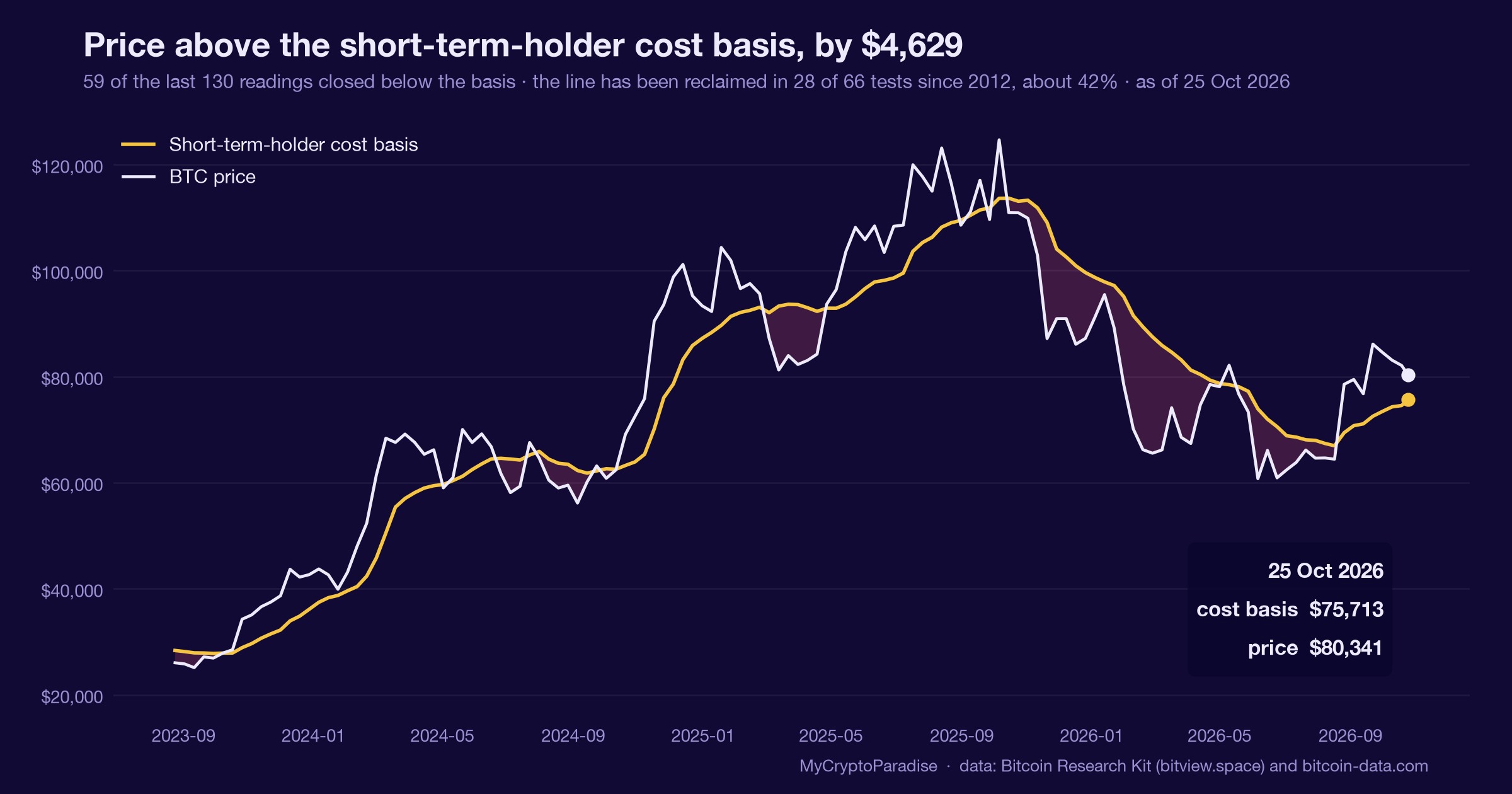
Given Bitcoin's current trading near $75,797, a reclaim of the $76,000 level could become a short-term downside target if bearish engulfing confirms. This level would need to be reclaimed as support to signal any short-term strength.
For a broader bullish shift on the weekly timeframe, Bitcoin would need to clearly reclaim the $82,000 – $88,000 resistance zone and establish it as support. This appears increasingly challenging following the Clarity Act's failure.
Conversely, a clear invalidation of the current bearish structure on the weekly timeframe would be required for a fundamental shift in outlook. Until then, the market remains vulnerable to further downside.
Traders should watch for how the market reacts around the $61,000 previous reaccumulation zone. A break below this level could open the path to $58,000, and potentially even lower to the $44,000 long-term target, where smart money anticipates aggressive reaccumulation.
Reading the Clarity Act setback through smart money
The ParadiseTeam views the Clarity Act failure as another data point reinforcing our bearish long-term bias. Smart money has been actively distributing Bitcoin at higher levels, including around $79,000 and $121,000, and this regulatory setback justifies their cautious stance.
Bitcoin's current price near $75,797 sits below the $79,000 previous distribution zone. The market lens suggests smart money is waiting for further confirmations after redistributing at these higher levels. This news provides precisely that confirmation for continued distribution.
Retail investors, already exhibiting fear with nearly $500 million in ETF outflows, are likely to capitulate further on this news. This exacerbates the selling pressure and aligns with smart money's anticipation of a significant crash for reaccumulation at much lower prices.
While the ParadiseTeam identifies a potential final short-term bounce, this legislative roadblock adds significant weight to the expectation of a deeper market correction. The $76,000 level is now a key area to watch as a potential downside reclaim target if a bearish engulfing candlestick confirms.
Our focus remains on the $61,000 and $58,000 support levels, with a long-term target for aggressive reaccumulation around $44,000 and potentially $20,000. This regulatory uncertainty further strengthens the case for smart money to continue distributing into any short-term strength that might emerge.
The read behind this: we framed this story through our own market analysis, Bitcoin ETF Outflows Near $500M: Crash Next?
Track it live: our live crypto funding rates and the Crypto Fear and Greed Index both update in real time, so you can watch this shift for yourself.
Related coverage
For exact entries, targets, and stop losses with full risk management, that is what ParadiseFamilyVIP is for. New to reading these moves? Start with our crypto trading strategies guide.
ParadiseTeam is monitoring the market situation closely, and we are taking these developments into consideration while building our trading tactics inside ParadiseFamilyVIP.
Crypto trading involves substantial risk. Prices are volatile and you can lose money. This article is educational and is not financial advice. Past performance does not guarantee future results.
Will the Clarity Act failure significantly delay US crypto adoption?
How 11 Paradisers are calling it
The first call is still open
Free account, no password. Members just sign in.
Follow this topic: Crypto regulation news












Join the discussion 1
yeah this just means more usdc converting to usdt for now i watch stablecoin net flows out of exchanges to get a read on smart money moves