

Listen: the breakdown
Developing story update (September 12, 2026, 22:06 UTC):
The Middle East conflict continues to drive significant reactions in traditional markets. While our initial report highlighted a general slump in stocks and bonds, new data confirms a surge in bond yields, indicating increased investor caution and a flight to safety within fixed income.
Energy markets are also seeing more specific impacts beyond just crude oil. Diesel prices have now risen by 10% in less than a week, adding to the broader inflationary pressures stemming from the geopolitical tensions. This further reinforces the risk-off sentiment we’ve been tracking.
For crypto traders, this macro backdrop remains critical. The specific movements in bond yields and diesel prices underscore the ongoing instability, aligning with our expectation that smart money will continue to observe from the sidelines, awaiting deeper corrections in Bitcoin.
What to watch now: Traders should monitor further movements in bond yields and energy prices for continued macro impact.
Developing story update (September 12, 2026, 21:44 UTC):
The conflict’s economic fallout is becoming more tangible, with US gas prices now confirmed to be up over 40% since the war’s onset. This development underscores the inflationary pressures stemming from geopolitical instability.
This specific rise in consumer energy costs reinforces the prevailing risk-off sentiment. Smart money continues to monitor for deeper corrections in risk assets, including crypto, as global uncertainty persists.
What to watch now: Monitor for further escalation that could impact global supply chains and consumer spending.
Developing story update (September 12, 2026, 21:23 UTC):
Our sources confirm a material escalation in the Middle East conflict. Iran-backed Houthi forces have now taken control of an island in the strategically vital Bab el-Mandeb Strait, moving beyond previous threats to establish a physical presence in the key shipping lane.
Further reports indicate a direct human cost, with one seafarer killed and another missing following a tanker attack. This confirms the severe and immediate danger to maritime traffic in the region, intensifying supply chain concerns.
While crypto prices remain largely unaffected in the immediate term, these developments reinforce the broader risk-off sentiment in traditional markets, contributing to the macro uncertainty that smart money is watching for deeper corrections in risk assets.
What to watch now: Traders should monitor further developments in the Bab el-Mandeb Strait, the impact on global shipping routes, and any broader market reactions to escalating geopolitical tensions.
Developing story update (September 12, 2026, 21:02 UTC):
Our sources confirm that Iranian strikes hit US aircraft in Jordan, removing prior ambiguity. This solidifies the geopolitical risk factor in the region.
In broader market reactions, bond yields have specifically jumped or surged, indicating a flight to safety or increased risk premium in fixed income markets.
Despite these confirmed escalations, Bitcoin and Ethereum continue to show relatively muted price action, reinforcing our view of crypto’s current detachment from immediate geopolitical shocks.
What to watch now: Traders should monitor how confirmed geopolitical risks influence broader market sentiment and potential liquidity for deeper crypto corrections.
Developing story update (September 12, 2026, 20:40 UTC):
New developments in the Middle East conflict show a significant escalation in maritime threats, with Houthi forces now controlling an island in the Bab el-Mandeb Strait, a critical global trade route. This increases the risk to shipping and could further impact supply chains.
Tragically, the human cost of the conflict is also evident, with one seafarer reported killed and another missing following a tanker incident. Oil markets continue to react, with Brent crude prices confirmed as the highest since May at $108 per barrel, and WTI crude also breaching the $100 mark.
What to watch now: Traders should monitor further escalations in the Bab el-Mandeb Strait and their potential impact on global shipping and energy prices.
Developing story update (September 12, 2026, 20:19 UTC):
Our sources confirm US gas prices have surged over 40% since the conflict’s onset, marking a significant and quantifiable economic impact on consumers. This development underscores the escalating real-world costs of the geopolitical tensions.
For traders, this rise in energy costs could signal increased inflationary pressures, potentially influencing central bank decisions and overall market risk appetite. While crypto remains resilient, these macro shifts warrant close attention for their indirect effects on digital asset liquidity.
What to watch now: Monitor the broader economic impact of rising energy costs on inflation and central bank policy.
Developing story update (September 12, 2026, 19:57 UTC):
The Middle East conflict has seen a material escalation, with Iran-backed Houthi forces confirming control of a strategic island in the Bab el-Mandeb Strait. This development significantly impacts a vital global trade artery, potentially increasing supply chain disruptions and further pressing oil prices.
Tragically, the human cost of the conflict has also become clearer, with reports of at least one seafarer killed and another missing following a tanker attack. These confirmed casualties underscore the direct and severe consequences of the ongoing hostilities.
Despite these significant escalations in geopolitical tensions and their clear impact on traditional markets, Bitcoin and Ethereum continue to show a muted response. Our read remains that smart money is not yet viewing these events as a catalyst for crypto accumulation, with whales likely awaiting deeper corrections.
What to watch now: Monitor further developments in Red Sea shipping lanes and any broader military responses.
Developing story update (September 12, 2026, 19:13 UTC):
Oil markets continue to show volatility, with Brent crude now confirmed to have breached the $100 per barrel mark for the first time since July. This adds further detail to the previously reported surge past $107 and $108 per barrel.
What to watch now: Continue monitoring geopolitical developments and their impact on traditional energy markets for broader risk-off sentiment.
Developing story update (September 12, 2026, 18:50 UTC):
Geopolitical tensions in the Middle East have escalated further, with Iran-backed Houthi forces now confirmed to have taken control of an island in the Bab el-Mandeb Strait. This move significantly increases the threat to a vital global trade artery and broader Gulf shipping, signaling a material expansion of the conflict’s reach.
The economic fallout is becoming clearer, with WTI crude oil prices joining Brent above $100 per barrel. More notably, US gas prices have surged by over 40% since the conflict began, indicating a substantial impact on consumer costs. Traditional financial markets are reacting, with bond yields jumping and both stocks and bonds experiencing a slump.
Despite these significant developments in traditional markets, Bitcoin and Ethereum prices show only minor fluctuations, reinforcing our view that crypto remains largely decoupled from this specific event’s immediate impact. However, the escalating instability and rising inflation fears could contribute to a broader risk-off sentiment, potentially accelerating the anticipated deeper correction in crypto markets.
What to watch now: The ongoing Houthi actions in the Bab el-Mandeb Strait and their impact on global shipping, alongside the continued rise in energy prices and broader traditional market sentiment.
Market briefing: Middle East geopolitical tensions have escalated, driving Brent crude oil prices past $107 a barrel. Despite this, Bitcoin was trading near $77,173, showing minimal immediate reaction, reinforcing the ParadiseTeam's bearish outlook for a deeper correction.
- Saudi Arabia closed a major oil pipeline after drone attacks from Iraq.
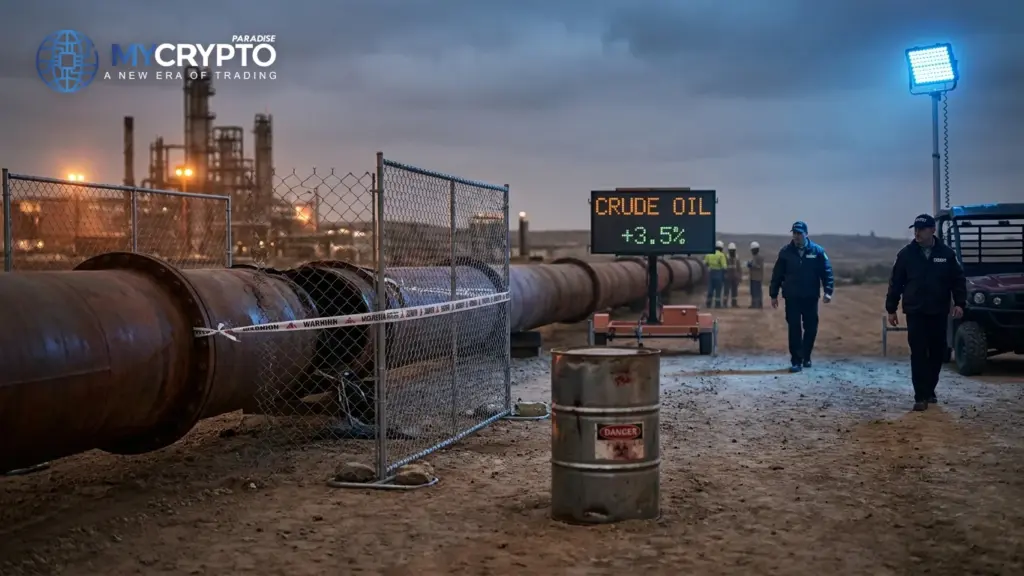
- Brent crude oil prices surged over 6%, trading above $107 a barrel.
- Bitcoin remained largely unmoved near $77,173 as broader risk-off sentiment intensified.
Geopolitical tensions in the Middle East have escalated, with attacks on oil infrastructure and US assets sending crude prices soaring. Does this global instability finally shake Bitcoin from its current range?
The Middle East conflict has broadened significantly, marked by a series of aggressive actions across the region. Saudi Arabia closed a critical oil pipeline following drone attacks launched from Iraq, highlighting a direct threat to energy supply routes.
Simultaneously, Iranian strikes hit US jets at Muwaffaq Salti Air Base in Jordan, escalating the direct confrontation. Houthi forces also launched attacks against Saudi Arabian energy facilities, further destabilizing the region's crucial oil infrastructure. These escalations sent Brent crude prices surging, trading close to $100 a barrel on Wednesday for the first time since July. The rally continued, with prices surging past $100 and reaching $108 a barrel, ultimately rising 6% to above $107 on Thursday.
This marks the highest level for oil prices since May, with the price of a gallon of diesel exceeding an average of $6. The market reaction in traditional assets reflected deep concern over sustained inflation and potential economic slowdowns.
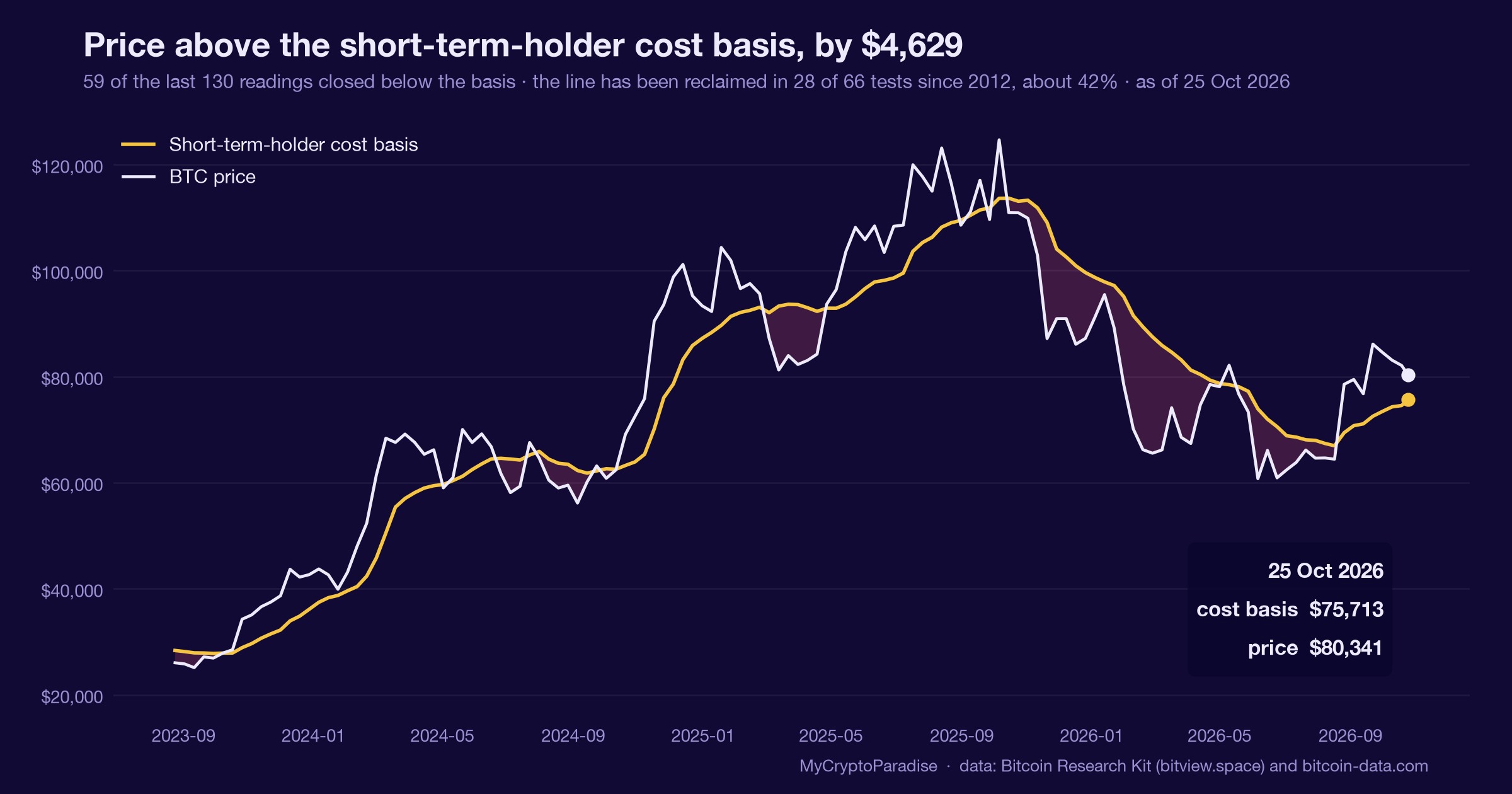
Bitcoin (BTC), however, showed a muted response, trading near $77,173 with a negligible 24-hour change of +0.02493% and a slight 1-hour dip of -0.2%. Ethereum (ETH) also remained largely unaffected, priced near $2526.21 with a -0.63063% 24-hour change and a -0.2% 1-hour change.
Escalating tensions fuel inflation fears
The widening conflict in the Middle East creates significant geopolitical risk, immediately impacting global energy markets. Attacks on critical oil infrastructure and US assets generate substantial uncertainty for oil supply stability.
The sharp increase in crude oil prices, with Brent surpassing $107-$108 a barrel, directly fuels inflation concerns across the global economy. Higher energy costs feed into production and transportation, ultimately affecting consumer prices. This renewed inflationary pressure could prompt central banks to maintain or even tighten their monetary policy stance. Such a hawkish shift would create a less favorable environment for risk assets, including cryptocurrencies.
Broader traditional markets, including stocks and bonds, wobbled in response to these developments. Investors are apprehending sustained inflation and potential economic slowdowns, shifting towards a risk-off posture.
While this event is not a direct catalyst for a major crypto move, it reinforces existing macro headwinds. It adds another layer of uncertainty to a market already grappling with the implications of high interest rates and global economic fragility.
Geopolitical risk and Bitcoin's resilience
The escalation of Middle East conflict typically triggers a flight to safety in traditional markets, reducing overall liquidity for speculative assets. However, Bitcoin's minimal 24-hour movement suggests a degree of decoupling from this specific geopolitical shock. This indicates that other, stronger underlying forces are currently at play in the crypto market. While traditional investors may be exiting risk assets, the immediate impact on Bitcoin's price action near $77,173 has been limited, suggesting the market is either pricing in higher-level macro factors or awaiting a different catalyst.
Ethereum (ETH) and other altcoins generally follow Bitcoin's lead, reflecting the broader market sentiment. Their similarly contained price action reinforces the idea that this geopolitical event, while important, is not currently driving a cascading liquidity effect within crypto.
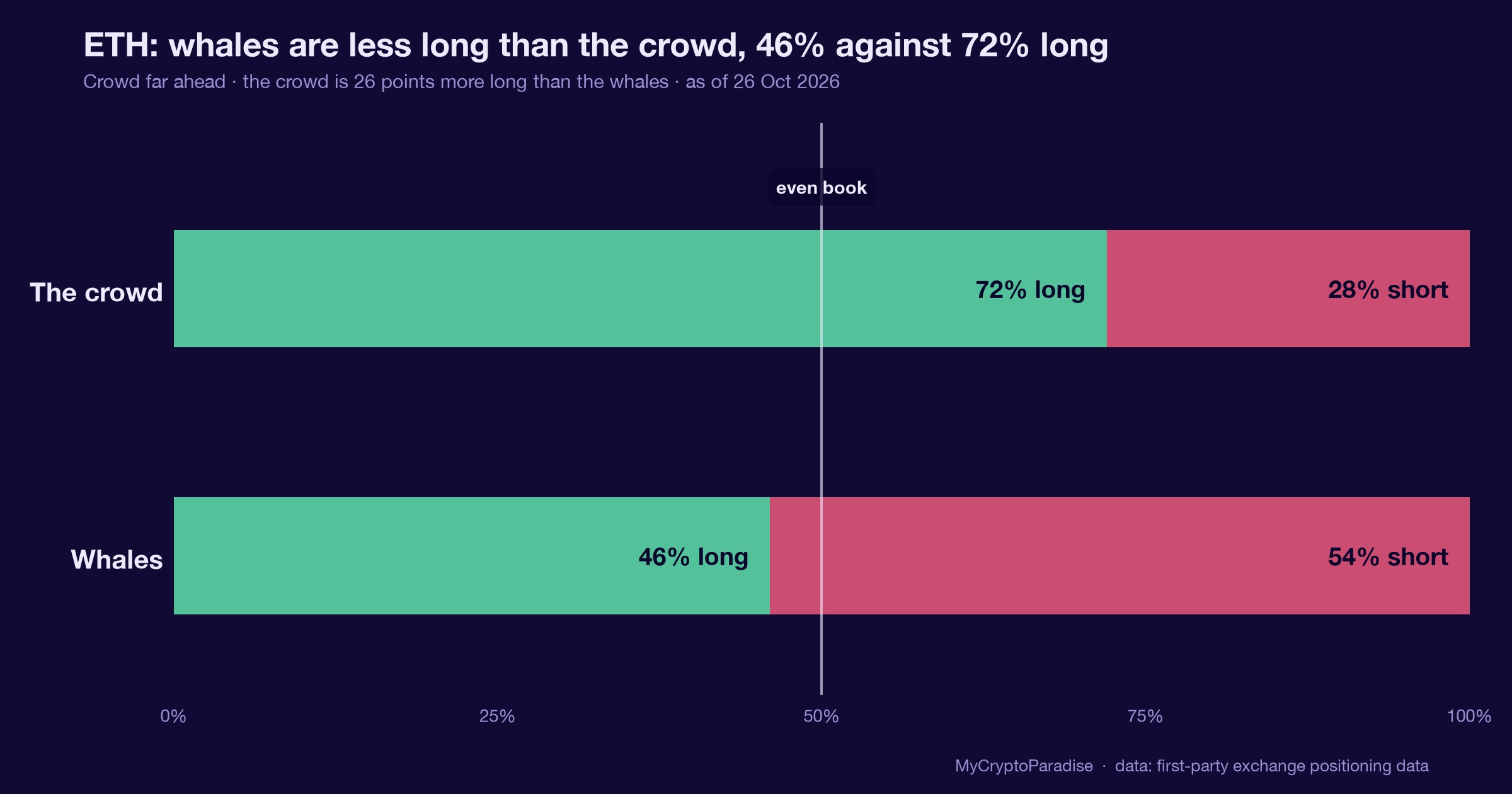
From a smart money perspective, this event does not alter the prevailing strategy. Smart money is observed to be waiting on the sidelines, with substantial USDT reserves not yet flowing into crypto, anticipating lower prices.
Conversely, retail traders might misinterpret Bitcoin's stability as a safe haven signal, potentially creating leveraged long positions. This could provide liquidity for a future long squeeze if the market indeed follows the anticipated deeper correction, trapping retail at higher levels.
Observing Bitcoin's key capitulation zone
Traders should closely monitor the broader macro environment for confirmation or invalidation of the current trends. Continued surges in oil prices and any hawkish shifts from central banks would reinforce the existing macro headwinds for risk assets.
For Bitcoin, a decisive break from its current consolidation would be a key signal. A move below the $58,000 previous low is critical; this would confirm the path towards the ParadiseTeam's anticipated $55,000-$44,000 target zone.
Conversely, an unexpected reclaim of the $82,000-$88,000 resistance level would invalidate the current bearish bias. This would signal a significant shift in market structure, demanding a re-evaluation of the medium-term outlook.
Smart money flow remains a crucial indicator. Observing USDT reserves beginning to move into crypto would signal that whales are starting to accumulate Bitcoin, likely in anticipation of a market bottom.
Without these signals, Bitcoin's price action around $77,173 is still viewed as part of an expected consolidation phase. The market is likely biding its time, waiting for clearer signals before a sustained directional move.
Why Middle East tensions reinforce bearish outlook
The ParadiseTeam maintains a strong bearish bias on higher timeframes, anticipating a deeper correction for Bitcoin. This latest geopolitical escalation, while significant for global markets, has not fundamentally altered that core expectation.
Bitcoin's minimal reaction to the oil price surge, trading near $77,173, reinforces our view that this event is a macro headwind rather than a direct catalyst for a sustained crypto rally. The market is still operating within the framework of an anticipated capitulation.
Smart money, specifically whales, are observed waiting patiently with their USDT reserves. They are positioned to absorb selling pressure in the $55,000-$44,000 'exchange of hands' zone, a strategy similar to past market bottoms. This patience is key in the current environment.
Retail traders, often driven by immediate news, are likely creating leveraged long positions. This activity provides the liquidity that smart money will eventually use for a long squeeze, particularly if Bitcoin begins to drop towards the $58,000 level and below.
For traders, the focus remains on key levels: a drop below $58,000 would confirm the bearish trajectory towards the $55,000-$44,000 range. A reclaim of the $82,000-$88,000 resistance level would be necessary to invalidate the current bearish bias, but that seems unlikely in the near term given the macro backdrop.
The read behind this: we framed this story through our own market analysis, Can Bitcoin Hold This Support?
Track it live: our live crypto funding rates and the Crypto Fear and Greed Index both update in real time, so you can watch this shift for yourself.
Related coverage
For exact entries, targets, and stop losses with full risk management, that is what ParadiseFamilyVIP is for. New to reading these moves? Start with our crypto trading strategies guide.
ParadiseTeam is monitoring the market situation closely, and we are taking these developments into consideration while building our trading tactics inside ParadiseFamilyVIP.
Crypto trading involves substantial risk. Prices are volatile and you can lose money. This article is educational and is not financial advice. Past performance does not guarantee future results.
Will escalating Middle East tensions push Bitcoin below $58,000 soon?
How 19 Paradisers are calling it
The first call is still open
Free account, no password. Members just sign in.









Join the discussion 5
yeah, that oil surge is big... I always check the commodity charts when theres news out of the Middle East, it jus makes sense. 📈
i look at oil as a cost not an investment, so a surge is just a reduction in purchasing power for most people..
yeah, i get that, it definitely impacts a lot of folks... but the *charts* show us how that cost moves, you know? its about tracking the ripples, not just feeling the splash. 📊
watching these charts reminds me that liquidity decides.. opinions get repriced fast.
i know i should be checking those commodity charts more often, it always makes me a bit nervous when theres so much happening in the news 😥 feels like i have to learn everything at once