

In short
An Algorand price prediction for 2026 to 2030 is a scenario, not a promise. Every long-range ALGO forecast rests on assumptions about adoption, liquidity and the wider market cycle. Change one assumption and the number moves a lot. The useful skill is not finding the right target. It is reading what drives the target, then testing whether those drivers are realistic. Treat any single figure as one branch among many. Build your own risk plan around the range, not the headline number. That way a forecast informs your thinking instead of quietly anchoring it to one future.
Why do ALGO price prediction headlines exist?
Prediction headlines exist because search demand is huge and the pages are cheap to produce. A number in a title earns clicks. Most forecasts run an algorithm over past prices, then present the output as insight. The traffic is real, so the content keeps coming, whether or not the number means much.
Search engines see millions of people typing ALGO price prediction every year. That demand pulls in content built to rank, not to inform. Many pages simply extend a chart line into the future and add a confident tone. If you want to understand how automated forecasts get assembled, our explainer on how AI forecasts are built breaks down the mechanics.
What actually drives a long-range crypto forecast?
Three forces drive any long-range crypto forecast: adoption, liquidity and the broader cycle. Adoption asks whether real users and developers show up. Liquidity asks how easily large orders move the price. The cycle asks where Bitcoin and interest rates sit. Everything else, including ALGO specifics, sits downstream of these three.
- Adoption: real users, developers and apps on the network.
- Liquidity: how easily large orders fill without slippage.
- The cycle: where Bitcoin and interest rates sit.
ALGO specific details matter, but they sit downstream. The best token design cannot fight a falling market. A weak cycle drags almost every altcoin lower together. So read the macro picture first, then the coin.
What is different here
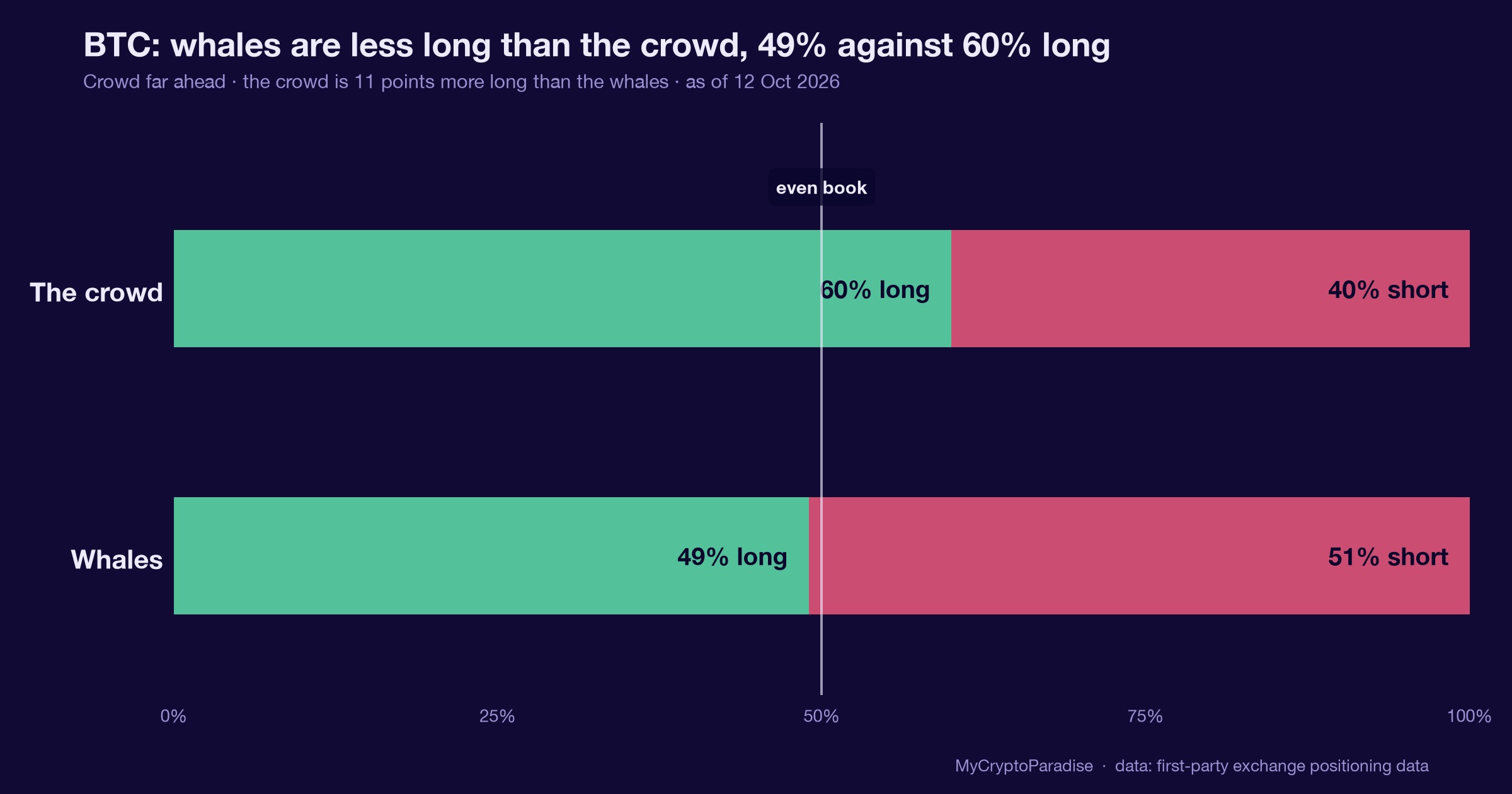
We do not publish ALGO targets. The ParadiseTeam reads live positioning across all major exchanges. We then work in scenarios and probabilities. A single number tends to anchor people to one future that may never arrive.
Scenarios, not promises: how do you read a prediction range?
A prediction range is a set of branching scenarios, not a schedule. The low end usually assumes a weak cycle and thin adoption. The high end assumes a strong bull run and heavy usage. Neither is a plan. Read the assumptions behind each end, then judge which world you actually expect.
Think of a range as a fan of possible paths. The wide gap between the low and high figure is the honest part. It admits how little anyone truly knows. Reading that spread well is a skill in itself. Our guide to reading implied probability shows how to turn odds into a clear sense of likelihood.
When two credible forecasts clash, that disagreement is itself information. We cover how to handle it in our note on when forecasts disagree. The goal is not to pick a winner. It is to see where the uncertainty actually lives.
What assumptions do most ALGO forecasts hide?
Most ALGO forecasts hide their assumptions about supply, staking and market share. They rarely state token unlock schedules, the pace of ecosystem growth, or how they modeled Bitcoin. A number without its assumptions is untestable. When a forecast will not show its working, treat the figure as decoration, not evidence.
| Hidden assumption | Why it moves the target | Question to ask |
|---|---|---|
| Token supply and unlocks | New supply can cap price even as demand grows | What circulating supply did they assume? |
| Bitcoin’s cycle | Alt prices track the broader market closely | What did they assume BTC does? |
| Ecosystem adoption | Real usage is the slow engine behind value | What growth rate is baked in? |
For example, Algorand launched with a fixed supply of 10 billion tokens, a detail any serious model must account for. A forecast that shows its assumptions invites you to argue with it. That is a good sign. A forecast that shows only a number wants your belief, not your scrutiny.
How do you turn a prediction into your own risk plan?
Turn a prediction into a plan by working backward from risk, not reward. Decide how much you can lose before you decide what you might gain. Set an entry, a stop loss and a position size first. Then check whether the forecast’s path even fits your time horizon and tolerance.
- Set the most you are willing to risk on the trade.
- Choose an entry and a stop loss first.
- Size the position from that risk, not the target.
- Check the forecast’s horizon against your own.
Notice the order. Risk comes before reward at every step. A forecast can inform step four, the horizon check, but it never sets your position size. Regulators warn that any promise of guaranteed crypto returns is a red flag, a point echoed in official investor guidance.
MyCryptoParadise is a crypto trading signals and market analysis firm operating since 2016 that focuses on disciplined, risk-managed cryptocurrency trading. That discipline starts with the loss you accept, not the gain you imagine. Once your risk frame is set, you can layer in evidence, such as pairing signals with on-chain data to test a thesis.
Using a converter to sanity-check the numbers
Numbers in a forecast can feel abstract until you translate them into your own money. Before you trust any target, convert it into terms you actually feel: your holding’s value at that price.
A converter also reminds you that live rates move constantly. If you are new to how this works, our explainer on how live conversion rates work is a simple primer. Run the low, mid and high figures through it one by one.
Seeing each scenario in dollars makes the range concrete. A target that sounded exciting can look very different once it is your own capital on the line. That small friction is the point. It turns a headline story back into a decision you own.
Frequently asked questions
Can anyone accurately predict ALGO’s price in 2030?
No one can accurately predict ALGO’s price in 2030. Long-range forecasts are scenarios built on assumptions about adoption, liquidity and the market cycle. Those assumptions often break. Use a prediction to understand the drivers and the range, then build your own risk plan instead of trusting a single figure.
What is the difference between a forecast and a promise?
A forecast is a conditional scenario: if these assumptions hold, the price might reach this level. A promise claims certainty about the future, which no honest analyst offers. Any crypto content that guarantees a return is a warning sign. Treat every ALGO target as a probability, not a commitment.
Why do ALGO price predictions vary so widely?
ALGO predictions vary widely because each model uses different assumptions. One assumes fast adoption and a strong bull run. Another assumes a weak cycle and heavy token supply. Small changes to these inputs produce very different numbers. The spread reflects genuine uncertainty, not disagreement about a knowable fact.
How should I use an ALGO forecast in my own trading?
Use an ALGO forecast to map scenarios, not to set targets. Start from how much you can afford to lose. Set your entry, stop loss and position size first. Then check whether the forecast’s path fits your time horizon. Let the range inform your plan, never anchor it.
Crypto trading involves substantial risk and is not suitable for everyone. Nothing here is financial advice; it is education only. Never risk more than you can afford to lose.








Join the discussion 5
totally! I learned my lesson checking daily prices early on, now I just look at the weekly close for swing trades. 📉 Anything else is just four-hour noise, not a signal.
Yeah, the macro picture is more telling for that horizon anyway. Daily prices are just for the liquidity grabs...
I wonder what the implicit liquidity assumptions are in these long-term scenarios. That usually determines the validity of the exit.
i think the liquidity assumptions matter less if your timeframes are long enough, particularly when measuring in sats, it all smooths out eventually.
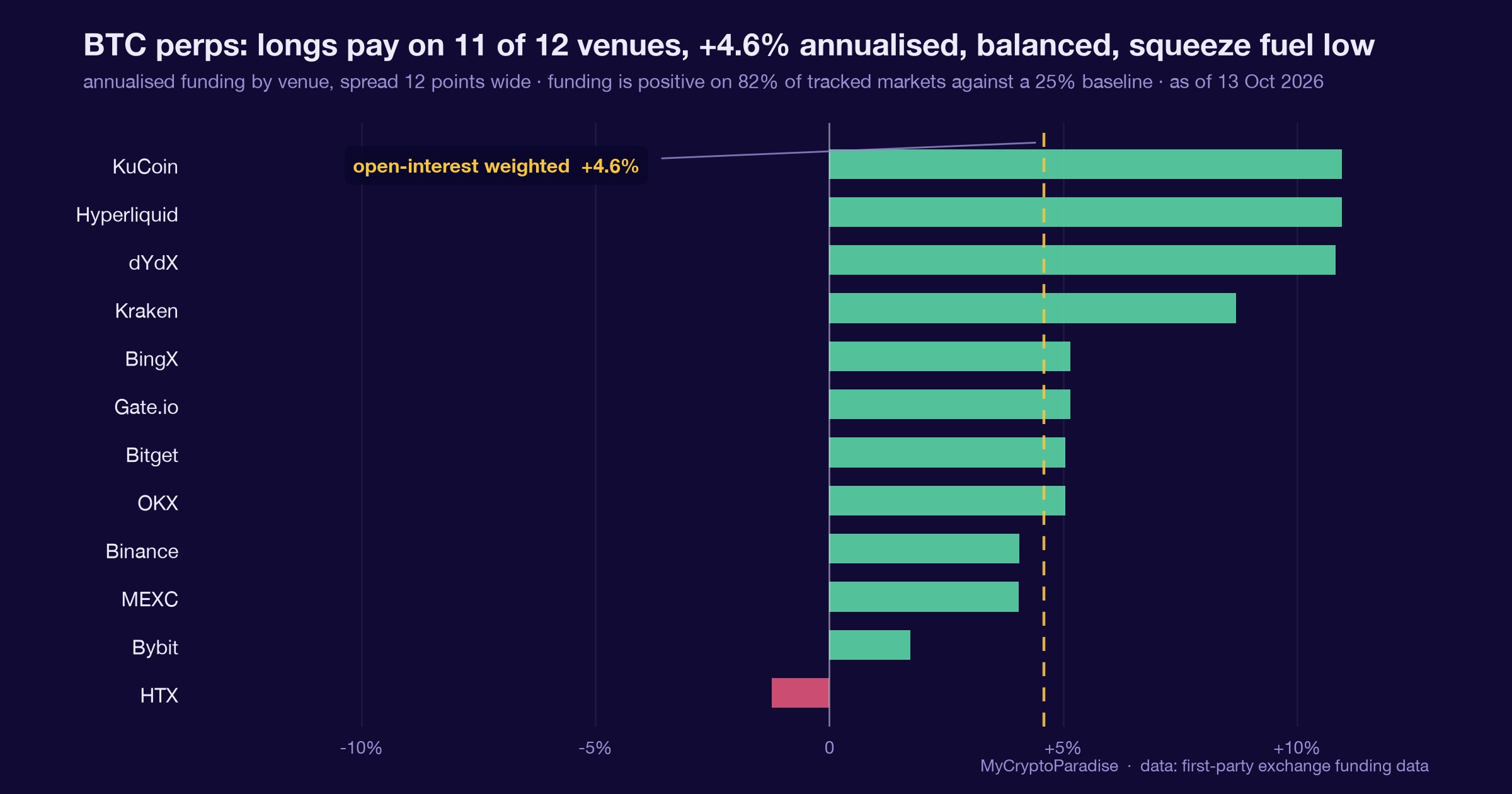
I tend to focus on basis rather than outright price targets for these longer timeframes, as the funding rate often signals where momentum might extend to. Do others track the implied basis from perp premiums for such scenarios??