

In short
An AI prediction market lets people buy and sell shares in whether a future AI event happens. A price of 25 percent means the last traders paid 25 cents for a dollar payout. That number reflects what a small crowd is willing to bet right now. It is not a forecast, a probability from a model, or a guarantee. These markets price sentiment and available money, not hidden knowledge. Thin trading, vague wording, and headline swings all distort the figure. Read a percentage as a live snapshot of crowd opinion. Treat it as one weak signal among many, never a prediction.
What is different here
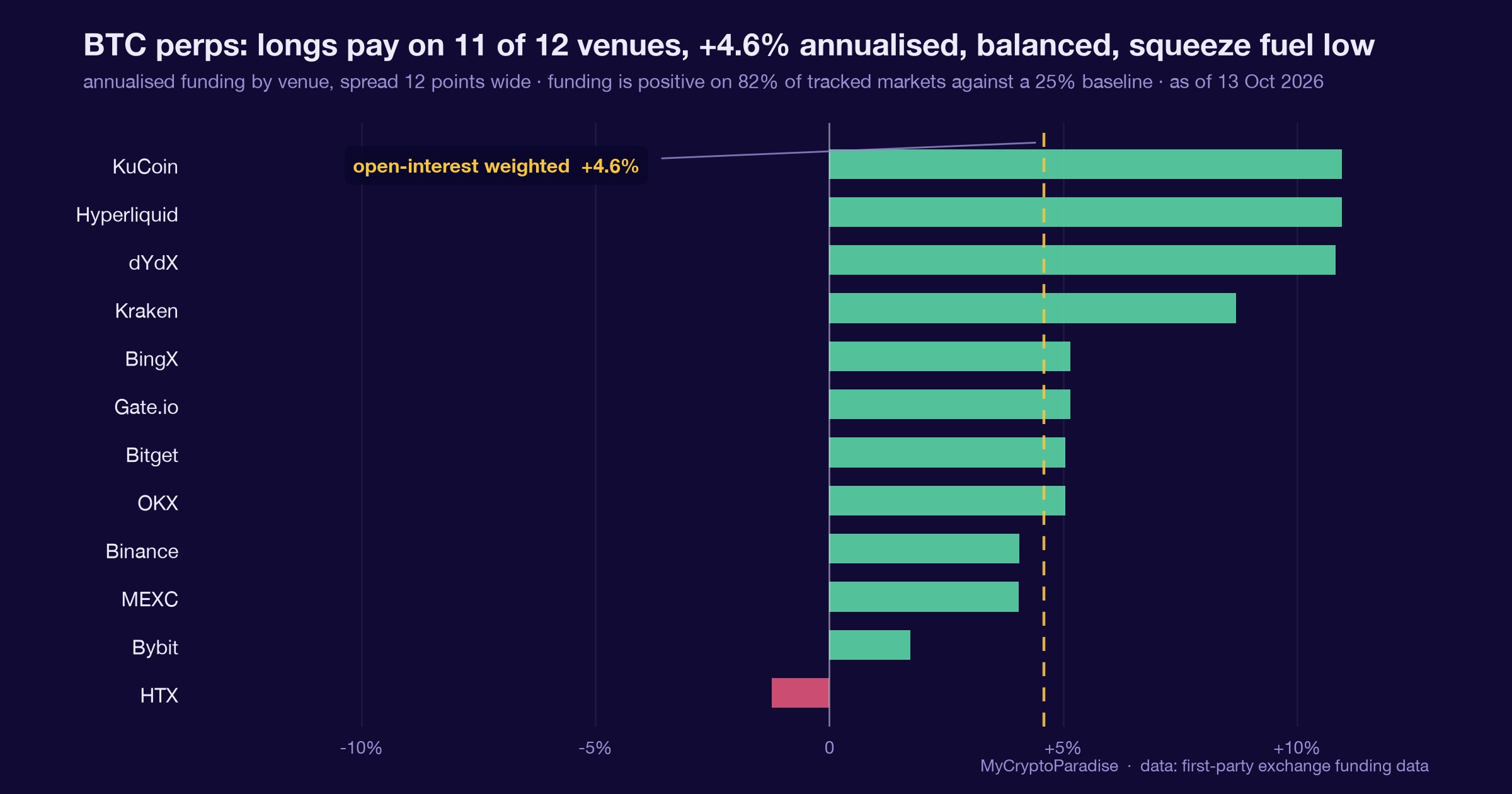
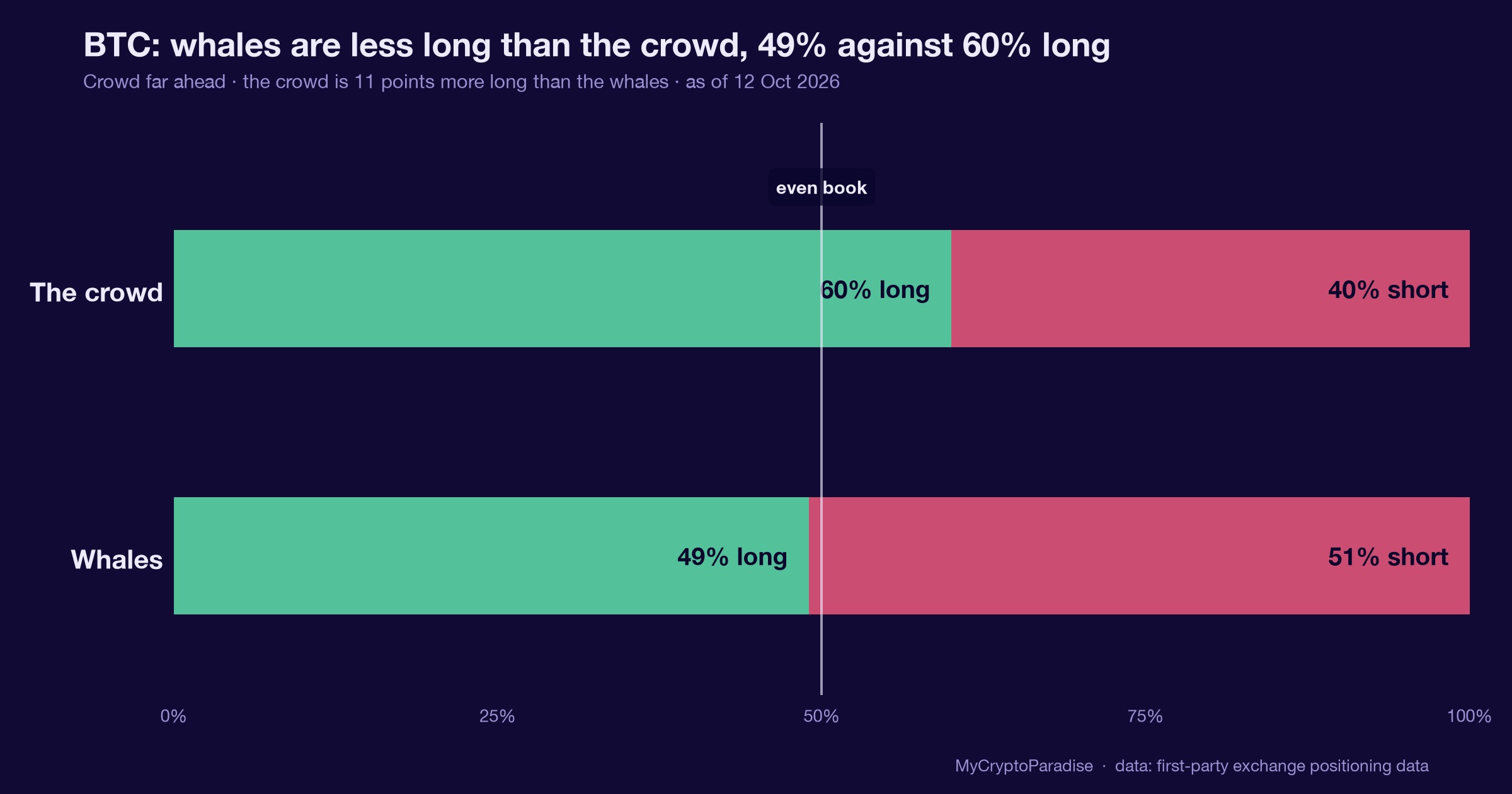
The ParadiseTeam reads a prediction market odd the way we read funding rates. It is sentiment to weigh across all major exchanges, never a signal to trade alone.
What an AI prediction market is pricing
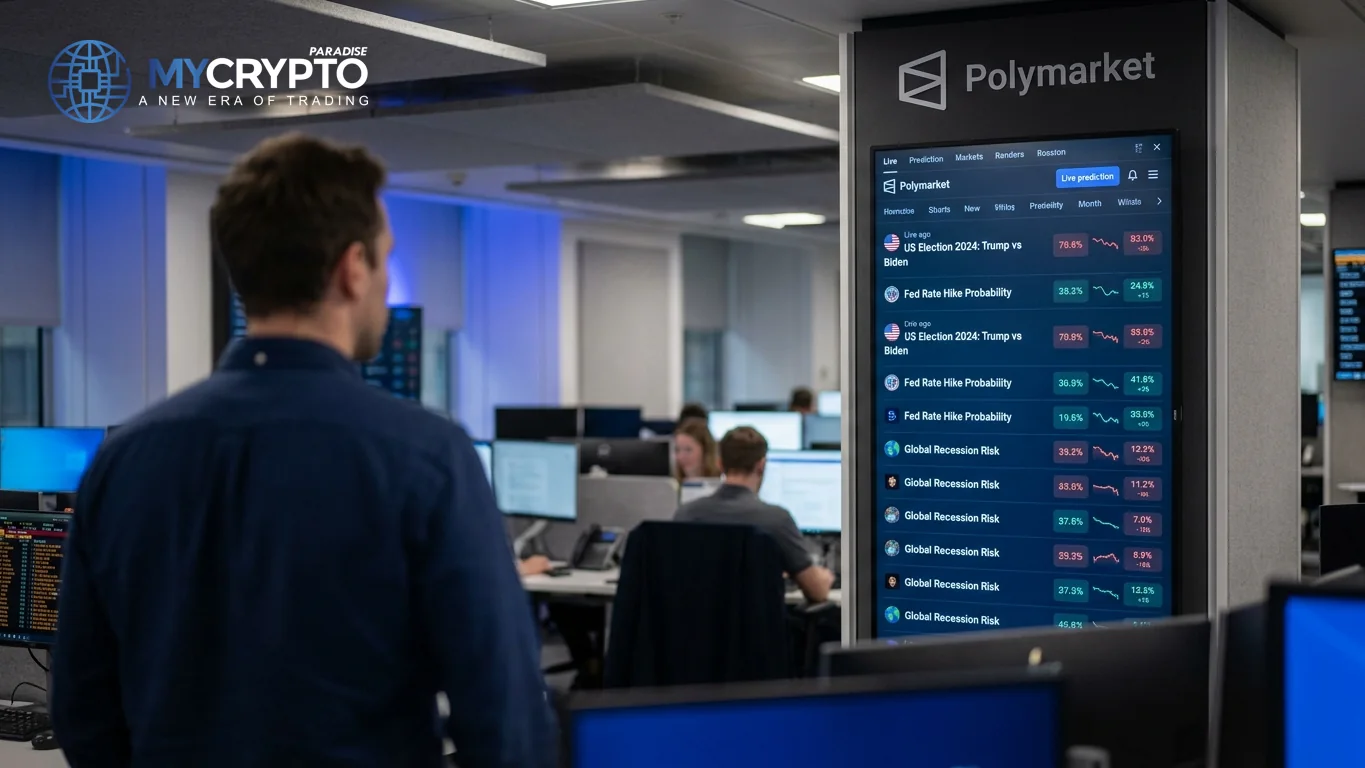
An AI prediction market prices a live bet, not a fact. Traders buy shares that pay one dollar if an event happens and nothing if it does not. The last trade sets the odd. So the figure shows what buyers will risk today, not what experts predict.
Say a market lists a 25 percent chance that a popular AI bot gets shut down over safety concerns. A trader who buys that side pays about 25 cents per share. If the bot is killed, each share pays one dollar. If it survives, the share expires worthless. The odd is simply the latest agreed price between a buyer and a seller.
That price moves whenever new money arrives. A single large bet can jump the number several points in minutes. So the odd is a market quote, like the price of a stock, not a measured probability. Researchers describe prediction markets as tools that aggregate dispersed opinion into a price. We cover the wider idea in our explainer on an artificial intelligence trade.
How should you read a percentage odd without over-reading it?
Read the odd as today’s crowd opinion, weighted by money. A 25 percent figure means buyers currently doubt the event but do not dismiss it. It does not mean the event has a true one in four chance. Check volume and wording before you trust any single number.
Before you lean on any figure, run four quick checks.
- Trading volume: a thin market moves on tiny bets.
- Resolution wording: vague terms decide payouts unfairly.
- Time to expiry: distant dates invite wild swings.
- Who is betting: a few accounts can dominate.
Each of these can bend the number away from anything real. A thin market is the biggest trap. When only a handful of people trade, one confident bettor sets the price for everyone else.
Why are AI-outcome markets especially noisy?
AI outcomes are hard to define, so these markets carry extra noise. Terms like shut down or unsafe rarely have a clean trigger. Trading is often thin, so one bet swings the odd. Headlines and viral posts then push prices faster than any real change in the facts.
Ambiguous wording is the core problem. A market can price the odds of a shutdown long before anyone agrees what a shutdown even means. Does a paused feature count? Does a regional block count? Traders read the same rule differently, so the odd blends real doubt with pure confusion.
AI stories also move on emotion. A single alarming clip can flood a small market with fresh bets in an hour. That is worth remembering when you weigh the limits of AI signals against their genuine uses.
Sentiment gauge or forecast: what is the honest distinction?
A forecast estimates what will happen using a model or evidence. A sentiment gauge shows what a crowd feels right now. A prediction market odd is the second, not the first. It can be useful as a mood reading, yet it fails badly as a promise about the future.
The table below separates what the odd means from what people assume it means.
| What a 25 percent odd means | What traders wrongly assume |
|---|---|
| The last trade priced this side at 25 cents. | The event has a fixed 25 percent chance. |
| A small crowd is betting today. | Experts have modelled the outcome. |
| The number can move on one headline. | The number reflects settled analysis. |
Crowds can be smart, but only when bets are many and independent, a pattern studied under the wisdom of the crowd. Thin AI markets rarely meet that bar. So treat the odd as a mood reading, and keep it well short of a forecast.
What does this mean for AI-linked crypto positioning?
Treat an AI prediction market as one weak sentiment input, never a trade trigger. If a market doubts an AI project, that mood can still move related tokens fast. Size any position on your own risk plan, not on a crowd’s bet. Confirm the story with harder evidence first.
AI-linked tokens often react to the same headlines that move these markets. A sour mood in a prediction market can precede a sharp move in a related coin. That is a reason to watch, not a reason to chase. Risk sizing comes first, and the crowd’s guess never replaces it.
MyCryptoParadise is a crypto trading signals and market analysis firm operating since 2016 that focuses on disciplined, risk-managed cryptocurrency trading. That discipline is why we read these odds as sentiment, not as a forecast to trade. If you use tools like ChatGPT for market analysis, apply the same caution, and the same care when choosing an AI trading tool.
Frequently asked questions
Does a 25 percent odd mean the event has a 25 percent chance?
No. A 25 percent odd means the last traders paid about 25 cents per dollar of payout. It reflects crowd sentiment and available money, not a measured probability. In thin AI markets, one large bet can set that number, so read it as opinion, never as a true chance.
Are AI prediction markets useful at all?
Yes, as a sentiment gauge. They show what a crowd feels about an AI event right now, which can hint at mood shifts. They are weak as forecasts, though, because wording is vague and trading is thin. Use them as one small input, and confirm with harder evidence.
Why are AI outcomes harder to price than sports or elections?
AI outcomes lack clean triggers. A phrase like shut down or unsafe can mean many things, so traders disagree on when a market should pay out. That ambiguity, plus thin trading and fast-moving headlines, makes the odd swing more than a well defined event with clear rules would.
Should a prediction market odd change how I trade AI tokens?
Not on its own. A sour or bullish odd can flag a mood that may move AI-linked tokens, so it is worth watching. It is not a trade trigger, though. Size positions on your own risk plan, confirm the story with real evidence, and treat the crowd’s bet as background.
Crypto trading involves substantial risk and is not suitable for everyone. Nothing here is financial advice; it is education only. Never risk more than you can afford to lose.



Join the discussion 25
i suppose some might interpret a high 'AI' probability as a signal to ape, but even the funding-rate premium on BTC rarely stays one-sided for long.
I often cross-reference the market's implied probability from these AI models with my own projected load path scenarios. It adds another data point for structural integrity.
Ahmed, you right that market implied probability can be useful for structure 🏗️. I also find it helps spot where the big players might be trapping retail 🎣.
I see it more as a confirmation tool... After my own research, I check the "sentiment" here... for what people are leaning towards.
i use it for contrarian signals sometimes too... rule 3: "when the crowd is certain, question everything"...
I use these only to gauge how much interest is currently priced into a potential retest. Nothing more.
That's a sound approach, Lukas. I find them most useful for determining where capital is being allocated across the wider market, which can sometimes highlight areas of value priced in sats.
i remember thinking early on that if the algos said something, it was like gospel 🙇♂️ but learned pretty quick sentiment aint a crystal ball 🔮 just another piece of the puzzle innit 🤔
yes, but i still look at open interest weighting for sentiment shifts and potential basis expansion/contraction.
The distinction between sentiment and forecast is well-made. If we acknowledge the "wisdom of the crowd," is there a measurable threshold where that sentiment itself begins to exert predictive force?
for me these AI markets are more than just sentiment, its a way to see what others are putting their capital on not just what they say
Sentiment" is okay, but I'm always looking for the black swan no one's even thought to price in. What's the *real* downside here, you know? 🧐
For me, the only "sentiment" I ever trusted was pesos disappearing. So I look at anything that helps protect real purchasing power.
I used to jump on every "hot tip" on the old forums... almost lost my shirt a few times doing that. 🤦♂️ Learning to read sentiment *after* my own digging makes so much more sense now.
I think this sentiment-not-forecast point is too strict 🤔. If enough people are seeing the same thing and acting on it… isnt that a forecast for price❓📈
Yah, I was wondering about that too, Aisha. Like, what if the AI market is pricing in news before we even see it? 🧐
It's less a forecast and more an emergent consensus, perhaps, which then influences basis. Liquidity providers certainly respond to that dynamic.
I don't know.. I've backtested enough price action to see that "sentiment" often *is* the forecast for many. Be careful with that line, it invites lazy thinking.
Sentiment is a forecast" - I know that feeling! It's why I always check the funding rates before putting any money in. Those are usually a good tell. 🤔
Honestly, it reminds me of when I'd design a landing page, then obsess over user sentiment post-launch for *any* signal, not just the good ones. 😅 It's all just data.
i wonder how AI models interpret exchange outflows as sentiment, if they even track it for these sorts of predictions
never relied on any oracle for a trade... your own skin in the game is the only real sentiment you need.
ray, for sure. the skin-in-the-game sentiment is the only one that truly posts to your ledger, you know? 💯 all other “sentiment” is just a contingent liabilty until its got a stop loss.
i think for me its more like a little nudge to keep looking at things or sometimes a reminder i might be missing something obvious. 🤷♀️
for those of us who treat our crypto positions like index allocations, I wonder what could actually shift an AI market's long-term conviction beyond short-term sentiment.