

In short
You do not need to watch charts all day to grow a crypto portfolio safely while working full-time. You need a plan that survives your absence. Start by risking a small, fixed share of your account on any single position, so one bad move cannot sink you. Size positions before you enter, not during the panic. Use alerts and resting orders to enforce your rules while you are at work. Prefer slow, boring accumulation over fast bets you cannot monitor. The goal is to survive long enough to compound, not to win any single trade.
How do you grow crypto without watching charts?
You grow crypto without watching charts by moving the decisions off the screen and into rules. Decide your position size, entry zone and exit levels in advance. Then place resting orders and alerts that act for you. Your job at work becomes checking, not reacting.
This works because the market does not care how many hours you stare at it. What protects your money is position sizing and a clear exit, not attention. A job that keeps you offline can be an advantage, if your rules are written down.
Think of it as building a system, not making predictions. A good system tells you what to do before the moment arrives, so emotion never gets a vote. That is the difference between investing around a job and gambling around one.
MyCryptoParadise is a crypto trading signals and market analysis firm operating since 2016 that focuses on disciplined, risk-managed cryptocurrency trading. That focus exists for exactly this reader: someone with a full day of other work.
What is different here
The ParadiseTeam sizes every position before the entry, then lets resting orders do the waiting across all major exchanges. Absence is planned for, not fought.
Why can less screen time mean lower risk?
Less screen time can mean lower risk because most damage comes from reacting, not from waiting. Constant watching tempts you to chase green candles and revenge losing trades. A trader who is at work cannot micromanage, so a rules-based plan protects them from their own impulses. Absence, structured well, becomes a discipline tool.
Overtrading is the quiet tax on busy people. Every extra click is a new chance to break your own plan. Sometimes the strongest move is no move at all, which is why waiting is a position too.
Crypto moves hard in both directions, and that is normal, not a crisis. If a twenty percent swing overnight would force you to act rashly, your position is simply too large. Right-sizing turns a scary move into a shrug.
How much should you risk per trade when you cannot babysit it?
Risk a small, fixed percentage of your account per position, often between one and two percent, so no single trade threatens your survival. When you cannot watch the screen, size down further. A smaller position widens your margin for error and lets a stop do its job without your input.
The maths is simple and worth internalising. If you risk one percent and a trade fails, you have ninety-nine percent left to recover. Survival is what lets you compound later. Our own framework for risk per trade and account survival treats this as the first rule, before any entry idea.
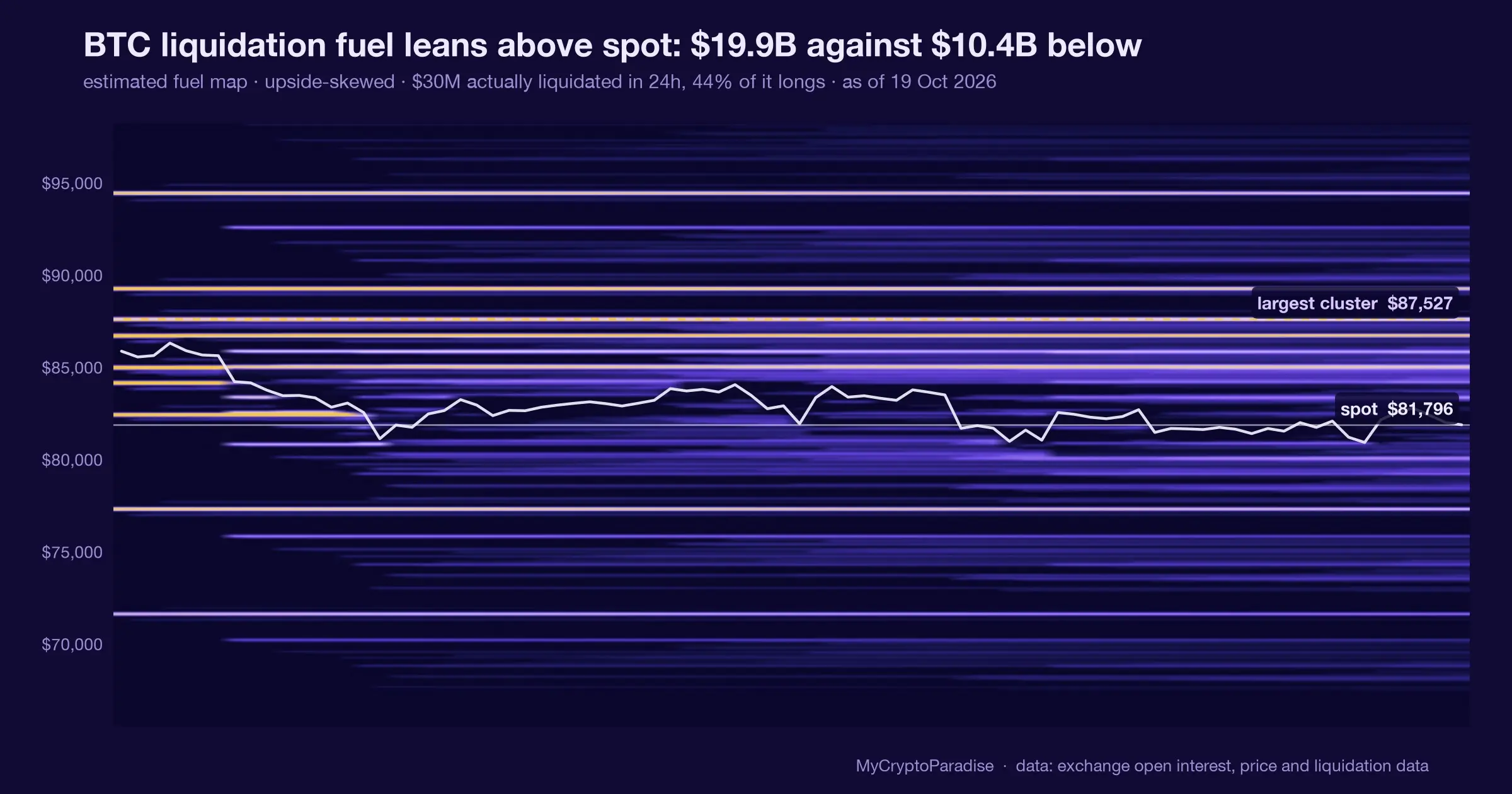
There is a second lever most busy traders ignore: leverage. High leverage shrinks the distance between your entry and liquidation, so a normal wobble can wipe a position while you are in a meeting. For an offline schedule, low or no leverage is the safer default.
If you want to see what a fixed percentage looks like in real numbers, try the sizing tool below.
How do you automate discipline with rules, alerts and limits?
You automate discipline by turning intentions into orders the exchange enforces. Set a stop loss and a take profit when you enter, not later. Add price alerts so you learn about moves by phone, calmly. Use limit orders to buy your zone without staring at the book.
Resting orders remove the two worst moments from your day: the panic sell and the greedy chase. There is a practical catch, though. In thin or fast markets your fill can drift from your intended price. That is why understanding how slippage affects fills matters before you lean on market orders.
Keep alerts few and meaningful. An alert at every tiny move trains you to ignore them all. Two or three levels that would genuinely change your plan are worth more than twenty that just create noise.
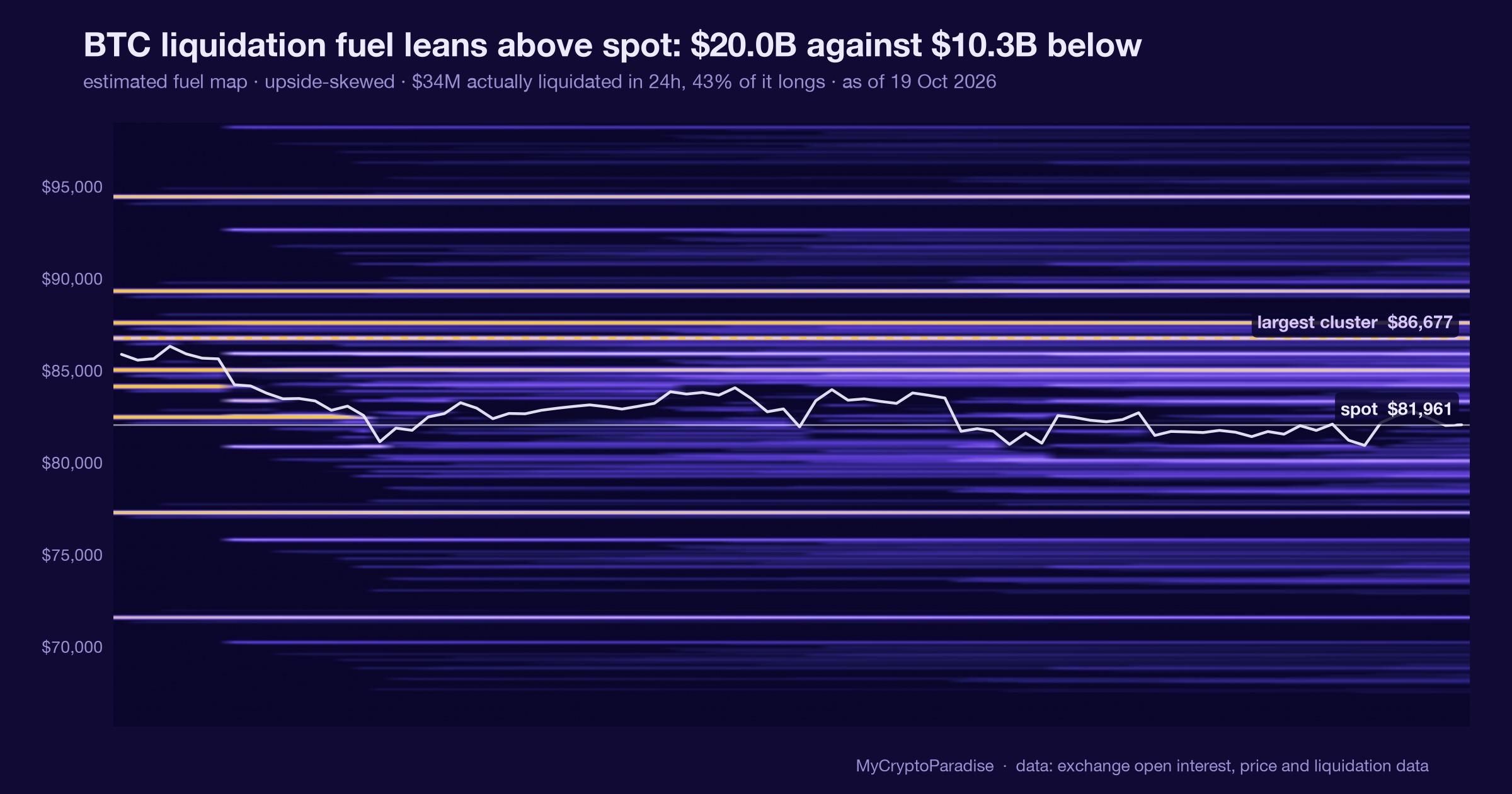
Timing your entries also gets easier when you read the crowd instead of the candle. Crowded, over-leveraged conditions often precede sharp reversals, so reading funding rate regimes can tell you when to wait. The market regulator’s guidance on crypto assets is blunt about their volatility, and that volatility is exactly what your rules must absorb.
What mistakes do busy investors make most?
Busy investors most often over-size positions, skip stop losses and use high leverage to force fast results. They check prices at random emotional moments and trade on feeling. They also chase whatever pumped that day. Each habit trades long-term survival for the illusion of speed.
The pattern is always the same: too much size, too little patience. If you recognise even one of these, treat it as the first thing to fix.
- Sizing a position by conviction instead of a fixed percentage.
- Entering a trade without a preset stop loss.
- Adding leverage to reach a target faster.
- Buying a coin only because it pumped today.
Signals can help here, but only when you treat them as one input among several. Pairing a setup with on-chain context is stronger than acting on either alone, which is where combining signals with on-chain data earns its place.
A simple risk-first routine for a full-time schedule
You do not need more screen time to grow a crypto portfolio. You need a routine that runs while you work. A short check in the morning and one in the evening is usually enough for a swing-focused approach.
One calm, repeatable habit beats a dozen frantic ones. A steady accumulation method such as dollar-cost averaging spreads your entries over time and removes the pressure to time the exact bottom.
- Morning: check open positions and confirm stops are still in place.
- Set or adjust price alerts for the levels you care about.
- Place any new entries as limit orders inside your planned zone.
- Evening: review alerts that fired and log what happened.
Notice what this routine does not include. It does not ask you to predict the market or to sit and watch it. It gives you a repeatable process, a probability read rather than a forecast, and enough distance to keep your judgement clear.
Grown slowly and defended well, a portfolio can outlast the noise. That is the whole point of trading around a full-time job, not against it.
Frequently asked questions
Can I grow a crypto portfolio if I only check it twice a day?
Yes. A twice-daily check suits a swing or accumulation approach well. Set your stops, take profits and alerts when you enter, so the plan runs without you. The market does not reward constant watching. It rewards consistent rules and position sizes small enough to survive the hours you are away.
How much of my income should I put into crypto?
Only money you can afford to lose entirely, after an emergency fund and essential bills. Many cautious investors keep crypto to a small slice of total savings. There is no universal number, but the test is simple. If a total loss would change your daily life, the amount is too high.
Is dollar-cost averaging safer than trying to time the market?
For most busy people, yes. Dollar-cost averaging spreads your buys across time, so no single entry price decides your outcome. It removes the pressure to catch the exact bottom, which almost nobody does reliably. You trade the chance of a perfect entry for a calmer, more repeatable process.
What is the biggest risk for full-time workers trading crypto?
Over-sizing positions is the biggest risk. When you cannot watch the screen, a position that is too large turns a normal dip into a forced, emotional decision. Leverage makes this worse by moving liquidation closer to your entry. Keep size small and leverage low, and most other problems shrink with it.
Crypto trading involves substantial risk and is not suitable for everyone. Nothing here is financial advice; it is education only. Never risk more than you can afford to lose.


Join the discussion 15
how do you guys deal with the fomo from that one co-worker always talking his book? 🫠 It makes sticking to my own plan so hard! 😅📉
The idea of alerts protecting capital feels a bit off to me. True safety in this space, especially when working, comes from understanding the asset itself and its place in the market, not from reactively chasing charts.
Purchasing power is the only “safety” I worry about. Position sizing helps protect that, but my alerts are critical for me to react when I can’t watch.
Safely" is good but this mindset... I mean, you need to be glued to the charts 🤯 for the real pumps ✨ not just "alerts" 😴. I learned that the hard way lol 💸.
If you need to be glued to charts for pumps, then your entry was flawed. That is chasing liquidity.
yeah, being glued to the charts for the pump its one thing, but that doesn't really help for liquidaton clustering does it
oh this is a good one to read about, its the "working full-time" bit that really makes you feel like you have to be extra careful 😬, really makes sense.
Grace, exactly! That 'working full-time' debit means your risk-reward has to be a lot cleaner on entry. No time for sloppy ledgers! 😅
alerts seem less useful for a long-term approach; it's the fundamental thesis, not daily price action, that matters most.
yeah, "safely" is the thing right? my rule is always figuring out the worst case first then seeing if i can live with it. 😅
Yes, position sizing. A key point missing from so many discussions... and the one I always lead with when friends ask about putting their pensions into crypto. What's your max drawdown from here.. then size for that.
I look at the macro first, then size from there... liquidity flows often dictate the drawdown, not just the asset itself.
macro can be a factor, sure, but what's your stop when liquidity dries up ..? or if your macro view is wrong, what's the capital at risk for that position.
safely while working full-time is good but what is the one level that matters
how are we defining "safely" here when volatility is the main driver. is it about capital protection from bad trades or something else.