


Listen: the breakdown
Developing story update (October 01, 2026, 13:50 UTC):
Bitget’s $388M hack pushes Q3 crypto security losses past $1B. Crypto security losses reached $1.26 billion in Q3 across 247 incidents, with September alone accounting for roughly $769 million.
Developing story update (September 30, 2026, 15:09 UTC):
Our sources indicate Bitget initially estimated the loss from the September 24 hack at approximately $351.6 million, a figure later updated by on-chain tracking to $387.5 million. This initial discrepancy highlights the evolving nature of incident reporting in major security breaches.
Further context on asset freezing capabilities shows Tether previously froze nearly $550 million in Iran-linked USDT in 2026. In 2025, Tether also blacklisted 39 addresses tied to the IRGC, freezing approximately $1.5 million they held, out of $1.5 billion received, reinforcing the centralized control stablecoin issuers maintain.
In contrast, native assets like XRP on the XRP Ledger cannot be unilaterally frozen by their creators, such as Ripple, once they are in an attacker-controlled wallet. This distinction is crucial for understanding the varying degrees of censorship resistance across different crypto assets.
What to watch now: Traders should continue to monitor the distinction between centralized stablecoins and native blockchain assets regarding censorship resistance.
Market briefing: A $387.5 million Bitget hack, the biggest of the year, drew stablecoin freezes and blocked swaps, yet BTC held near $84,277 and ETH near $2,700 as the tape barely moved.
- Attackers pulled about $387.5 million from Bitget on 24 September, the biggest exchange hack of the year.
- Circle and Tether blacklisted attacker wallets holding roughly $339,000, and NEAR Intents turned away over $50 million in linked swaps.
- Prices barely moved, with BTC near $84,277 and ETH near $2,700, a muted reaction that is itself the signal.
A $387.5 million Bitget hack, then stablecoin issuers froze wallets and a router blocked linked swaps. So who really can freeze your crypto when it matters most?
Crypto sold itself on a simple promise: your coins, no one else's permission. This week tested that promise hard.
On 24 September, attackers drained roughly $387.5 million from Bitget. It stands as the biggest exchange hack of the year. The theft alone would be story enough.
What followed matters more. Circle and Tether blacklisted attacker wallets holding about $339,000 in USDC and USDT. NEAR Intents said it turned away more than $50 million in swaps linked to the attack.
So the funds moved, and then parts of the system simply froze. Issuers flipped a switch. A cross-chain router refused the business. The censorship-resistant asset class showed, again, that large chunks of it answer to someone.
We covered the laundering trail separately, as stolen funds hopped through DeFi. This piece is about the other half: who holds the freeze button, and what that means for anyone parking size on a centralized exchange.
The reaction in price was quiet. BTC sat near $84,277, up a modest half percent on the day. ETH drifted to $2,700, slightly red. A third of a billion dollars walked out of a major exchange, and the tape barely blinked.
That calm is itself the signal. Either the market already prices this risk into centralized platforms, or the frozen sums are too small to threaten anyone's solvency. Both readings point the same way. Centralization is a feature the industry tolerates until the day it does not.
Censorship resistance meets a compliance reality
The transmission here is trust, not liquidity. A hack of this size does not drain market-wide funding. It drains confidence in where you keep your coins.
Every large exchange breach reminds holders of a plain fact. Custody on a centralized platform means someone else controls the keys. That someone can be hacked, and the issuers behind the stablecoins can freeze what moves next.
Circle and Tether proving they can blacklist wallets cuts both ways. For victims, it is a rescue tool. For the censorship-resistance thesis, it is a crack in the story. The same power that freezes a thief can, in principle, freeze anyone a regulator names.
That tension is the real macro effect. It does not show up in a single candle. It shows up slowly, in where capital chooses to sit.
When trust in centralized custody thins, funds migrate. Some move to self-custody wallets. Some rotate toward assets and rails seen as harder to stop. The flow is gradual, not a same-day shock.
There is no single confirmed catalyst tying this hack to today's price action. We read it as slow pressure, not a trigger. Honesty matters here more than drama.
For traders, the mechanism is simple. Exchange risk is visible again. Counterparty risk sits back on the whiteboard. And every headline like this raises the quiet cost of leaving size on a platform you do not control.
A huge hack the market shrugged off
Start with the tape. BTC held near $84,277, ETH near $2,700, both close to flat. On the surface, nothing broke.
Look closer and the bearish tilt is about flows, not the daily candle. A breach of this scale nudges cautious capital off exchanges. Coins leaving order books thin the bid over time.
BTC feels this least. It is the deepest, most liquid asset in the space, so a confidence knock rarely moves it hard on the day. But reduced exchange balances can sap the fuel a rally needs to push through resistance.
ETH sits one rung down the risk ladder. It already printed red on the day. When trust in centralized platforms wobbles, the assets just below BTC tend to feel the drag first.
Alts sit at the bottom. They live and die on exchange liquidity. If holders pull funds toward self-custody, the thinnest books get thinner, and spreads on smaller tokens widen.
Stablecoins are the quiet centre of this story. The frozen $339,000 is tiny against total supply, so liquidity itself is untouched. But the demonstration lingers. Traders now see, in public, that a wallet balance can be switched off.
None of this forces a crash. The sums are small and the market shrugged. The bearish read is softer and slower: a security shock that chips at confidence in the centralized plumbing every trader still relies on.
Blacklists, outflows and exchange confidence
Watch exchange balances first. If net outflows from major platforms climb in the days ahead, that confirms the confidence hit is real and capital is voting with its feet.
Watch Bitget specifically. Steady withdrawals, a widening gap between its prices and the broader market, or fresh solvency questions would deepen the bearish read. Calm books and business as usual would invalidate it.
Watch the stablecoin response next. More blacklisting headlines keep the censorship debate hot and pressure sentiment toward centralized rails. Silence lets the story fade.
The invalidation case is straightforward. If BTC reclaims and holds above the levels it is fighting for, and outflows stay ordinary, this hack becomes a footnote. Markets forget breaches quickly when price cooperates.
There is also a contrarian path. A clean recovery of most funds, or coordinated freezes that claw back more, could reframe the freeze power as a safety net rather than a threat. That would soften the bearish tone.
Keep an eye on where BTC trades relative to $82,000. That level is the market's current battleground for turning old resistance into support. A hack-driven wobble that loses it would matter more than the theft headline itself.
Finally, watch retail. If smaller holders panic about the freeze angle and pull funds, the near-term flow turns heavier. If they shrug, as the muted tape suggests so far, the event stays localized. The next few sessions decide which.
Where centralization risk sits for positioning
The ParadiseTeam reads this as a confidence event, not a liquidity event, and positions accordingly. The hack does not change the map. It changes the risk of where you hold coins while you trade it.
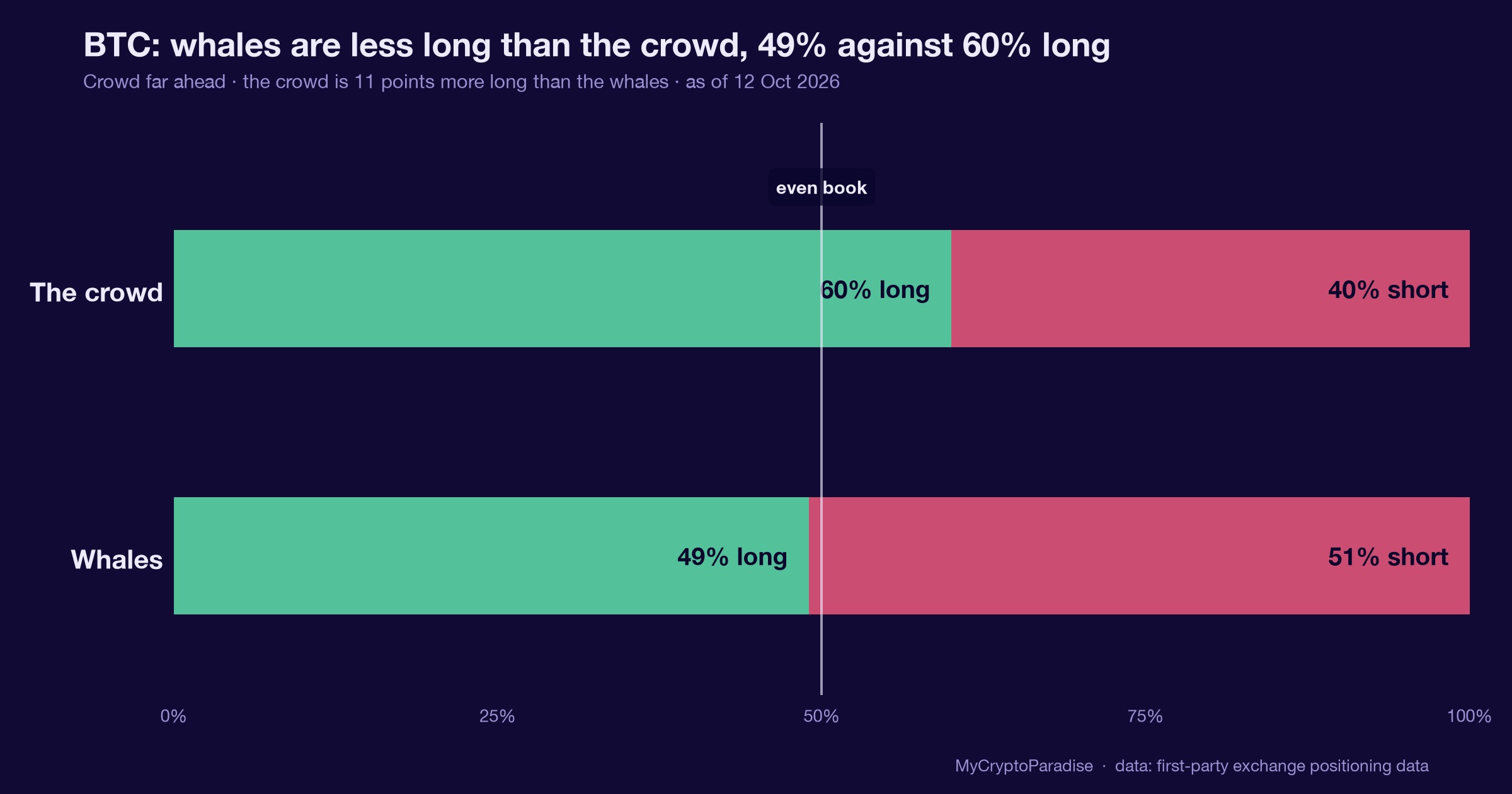
Our standing lens keeps BTC in a cautious frame. Whale accumulation, roughly $380 million in a day, may still fuel a push toward the $88,000 to $90,000 zone. We put rejection there at high odds. This hack gives no reason to fade that caution.
BTC was near $84,277 as of the read. It is still trying to turn $82,000 from old resistance into firm support. That reclaim is the line that matters more than any breach headline.
Here is the smart-money frame. Strength into the $88,000 to $90,000 band, especially with the daily MACD divergence we are tracking, is where distribution usually hides. A security scare landing while price stalls under resistance fits that pattern, not a fresh accumulation story.
So we treat the muted reaction with respect, not comfort. Retail sees calm and assumes safety. Smart money sees an excuse to trim into strength and reduce exchange exposure quietly.
The practical takeaway is about counterparty risk, not a level. Size held on any single centralized exchange now carries a visible tax. The ParadiseTeam favors self-custody for holdings and treats exchange balances as working capital only. That discipline costs nothing when nothing breaks, and plenty when something does.
The read behind this: we framed this story through our own market analysis, Can Bitcoin Reach $90K After Whale Buying?
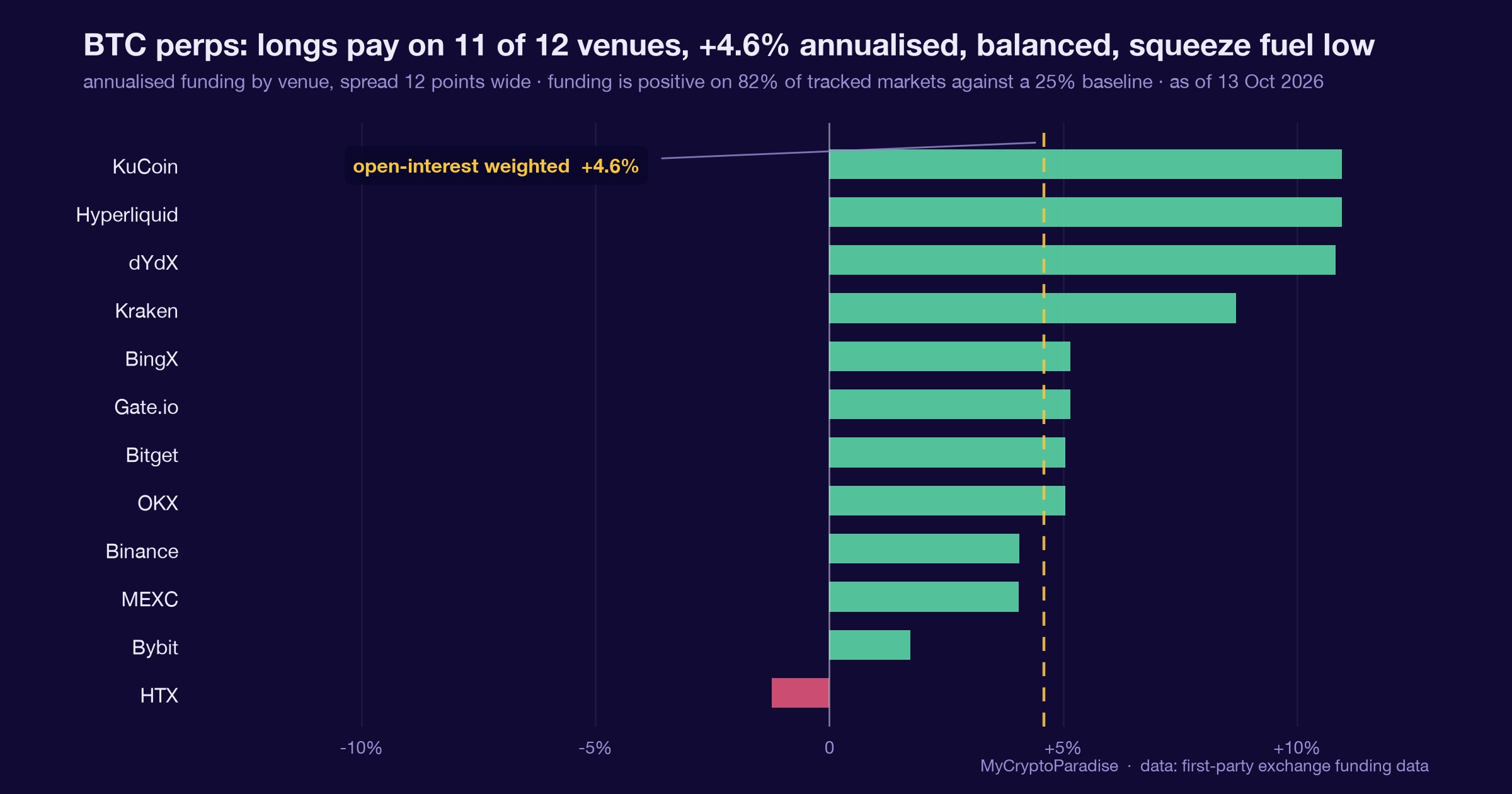
Track it live: our Crypto Fear and Greed Index and the live crypto funding rates both update in real time, so you can watch this shift for yourself.
Related coverage
For exact entries, targets, and stop losses with full risk management, that is what ParadiseFamilyVIP is for. New to reading these moves? Start with our crypto trading strategies guide.
ParadiseTeam is monitoring the market situation closely, and we are taking these developments into consideration while building our trading tactics inside ParadiseFamilyVIP.
Crypto trading involves substantial risk. Prices are volatile and you can lose money. This article is educational and is not financial advice. Past performance does not guarantee future results.
Will outflows from centralized exchanges rise after the Bitget hack?
This is how 22 Paradisers are calling it. Tap your call.
No calls on this one yet. Tap yours to be the first.
Free account, no password. Members just sign in.









Join the discussion 7
freezing funds is a problem, but seeing the market shrug tells me some traders are still underestimating basic security. that nearly cost a colleague everything.
It’s always a balance, isn't it? One weekend's parking money taught me that even the most "boring" assets can get interesting quickly! The speed of the un-freeze is what matters. 🤝
who cares how fast they reconcile the problem is they can freeze it at all that's the whole point
Tommy, you’re missing the point 🙅♀️. It’s not just *that* they can freeze it, but *who* decides, and how transparent the process is 🙄. My funds got locked on FTX because it was a scam, not for security reasons 🔥. It matters, big time.
my point is no one should have the power to freeze your money not ftx not bitget no one not ever
for me, the focus is on how fast they credit the frozen funds back to the user's ledger. a clean reconciliation is key! 📊
Chinedu, a swift and transparent accounting is essential, yes. But the design of the system to prevent such a need for reconciliation is also a critical factor.