

Listen: the breakdown
Developing story: This story is still unfolding. We are tracking it and will update this article as more details are confirmed.
Market briefing: Reports of Houthi missiles hitting Saudi oil infrastructure collide with confirmed interceptions, and crypto barely blinks. BTC was near 84,856 dollars, up roughly 1.5 percent on the day, with ETH around 2,706.
- Saudi-led coalition says it intercepted six Houthi ballistic missiles, plus four drones.
- Claims of strikes on the East-West pipeline and Abqaiq refinery stay uncorroborated.
- BTC near $84,856 and ETH near $2,706 both ticked higher, shrugging off the oil fear.
Reports of Houthi missiles hitting Saudi oil infrastructure sound like a classic risk-off trigger, yet crypto is green. So why are BTC and ETH ignoring the headline?
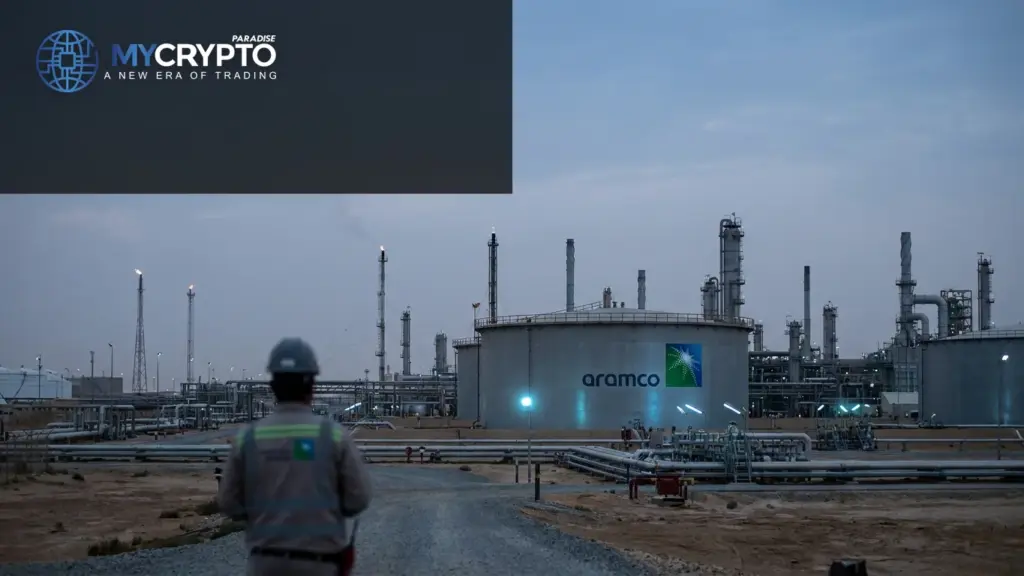
Middle Eastern reports claim Houthi ballistic missiles struck another segment of Saudi Arabia's East-West oil pipeline, with a separate claim of a hit on the Abqaiq refinery. The framing is dramatic: oil supply restoration described as nearly impossible. That is the kind of line that usually sends energy traders scrambling.
The confirmed side of the ledger reads differently. The Saudi-led coalition said it intercepted six Houthi ballistic missiles. Saudi Arabia reported downing two missiles over Jazan and Khamis Mushait, plus four drones over Khamis. Houthi forces have staged similar missile and drone attacks across Yemen, Israel, Saudi Arabia, and the UAE before.
So two versions of the same morning exist side by side. One says critical oil infrastructure is burning. The other says the projectiles were knocked out of the sky. Major Western outlets have not corroborated the pipeline or refinery strike claims, which leaves the most alarming part of the story unverified.
That gap matters, because structurally an attack that actually disables Saudi oil capacity is a genuine macro event, while intercepted missiles are a headline. Markets, for now, have voted. BTC was trading near $84,856, up about 1.5 percent, and ETH sat near $2,706, also higher.
The oil fear and the price action disagree. When a story this loud moves nothing, that silence is the story.
How an oil shock would reach crypto
The reason oil headlines command attention is the chain they can set off. A real strike that cripples Saudi export capacity lifts crude prices. Higher crude feeds through to inflation. Stickier inflation pressures central banks to stay tight, which drains liquidity from risk assets. Crypto sits at the far, most sensitive end of that chain.
That is the pathway traders instinctively price when they see missiles and refineries in the same sentence. It is also why a confirmed Abqaiq-scale strike would be a different conversation entirely.
Here the chain never fired. The confirmed facts are interceptions, not destruction. Without corroboration that oil throughput actually fell, there is no crude spike to transmit, no fresh inflation impulse, and no new reason for policy to tighten. The macro input that would hurt crypto is missing.
There is a quieter lesson in the coverage gap itself. A claim that the world's most important oil artery is permanently down would normally dominate every front page within the hour. Its absence from major outlets is not proof of nothing, but it is information.
Markets reward verified supply shocks and tend to fade unconfirmed ones. Energy desks have seen enough phantom disruptions to wait for tanker data and satellite confirmation before repricing. Until the physical damage is established, this remains a geopolitical risk headline rather than a liquidity event, and crypto is treating it exactly that way.
Why the liquidity cascade never arrived
A genuine oil supply shock would normally cascade in a familiar order. Crude gaps up, equities wobble, the dollar firms as a haven bid, and crypto takes the first hit as the highest-beta risk asset. BTC leads the drop, ETH follows, and alts bleed hardest as liquidity thins.
None of that is visible today. BTC is up roughly 1.5 percent on the 24-hour window and firmer on the hour. ETH is up about 0.8 percent. That is not the tape of a market absorbing a supply crisis.
The read is straightforward. Larger players are treating the strike claims as noise, not signal. With interceptions confirmed and the damage unverified, there is no catalyst to force deleveraging, so the standing bid stays intact.
For altcoins the message is secondary but clear. Alts live or die on BTC's risk appetite, and BTC is not flinching. No flight to safety means no forced rotation out of the long tail.
We should be honest about causation. There is no single confirmed same-day catalyst driving the slight green, so attributing the upside to any one factor would be a guess. The more defensible statement is narrower: this geopolitical headline did not generate downside. The market's refusal to react is the data point, and it points to dismissal rather than fear.
What would turn this into a real event
The pivot from headline to market-mover rests on verification. The first thing to watch is independent confirmation that oil throughput actually fell, not that missiles were launched. Satellite imagery of fire or structural damage at Abqaiq, and any official acknowledgment of reduced export capacity, would change the calculus.
The cleaner tell sits in the oil market itself. A sustained spike in crude, rather than a brief intraday pop that fades, would signal that energy traders believe supply is genuinely impaired. If crude stays elevated into the next session, the inflation-and-liquidity chain becomes live, and crypto's indifference would be tested.
Confirmation of the bearish case looks like this: corroborated refinery damage, a holding crude bid, and BTC finally losing its footing on rising volume. That sequence would validate the fear the headline implies.
Invalidation is what we are watching unfold right now. No corroboration, crude calm, and BTC holding or extending higher together say the market read the event correctly as a non-catalyst.
There is also a reflexive risk worth naming. If the claims are amplified without new evidence and then quietly fade, any fear-driven dip becomes a trap for whoever sold the rumor. Headlines that cannot be verified have a short half-life. Track the crude tape and the confirmation flow, not the volume of the claims.
What the market's calm says about positioning
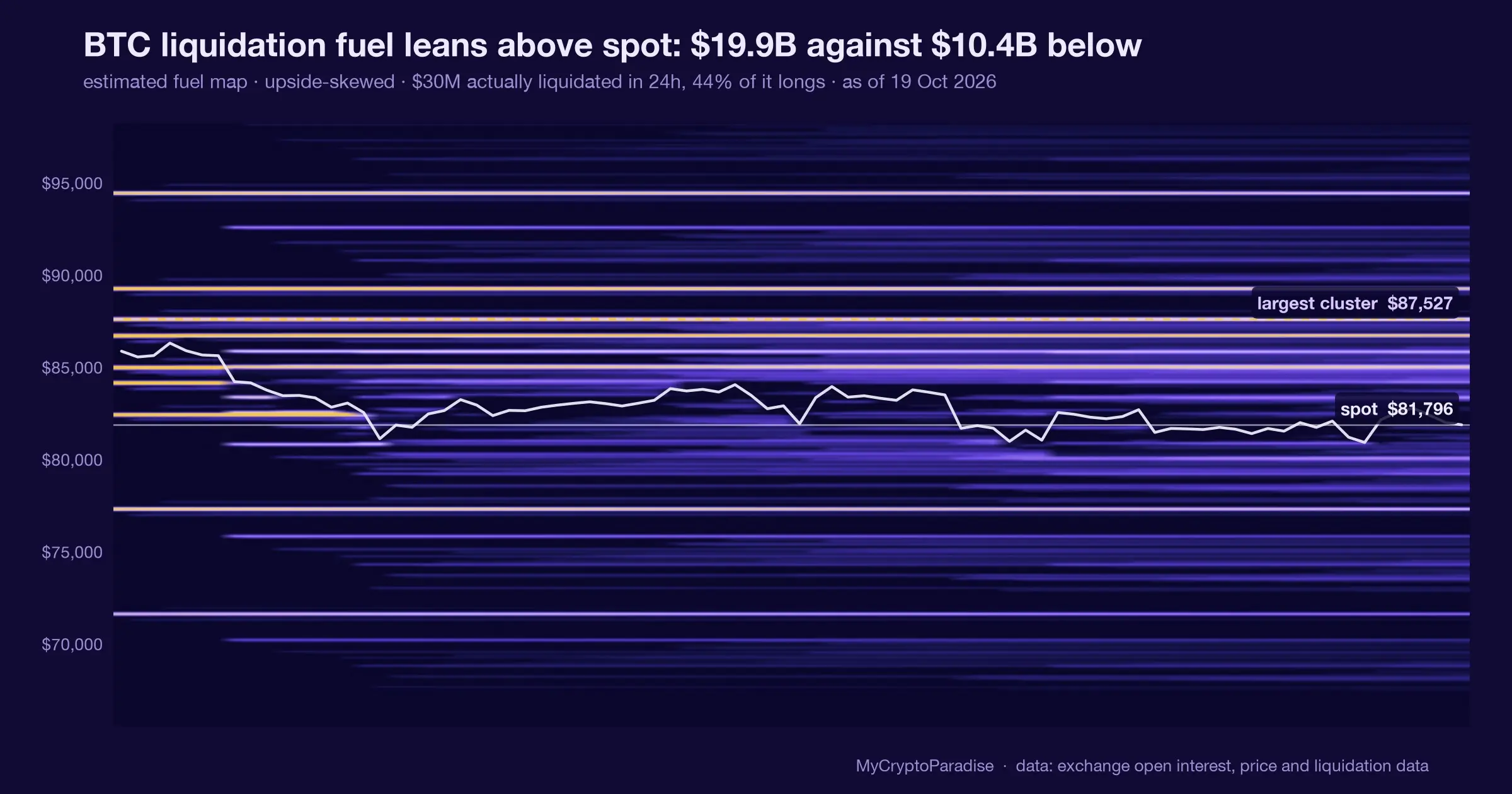
The ParadiseTeam reads this as a test the market just passed quietly. A loud geopolitical headline hit the tape, and the bid barely moved. With BTC near $84,856, the structure that matters is not Yemen; it is the levels already in front of price.
The backdrop is a reclaim attempt. BTC is trying to turn roughly $82k into support, and that breakout showed no bearish divergence, which makes it healthy. A geopolitical scare that fails to break $82k actually reinforces the reclaim rather than threatening it.
The ParadiseTeam's standing caution lives higher up. The $88k to $90k zone is weekly resistance, and strength running into it has carried a meaningful rejection risk. A daily MACD divergence and fading volume on the recent breakout argue for respect, not chasing, as price approaches that band.
So the honest framing is this. Today's non-reaction removes a downside excuse, but it does not clear the real hurdle overhead. Aggressive whale accumulation reported near $380M in a day explains the resilient bid; it does not guarantee a clean push through weekly resistance.
For positioning, the ParadiseTeam watches whether $82k holds as support and whether volume confirms into any approach toward $90k to $95k. Geopolitical noise is background. The structure at resistance is the decision point, and that is where discipline earns its keep.
The read behind this: we framed this story through our own market analysis, Can Bitcoin Reach $90K After Whale Buying?
Track it live: our Crypto Fear and Greed Index and the live crypto funding rates both update in real time, so you can watch this shift for yourself.
Related coverage
For exact entries, targets, and stop losses with full risk management, that is what ParadiseFamilyVIP is for. New to reading these moves? Start with our crypto trading strategies guide.
ParadiseTeam is monitoring the market situation closely, and we are taking these developments into consideration while building our trading tactics inside ParadiseFamilyVIP.
Crypto trading involves substantial risk. Prices are volatile and you can lose money. This article is educational and is not financial advice. Past performance does not guarantee future results.
Does the Saudi oil missile headline change your BTC view this week?
This is how 28 Paradisers are calling it. Tap your call.
No calls on this one yet. Tap yours to be the first.
Free account, no password. Members just sign in.









Join the discussion 8
These things always feel like the bigger gears turning… it takes so much to really shake the whole ship. Ray's got a point there...
I wonder if it's more that it *looks* like it shrugged when really the market is still just so much smaller... 🤔 A big move wouldn't take much, right?
lol "crypto shrugged" when *real* news hits, but some random 🦐 coin promoter tweets a picture of a dog and the whole market does 🚀🚀?! not my first rodeo 🤦♂️🙄.
Carlos, honestly, I feel you on the dog coin thing 🤦🏽♀️. I got burned hard once 💔, now I just watch the charts.
It's not "shrugging" when poor people get wiped out while the big players already moved their capital... We see this every time.
yeah, my fear of missing the dip always makes me get chopped up on these moves 😅 like, should i just fade everything now? 🤔
Benny, fading *everything* might save you from the dip, but what about missing the real-world utility that just keeps building? 🏗️🌍 That's where I keep my focus! 👀
never was big on "crypto shrugged"... more like the news was already priced in... before the headlines even hit.