


Listen: the breakdown
Market briefing: NEAR Intents lost about $3.8 million to an Omni bridge bug, now patched, with full reimbursement pledged. Bitcoin shrugged near $83,835, up 0.1 percent on the day.
- NEAR Intents lost roughly $3.8M to a bug between Omni deposit infrastructure and its smart contracts.
- The vulnerability is patched, services were halted, and full reimbursement has been pledged.
- Deposits and withdrawals on 11 networks stay disrupted, some for about 12 more hours.
A fresh NEAR Intents exploit drained about $3.8M through an Omni bridge bug, now patched. The team pledged full refunds. So does this really threaten anyone's bags?
NEAR Intents confirmed a security incident that drained roughly $3.8 million from its system. The team traced the loss to a bug in how the Omni deposit and withdrawal infrastructure talks to its smart contracts.
The fix came fast. The vulnerability has been patched, and the team pledged full reimbursement for everyone affected. That combination, a quick patch plus a clean promise to make users whole, is what separates a bad week from a death sentence for a protocol.
Services were stopped straight after the breach. Deposits and withdrawals across 11 networks remain disrupted, and some are expected to stay offline for about 12 hours while the team rebuilds safely.
The case has been reported to authorities, and on-chain tracking of the stolen funds continues. None of that undoes the loss, but it does signal a professional response rather than a panicked silence.
Here is the part that matters for traders. The wider market barely registered it. Bitcoin sat near $83,835, up 0.1 percent over 24 hours, while TON held $1.51, up 1.0 percent. A $3.8 million hole is painful for the protocol and the people exposed to it, yet it is a rounding error against total crypto liquidity.
That gap between a scary headline and a flat tape is the whole story. This looks like a contained, project-specific failure, not the opening act of a systemic unwind.
A bridge bug, not a market event
The transmission mechanism here is the key, because it tells you how far the damage can travel. This exploit lived inside the handshake between Omni's deposit and withdrawal rails and the NEAR Intents contracts. It was a code flaw, not a macro shock.
That distinction decides everything. A regulatory ban or a liquidity squeeze hits the entire asset class through shared plumbing. A single-protocol contract bug hits one protocol and the funds routed through it. So the chain from driver to market is short and shallow. Smart contract flaw, then isolated incident, then no meaningful drain on overall crypto liquidity, then almost nothing reaching BTC, ETH, or the broader alt complex.
The reimbursement pledge matters more than the dollar figure. When a team covers losses in full, it absorbs the financial shock itself instead of letting it ripple out through forced selling by burned users. That is why the tape stayed calm. There is no fire sale of BTC to cover a $3.8 million gap, because the protocol, not the market, is carrying the bill.
The halt across 11 networks is friction, not fear. Users cannot move funds for a window of about 12 hours, which is inconvenient and reputationally awkward. But paused rails during a patch read as caution, not insolvency. The market has learned to tell the two apart, and today it filed this firmly under the first.
Why BTC and TON barely blinked
Start with the liquidity picture, because that is where contagion either spreads or dies. A $3.8 million exploit does not move the pools that set Bitcoin's price. The market treated it as a contained event, and the order books agreed.
Bitcoin held near $83,835, up a token 0.1 percent on the day. That is the tape of an asset that read the headline and moved on.
TON, the asset closest in orbit to this ecosystem, actually sat slightly green at $1.51, up 1.0 percent. When the asset nearest the blast radius ticks up, the contagion thesis has already failed.
Ethereum and the wider alt complex show the same indifference. There is no flight-to-safety rotation, no funding spike, no cascade of liquidations tied to this name. The cross-exchange flow simply did not treat it as a market-wide risk.
The reason is structural. Isolated exploits with full reimbursement pledges rarely force broad deleveraging, because the losses are ring-fenced and the selling pressure that normally follows a hack gets absorbed by the team's promise to pay.
For traders, the practical read is simple. This is noise against the BTC chart, not a driver of it. The near-term direction of Bitcoin is still being set by the things that were setting it yesterday: positioning around resistance, funding, and whether buyers can defend higher lows. A single-protocol patch does not enter that equation.
Execution of refunds and reopened rails
Confirmation that this stays contained rests on execution, not on the apology. The first thing to watch is the reimbursement itself: whether affected users are actually made whole, on time, in full. A pledge is a press release until the funds land.
The second marker is the service restoration. Deposits and withdrawals on 11 networks are down, with some expected back in roughly 12 hours. A clean reopening on schedule validates the contained read.
A slipping timeline would be the first real warning. If those 12 hours stretch into days, or if networks come back piecemeal with fresh issues, the story shifts from competent crisis response to lingering operational doubt.
The on-chain trace is the third thread. Funds are being tracked, and any recovery or freeze would soften the blow further, while movement to mixers would confirm the loss is permanent.
Invalidation of the calm thesis would look like this: a second exploit on the reopened rails, a reimbursement that quietly shrinks, or signs the bug touched more than the Omni handshake. Any of those would justify real caution on anything built on or routed through this stack.
For the broader market, the trigger to care is contagion evidence, and so far there is none. Watch TON and NEAR-adjacent liquidity for any delayed reaction. Absent that, this remains a protocol story the index can ignore while the usual macro levels keep driving BTC.
What a contained hack means for positioning
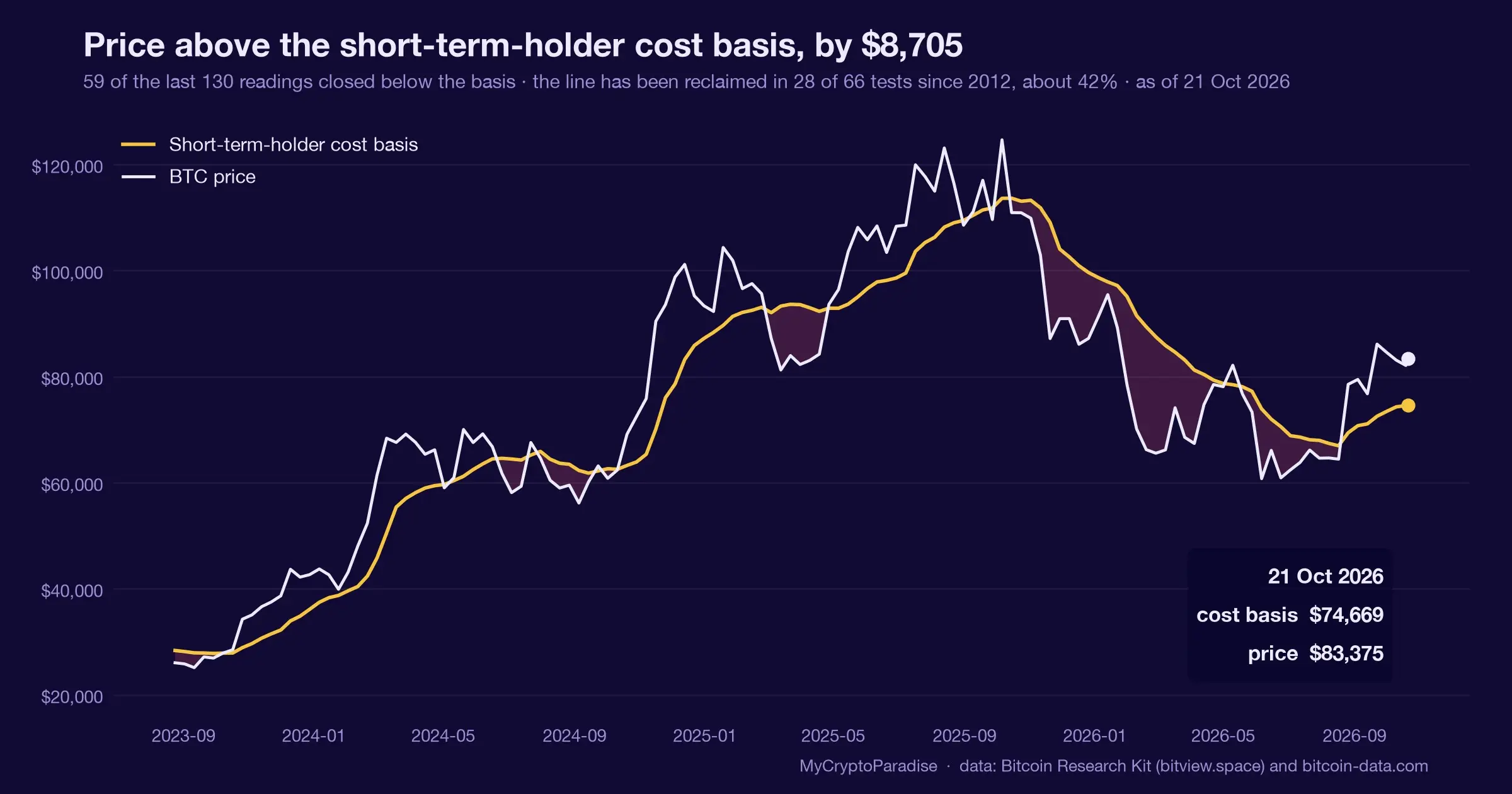
The ParadiseTeam frames this as a protocol event that leaves the Bitcoin map untouched. With BTC near $83,835 as of the latest read, the levels that matter today are the same ones that mattered before this exploit crossed the wire.
Our standing lens keeps $82k as the line in the sand: the daily previous high the market is trying to reclaim as support. A $3.8 million bridge bug does nothing to that battle, so we keep watching whether $82k holds on real volume.
Above, the lens still flags $88k to $90k as weekly resistance, where we put roughly a 60 percent chance of rejection. Whale accumulation can fuel a final push toward that zone, but we treat strength into resistance with suspicion, not celebration. That caution is independent of today's hack. The bearish divergence building on the daily MACD, plus fading volume on the recent breakout, is the reason we respect the downside risk, not because a NEAR protocol failed.
Here is the honest separation. This exploit is neutral for the tape. It neither adds fuel to a push to $90k nor opens the trapdoor toward $58k in the low-probability bear case.
So the positioning logic is unchanged. Smart money is accumulating Bitcoin on the medium timeframe while staying alert for distribution into $88k to $90k. A contained, fully-reimbursed exploit is simply not part of that calculation, and traders who let it spook them out of a clean BTC thesis are reacting to theatre, not to risk.
The read behind this: we framed this story through our own market analysis, Can Bitcoin Reach $90K After Whale Buying?
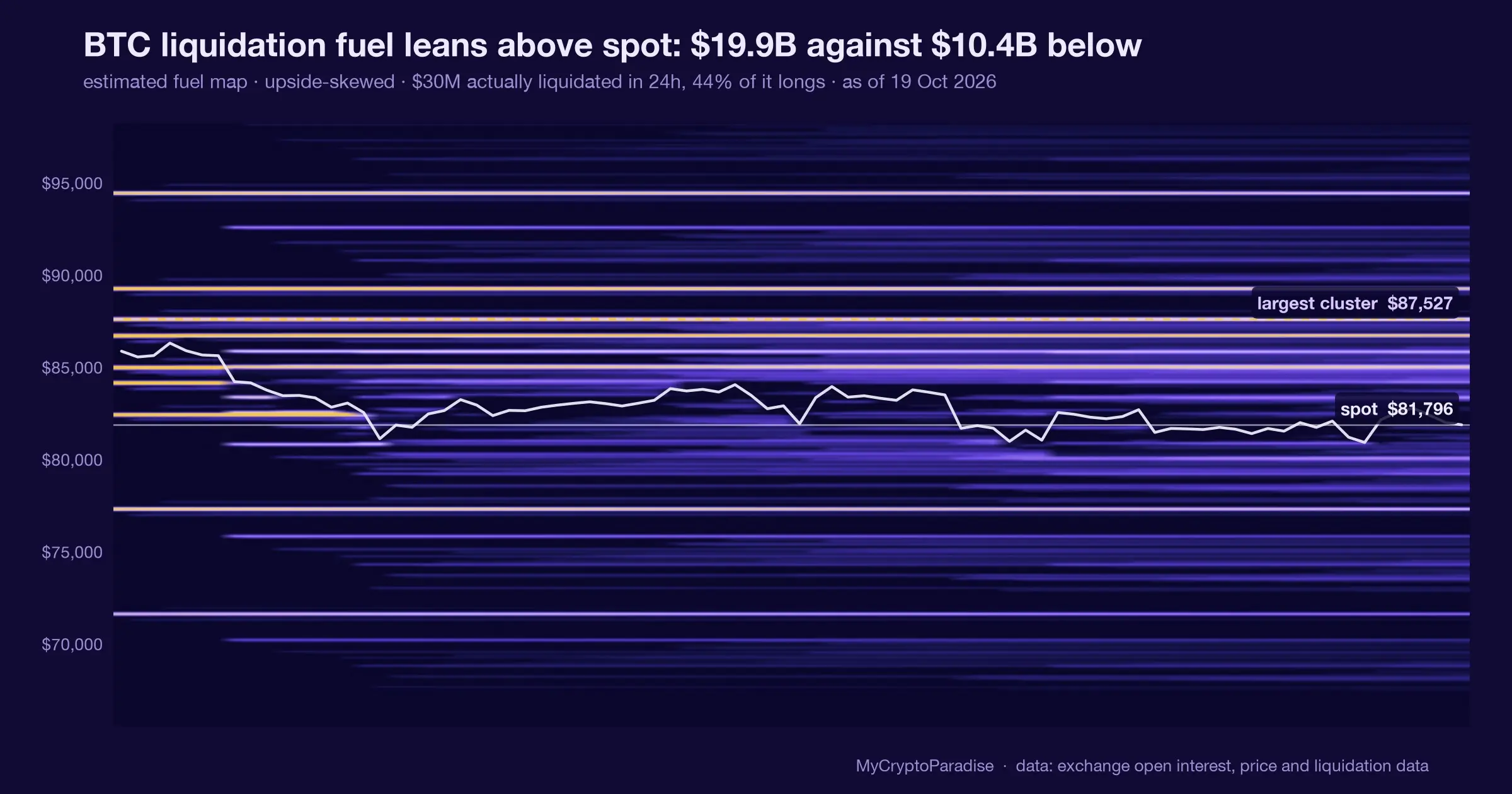
Track it live: our crypto liquidation heatmap and the live crypto funding rates both update in real time, so you can watch this shift for yourself.
Related coverage
For exact entries, targets, and stop losses with full risk management, that is what ParadiseFamilyVIP is for. New to reading these moves? Start with our crypto trading strategies guide.
ParadiseTeam is monitoring the market situation closely, and we are taking these developments into consideration while building our trading tactics inside ParadiseFamilyVIP.
Crypto trading involves substantial risk. Prices are volatile and you can lose money. This article is educational and is not financial advice. Past performance does not guarantee future results.
After the $3.8M exploit, where does NEAR Intents stand once rails reopen?
This is how 23 Paradisers are calling it. Tap your call.
No calls on this one yet. Tap yours to be the first.
Free account, no password. Members just sign in.










Join the discussion 7
Oh, another bridge exploit... I'm really trying to understand these better, it's why I mostly stick to buying BTC directly. Always makes me wonder how these things affect the smaller coins.
A full refund is certainly welcome. I do wonder, though, how much that "bug fix" cost the protocol and whether it's sustainable at this frequency.
This is why I stick to the debit side of the ledger for my risk exposure on newer chains. A clean stop loss mitigates these kinds of bridge liabilities. 😅
i dont know chinedu, a stop loss cant help you much if its the bridge itself that gets drained you know
That's a very sensible approach, Chinedu. Especially with newer chains, managing the delta on your debits can really help keep those bridge risks in check. 👍
for me bridges are just another place to wait in line, like the port, when you can just move the goods yourself
Ugh, bridges! 😫 I remember using one once for a farm... went to sleep, woke up to nothing! 📉 Marta, sometimes it's better to stay boring 😂.