

Listen: the breakdown
Developing story update (October 02, 2026, 00:00 UTC):
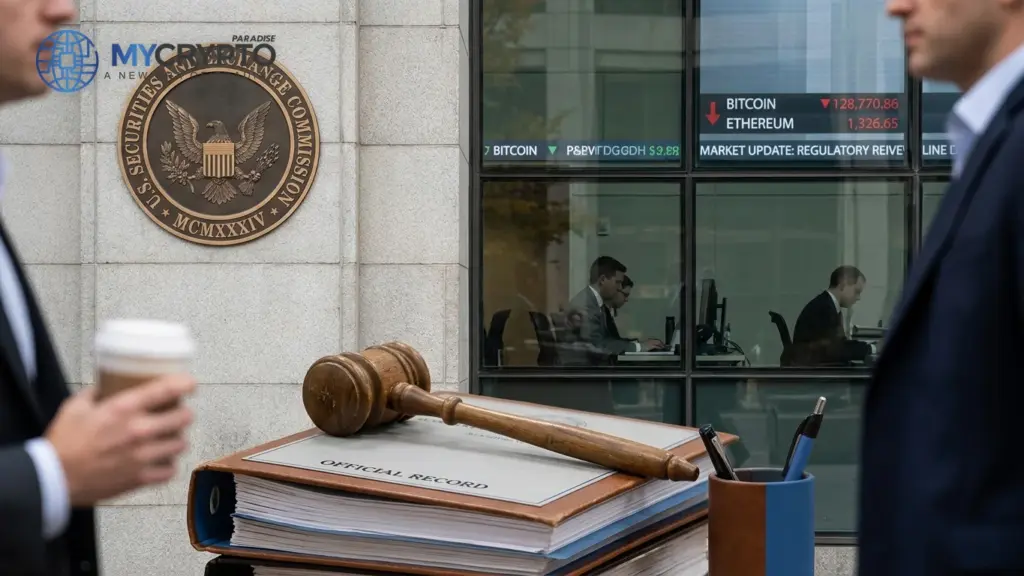
SEC Chairman Paul Atkins releases a statement to address the custody of crypto assets. "Since the advent of Bitcoin in 2008, the crypto asset market has grown from a niche curiosity into a multi-tri. SEC Chairman Paul Atkins releases a statement to address the custody of crypto assets. "Since the advent of Bitcoin in 2008, the crypto asset market has grown from a niche curiosity into a multi-trillion-dollar asset class"
Market briefing: The U.S. SEC has put forward a new proposal addressing crypto custody, a move that could gradually reduce structural barriers for institutional capital. Bitcoin was trading near $84,616 as of this report, showing little immediate reaction.
- U.S. SEC put forward a new proposal addressing crypto custody.
- Aims to streamline the pathway for institutional balance-sheet allocation.
- Expected impact is long-term, not an immediate price mover.
Source: U.S. SEC
The U.S. SEC has unveiled a new proposal targeting crypto custody, a critical step in its broader digital assets agenda. Does this regulatory clarity finally pave the way for a major institutional influx into the market?
The U.S. Securities and Exchange Commission (SEC) recently put forward a proposal that maps out crypto custody within its ongoing digital assets agenda. This move aims to provide a clearer framework for how digital assets, including Bitcoin and Ethereum, can be held by qualified custodians.
This development is significant for the underlying infrastructure of the crypto market, rather than its immediate price action. Bitcoin was trading near $84,616 as of this report, showing a modest +1.0% gain over 24 hours but remaining flat in the last hour. Ethereum likewise saw a minor +0.5% gain over 24 hours at $2,695.27, with no discernible immediate market response to this specific announcement.
The proposal addresses a persistent challenge for institutional investors looking to allocate significant capital to crypto. Clear custody guidelines are often a prerequisite for large financial entities to engage with digital assets without facing prohibitive regulatory uncertainty.
Therefore, this is best understood as a structural development that could incrementally reduce barriers to institutional balance-sheet allocation. Its effects are expected to manifest over quarters, impacting who can hold these assets, rather than triggering immediate price movements in trading sessions.
Institutional demand hinges on custody clarity
Institutional allocators have long cited the lack of clear regulatory frameworks, particularly around custody, as a major hurdle to committing substantial capital to crypto. Complex or ambiguous rules create compliance risks that traditional financial institutions are unwilling to assume. This SEC crypto custody proposal seeks to clarify what constitutes a 'qualified custodian' for digital assets. Such clarity can unlock new avenues for pension funds, endowments, and other large institutional players to gain exposure to Bitcoin and Ethereum.
For smart money, this is a 'plumbing' story. It’s about building the necessary infrastructure for future liquidity supply, not about current market sentiment or short-term trading opportunities. Retail investors, typically focused on immediate price catalysts, may not register the full significance of such a technical regulatory change.
Over time, an incremental reduction in this structural barrier could lead to a broader base of institutional demand for holding BTC and ETH. This isn't a signal for today's price action, but a slow-burn legitimacy input for those who will ultimately move significant size into the market.
Liquidity implications for long-term holders
Despite the significant nature of the SEC's proposal, its immediate impact on crypto liquidity and price action remains minimal. Both Bitcoin and Ethereum traded largely flat following the news, indicating that the market had no strong directional conviction based on this development. This proposal is not designed to create immediate trading volume or price spikes. Instead, it lays groundwork for a future shift in the composition of market participants. By defining clear custody pathways, it increases the pool of institutional entities who can *safely hold* digital assets.
For Bitcoin, this means a potential, delayed increase in long-term holding demand from institutions. As more traditional balance sheets gain the regulatory comfort to allocate to BTC, it could solidify its position as a legitimate store of value within institutional portfolios.
Ethereum would likely benefit similarly, as institutions seeking diversified digital asset exposure would also require secure, compliant custody solutions for ETH. Altcoins, while further down the chain, could see indirect benefits as overall institutional engagement with the crypto ecosystem expands over time.
Monitoring adoption of new custody pathways
For confirmation of this structural shift, traders should monitor the adoption rate of these new custody pathways by large financial institutions. This involves observing whether new crypto-focused funds or investment products emerge that explicitly leverage the clarified SEC guidance.
We would look for announcements from major institutional players regarding their increased allocation to digital assets, citing regulatory clarity as a key factor. This could manifest in the form of new institutional crypto offerings or expansions of existing ones.
Conversely, invalidation of this positive structural read would involve a lack of significant institutional uptake despite the clearer rules. This could happen if other regulatory or operational hurdles remain too high, or if institutional risk appetite for crypto simply does not materialize as expected. It is crucial to remember that this process will unfold over quarters, not days. The impact will be measured by long-term capital inflows and structural shifts in market participation, rather than immediate price movements or technical breakouts.
Reading the institutional flow through smart money
The ParadiseTeam views this SEC custody proposal as a necessary, albeit gradual, step for long-term market maturation. While structurally constructive, it does not immediately alter the current technical outlook or the cautious bias we hold for Bitcoin's price action around key resistance levels.
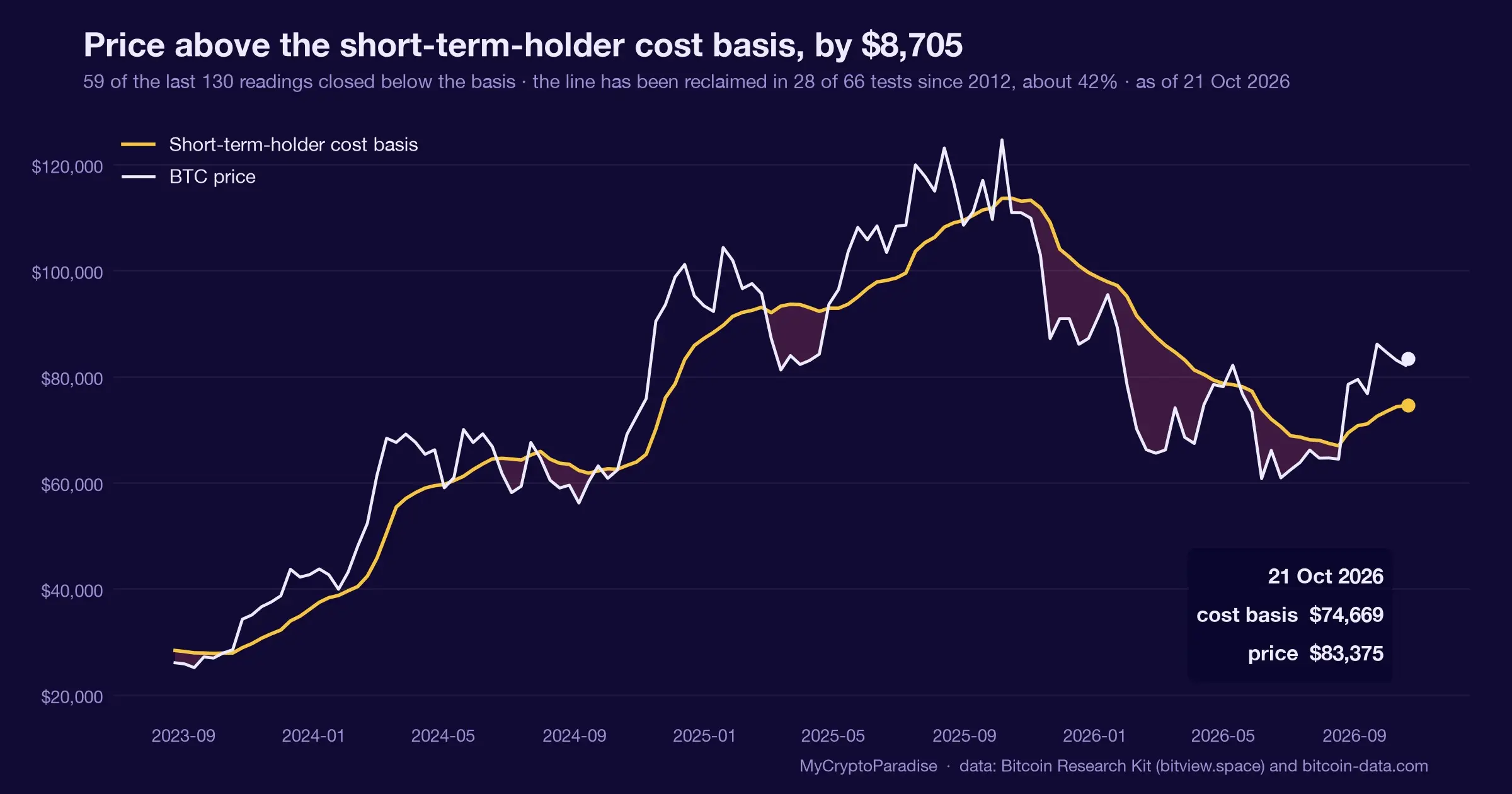
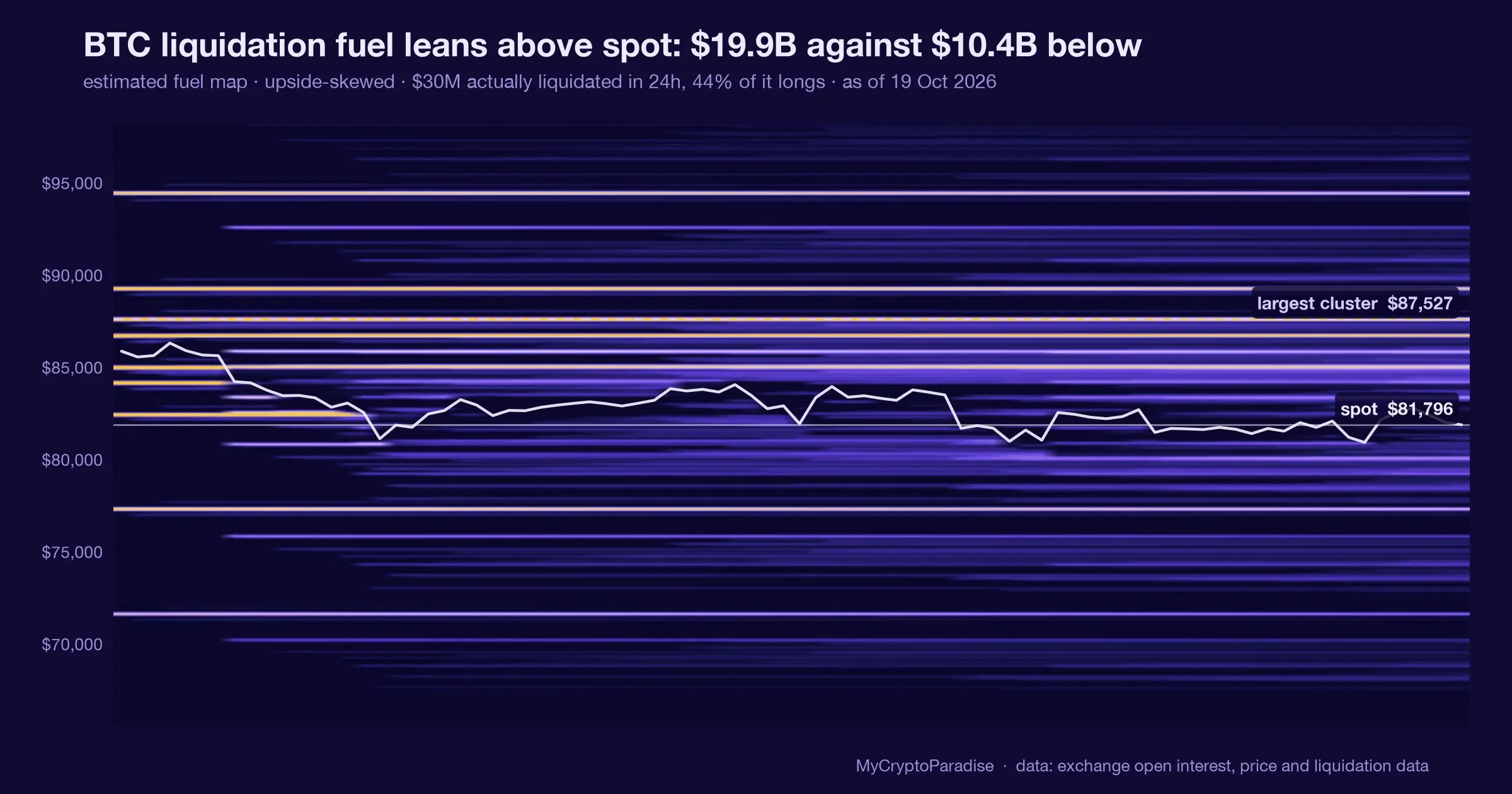
Bitcoin's current trading near $84,616 sits below the significant $88-90k weekly resistance level, where the ParadiseTeam anticipates a 60% probability of rejection. This custody news does not provide the immediate catalyst to overcome such strong technical overhead, especially with a daily timeframe bearish divergence forming on the MACD.
Smart money, while undoubtedly welcoming this long-term clarity, is still navigating the immediate market structure. Aggressive whale accumulation has been noted, suggesting an underlying demand, but this is for strategic positioning, not a reaction to daily news headlines that lack immediate price impact.
Traders should continue to watch for confirmation of $82k turning into support. The key is whether current bullish momentum, fueled by whale buying, can sustain a push towards the $90-95k range, or if the noted divergences and fading volume on breakouts signal an imminent top before a potential downside move. This regulatory plumbing story is important, but its impact is longer-term than the daily trading dynamics.
The read behind this: we framed this story through our own market analysis, Can Bitcoin Reach $90K After Whale Buying?
Track it live: our live crypto funding rates and the Crypto Fear and Greed Index both update in real time, so you can watch this shift for yourself.
Related coverage
For exact entries, targets, and stop losses with full risk management, that is what ParadiseFamilyVIP is for. New to reading these moves? Start with our crypto trading strategies guide.
ParadiseTeam is monitoring the market situation closely, and we are taking these developments into consideration while building our trading tactics inside ParadiseFamilyVIP.
Crypto trading involves substantial risk. Prices are volatile and you can lose money. This article is educational and is not financial advice. Past performance does not guarantee future results.
Will SEC custody clarity drive significant institutional inflows this year?
This is how 15 Paradisers are calling it. Tap your call.
No calls on this one yet. Tap yours to be the first.
Free account, no password. Members just sign in.
Follow this topic: Crypto regulation news











Join the discussion 19
The direct impact on basis for BTC-denominated pairs could be limited, but I am monitoring how this might affect ETH perpetuals.
All these 'protections' for institutions always end up freezing retail accounts anyway 🙄🙄. What about protecting *us* from *them*? 📉🤬.
I'm looking at the "institutional barriers" part 🏦🤔 and it feels like a very slow boat here from Asia ⛴️. My friend lost her savings with some "big player" back in the day, so I'm a bit wary 😬.
This "remove institutional barriers" line is always hopium. Institutions will play by their own rules as long as they can, and regulators will find new ways to extract rent.
Bram, I see it differently. These moves, even if slow, can create new entry points... I'm tracking how they might shift the market structure for my scalp entries.
Derek, entry points are irrelevant if the structure keeps shifting the goalposts. New rules mean new costs. Someone pays, and it's rarely the institutions.
bram, the cost is the game. a new rule, even one for custody, changes the order book. i logged a similar shift back in june 2022 after that Binance news... it opened up short entries for a week.
i am just watching how these things affect stability and liquidity for places like us... it's a slow burn.
That stability for smaller participants depends on predictable regulatory frameworks. These proposals, while slow, define those boundaries.
yes, Samuel, and for me its about knowing what will happen with the fees to trade, they seem to change so much lately 😥
dunno, this feels more like a new hoop for the big lads to jump through rather than makin' it easier for them to get in 🤷♂️ i'm not seein' the open floodgates yet, tbh. 🙄📈
yeah i get that but what about the smaller exchanges they gotta keep up with this too
I'm just watchin' these announcements for any signs that more big players are gonna come in... that's where the real movement happens, eh? 🤔 But gotta be careful not to chase every headline. 🏃♂️💨
its not about new money coming in Noah, what's the one level that matters
Noah, if institutions were truly keen to onboard, they'd already have found a path. These rules seem more likely to formalize an existing bottleneck than unlock fresh liquidity.
isabella, respectfully, i see your point about bottlenecks, but the SEC proposing rules *is* the path. for new players, it's about clarity and minimizing risk, not about whether the *existing* players are nimble enough. 💯 these rules are for the ones who havent even set up yet.
that's certainly the hope for volume, but the real impact will be on how they structure their entry-zones, not just that they enter.
yeah, more clarity around qualified custodians is helpful... had too many situations where funds were frozen or "lost" during transfers, especially with less regulated entities. this just makes you watch total float more closely.
i see the focus on institutional barriers, but the proposed rules do little to address the logging and auditability requirements for actual custody. that is what matters.