

Listen: the breakdown
Market briefing: The Bank of Japan lifted rates to a 31-year high of 1.25%, quietly raising the cost of the yen that has long funded risk. Bitcoin edged up near $77,458, but we read that bounce as retail buying into whale distribution, not a green light.
- The BOJ raised its policy rate to 1.25%, the highest since 1995 and another step away from ultra-cheap yen.
- A costlier yen weakens the carry trade that has funded risk assets, including crypto, for years.
- BTC gained about 1.3% to near $77,458, a move we read as retail liquidity for whale distribution.
Source: Bank of Japan
The yen carry trade just got more expensive as the Bank of Japan hit a 31-year rate high, yet Bitcoin ticked higher. Is that real strength, or an exit door held open?
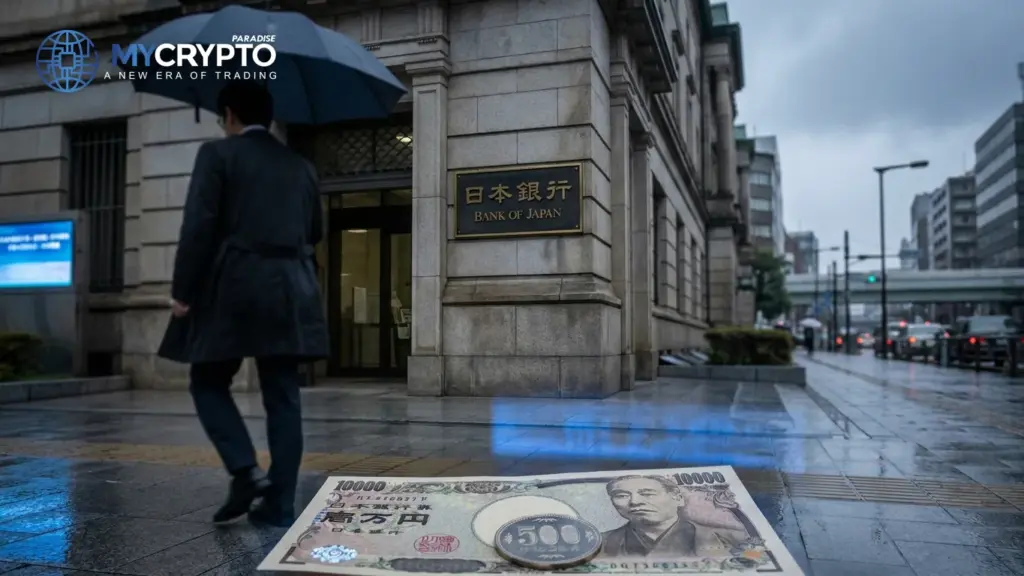
The Bank of Japan raised its policy rate to 1.25% on Friday. That is the highest level since 1995, a 31-year peak. The previous rate stood at 1%. The move was widely expected, and it extends the normalization the BOJ started in March 2024. Markets did not flinch at the number itself.
We reported that rate decision earlier today. Here we follow the money instead.
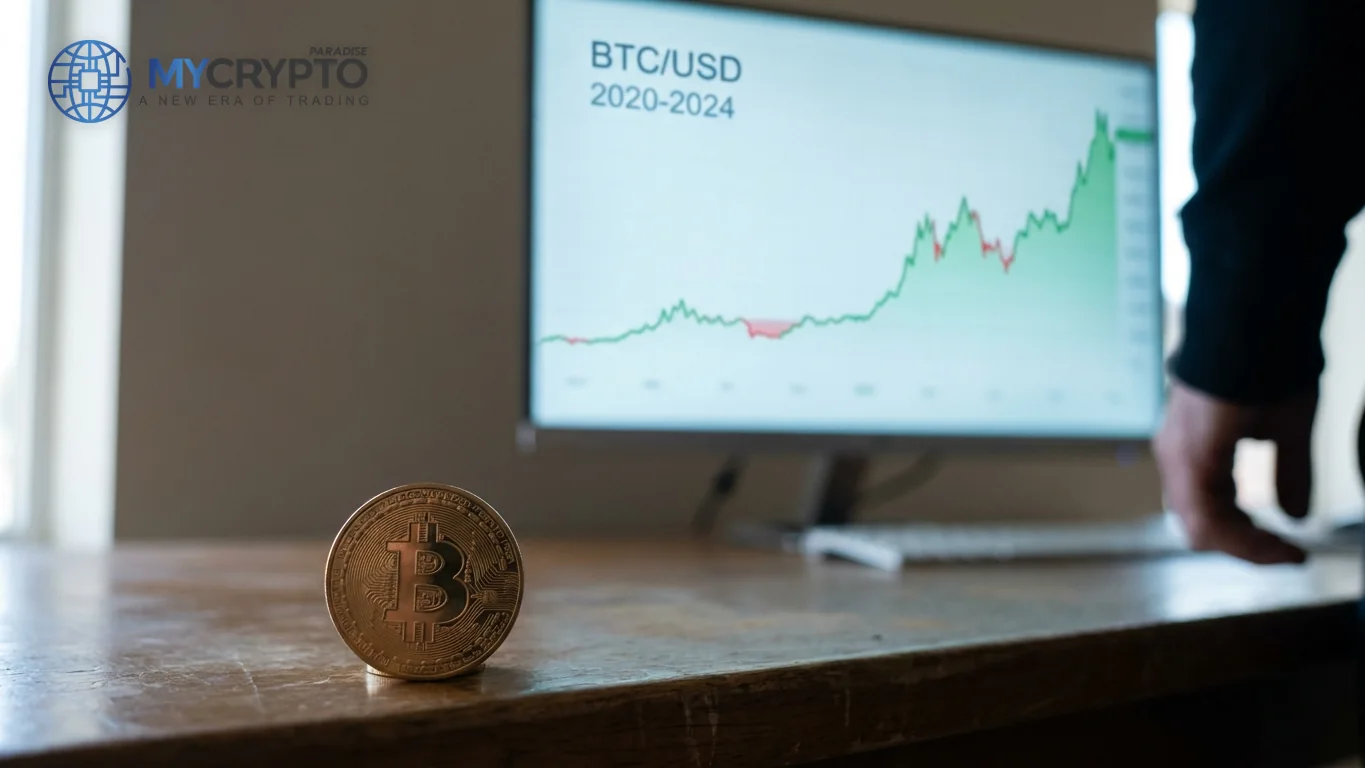
Bitcoin actually rose after the announcement. BTC traded near $77,458 as of the print, up about 1.3% on the day. On the surface that looks like a shrug: a central bank tightens, risk assets should feel it, and crypto ticked higher anyway.
But the yen story runs deeper than one candle. Cheap yen has funded risk for years. Investors borrowed it near zero and bought higher-yielding assets worldwide, crypto included. A more expensive yen makes that trade less profitable, so the BOJ is quietly pulling one of the market's fuel lines.
We do not treat this as a same-day catalyst. There is no single confirmed trigger behind today's tape. The read is ours: the hike is slow bearish pressure, and the small bounce looks like retail buying that gives larger holders room to sell.
Costlier yen drains the carry trade
The carry trade is the mechanism to watch. For years, near-zero rates in Japan let investors borrow yen almost for free. They converted it and bought assets that paid more, from equities to crypto. That flow added liquidity to risk markets far beyond Tokyo.
A 1.25% rate changes the math. Borrowing yen now carries a real cost. As the yen strengthens, anyone holding that borrowed position also faces currency losses. Both forces make the trade less attractive at the margin.
This aligns Japan with the wider tightening cycle. Major central banks have leaned against inflation for two years. The BOJ was the last big holdout on ultra-loose policy. Its shift removes a reliable source of cheap global liquidity.
Less cheap money usually means less appetite for the riskiest assets. Crypto sits at the far end of that risk curve.
None of this hits in a single session. Carry unwinds happen in waves, not headlines. But the structural direction is clear: the tailwind that helped inflate risk assets is fading, slowly and deliberately. That matters more than one green candle.
Liquidity tightens from Tokyo to Bitcoin
Start with liquidity, because that is the real transmission line. A costlier yen tightens global funding at the margin. When funding tightens, the assets bought with borrowed money tend to wobble first.
BTC feels it first, as the market's liquidity anchor. Today's 1.3% gain sits against a bearish backdrop, not a bullish one. Our read is that retail bought the reaction while larger holders sold into it. Cumulative volume delta, or CVD, has shown spot selling absorbed by eager buyers.
ETH tends to lag BTC in moves like this. If Bitcoin loses its footing, ether usually amplifies the drop rather than cushions it. A tighter liquidity backdrop rarely rewards the second-largest asset with independence.
Alts sit at the end of the chain. They need abundant, cheap liquidity to hold bids. Remove the carry-trade fuel and their order books thin fastest. That is where forced selling tends to appear first, and where the pain runs deepest.
So the surface reaction is green. The structure underneath is doing something quieter and less friendly.
$74,900 becomes the line to hold
Watch the yen first, then Bitcoin. A yen that keeps strengthening pressures the carry trade harder. That is the macro signal that this hike is actually biting risk assets.
On BTC, the near-term battle sits around resistance. Price has been defending the $78,000 to $79,000 zone with weak, indecisive candles. A rejection there would fit the distribution read: buyers pushing up, sellers quietly meeting them.
Confirmation of downside comes lower. A clean break below the previous local low near $74,900 would signal the bounce is done. Below that, the structure opens toward deeper support.
Invalidation matters too, and we stay honest about it. A strong reclaim above $79,000, with real volume and follow-through, would weaken the bearish case. That would suggest the carry-trade worry is being brushed off for now.
Funding rates and open interest, or OI, are the tell. Crowded longs on positive funding are fragile.
If leverage builds while price stalls at resistance, the conditions for a flush grow. Watch whether buyers keep paying to hold longs into a tightening macro backdrop. That crowd is often the last to get the memo.
Where this tightening leaves BTC positioning
The ParadiseTeam sees this hike as slow-burn pressure, not a same-day driver. With BTC near $77,458, the tape is caught between a real macro headwind and a stubbornly bullish crowd. That gap is where the risk lives.
Our bias stays bearish on the daily and weekly. The carry-trade unwind reinforces it rather than changing it. Whales have been distributing on spot exchanges, and this small BOJ bounce hands them more retail liquidity to sell into.
Resistance sits at $78,000, then $79,000. We are watching whether BTC can even reach $78,000 on the lower timeframes before sellers reappear. A push into that zone on fading momentum would look like distribution, not strength.
The bearish divergences are still there. Price made a higher high while momentum made a lower one. Retail reads the green candle as a bottom. We read it as an exit door being held open.
Support to respect: $75,500, then $74,900. Lose $74,900 and the medium-term targets sit far lower, into the $44,000 to $55,000 region.
Risk-to-reward, or R:R, favors patience here. Chasing a bounce into resistance during a tightening macro shift rarely pays. The higher-probability path is watching who gets trapped, then following the liquidity.
The read behind this: we framed this story through our own market analysis, Bitcoin Whale Sells $9M: Is a Drop Next?
Track it live: our live crypto funding rates and the crypto liquidation heatmap both update in real time, so you can watch this shift for yourself.
Related coverage
For exact entries, targets, and stop losses with full risk management, that is what ParadiseFamilyVIP is for. New to reading these moves? Start with our crypto trading strategies guide.
ParadiseTeam is monitoring the market situation closely, and we are taking these developments into consideration while building our trading tactics inside ParadiseFamilyVIP.
Crypto trading involves substantial risk. Prices are volatile and you can lose money. This article is educational and is not financial advice. Past performance does not guarantee future results.








Join the discussion 1
So they really think yen carry traders were powering crypto liquidity like that 🤔. Feels a bit like a stretch tbh, especially on the 15m. 📉