

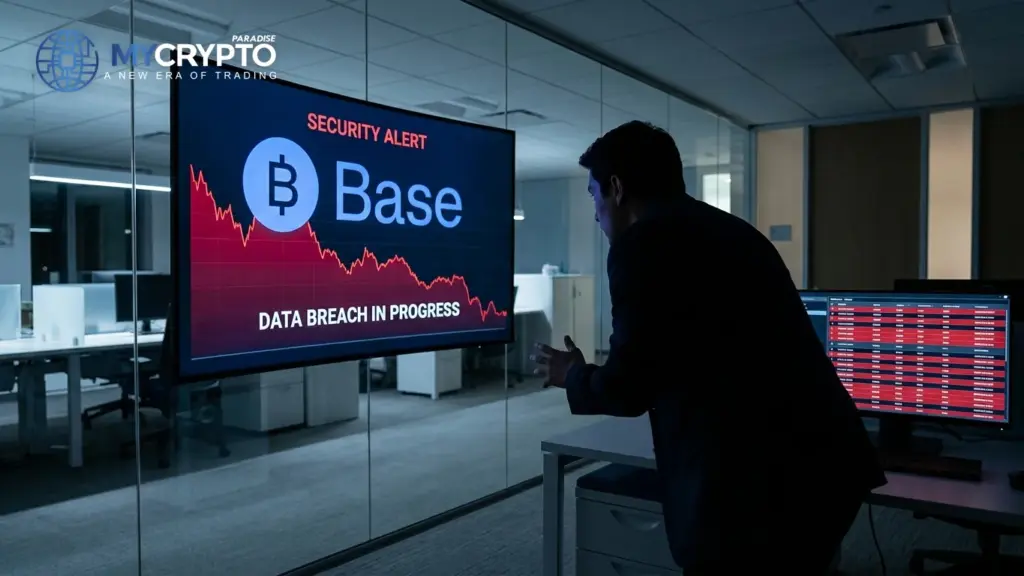
Listen: the breakdown
Developing story update (October 04, 2026, 23:54 UTC):
GoPlus Security: GoPlus Security Alert: On Base, a vault contract that no project team has publicly claimed was hit. 1,783.067 aBaswstETH was taken out, then redeemed on Aave V3 for about 1,783 wstETH. Loss is roughly $6 million.
The vault holds a position on Aave V3 Base, sized in the tens of millions. Aave’s core lending contracts and Base itself were not attacked.
https://basescan.org/tx/0x03f02973736beb1a49bba22fa84430993ca1c100697ee1bcfc33ea8025d9e001
Root Cause:
multisig governance and access-control failure. The exploit contract (0xcdFE9130…) was added to the vault’s borrow allowlist through a Safe multisig. The Safe flow may have been socially engineered or phished, or this was insider collusion. The team had not executed any Safe transaction for 25 days. These two were executed suddenly.
Most concerning: about $31.7 million in assets is still sitting in the vault, at risk. Someone even sent the attacker an on-chain message pushing them to withdraw the rest and asking for a tip. Still zero response and zero announcement from the project team.
Attacked vault: 0xD1895f2019c2152FC2b9022D57f19198c4CFCABC
Attacker: 0x0B5126e1bc27C0de77e02e97945760A674EdB034
Related addresses: 0xcdFE91301356da873562EF513828a60dba1F569d 0xC73448432a05deeA5Ea18a07D3b5d9ccf6297f8D
Malicious authorization (Safe execution): https://basescan.org/tx/0xed265fc80e4abe42d72d6bfd1623c89dd2d12f544d53d4ca2c9c3d0fefbf2810
Attack transaction (first borrow, 1 aBaswstETH): https://basescan.org/tx/0x0ec75c3be1f55bb08a92421796675e051993cdb6cbc38d5e33cc2b7f6ef2f491
Attack transaction (Aave redemption, 1,783.067 wstETH): https://basescan.org/tx/0x557bfd0e8530fd3e089748ccaabaa7837877f7578b13a377008474f2e367ee8c
Developing story: This story is still unfolding. We are tracking it and will update this article as more details are confirmed.
Market briefing: An ongoing exploit is draining about $2.02 million from a Base vault through a manipulated whitelist, another knock to Layer 2 security confidence. Bitcoin shrugged it off near $85,368, up about 0.9% on the day, so the pressure sits on L2 and DeFi assets, not the majors.
- An attacker whitelisted a malicious contract and drained about $2.02 million from a Base vault across four transactions.
- The exploit was still live at our latest check, with borrowed aBaswstETH tokens moved out of the vault.
- BTC near $85,368 and ETH near $2,705 barely reacted, so the risk sits on L2 and DeFi assets, not the majors.
A Base vault exploit is draining about $2.02 million in real time, and the attacker did not need to break the code. So what does another Layer 2 security scare mean for your holdings?
A vault on the Base blockchain is bleeding funds right now. Our monitoring flagged an ongoing exploit draining roughly $2.02 million from the contract. The attacker did not break the code by force. They walked through a door the vault left open.
The method matters more than the number. The attacker added a newly deployed contract to the vault's whitelist. That whitelist is meant to approve trusted addresses only. Once inside, the attacker borrowed aBaswstETH tokens from the vault and moved them out.
The drain ran across four separate transactions. As of our latest check, the exploit had not stopped. Funds were still in motion.
$2.02 million is small against the total crypto market. But the mechanism is the warning. A whitelist is a trust list. When an attacker can add themselves to it, the lock was never really locked.
This lands on Base at an awkward moment. Layer 2 networks, the chains built on top of Ethereum to cut fees, have absorbed a run of security scares lately. Each incident chips at user confidence in the same place.
BTC traded near $85,368 as of this report, up about 0.9% on the day. ETH held near $2,705. Neither flinched at the news. That tells you the market reads this as a local fire, not a systemic one.
Still, local fires change how capital sits on a chain. Money that was comfortable on Base now asks harder questions. That shift is the real story here.
Another L2 security crack widens caution
The transmission here is confidence, not capital. $2.02 million does not move Bitcoin. But trust is the collateral underneath every Layer 2, and this chips at it.
Base sells itself on safety and scale. A whitelist exploit attacks exactly that promise. The vault did not fall to brute force. It got manipulated at the contract level, which is far harder to reassure users about.
Here is why that spreads. DeFi, decentralized finance, runs on composability. Vaults lend to protocols, protocols plug into other protocols. One weak whitelist becomes a question mark over every vault using a similar design. Users cannot easily tell which is which, so some pull back from all of them.
That caution has a liquidity cost. When depositors withdraw, vaults thin out. Thinner vaults mean wider spreads and worse borrowing rates. The chain gets more expensive to use right when it needs to feel safe.
This also arrives into an already nervous backdrop. The L2 and DeFi space has seen other exploits and shutdowns recently. Each one on its own is survivable. Stacked together, they build a narrative, and narratives move money faster than any single $2.02 million drain.
For BTC and ETH, the direct hit is minimal. The indirect hit is sentiment toward riskier alts and L2 tokens. Capital in a cautious mood rotates up the quality ladder, toward the majors, away from the chains where the headlines keep landing.
Where $2.02M loss hits liquidity next
Start with the majors, because they barely moved. BTC sat near $85,368 and ETH near $2,705 as this unfolded. The exploit did not dent either. That is the first read: contained, for now.
But sentiment leaks downhill. BTC absorbs almost nothing from a $2.02 million L2 drain. ETH feels slightly more, because Base is built on Ethereum and shares its security story by association.
The real pressure sits further down the risk curve. L2 tokens and smaller DeFi names wear this directly. Traders who hold Base-linked assets now price in a confidence discount. Some will cut exposure first and ask questions later.
Watch where the stops sit. Retail long positions on L2 and DeFi alts often cluster just under recent support. A drip of bad security headlines is exactly the fuel that triggers those stops in a cascade. One flush feeds the next.
That is the bearish mechanic of this story. Not a crash in Bitcoin, but a slow erosion of the bid under riskier chains. Liquidity turns cautious, spreads widen, and thin books fall faster on any sell.
The honest caveat: there is no single confirmed catalyst tying this to a market-wide move. BTC and ETH green on the day argue the opposite. So treat this as pressure on the L2 and alt corner, not a thesis for the whole market. The drain hurts Base's neighbourhood first.
Containment versus contagion across Base protocols
The first thing to watch is whether the drain stops. As of our latest check it was still live. A clean halt, with the whitelist flaw patched, caps the damage and lets confidence rebuild. A drain that keeps running past this point is the worse case.
Next, watch the deposit flows on Base. If total value locked across Base vaults holds steady, the market has shrugged it off. If depositors start pulling in size across multiple protocols, that is contagion, and it confirms the bearish read.
Then watch the L2 token tape. A quiet, orderly session says this stayed local. A sharp move lower on rising volume, especially if it breaks recent support, signals the fear is spreading beyond one vault.
For the majors, the bar is simple. BTC holding above its support and ETH defending its own range tells you the broader market is ignoring this. A sudden risk-off move in BTC or ETH would mean something larger is at play, not this drain alone.
The invalidation for the bearish case is straightforward. Funds recovered or frozen, the contract fixed, and Base liquidity stable within a day. That turns a scare into a footnote.
The confirmation is the opposite. More affected protocols, visible outflows, and a widening security narrative. Watch the next 24 to 48 hours. That window usually decides whether an exploit becomes a trend or a Tuesday.
Reading the drain through smart money
The ParadiseTeam frames this as a risk-appetite test, not a Bitcoin event. With BTC near $85,368 and holding above the $82,000 support zone we have been tracking, the majors are not the victim here. The L2 and DeFi corner is.
Our standing read is a cautious bounce from current support, with real resistance waiting at $88,000 to $90,000. This exploit does not change those Bitcoin levels. What it changes is the quality of the bid underneath riskier assets while that bounce plays out.
Here is the mechanism. Whales have been net sellers lately, roughly 65% selling against 35% buying, which already presses the top of the range. A steady stream of security scares gives nervous retail another reason to de-risk out of alts and L2 tokens first. That capital does not vanish. Some rotates into majors, some sits in stablecoins waiting.
So the near-term picture splits. BTC can still grind its bounce toward that $88,000 to $90,000 shelf, where we expect sellers to lean in. Meanwhile L2 and DeFi names carry an extra discount from headlines like this one.
The ParadiseTeam treats Base-linked exposure as higher risk until the drain is confirmed stopped. The majors keep their own map. If BTC rejects the $88,000 to $90,000 zone on weak volume, the whole risk curve, alts included, feels it harder. Security headlines just make the lower end of that curve more fragile.
The read behind this: we framed this story through our own market analysis, Can Bitcoin Bounce From Support?
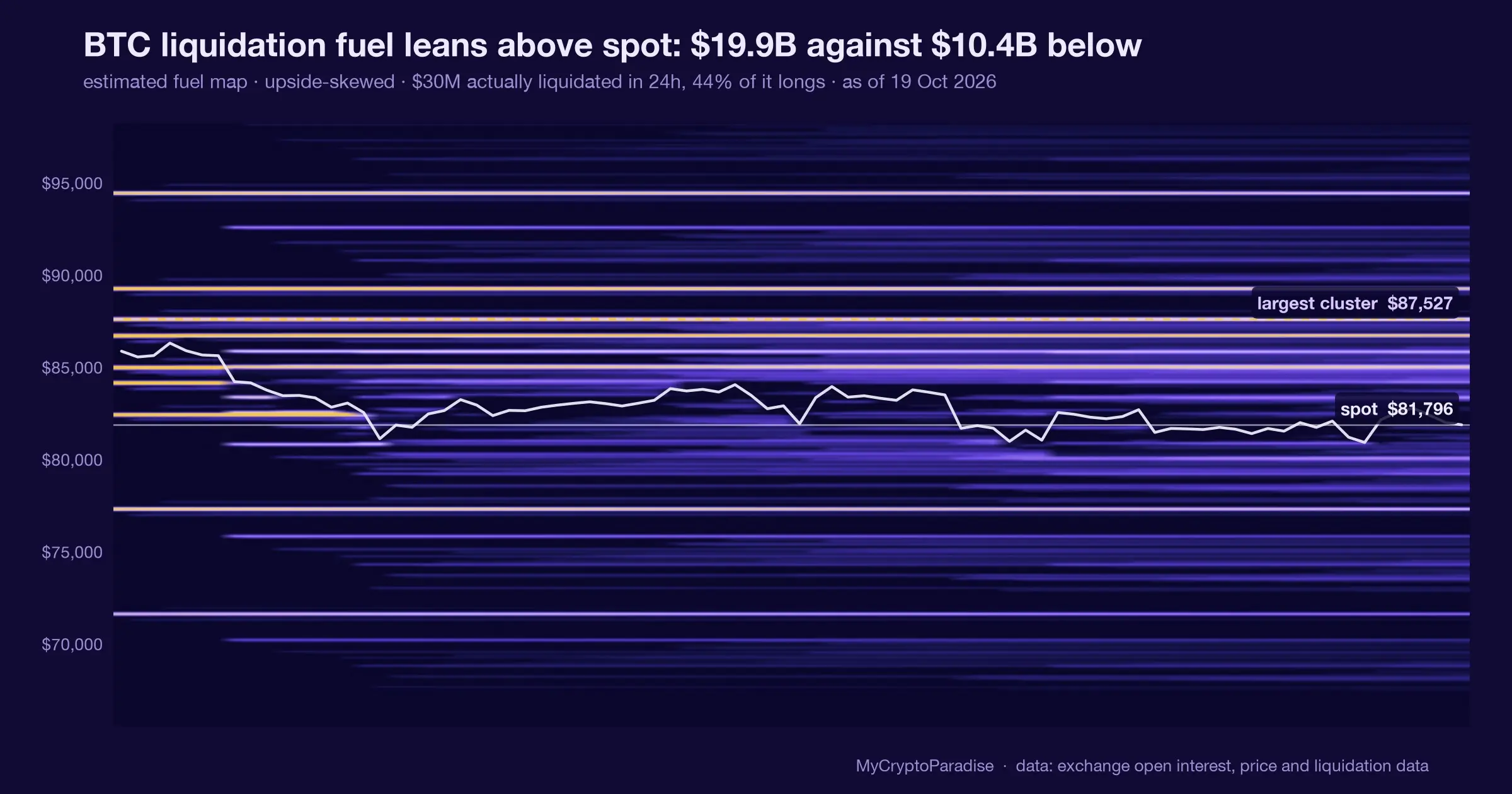
Track it live: our Crypto Fear and Greed Index and the crypto liquidation heatmap both update in real time, so you can watch this shift for yourself.
Related coverage
For exact entries, targets, and stop losses with full risk management, that is what ParadiseFamilyVIP is for. New to reading these moves? Start with our crypto trading strategies guide.
ParadiseTeam is monitoring the market situation closely, and we are taking these developments into consideration while building our trading tactics inside ParadiseFamilyVIP.
Crypto trading involves substantial risk. Prices are volatile and you can lose money. This article is educational and is not financial advice. Past performance does not guarantee future results.
Does this Base exploit spread to other L2 protocols in the next 48 hours?
This is how 30 Paradisers are calling it. Tap your call.
No calls on this one yet. Tap yours to be the first.
Free account, no password. Members just sign in.










Join the discussion 10
This "liquidity hit" part of the article... 🧐 honestly feels like they're just trying to soften the blow for what is, like Rahul said, a rug variation!! 💸 The whitelists always get manipulated! 🙄
the liquidity issue here is distinct from a rugpull a manipulated whitelist is not the same as an exit scam
This is why I watch address activity more than anything.. liquidity always finds its way.
Aye Elif, I see your point but liquidity can definitely be 'hit' in a different way when trust vanishes after these kinda things happen 😟📉. People just pull back you know?
seems like these whitelist issues are just a new flavour of the same old "rug," no? the "liquidity hit" part feels a bit overblown for this size, to be honest 🤔. markets always find a way to re-balance.
yeah feels like a rug and the whitelist just makes it harder to trace the exit.
I can see why you might think that, Rahul, but a whitelist exploit feels different from a rug pull to me 🤔. It's more about a specific, targeted vulnerability.
Yeah, it's why I'm always checking on USDC redemption volumes and T-bill rates more than on-chain stuff directly. Liquidity tends to show up there first...
This is exactly why I only ever buy spot and send it straight to my hardware wallet, not touching anything else. Been there with the "opportunity" cost of leaving it on an exchange. 😩
Yeah, this is why I always check the project's reputation before getting on a whitelist 🤷♂️ and then double check who they're letting in too 🧐. Total pain.