

Listen: the breakdown
Update on this developing report (October 04, 2026, 10:10 UTC):
Microsoft's official X account was hacked for 30 minutes to promote a Clippy meme coin, following promoters and changing its profile picture. Microsoft states it never authorized this, will take legal. Microsoft's official X account was hacked for 30 minutes to promote a Clippy meme coin, following promoters and changing its profile picture. Microsoft states it never authorized this, will take legal action, and notes that accounts linked to Robinhood's CEO, SpaceX, and Starlink were also hijacked to push meme coins this year.
Market briefing: Microsoft's official X account was hijacked for about 30 minutes to promote a fake Clippy meme coin, and attackers reportedly drained $3 million from a liquidity pool. BTC was trading near $85,245, up 0.8 percent on the day, barely reacting.
- Microsoft's 13 million follower X account was hijacked for roughly 30 minutes to promote an unauthorized Clippy meme coin.
- Attackers reportedly drained $3 million from a Uniswap pool before moving funds to a cold wallet; Microsoft plans legal action.
- BTC held near $85,245 and ETH near $2,702; the damage is reputational for meme coins, not a hit to BTC or ETH fundamentals.
A Microsoft X account hack turned 13 million followers into a captive audience for a Clippy meme coin scam. So who really paid for those 30 minutes?
For about 30 minutes, one of the most trusted brands on the internet was quietly selling a meme coin. Microsoft's official X account, with over 13 million followers, was hijacked. It began following accounts that promoted an unofficial Clippy themed token, reposting them, and it swapped its profile picture to Clippy.
The mechanics were textbook pump and dump. A borrowed audience of 13 million creates instant, unearned credibility. Retail sees the blue brand, assumes legitimacy, and buys. By the time anyone questions why Microsoft is shilling a nostalgic paperclip, the exit has already happened.
Attackers reportedly drained roughly $3 million from a Uniswap liquidity pool in minutes. The funds then moved to a cold wallet. A linked account,, was involved and has since been suspended, and the fake token leaned on a bogus claim about Microsoft stock to look official.
Microsoft says it never authorized anyone to use Clippy to promote tokens and plans to take legal action. Accounts tied to other high profile names and companies have reportedly been targeted in similar fashion.
What matters for traders is not Clippy. It is the template. A hijacked blue check brand, a freshly minted token, a thin pool, and a 30 minute window are all it takes. The crypto rails worked exactly as designed; the social layer on top of them did not.
Why a borrowed brand moves retail money
The transmission here runs through trust, not through monetary policy. A hijacked Microsoft account does not change liquidity or rates. It changes perception, and perception is what prices speculative tokens.
Meme coins have almost no fundamental anchor. Their value is a function of attention and belief. So when attention arrives wearing a Fortune 500 logo, demand spikes faster than any honest project could ever manufacture. That is precisely why attackers rent a brand instead of building one.
The $3 million drain shows the real cost. A thin Uniswap pool plus a surge of trusting buyers equals an easy exit for whoever controls the supply. Retail provides the liquidity; the attacker takes it and moves it to cold storage before anyone reconciles the story.
This matters structurally because it reinforces a narrative regulators already love: that the speculative edge of crypto is a scam magnet. Every high profile incident like this hardens caution, thins out casual meme coin participation, and widens the gap between serious capital and the casino floor.
BTC and ETH sit on a different footing. Their value does not depend on a single tweet, which is exactly why the market barely flinched. The lesson is old and expensive. When something looks too credible too suddenly, the credibility is usually the product being sold.
Where the damage lands across the market
Price confirms the read. BTC was trading near $85,245, up 0.8 percent on the day, while ETH held near $2,702. Neither blinked at a 30 minute brand hijack, and that non reaction is the signal.
The impact is concentrated at the speculative edge. Meme coins and freshly launched low liquidity tokens carry the reputational hit, because this is the exact corner where a borrowed brand and a thin pool can be weaponized in minutes.
For BTC, the story is near neutral at the asset level but mildly negative for broad sentiment. It feeds the drumbeat of scam risk that keeps cautious retail capital parked, and caution tends to shrink the risk appetite that eventually reaches alts.
ETH sits one step closer to the blast radius, since the drained pool lived on its rails. The protocol did nothing wrong, but headlines rarely separate the exploit from the infrastructure it used.
Alts and meme coins absorb the real bruise. Expect thinner trust, quicker skepticism toward sudden influencer endorsements, and a harder time for new token launches to attract honest bids. When retail gets burned by a fake Microsoft, it does not just avoid that token. It avoids the whole aisle for a while, and that quiet withdrawal drains speculative liquidity precisely when the broader tape is already fragile.
Signals that tell you how deep this cuts
The first thing to watch is whether this stays a one off or becomes a pattern. Reports already point to other high profile accounts being targeted. A cluster of similar hijacks within days would turn an isolated embarrassment into a sustained confidence problem for the speculative sector.
Watch the fund trail next. The reported $3 million moved to a cold wallet. Any on chain movement toward exchanges, or any freeze cooperation, would signal whether this ends in a recovery story or just another drained pool nobody gets back.
Track meme coin volumes and new token launches over the coming sessions. A visible drop in fresh listings or speculative turnover would confirm that retail trust took a real hit, not just a news cycle scare.
Then watch BTC itself against the levels that actually matter. If this reputational noise coincides with BTC losing its current support footing, the two can compound into broader risk off, even though the hack itself does not touch BTC fundamentals.
Invalidation of the bearish read is simple. If meme coin activity shrugs this off within a day, exchanges tighten listing and verification quickly, and no copycat hijacks land, then the event decays into a footnote. The honest framing: the direct market effect is small, but the confidence effect is the variable, and confidence is harder to measure than price.
What this breach means for risk appetite
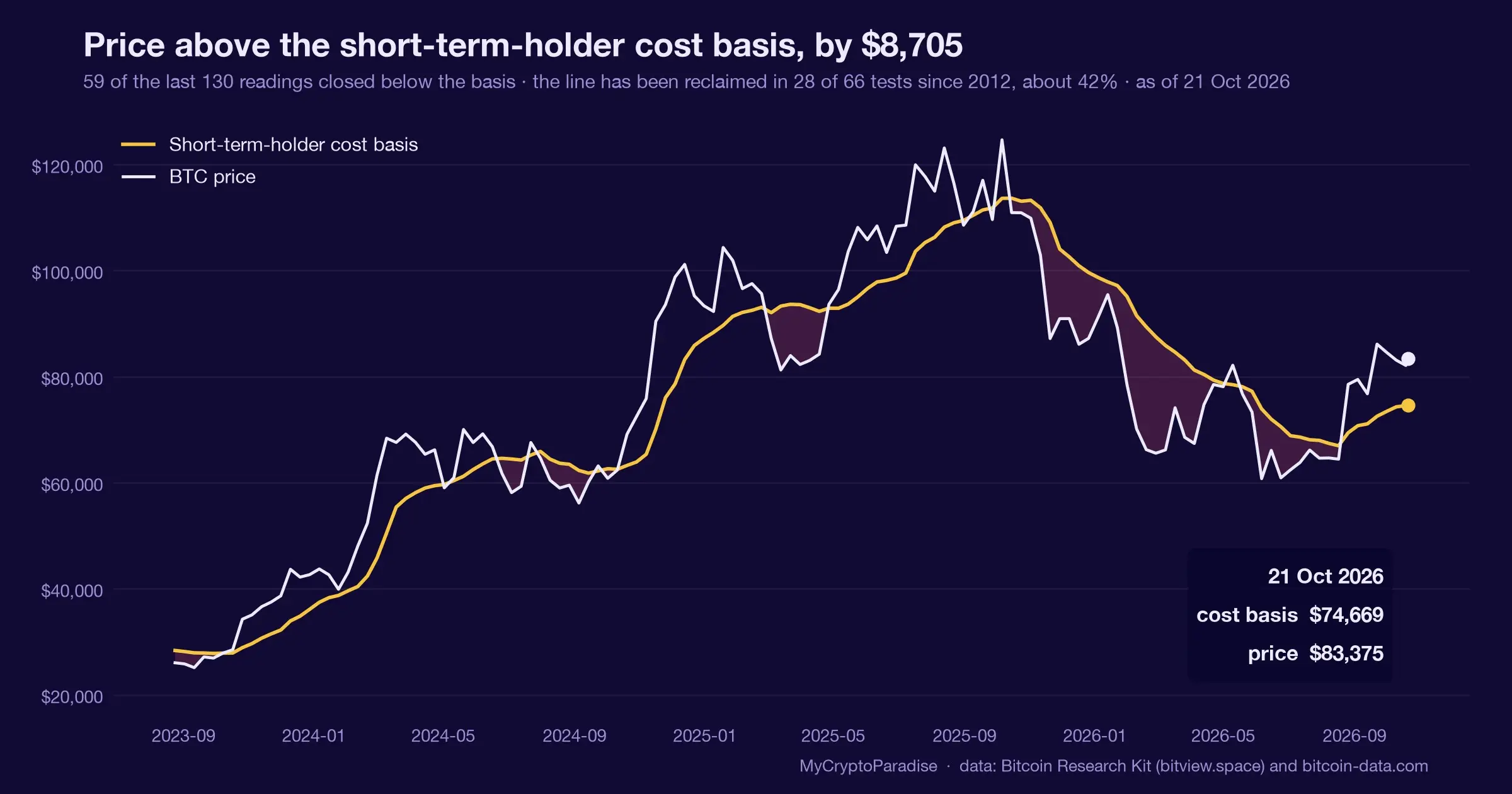
The ParadiseTeam frames this as a sentiment event, not a BTC event. With BTC trading near $85,245 as of the latest read, a hijacked paperclip does nothing to the levels that govern the trend. It does something to the mood around them.
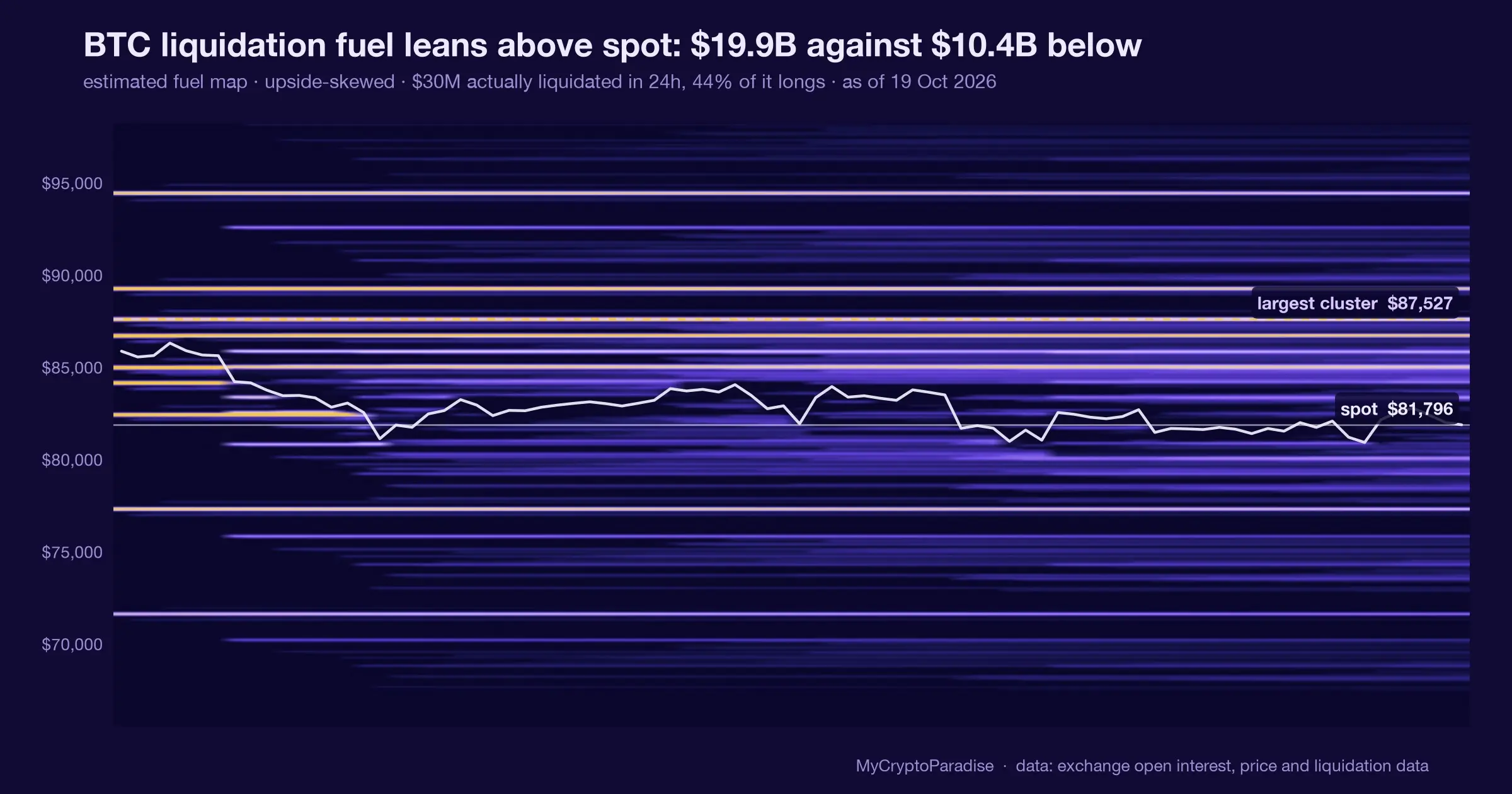
Our standing lens puts support near $82,000, with resistance stacked at $88,000 to $90,000. Incidents like this do not move those lines, but they do thin the speculative demand that would otherwise help a bounce extend. Fearful retail plus a fresh scam headline is not the fuel a squeeze needs.
Whales are still net sellers in our read, roughly 65 percent against 35 percent buying, with that pressure being absorbed at support for now. A reputational knock to the risk end of the market makes absorption slightly harder, because the marginal meme coin buyer is exactly the participant this hack scares off.
For positioning, the ParadiseTeam treats low liquidity tokens with extra skepticism here. A sudden brand endorsement is now a documented attack vector, not a bullish catalyst.
The broader caution stands. Even if support holds for a short term bounce, our macro read still expects strength to meet selling into the $88,000 to $90,000 zone. This story does not change that map. It simply reminds everyone which part of the market gets robbed first when trust slips.
The read behind this: we framed this story through our own market analysis, Can Bitcoin Bounce From Support?
Track it live: our Crypto Fear and Greed Index and the live crypto funding rates both update in real time, so you can watch this shift for yourself.
Related coverage
For exact entries, targets, and stop losses with full risk management, that is what ParadiseFamilyVIP is for. New to reading these moves? Start with our crypto trading strategies guide.
ParadiseTeam is monitoring the market situation closely, and we are taking these developments into consideration while building our trading tactics inside ParadiseFamilyVIP.
Crypto trading involves substantial risk. Prices are volatile and you can lose money. This article is educational and is not financial advice. Past performance does not guarantee future results.
After this hijack, does meme coin risk appetite drop over the next few weeks?
This is how 14 Paradisers are calling it. Tap your call.
No calls on this one yet. Tap yours to be the first.
Free account, no password. Members just sign in.





Join the discussion 27
The speed of these drainers is always impressive, yes, but the real point, Diego, is the liquidity the scammers can find even for something as transparently unserious as a Clippy coin.
it really makes you think about how quickly things can go wrong, even when you're being careful 😬 like that feeling you get when you nearly fall for something silly, but its much bigger stakes here
yes the stakes are bigger but its not just about avoiding loss for me its about not disrupting the harvest cycle
Got burned once clicking a link from a big name... the name doesn't matter, the link does.
Crazy what happens if you dont check the ticker on a 15m chart! 👀📉 Just coz its a big name eh? 🤦♀️
It's scary how fast these things happen, especially with official accounts 😨 I always check CoinGecko before doing anything now, even if I think I know the project.
Lol, this happens all the time with smaller accounts, no surprise a bigger target got got. 🤷♂️ A good lesson for newbs, maybe not for us who've been here a bit, right Diego? 🫠💸
It's a wonder they even got access to something like that in the first place, isn't it Carlos?? 🤯🔐 Just shows how careful you gotta be. 🧐
even with all the checks, it still only takes one moment of not paying attention... like a loose valve, the pressure drops fast. that’s why i keep positions small.
Woah, this is exactly what keeps me up at night sometimes... 😬 always worried about some little thing I miss and losing my stack. Rahul's right, gotta be extra careful these days. 🤦♂️
Exactly! 👆 Scammers are getting so smart, makes me think about double-checking the URL even more now. So many phishing attempts 😤.
its not the little things that get you Noah. what was the stop on that trade
Three million in 30 minutes.. that's what caught my eye. Some people will always chase the quick gain and just lose purchasing power for it. 🤷♂️
That's the liquidity trap... new money chases anything with momentum, leaving the stable assets behind.
totally agree, Diego! that quick 30 min window is wild... shows how important it is to keep an eye on official channels for real news 🕵️♂️
that 3 million number seems a bit high for a 30 minute window, even with a hack like this. its not easy to move that many sats that quickly.
its the 30 minutes that got me, three million in such a short time is a big claim. what was the stop loss there
its not about quick gain diego this is about trust. you dont take that back after it breaks.
This situation highlights why I always verify the integrity of the information path itself, not just the content. A compromised source invalidates all data from it.
Wow, Microsoft even? This is why I double-check everything, even when I think I know the source. Always a catch, isn't there? 🤦♂️
Yeah, it's not just checking the source, it's the *speed* they act too! 🚀 My FOMO brain would probably just aped in before thinking twice 🧠😂.
It always makes me check if my stop-loss is set right on any new entry... even with a good setup... just in case.
i wonder if the funds have been traced on-chain yet, that often reveals who the perpetrators are, even with mixers.
it's the implied trust that always gets exploited for this kind of quick liquidity grab. reminds me of my dad always telling me to check the gas tank twice before a long drive.
these identity hacks are becoming more common now; always good to double-check sources, especially for something as random as Clippy! 😅
Indeed. Even the most seemingly secure channels can be compromised. Always verify contract addresses independently, even if the source seems official.
Absolutely, Rahul. It's a proper debit to confidence when even a blue-chip account gets compromised. My rule: if the risk-reward isn't clear, the trade isn't there. 🧾