


Listen: the breakdown
Market briefing: A $214 million ETH whale long sits close to liquidation as ETH trades near $2,297 and BTC holds around $79,487. One more drop could force the position shut.
- A single whale holds 93,184 ETH in longs, worth about $214 million.
- Liquidation prices sit at $2,256.45 and $2,226.53, just below ETH near $2,297.
- A forced close would add mechanical sell pressure to an already falling ETH.
One wallet holds a $214M ETH long, and its liquidation prices sit just below the current price. If ETH keeps sliding on this whale long, who absorbs the forced selling?
A single wallet is carrying 93,184 ETH in long positions. That stack is worth roughly $214 million. And it now sits uncomfortably close to the exit.
ETH was trading near $2,297 as this came into focus. The token fell more than 4% over 24 hours. One more leg lower and the math turns ugly for this trader.
Two numbers define the risk. The first liquidation price is $2,256.45. The second is $2,226.53. Both sit within a short move of the current price.
That proximity is the whole story. A leveraged long only works while price stays above its liquidation level. Drop below, and the exchange closes it with market sells, whether the trader likes it or not.
No single confirmed catalyst explains today's slide. We read it as broad risk-off bleeding through the majors, not one clean trigger. Still, the position does not care about the reason. It cares about the price.
This is the quiet tension under every falling market. Big leverage looks like conviction on the way up. On the way down it becomes fuel.
We have watched this pattern through several cycles. A giant long is celebrated as a bull while the screen is green. The same long becomes forced supply the moment it breaks. So the question is simple. Does ETH hold above these levels, or does it feed them?
Leverage clusters just below the current price
Liquidations are not opinions. They are mechanical sells the exchange executes automatically. When a long hits its liquidation price, the system dumps it into the market at whatever bid exists.
That is the transmission that matters here. This whale's $214 million long does not ease out gently if it breaks. It gets closed in size, fast, pressing price lower exactly when buyers are already thin.
The driver is the ongoing ETH decline, down over 4% in a day. A falling tape pulls price toward stacked liquidation levels. Reach them, and the forced selling becomes its own second driver.
This is reflexivity in plain sight. Price drops toward the liquidation, the liquidation adds selling, the selling drops price further. Each step shortens the distance to the next trapped position.
Leverage flatters a market on the way up and punishes it on the way down. A $214 million long reads as a confident bet while ETH climbs. Below $2,256, that same confidence becomes supply the market has to swallow.
So the real question is not whether the whale is right. It is who stands ready to buy when the position is forced to sell. That answer decides whether this is a brief flush or the start of something deeper.
One forced sale, three knock-on markets
ETH leads this story, but it does not fall alone. A forced $214 million long close is an ETH event first. Yet the ripple rarely stays in one asset.
Start with ETH itself. If price loses $2,256.45, then $2,226.53, those liquidations print as market sells. Order books in a risk-off session are shallow, so each sell moves price more than it would in calm conditions.
BTC sets the mood for all of it. Bitcoin was near $79,487 and down 2.5% on the day. When BTC is heavy, ETH liquidations land on an already nervous market, and bids step back further.
Alts sit at the bottom of this chain. They carry the highest beta and the thinnest liquidity. An ETH cascade tends to hit smaller tokens hardest, because panic sells the whole book, not one line.
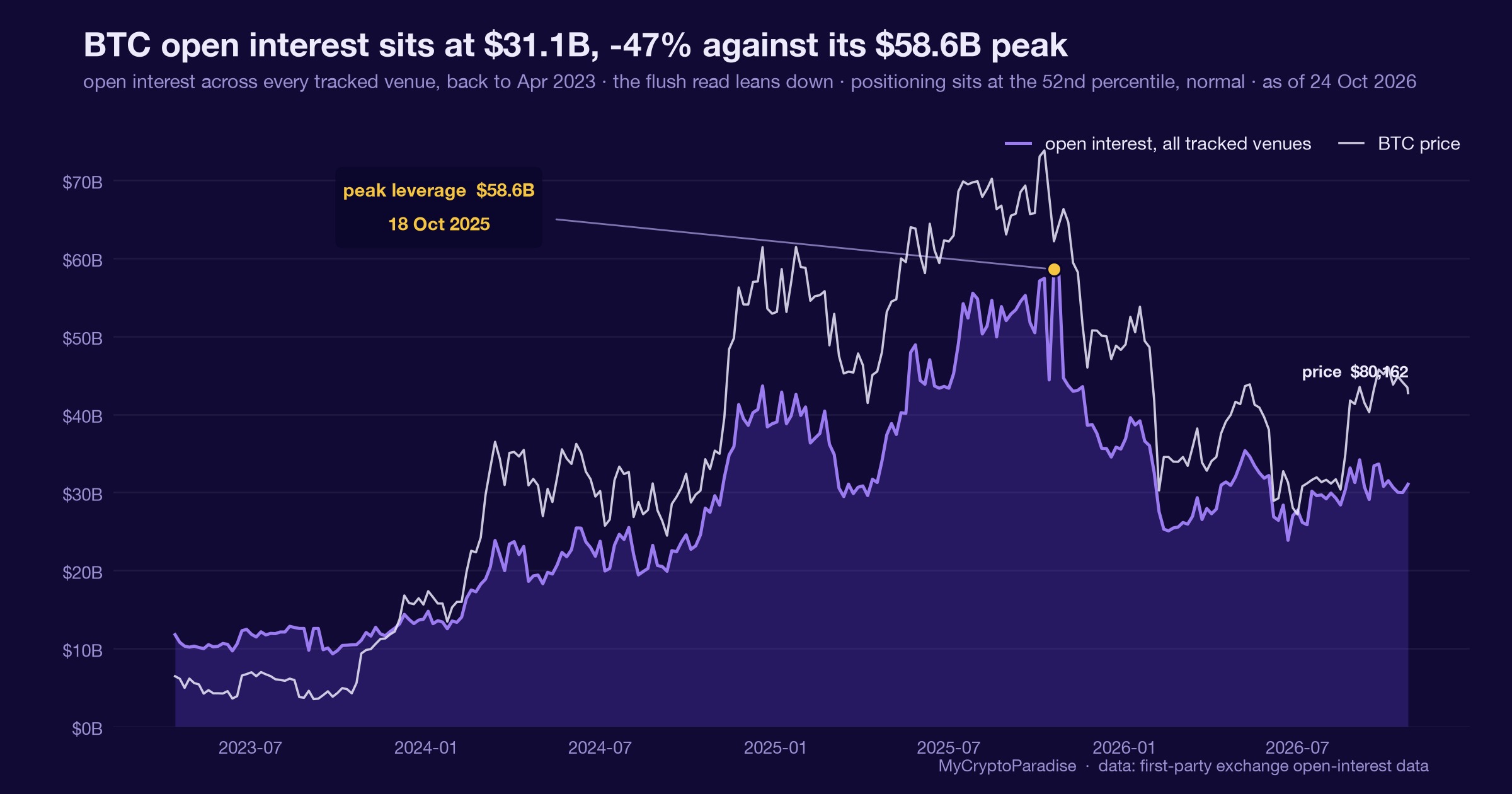
Open interest, or OI, the total value of open leveraged contracts, is the thing to size here. High OI near these levels means more fuel for a cascade. A flush that clears that leverage can reset the board.
That reset cuts both ways. Forced selling hurts in the moment. But a market that purges trapped longs often finds firmer ground once the weak hands are gone.
The two prices that settle this
Two prices decide the next move. $2,256.45 is the first line. $2,226.53 is the second. Hold above both, and this threat stays theoretical.
Confirmation of downside is simple to spot. A clean break and close below $2,256.45 opens the door to the second level. Lose $2,226.53 as well, and the forced close becomes live, not hypothetical.
Watch how price behaves at each level, not just whether it touches. A sharp wick down that snaps back shows buyers defending. A slow grind that sits below suggests sellers are winning.
Invalidation of the bearish case is a reclaim of $2,300 with strength. If ETH pushes back above and holds, this whale's long survives, and the fear fades for now.
Cumulative volume delta, or CVD, which tracks whether market buys or sells dominate, is the honest tell. Falling CVD into these levels means real selling pressure. Flat or rising CVD on a dip hints that someone is absorbing it.
Also track whether this is one position or many. We flagged a wider liquidation flush across majors earlier today. This whale sits inside that same stressed tape, so it is a symptom as much as a cause.
The level holds, or it does not. Price will settle this argument quickly.
Where smart money finds its exit liquidity
The ParadiseTeam reads this as a pressure test, not a verdict. A $214 million long parked just above its liquidation is exit liquidity waiting to happen. The question is who collects it.
Context from the wider tape matters. BTC was trading near $79,487 as of 15:52 UTC, sitting on the $79,000 to $81,000 support we have flagged as the line that holds bullish structure. That zone is where smart money has been absorbing, roughly 56% buying against 44% selling over the past day.
Here is how that connects to this ETH long. If ETH breaks $2,256.45 and $2,226.53, the forced sells hand cheaper coins to whoever is accumulating. A cascade does not only hurt. It also feeds the buyers who wait below.
Our standing bias stays cautious on the high timeframe. We still see room toward much lower levels before any macro bottom is confirmed. So a single flush does not change the structure. It just moves liquidity around.
For positioning, the lesson is about leverage, not direction. Longs stacked this close to liquidation are the first to get hunted in a down move. Stops sit right where everyone can see them.
Risk-to-reward, or R:R, only works when your stop-loss, or SL, sits beyond the obvious liquidation cluster, not inside it. The crowd's pain is often someone else's entry.
The read behind this: we framed this story through our own market analysis, Can Bitcoin Still Make a Higher High?
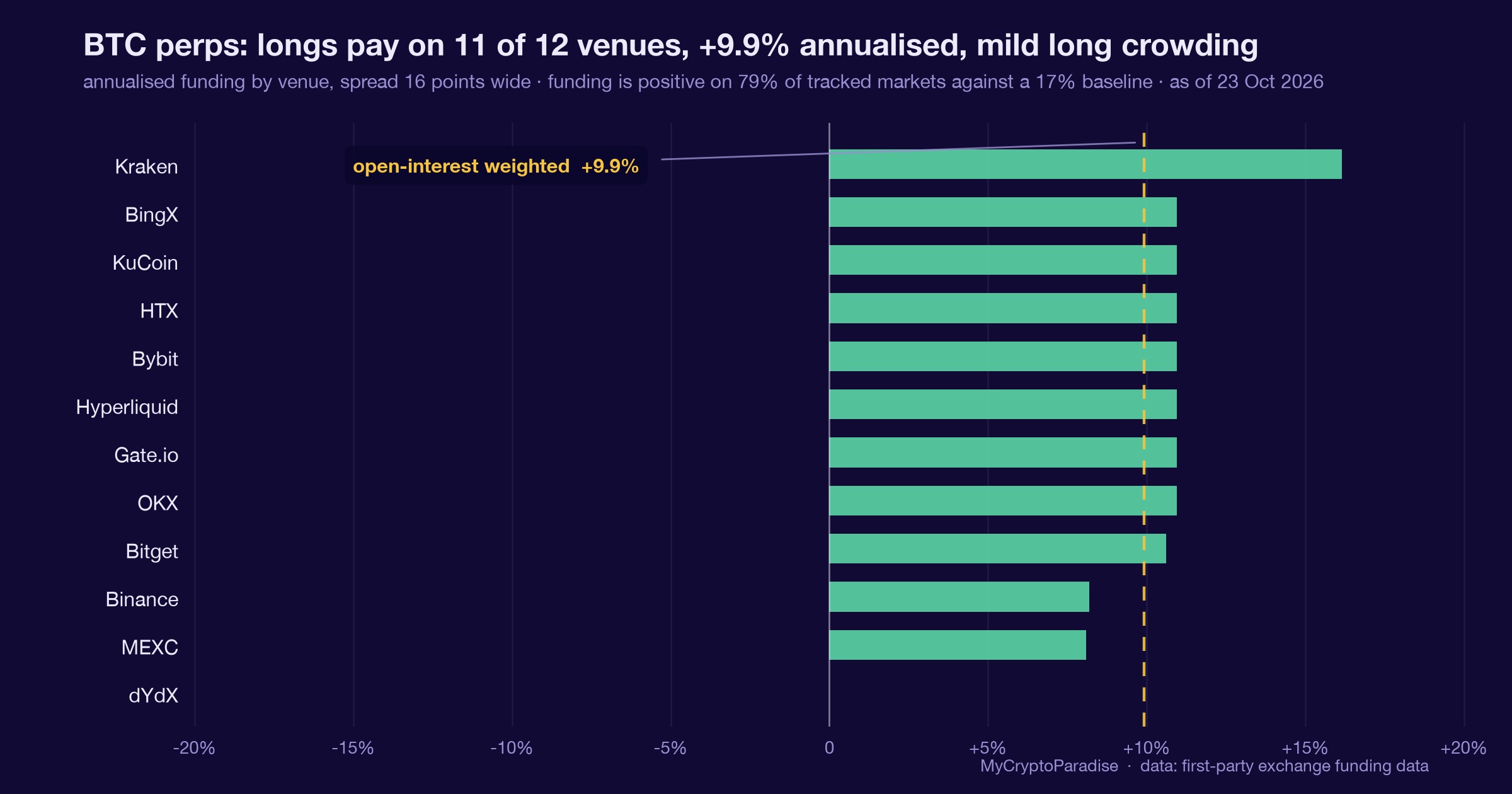
Track it live: our crypto liquidation heatmap and the live crypto funding rates both update in real time, so you can watch this shift for yourself.
Related coverage
For exact entries, targets, and stop losses with full risk management, that is what ParadiseFamilyVIP is for. New to reading these moves? Start with our crypto trading strategies guide.
ParadiseTeam is monitoring the market situation closely, and we are taking these developments into consideration while building our trading tactics inside ParadiseFamilyVIP.
Crypto trading involves substantial risk. Prices are volatile and you can lose money. This article is educational and is not financial advice. Past performance does not guarantee future results.
Does this whale's ETH long get liquidated before ETH reclaims $2,300?
This is how 1 Paradiser is calling it. Tap your call.
No calls on this one yet. Tap yours to be the first.
Free account, no password. Members just sign in.
Follow this topic: Crypto liquidation news









Join the discussion
No comments yet. Members, share how you are reading this.