


Listen: the breakdown
Market briefing: Nexus Mutual has moved $9 million into Re's reUSDe mezzanine tranche through a unanimous governance vote. BTC sat near $64,856 as of this session, trading on its own momentum, not this news.
- Nexus Mutual allocated $9 million into reUSDe, Re's mezzanine tranche token
- The decision passed through standard governance with unanimous backing
- BTC near $64,856 and ETH near $1,819.8 showed no read-through from the move
Source: Nexus Mutual Governance
Nexus Mutual just put $9 million into Re's reUSDe mezzanine tranche through a clean governance vote. Quiet, transparent, and barely noticed. Does it mean anything for your chart?
Nexus Mutual has allocated $9 million into reUSDe, the mezzanine tranche token of onchain reinsurance platform Re. One of crypto's oldest and most established risk protocols just put real capital behind another protocol's risk design.
The decision was not a quiet treasury tweak made in a back room. It went through Nexus Mutual's standard governance process and received unanimous backing. Every voter said yes, which in crypto governance is almost suspiciously tidy.
Strip away the novelty and this is plumbing. A mutual that underwrites onchain risk moved funds into a structured tranche that pays yield for sitting in the middle of a risk waterfall. The mezzanine tranche absorbs losses after the junior layer but before the senior one. That is a deliberately boring sentence, and that is the point. This is risk-management infrastructure doing exactly what mature infrastructure is supposed to do: route capital through transparent, voted-on channels rather than vibes.
What makes it notable is the signal, not the size. Nine million dollars will not move Bitcoin. But an established mutual allocating into another protocol's reinsurance structure says the onchain insurance stack is knitting together, protocol to protocol.
The causation chain is short and honest. Governance approves the allocation, capital enters reUSDe, and marginal demand for onchain reinsurance products ticks up. From there the trail goes cold, because nothing credible links $9 million in one tranche to broad crypto liquidity.
Onchain reinsurance plumbing quietly maturing
The reason this matters sits underneath the price screens, not on them. Onchain insurance has long been the layer everyone agrees crypto needs and almost nobody enjoys building. A $9 million allocation from an established mutual into a peer protocol's tranche is a small vote of confidence in that unglamorous layer.
Transmission to the wider market is close to nil, and we should say that plainly. Capital moving from one onchain risk protocol into another does not expand or drain the liquidity that BTC and ETH trade on. There is no fresh dollar demand for Bitcoin here, no supply shock, no leverage unwind.
What it does reflect is structural maturation. Reinsurance exists because insurers themselves need somewhere to lay off risk. When an onchain mutual starts using another protocol's mezzanine tranche to diversify, the sector is behaving like a real insurance market, with layered risk and priced-in returns. That is genuinely healthy for DeFi over time. A deeper, more interconnected risk stack means vaults, lenders and stablecoins have more places to hedge tail events instead of socialising losses when something breaks.
But healthy is not the same as market-moving. Traders looking for a macro driver in this headline will leave empty-handed. The honest framing is that this strengthens the scaffolding around DeFi risk, slowly, without touching the price of the two assets most readers actually hold.
Negligible spillover into BTC and ETH
Start with the obvious: Bitcoin did not notice. BTC was trading near $64,856, up about 0.5% on the day, with the one-hour change essentially flat. That is the chart of a quiet session, not a chart reacting to a reinsurance allocation.
ETH tells the same story. It sat near $1,819.8, up around 0.4% on the day and marginally red on the hour. Both majors are moving on their own independent momentum, and this headline is simply not part of that conversation.
The liquidity cascade we usually trace from a driver into BTC, then ETH, then alts, does not exist here. The capital stayed inside the DeFi risk layer. It did not pass through spot order books, it did not shift funding, and it did not rotate into altcoins.
For reUSDe and the Re ecosystem, the effect is real but contained. Marginal demand for the mezzanine tranche rises, and the protocol gains a credible counterparty in Nexus Mutual. That is meaningful for those tokens and irrelevant to the majors. So the correct market impact read is: almost none. We are the first to call a story a non-event when it is one, because pretending otherwise just helps retail chase noise.
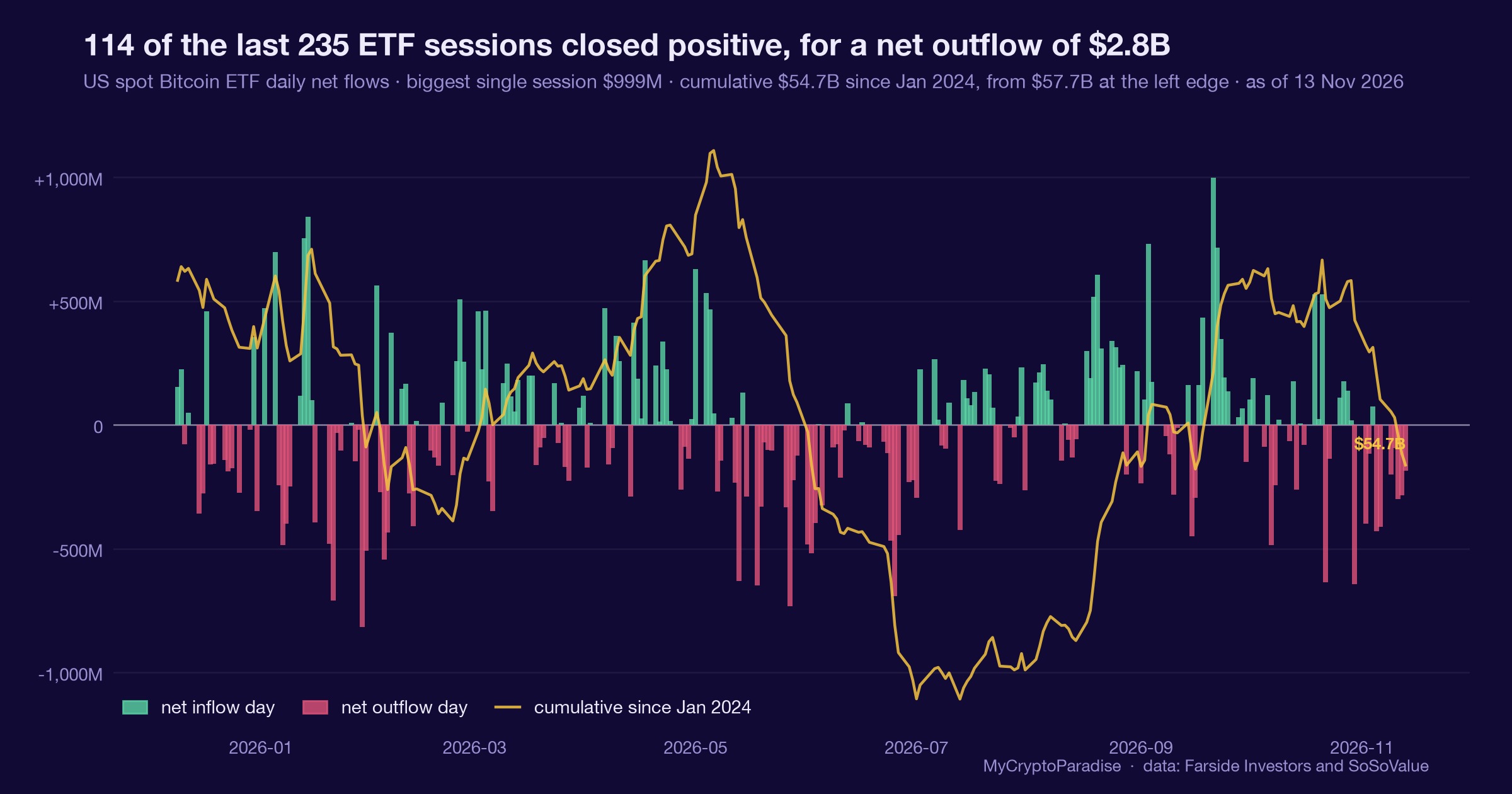
The broader tape is being written elsewhere, by ETF flows, liquidations and macro liquidity. A unanimous governance vote on a nine-figure-adjacent allocation is a footnote to that tape, not a turning point in it.
Governance transparency over headline noise
The thing to watch is adoption, not price. If more established protocols start allocating into onchain reinsurance tranches, the sector's maturation thesis strengthens. One allocation is an anecdote; a pattern is a trend.
Confirmation here looks structural, not chart-based. Watch whether reUSDe and similar tranches attract repeat institutional-style allocations through transparent governance. That would tell us onchain insurance is becoming a normal treasury destination rather than an experiment.
Invalidation of the healthy-plumbing read would be the opposite: capital quietly leaving, governance friction, or a tranche taking losses that spook future allocators. Mezzanine layers exist precisely to absorb pain, so how they behave under stress is the real test.
For BTC and ETH traders, the watch list barely changes because of this story. Your signals remain funding, flows and the levels that actually govern the majors. Nothing in a $9 million reinsurance allocation should alter where you place risk on Bitcoin.
We would flag one trap. In a nervous market, retail sometimes reaches for any adoption-flavoured headline as a reason to long into a downtrend. This headline is not that reason. So treat it as a DeFi-infrastructure data point with a clean paper trail, and keep your actual decisions anchored to the price structure. The governance transparency is the most impressive part of the whole story, and transparency, refreshingly, needs no interpretation.
Protocol flows against the weekly trend
The ParadiseTeam view is simple: this allocation changes nothing for how we read BTC right now. A reinsurance tranche inflow is not a macro driver, and we will not pretend it rhymes with the weekly structure we actually care about. That structure stays our focus. Our standing bias on the higher timeframe is still cautious, with price working through the $64,000 support zone after an unreactive touch of $69,000. The deeper exchange-of-hands zone runs from $55,000 down toward $44,000, and this news does nothing to pull price away from it.
Here is where smart money versus retail matters, and it is not inside this headline. Whales were heavy sellers recently but have eased near support, an early, unconfirmed sign of slow re-accumulation. Retail, meanwhile, keeps longing the drop with funding still crowded positive. So the honest warning: do not let a feel-good DeFi story become your excuse to chase longs into a weak tape. Strength can still meet selling into resistance while the weekly trend points down.
We want confirmation before conviction. We watch funding on the MCP website resetting toward zero or negative, a short-squeeze fuel gauge, plus whether net unrealized loss finally dips below the capitulation line near $44,000 to $64,000.
Keep R:R (risk-to-reward) tight, respect your SL (stop-loss), and let the majors, not this allocation, set your bias.
The read behind this: we framed this story through our own market analysis, Bitcoin Crash to $44K or Bounce First?
Track it live: our live crypto funding rates and the Crypto Fear and Greed Index both update in real time, so you can watch this shift for yourself.
Related coverage
For exact entries, targets, and stop losses with full risk management, that is what ParadiseFamilyVIP is for. New to reading these moves? Start with our crypto trading strategies guide.
ParadiseTeam is monitoring the market situation closely, and we are taking these developments into consideration while building our trading tactics inside ParadiseFamilyVIP.
Crypto trading involves substantial risk. Prices are volatile and you can lose money. This article is educational and is not financial advice. Past performance does not guarantee future results.
Will onchain reinsurance like Re become core DeFi infrastructure within a year?
How 2 Paradisers are calling it
The first call is still open
Free account, no password. Members just sign in.











Join the discussion
No comments yet. Members, share how you are reading this.