

Listen: the breakdown
Market briefing: A newly exposed iOS exploit network is hunting Web3 private keys, and the fear is showing up in price. ETH slid near $2,289 and SOL near $98.81, while BTC traded near $79,301 as of 15:31 UTC.
- GoPlus Security exposed an organised iOS exploit network stealing Web3 private keys since late 2025.
- ETH fell near $2,289 (-4.7%) and SOL near $98.81 (-5.4%) as security fear hit self-custody assets.
- BTC sat near $79,301 (-2.7%); the $79,000 to $81,000 zone is the battleground our framework watches.
A newly exposed iOS exploit network is hunting Web3 private keys, and altcoins are already sliding. With ETH and SOL down over 4%, is smart money using the fear to accumulate?
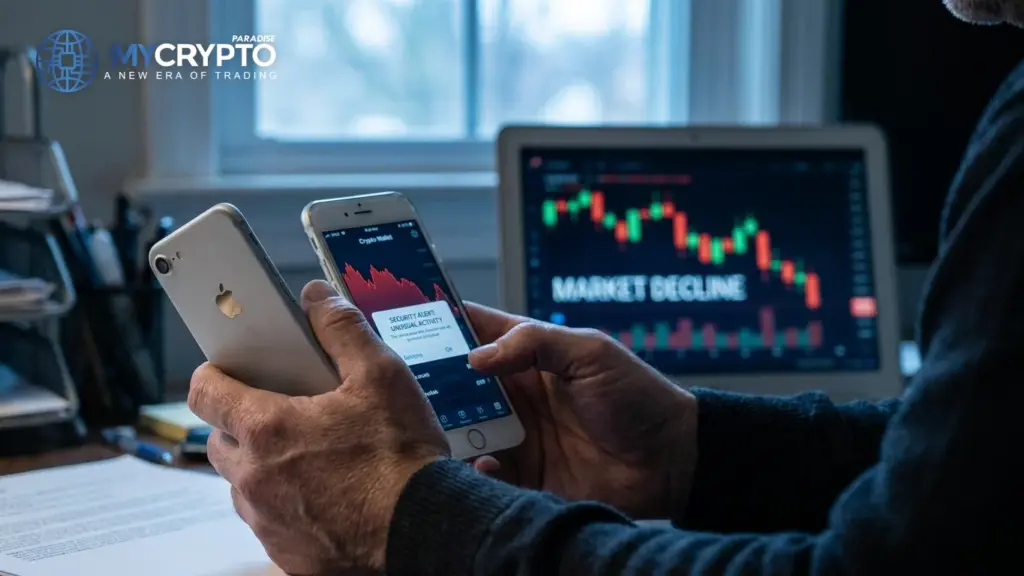
GoPlus Security has flagged an organised cybercrime ecosystem built for one purpose. The target is crypto held on Apple devices. The method is exploiting vulnerabilities in older iOS versions. The prize is Web3 private keys and the assets they control.
This activity has taken shape since late 2025. It is not a single bug or a lone hacker. It is a coordinated supply chain of theft, aimed squarely at self-custody.
The timing lands badly. ETH was trading near $2,289 and down 4.7% over 24 hours. SOL sat near $98.81, off 5.4% on the day. BTC changed hands near $79,301 as of 15:31 UTC, down 2.7%.
Private keys are the whole game in Web3. Whoever holds them holds the coins. There is no chargeback, no support line, no reversal. A stolen key is a drained wallet, full stop.
That is why this report cuts deeper than a routine phishing warning. It attacks the one thing self-custody was supposed to protect. The old promise of "not your keys, not your coins" quietly assumed the keys were safe on your own phone.
For older iOS holders, that assumption now carries a question mark. The exploit does not care about your conviction or your cost basis. It cares about an unpatched device.
Markets price trust before they price anything else. When the custody layer looks shaky, the natural reflex is to reduce risk. That reflex is already visible in today's altcoin tape.
Stolen keys hit trust, not just wallets
Security is the hidden collateral behind every crypto position. People hold coins because they believe the coins stay held. Break that belief and you weaken the demand side.
This is the transmission mechanism here. An iOS exploit targeting private keys does not move a central bank rate. It moves confidence. And confidence is the cheapest form of liquidity in any market.
When self-custody looks compromised, some holders move coins to exchanges for perceived safety. Others simply sell. Both actions add supply to the order book at the same moment. That is how a security story becomes a price story.
The effect concentrates in Web3-heavy assets. ETH and SOL anchor most self-custody wallets and DeFi activity. So fear about key theft lands on them first and hardest. Today's 4% to 5% drops fit that pattern cleanly.
There is a second-order drain too. Builders and users who feel unsafe slow down on-chain. Lower activity means thinner fees, thinner liquidity, and weaker bids under every token.
None of this requires the exploit to touch a majority of users. It only requires enough doubt to shift behaviour at the margin. Markets trade the margin, not the average. So we read this as a genuine negative for risk appetite. Not a structural break, but a real headwind while the fear is fresh.
ETH and SOL absorb the first blow
BTC sets the risk clock for everything below it. Near $79,301 and down 2.7%, it is already soft. A security scare simply adds weight to an order book that was leaning lower.
The cascade runs downhill from there. BTC wobbles, ETH drops harder, SOL and smaller alts drop hardest. Today's tape shows exactly that staircase.
ETH near $2,289 and SOL near $98.81 are carrying the brunt. That is logical. They host the wallets and the DeFi rails this exploit targets, so the fear sticks to them.
Watch where the pain sits in leverage. A sliding market pressures long positions first. Forced selling then feeds more selling, and the move overshoots fair value on the way down.
Here is the subtler part. Panic from retail creates exit liquidity for larger players. Some use fear to hedge or distribute into any bounce. Others quietly accept the cheaper coins that frightened sellers hand them.
That two-way flow is why a scare rarely falls in a straight line. Sharp drops meet absorption, then another leg as the next headline hits. The chop is the point, not the exception.
For now the first-order read is clear. A credible key-theft report, landing on an already nervous market, pushes the path of least resistance down. Until the fear fades, bounces look more like exits for the strong hands than the start of real relief.
Whether fear hardens into fresh outflows
Stablecoin inflows to exchanges are the first tell. A spike says holders are moving coins to sell or to safety. That confirms the fear is converting into real supply, not just headlines.
On-chain activity is the second tell. If transaction counts and DeFi volumes on ETH and SOL keep sliding, the scare is biting behaviour. That would validate the bearish read.
Watch BTC's reaction around $79,000 closely. It is a key level for bullish structure in our framework. Lose it decisively and the whole complex likely opens more downside.
Invalidation looks different. A fast reclaim of lost levels on rising volume would say the market shrugged this off. Security scares often fade once a patch or mitigation lands and attention moves elsewhere.
A quiet patch narrative is the thing that ends these episodes. The exploit targets older iOS versions, which is a fixable problem. Clarity that most users were never exposed would drain the fear quickly.
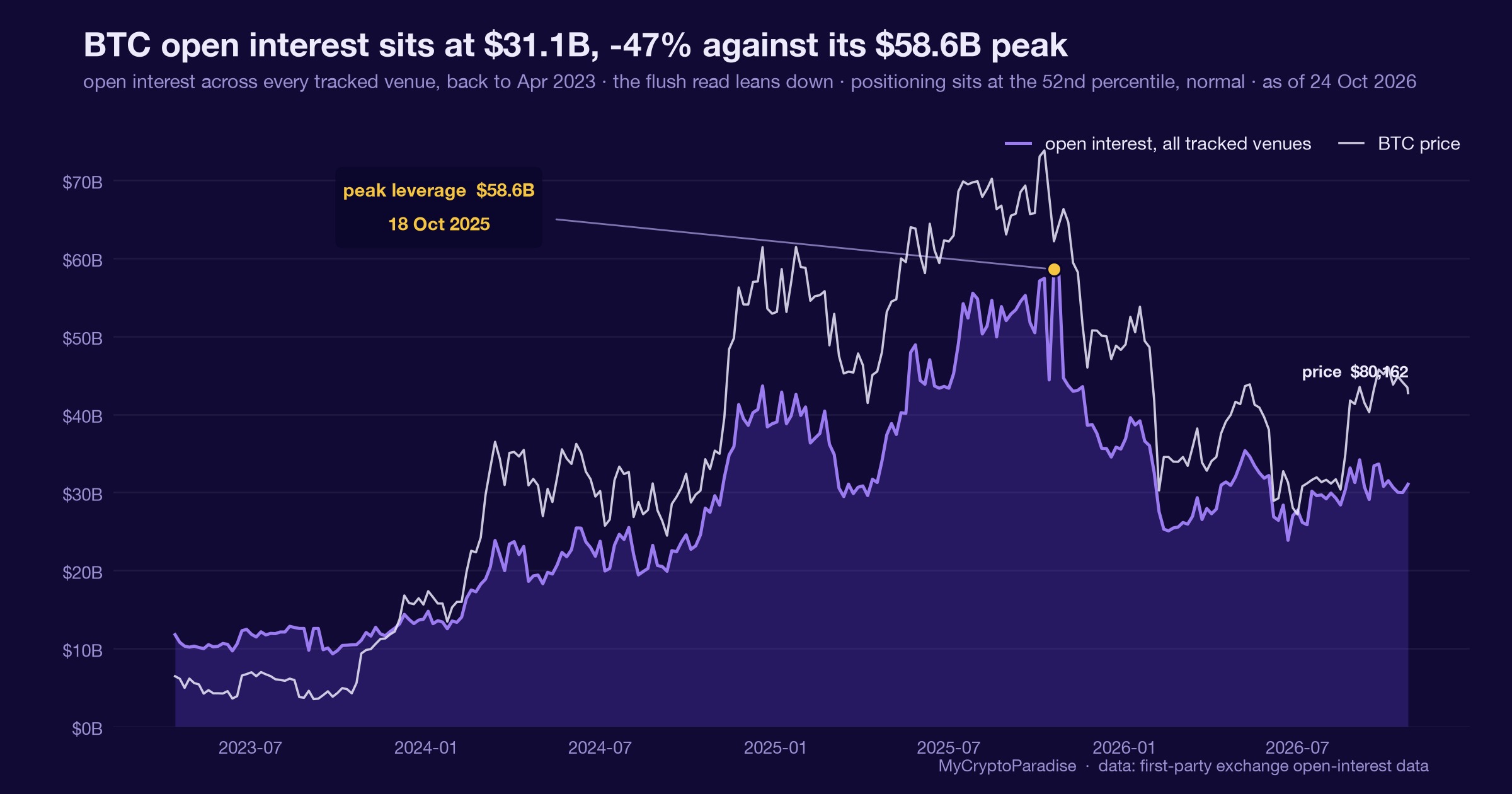
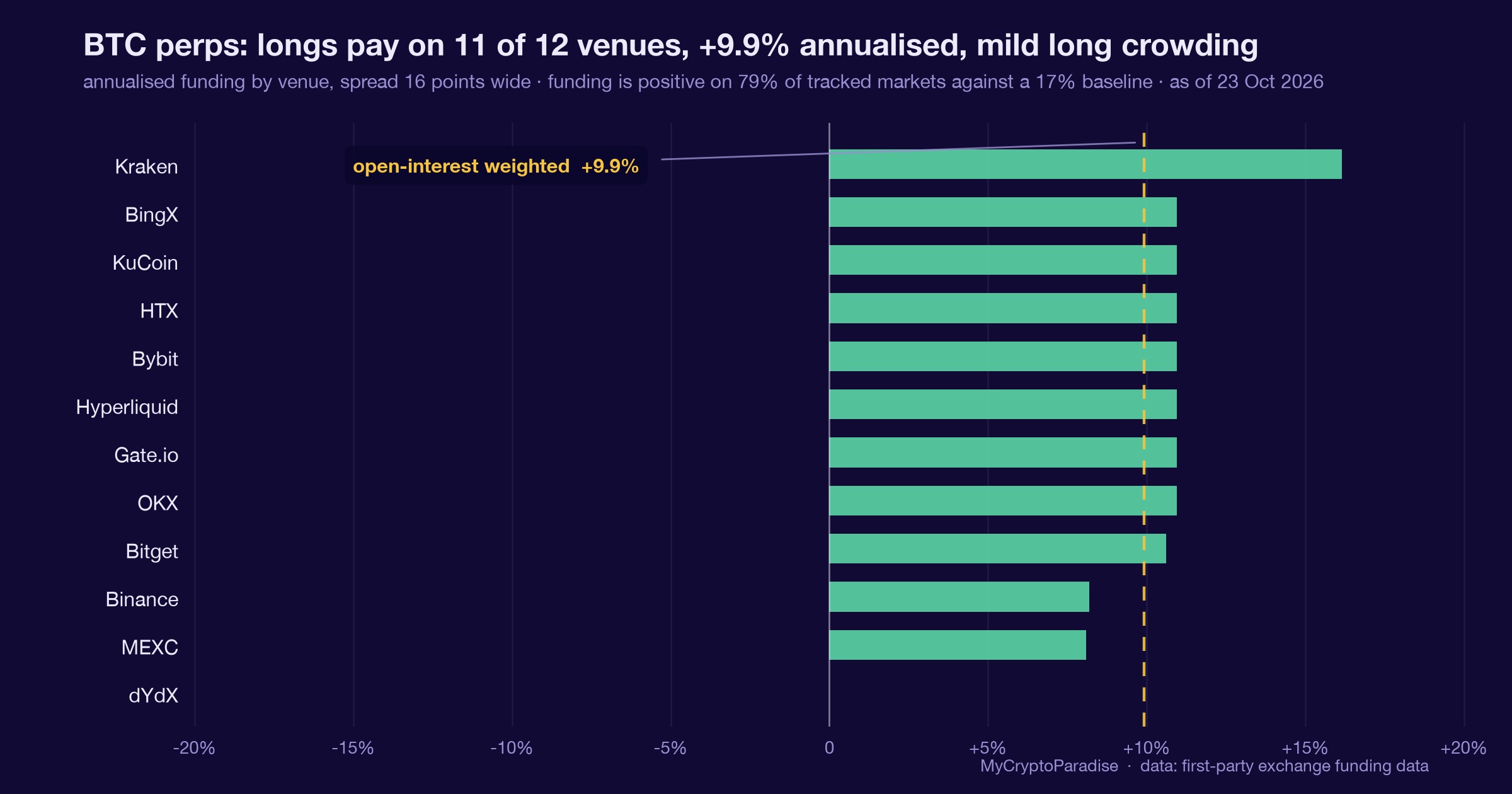
Funding and open interest matter too. OI (open interest) is the total value of open derivatives contracts. If OI falls while price drops, leverage is flushing, which can set a cleaner floor.
So the honest signpost is simple. More exchange inflows plus a lost $79,000 confirms weakness. A sharp reclaim with no follow-through selling says the scare was mostly noise. We let the tape, not the headline, cast the deciding vote.
Where the scare meets BTC's $79K floor
Our standing map matters more than the scare in isolation. The ParadiseTeam frames BTC near $79,301 as sitting right on the line that decides short-term structure. The $80,000 to $81,000 zone is the 0.618 retracement, and $79,000 is our key bullish level.
This is where the story and the chart meet. A fresh security fear is exactly the kind of catalyst that flushes nervous holders through support. Retail tends to sell precisely here, into the level that mattered most.
Our data shows smart money is not panicking. Roughly 56% of tracked smart money was buying over the past 24 hours, against 44% selling. Whales appear to be absorbing the supply that fear is producing.
That is the edge in this episode. The headline reads bearish, and near term it is. But the flow underneath suggests larger players are using retail's exit liquidity, not joining the exodus.
We stay honest about the bigger picture. On high timeframes our bias remains cautious, with $44,000 still on the map as a deeper target. Strength into $85,300 or $90,000 resistance would more likely meet selling than a clean breakout.
So the ParadiseTeam holds a split view. Short term, support at $79,000 to $81,000 is the real battleground, and absorption there would be constructive. Longer term, we treat bounces with respect, not conviction. Risk management, not prediction, carries you through scares like this.
The read behind this: we framed this story through our own market analysis, Can Bitcoin Still Make a Higher High?
Track it live: our Crypto Fear and Greed Index and the live crypto funding rates both update in real time, so you can watch this shift for yourself.
Related coverage
For exact entries, targets, and stop losses with full risk management, that is what ParadiseFamilyVIP is for. New to reading these moves? Start with our crypto trading strategies guide.
ParadiseTeam is monitoring the market situation closely, and we are taking these developments into consideration while building our trading tactics inside ParadiseFamilyVIP.
Crypto trading involves substantial risk. Prices are volatile and you can lose money. This article is educational and is not financial advice. Past performance does not guarantee future results.
Do iOS key-theft fears push ETH and SOL lower from here, or does it fade fast?
This is how 1 Paradiser is calling it. Tap your call.
No calls on this one yet. Tap yours to be the first.
Free account, no password. Members just sign in.








Join the discussion
No comments yet. Members, share how you are reading this.