

Listen: the breakdown
Market briefing: The US has moved a third carrier strike group and 10,000 troops into the Persian Gulf as Iran prepares a possible response. Risk assets softened on the headline, with BTC near $79,859 and ETH near $2,322.80.
- US deploys a third aircraft carrier strike group and 10,000 extra troops to the Persian Gulf
- Iran is preparing for possible retaliation, raising conflict risk in a key energy corridor
- BTC near $79,859 and ETH near $2,322.80 slipped as risk-off pressure spread
The US just moved a third carrier group and 10,000 troops into the Persian Gulf as Iran readies a reply. When force stacks up this fast, where does crypto liquidity run?
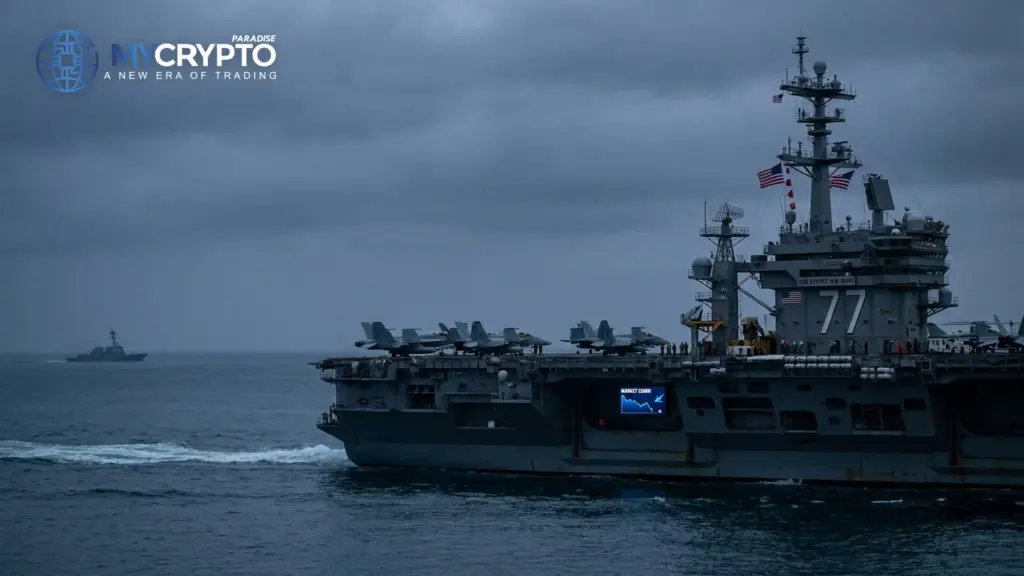
The United States has moved a third aircraft carrier strike group into the Persian Gulf. Alongside it, roughly 10,000 additional troops have deployed to the region.
Iran, for its part, is preparing for possible retaliation. That is a heavy concentration of force in a narrow stretch of water.
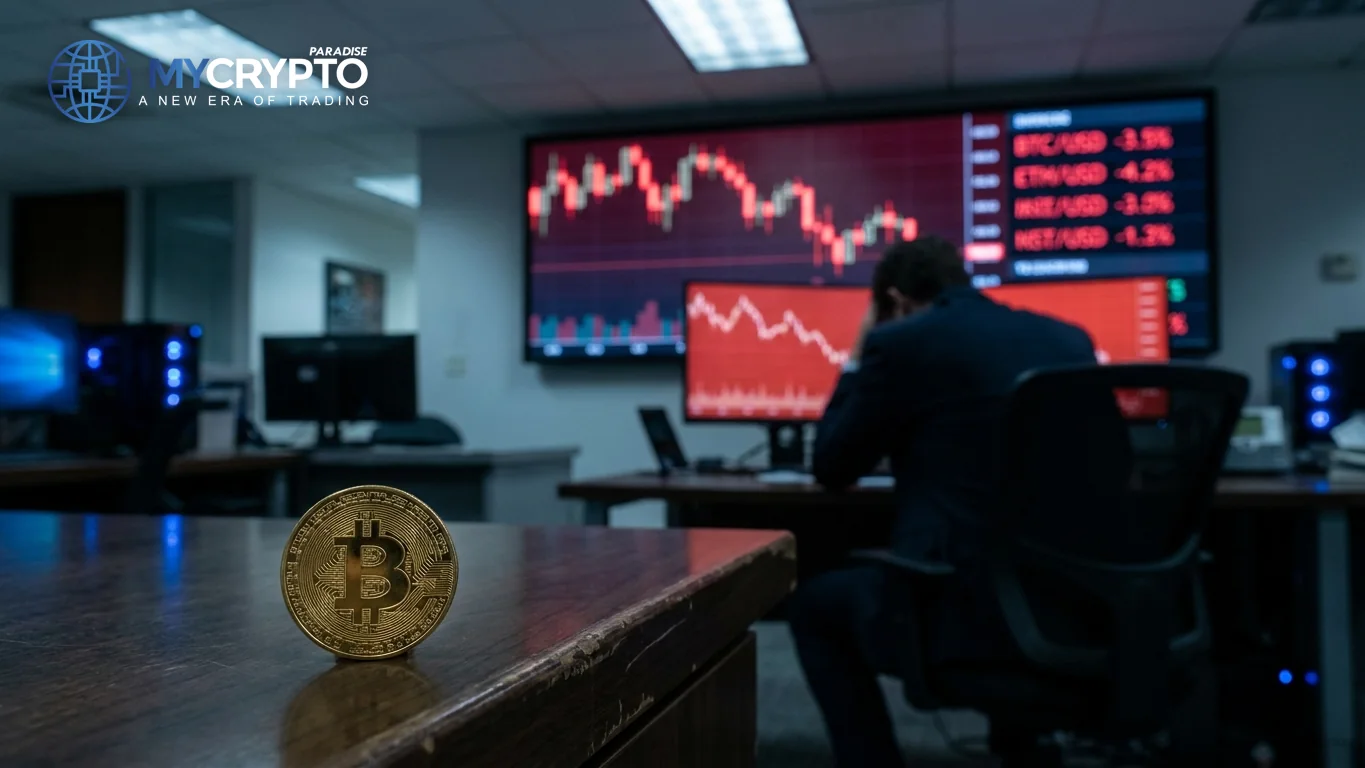
Markets noticed quickly. Bitcoin was trading near $79,859 as of the latest read, down about 2.1% over 24 hours. Ethereum slipped harder, off roughly 3.3% near $2,322.80. The reaction looks orderly, not a crash, but the direction is not in doubt.
The driver here is geopolitical, and it arrived without a schedule. A carrier group is a floating signal of intent, and three of them in one theatre changes how traders price the next headline. Every risk asset now carries a tail risk it did not carry last week.
This is the mechanism in plain terms. When military escalation rises, capital shifts toward what feels safe and away from what feels speculative. Crypto sits firmly in the second bucket for most allocators, whatever we think of it.
So the selling in BTC and ETH is not a verdict on the technology. It is a verdict on the moment. Liquidity gets expensive when the headlines turn to troop numbers and possible retaliation.
We have published on today's broader risk unwind and on an unverified ceasefire rumor that crypto shrugged off. This is a different thread. Here the escalation is confirmed, the force is real, and the market is pricing a fatter tail than a rumor ever justified.
Why force in the Gulf drains risk flows
A carrier group changes the risk calculus for every allocator, not just crypto traders. When conflict risk rises in a major energy corridor, the first reflex is defence, not offence.
Capital rotates toward perceived safety. That tends to mean the dollar, short-dated government paper, and sometimes gold. Oil often firms too, because the Persian Gulf moves a large share of the world's crude.
That last point matters more than it looks. Higher energy prices feed inflation worries, which complicate the path for rate cuts. Tighter expected liquidity is a headwind for every speculative asset, and crypto sits at the front of that queue.
Here is the chain in full. Escalation raises risk aversion. Risk aversion pulls money out of risk assets. Thinner liquidity then amplifies every move, up or down.
Crypto feels this fast because it trades around the clock. There is no closing bell to pause the reaction while cooler heads arrive. A weekend headline can hit BTC before any traditional market opens. So the softness in BTC and ETH is the transmission working exactly as expected. Confirmed military buildup plus a stated possibility of retaliation is a textbook risk-off input.
The honest caveat is that geopolitical shocks are notoriously hard to price. They can fade in a day or escalate for months. Markets are forecasting a range of outcomes at once, and the forecast will be confident right up until it is wrong.
BTC leads the liquidity drain into ETH and alts
Bitcoin leads the move, and that ordering is the tell. BTC is the most liquid crypto, so it absorbs the first wave of risk-off selling before weakness spreads.
ETH is already confirming the pattern. Down roughly 3.3% against BTC's 2.1%, it is falling faster, which is what usually happens when liquidity thins and traders reach for the most liquid door first.
Alts sit furthest down this chain. They carry the least depth, so a modest BTC drop can translate into outsized alt declines as market makers widen spreads and pull bids.
Leverage is the accelerant. We already flagged today that $494 million in leveraged longs unwound on an earlier flush. A geopolitical headline into a market still carrying long exposure is exactly the fuel a cascade needs.
Think about where stops sit. Longs opened near the recent range tend to cluster their protective stops just under obvious support. A sharp headline can sweep those levels, triggering forced selling that looks like conviction but is really just liquidation.
That is the uncomfortable truth of risk-off moves. Much of the downside is mechanical, not fundamental. Positions get closed because they must be, not because anyone reassessed Bitcoin's long-term case.
The near-term read stays cautious while the headline risk is live. First-order, this event pressures BTC, then ETH, then alts. Any relief rally into that pressure deserves scepticism until the force posture in the Gulf actually eases.
The $80K zone that decides the next leg
The $80,000 to $81,000 zone is the line that matters now. It has acted as support, and a confirmed daily hold there would suggest buyers are absorbing the geopolitical fear rather than fleeing it.
A clean break below, with rising volume and expanding downside, points the other way. That would open the door toward the next shelf and signal the risk-off flow is winning.
Watch $79,000 closely. Reclaiming it as support keeps the constructive structure alive; losing it and seeing it flip to resistance would mark a more serious shift in direction.
The second thing to track is the headline cadence itself. If retaliation materialises or the force posture hardens, expect another leg of selling as the tail risk gets repriced higher.
The opposite also holds. Any credible de-escalation, a verified pullback or a quiet period, would remove the premium markets just added and could spark a quick relief bounce.
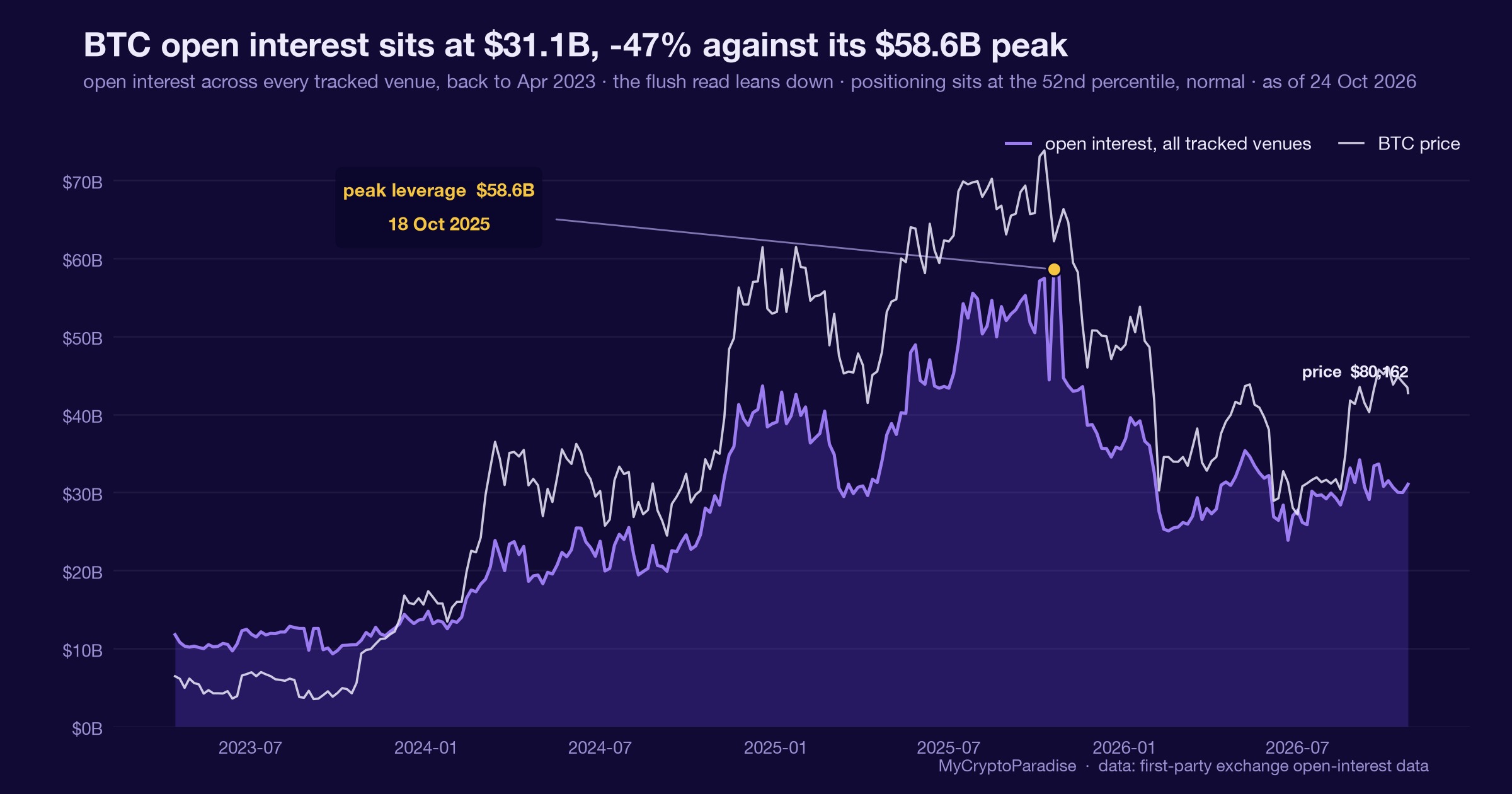
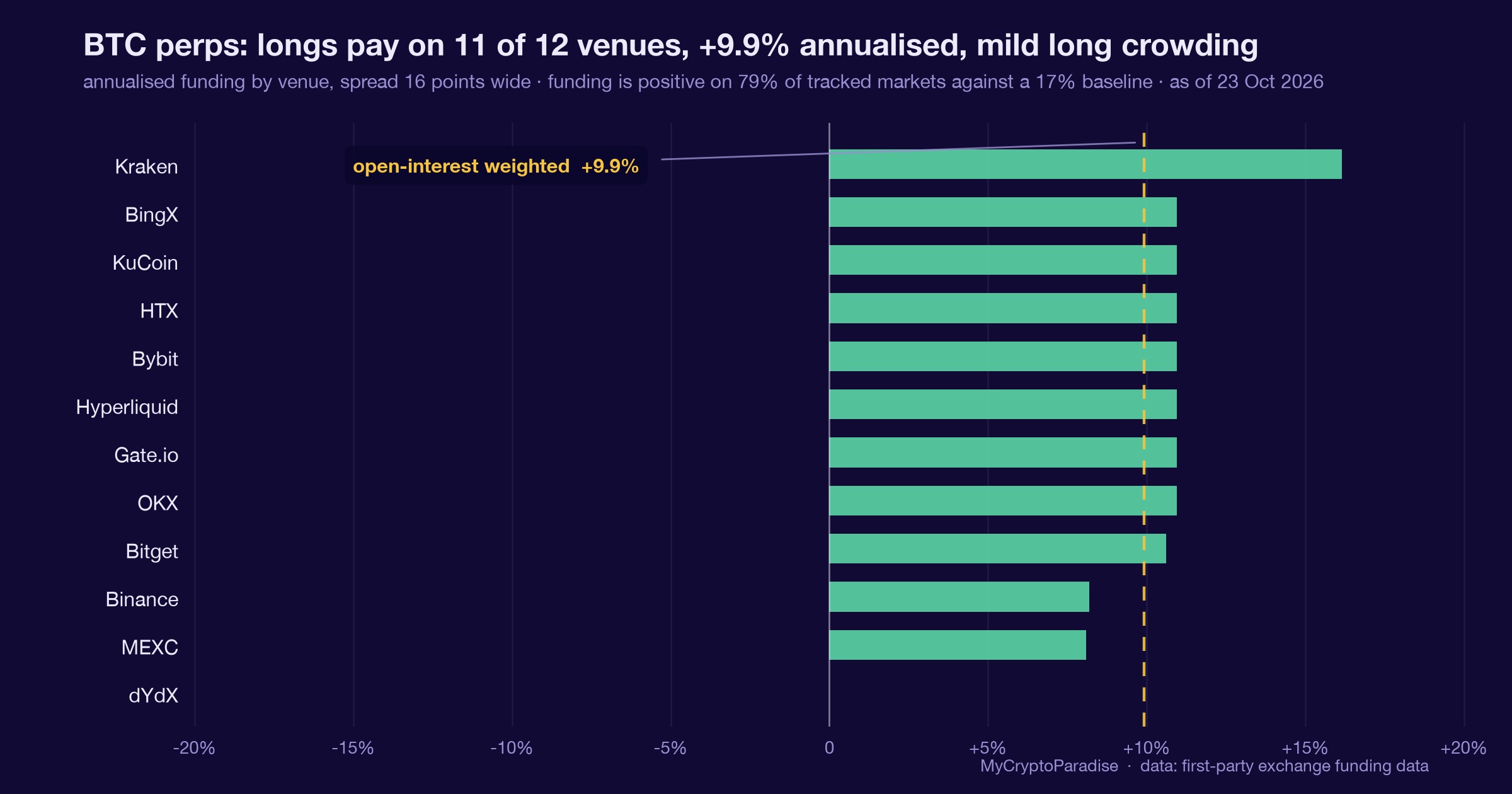
Funding and open interest are worth a glance too. If OI (open interest) keeps climbing while price falls, fresh shorts are stacking, and crowded shorts are their own fuel for a squeeze later.
Confirmation of weakness is a daily close below the support zone on real volume. Invalidation is a firm defence of $80,000 to $81,000 with buyers stepping in while retail panics.
Until one of those prints, this stays a headline-driven tape. Trade the level that confirms, not the fear that shouts.
What a Gulf escalation does to key support
The ParadiseTeam reads this through one lens: a confirmed escalation landing right on the $80,000 to $81,000 support zone while BTC trades near $79,859. That overlap is the whole story for positioning.
Bearish news arriving at medium-timeframe support, with retail already fearful, is often where smart money does its quiet work. Panicked sellers hand over exit liquidity, and larger players absorb it rather than chase price down.
Our standing data supports that caution in both directions. Recent flows show a slight majority of smart money buying while the crowd leans short and expects a crash. That divergence is modest, not extreme, so it argues for patience, not heroics.
Hold the longer view honestly. Our higher-timeframe bias remains cautious, with real downside risk toward $58,000 to $59,000 and deeper if the structure breaks. Short-term absorption at support does not cancel that larger map. So both things can be true. Smart money can accumulate this dip from scared retail, and the macro structure can still point lower over weeks.
The levels that settle the argument are clear. Defending $80,000 to $81,000 and reclaiming $79,000 as support would favour the absorption read. Losing both on volume would hand the tape to the risk-off sellers and the bearish higher-timeframe case.
The geopolitical driver does not change those levels. It raises the odds that they get tested, and tested soon. Respect the line, size for the tail, and let confirmation lead.
The read behind this: we framed this story through our own market analysis, Can Bitcoin Still Make a Higher High?
Track it live: our live crypto funding rates and the Crypto Fear and Greed Index both update in real time, so you can watch this shift for yourself.
Related coverage
For exact entries, targets, and stop losses with full risk management, that is what ParadiseFamilyVIP is for. New to reading these moves? Start with our crypto trading strategies guide.
ParadiseTeam is monitoring the market situation closely, and we are taking these developments into consideration while building our trading tactics inside ParadiseFamilyVIP.
Crypto trading involves substantial risk. Prices are volatile and you can lose money. This article is educational and is not financial advice. Past performance does not guarantee future results.
Does this Gulf escalation push BTC below $80K support or does it hold?
This is how 1 Paradiser is calling it. Tap your call.
No calls on this one yet. Tap yours to be the first.
Free account, no password. Members just sign in.







Join the discussion
No comments yet. Members, share how you are reading this.