

Listen: the breakdown
Market briefing: The US Treasury sanctioned an Iranian maritime firm for taking Bitcoin to dodge restrictions and fund the IRGC. BTC shrugged, trading near $64,020, up 0.5 percent on the day.
- US Treasury sanctioned Iranian firm HormuzSafe for accepting Bitcoin to evade restrictions.
- Treasury says the crypto revenue funded Iran's Islamic Revolutionary Guard Corps.
- BTC barely moved near $64,020, holding structure well above the $62,500 line.
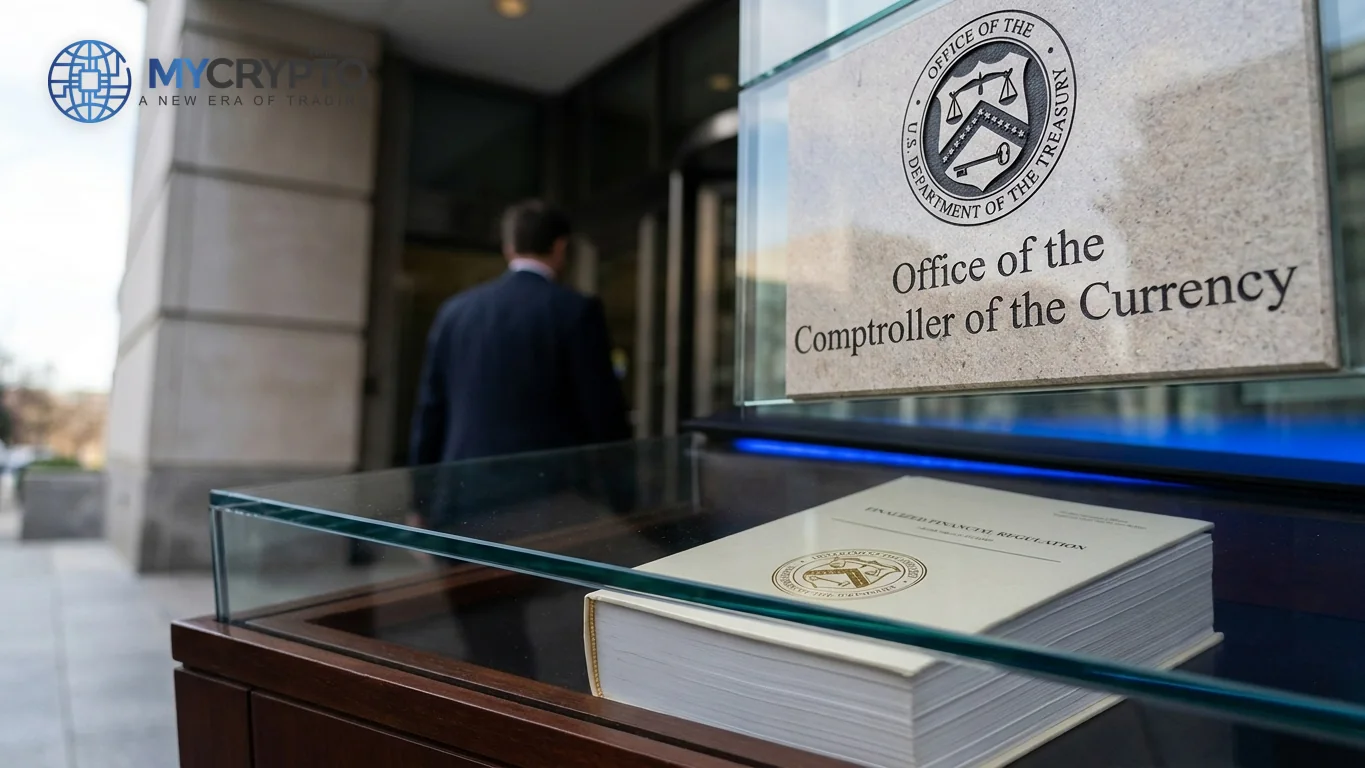
Source: U.S. Department of the Treasury
Fresh Bitcoin sanctions hit an Iranian maritime firm accused of dodging US restrictions with crypto. Yet BTC held near $64,020 and shrugged. So who is actually reacting?
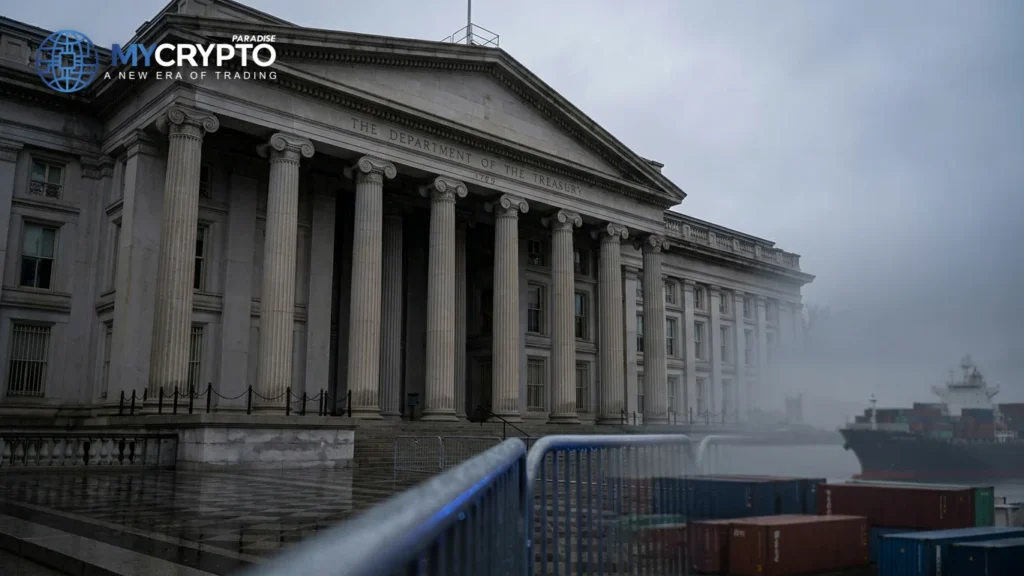
The US Treasury has sanctioned an Iranian maritime firm called HormuzSafe. The stated reason is direct: it accepted Bitcoin and other digital assets to evade restrictions. That crypto revenue, Treasury says, flowed to Iran's Islamic Revolutionary Guard Corps.
This is a confirmed designation, not a rumour. A named entity, a named beneficiary, and a specific accusation that digital assets were the payment rail. For a market that spent years hearing crypto called a tool for bad actors, the headline writes itself.
And yet the tape barely noticed. Bitcoin traded near $64,020 as the news landed, up 0.5 percent on the day and down a quiet 0.2 percent on the hour. No flush, no spike, no capitulation candle. The kind of non-reaction that tells you more than a violent one.
We covered geopolitics twice already today, from airstrikes on Iran to a Lazarus Group Bitcoin move. This story is different in one important way. It is not about violence or a hack. It is about the state formally treating crypto as a sanctions-evasion channel, and pricing that risk into the compliance layer, not the order book.
That distinction matters. Sanctions designations rarely move spot directly. They move the plumbing around it: exchange screening, banking access, and the cost of staying clean. The market seems to understand that the immediate liquidity impact here is close to zero.
Why sanctions hit compliance not price
Sanctions on a single firm do not drain liquidity from Bitcoin. They add friction to the edges of the system. That is the transmission mechanism worth understanding.
When the Treasury names an entity for using crypto to evade restrictions, the pressure lands on intermediaries. Exchanges tighten screening. Banks scrutinise on-ramps harder. Compliance desks add another watchlist. None of that forces a holder to sell a coin.
So the macro effect is regulatory, not monetary. It raises the long-run cost of doing business in crypto, especially for anything touching sanctioned jurisdictions. Over time, that can shape where liquidity is allowed to flow. In a single session, it changes almost nothing.
There is an older lesson underneath this. Every cycle produces a fresh warning that crypto is mainly for illicit finance, usually delivered with great confidence. The borderless design that regulators dislike is the same design that makes a single-firm sanction largely symbolic for global spot price.
This is why the FUD, fear, uncertainty and doubt, tends to fade fast. The headline is scary. The mechanical impact on Bitcoin's supply and demand is thin. Traders who confuse the two often sell a strong hand into a weak story.
The honest read is that this event sharpens regulatory scrutiny without touching the flows that actually set price today.
How the illicit finance headline hit liquidity
Start with Bitcoin, because Bitcoin is where the fear was supposed to show up. It did not. Price held near $64,020, and the muted 0.2 percent hourly drift says sellers had no urgency.
That calm is the signal. A genuine liquidity shock from a sanctions story would print a fast wick as leveraged longs got flushed and stops triggered. Instead the reaction reads as absorption. Whatever fear the headline generated met a bid.
Ethereum tends to amplify Bitcoin's moves in both directions. With BTC steady, ETH had no fresh catalyst to lead lower. Regulatory scrutiny of sanctions evasion is not an Ethereum-specific event, so the relative move stayed muted.
Alts are where retail emotion usually breaks first. When a scary geopolitical headline hits, thin alt order books get shaken before Bitcoin does. Today that cascade did not fire, which suggests the crowd is not panic-selling into this.
Here is the mechanism in plain terms. This news does not remove buyers or add forced sellers. It adds paperwork. Liquidity that matters for price, spot demand and derivatives positioning, is still being driven by technicals and the broader macro backdrop.
We will be honest about causation. There is no single confirmed catalyst setting today's tape. The lack of a reaction to a real, sourced sanctions story is itself the most useful data point on the board.
What confirms accumulation versus real capitulation
The level that decides everything is $62,500. That is the invalidation line for the current bullish market structure. As long as Bitcoin holds above it, this sanctions story stays a headline, not a trend change.
Watch the current support zone first, roughly $63,400 to $63,600. A clean hold there through follow-on headlines would confirm that the market is absorbing regulatory fear rather than fearing it. That is the accumulation read.
Invalidation is specific and worth respecting. A decisive break and hold below $62,500 would tell us the bullish structure is broken, and that this cluster of geopolitical and regulatory stories is finally biting. Below that, the $60,000 to $59,000 band becomes the next high-probability zone.
To the upside, $69,000 is the main resistance on the 4-hour timeframe. Reclaiming momentum toward it would confirm that the FUD was faded, not front-run.
We are also watching the crowd, not just the chart. If retail sentiment turns sharply bearish on sanctions and illicit-finance fear while price refuses to fall, that divergence usually favours the patient side.
The cleanest confirmation is boring: sideways-to-higher price on shrinking fear. The cleanest invalidation is a momentum break of $62,500 that finally makes the bears right. Until one of those prints, this is noise around an intact structure, and treating noise as a trend is how good positions get sold early.
What this non-reaction signals for positioning
The ParadiseTeam reads this sanctions story through one filter: what did it change for our levels? The answer is almost nothing, and that is the point.
Our bias stays bullish, with structure intact above $62,500 and continuation toward $79,000 the base case after a final dip or consolidation. A sanctions designation on an Iranian shipping firm does not touch that thesis. It tests the crowd's conviction, not the chart.
The smart-money behaviour we track fits this exactly. Professionals fade emotional headlines, work limit orders into support, and move stops to break-even rather than chasing. Mean-reversion trading means doing the opposite of a panicking crowd, and a scary story that fails to move price is a textbook invitation to do just that.
Stops matter here. After a fear headline, retail sell-stops tend to cluster just under obvious support like $63,400 and $62,500. That is precisely where liquidity pools for anyone accumulating. A headline that pushes weak hands toward those stops, without breaking structure, tends to feed the stronger side.
Ground it in price. Near $64,020, Bitcoin sits inside the accumulation zone, not at a breakdown. The bullish divergences we are watching on the 4-hour, momentum making higher lows while price holds, matter far more than any single sanctions print.
Probabilities, not promises. Hold $62,500 and this story ages into a footnote. Lose it, and we reassess.
Track it live: our Crypto Fear and Greed Index and the crypto liquidation heatmap both update in real time, so you can watch this shift for yourself.
Related coverage
For exact entries, targets, and stop losses with full risk management, that is what ParadiseFamilyVIP is for. New to reading these moves? Start with our crypto trading strategies guide.
ParadiseTeam is monitoring the market situation closely, and we are taking these developments into consideration while building our trading tactics inside ParadiseFamilyVIP.
Crypto trading involves substantial risk. Prices are volatile and you can lose money. This article is educational and is not financial advice. Past performance does not guarantee future results.
Does Bitcoin hold the $62,500 structure through this sanctions wave?
This is how the Paradisers are calling it. Tap your call.
No calls on this one yet. Tap yours to be the first.
Free account, no password. Members just sign in.






Join the discussion
No comments yet. Members, share how you are reading this.