


Listen: the breakdown
Developing story update (October 02, 2026, 16:48 UTC):
New detail has emerged on the scope of the US aircraft parts curbs on China. Based on our sources, the measures target specific suppliers and products: jet engines from GE Aerospace, navigation systems from Honeywell Aerospace, and other components bound for Chinese planemaker COMAC, whose licenses were suspended in late spring.
The restrictions are now being framed as leverage in ongoing trade negotiations rather than a one-off action, building on broader aircraft export limits first imposed last year. For traders, this points to a prolonged, structural standoff rather than a single headline, which likely keeps the crypto reaction muted unless the dispute widens.
What to watch now: Whether China retaliates on US exports or widens the dispute into other sectors, which could sharpen risk-off pressure.
Market briefing: The US has restricted aircraft parts exports to Beijing, sharpening the trade war. Bitcoin held near $85,348, up 1.5 percent on the day, but slipped in the hour after the headline. We read this as caution, not panic.
- US restricts aircraft parts exports to Beijing, escalating the US-China trade war.
- BTC traded near $85,348, up 1.5 percent on the day but down near 1 percent in the last hour.
- ETH held $2,696, up 0.6 percent daily, with a similar short-term dip as risk appetite paused.
The US just restricted aircraft parts exports to Beijing, and the trade war escalation hit crypto within the hour. Is this a blip or a warning for risk assets?
The US has restricted aircraft parts exports to Beijing. On its own, that sounds like a story for industrials, not crypto. But trade-war escalation between the two largest economies rarely stays in one lane.
The move tightens a screw that was already turning. Export controls are a slow-motion weapon, and each new restriction raises the cost of doing business across borders. Markets price that friction as uncertainty, and uncertainty is the enemy of risk appetite.
Crypto felt it quickly. Bitcoin was trading near $85,348, up about 1.5 percent over 24 hours, yet it slipped close to 1 percent in the hour after the headline crossed. Ethereum told the same story, holding $2,696 on the day while dipping over 1 percent in the last hour.
So the surface reading is mixed, and honestly that is the point. The daily tape is still green, which means this news did not override the broader momentum that carried both assets higher. It simply paused it.
That gap between a 24-hour gain and a one-hour dip is where the real information sits. It tells us participants are de-risking at the margin, trimming exposure rather than fleeing. Nobody is rushing for the exits yet, but the room has noticed where the door is. This extends a theme we have tracked all day: macro crosscurrents pulling at crypto while price stays stubbornly firm. What is new here is the source of the friction, which is geopolitical rather than monetary.
How trade friction leaks into crypto liquidity
Export restrictions are macro signals disguised as logistics. When the US limits aircraft parts to Beijing, it is not a one-off sanction. It is a statement that the relationship is hardening, and hardening relationships raise the probability of retaliation.
That probability is what markets actually trade. Investors do not need a tariff to act. They need the credible threat of one, because a threat alone widens the range of outcomes they must hedge against.
Wider outcomes mean wider risk premiums. Capital that was happily chasing returns starts asking for a bigger cushion, and some of it rotates toward perceived safety. Crypto, still treated as a high-beta risk asset by most allocators, sits at the back of that queue.
The transmission runs like this. Trade escalation lifts global uncertainty, uncertainty cools risk appetite, cooler appetite slows or pauses the liquidity flowing into speculative assets. Bitcoin and Ethereum feel that pause before almost anything else.
None of this guarantees a selloff. The daily gains prove the broader bid is still intact. But it does mean the easy, one-way flows that push price higher can thin out, and thin flows make moves sharper in both directions.
The quiet irony is familiar. Every cycle, someone insists crypto has decoupled from the macro. Then a headline about aircraft parts, of all things, nudges the tape. Correlation has a way of reappearing at exactly the wrong moment for that argument.
Where the dip sits across BTC, ETH and alts
Bitcoin leads this reaction, as it always does. Near $85,348 the daily trend was still up, but the hourly dip toward minus 1 percent shows where the first selling landed. BTC is the pressure valve, and when risk cools it moves first.
Ethereum followed rather than led. Holding $2,696 with a 0.6 percent daily gain, ETH gave back more than 1 percent in the hour, a slightly deeper short-term flinch. That relative softness is normal; ETH tends to lag BTC on the way down and exaggerate on the way up.
Alts are the tail of this whip. They did not cause the move and they will not cushion it. If BTC and ETH keep bleeding small amounts, liquidity drains out of the long tail faster, because speculative capital retreats to the majors when uncertainty rises.
Here is the structural read. This is a de-risking posture, not a distribution event. Smart money is trimming at the margin, not unloading into a crowd. The green daily candles argue against panic selling, and panic is what distribution needs to work.
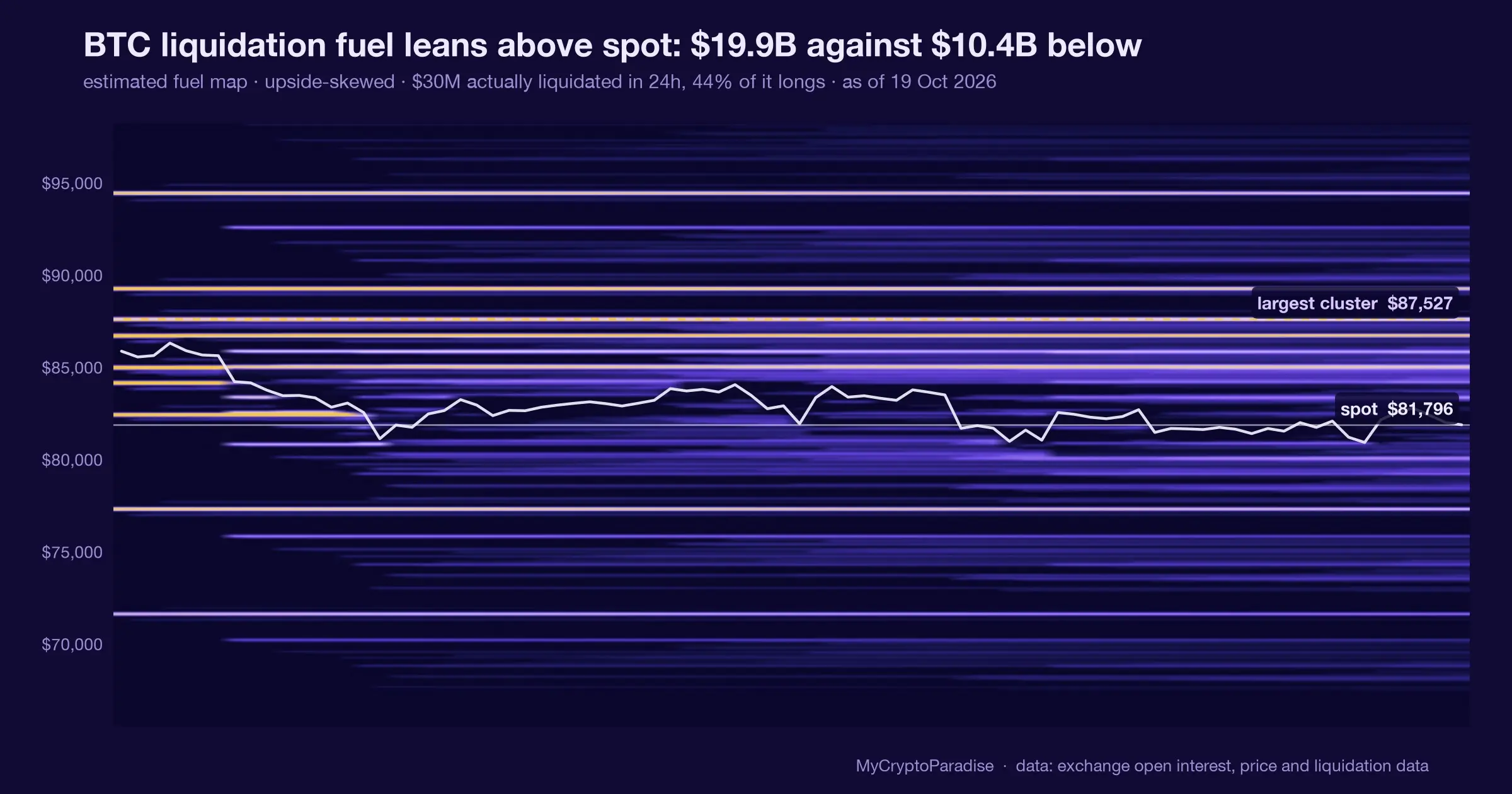
So the near-term risk is a grind, not a crash. Thinner bids let price slide toward liquidity below, where resting stops sit. That is where the next real test comes, and it is why the hourly tape matters more than the daily one right now.
Watch whether the dip stays shallow. A contained pullback that holds the daily gains says the market absorbed the news. A deeper slide that erases them says the risk-off read is spreading.
Signals that tell contained from spreading
The first tell is retaliation. If Beijing responds with its own restrictions, the uncertainty premium climbs, and crypto's pause can turn into a genuine pullback. No response, and today's dip likely fades into noise.
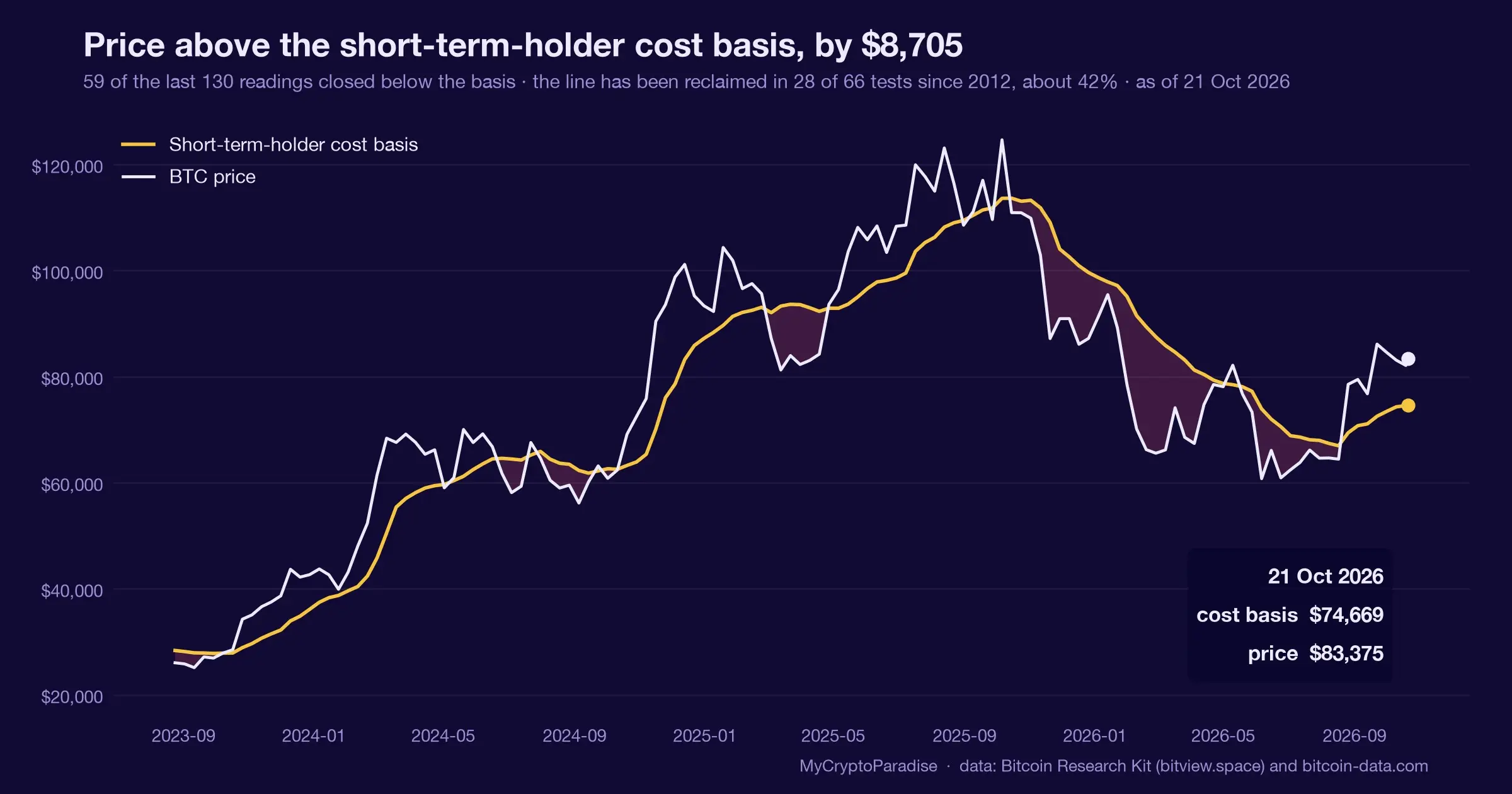
The second tell is whether the daily gains survive. Bitcoin held near $85,348 with the broader trend intact. As long as that green daily structure stays, this reads as a blip. Lose it on a closing basis, and the warning gets louder.
Watch the hourly follow-through closely. One red hour is caution. Several stacked red hours, with each bounce selling off, is the market telling you capital is actively rotating out of risk. The difference is everything for positioning.
Volume is the honesty check. A dip on fading volume is weak hands stepping aside, often a prelude to a reclaim. A dip on rising volume means real size is leaving, and that deserves respect.
Keep an eye on where stops cluster beneath current price. Thin liquidity after a risk-off headline is exactly the condition that lets price hunt those stops. A quick wick down that snaps back is smart money collecting liquidity, not a trend change.
Finally, separate the macro noise from the chart. This story is a sentiment input, not a structural break in crypto itself. If the broader uptrend holds its key levels, the trade-war headline becomes background. If it does not, it becomes the excuse the sellers were waiting for.
What this friction means for the $90K push
The ParadiseTeam reads this against a market that was already leaning toward $90,000. With BTC near $85,348, the standing view favors a push higher driven by improving participation, but it also flags a likely rejection as that level approaches. This trade-war headline does not break that view. It adds a reason for the move to stall sooner.
The $85,000 area matters most here. It has acted as an ultra low timeframe resistance and a liquidation cluster, so a risk-off dip into or just below it is exactly where stops sit and where re-accumulation tends to happen. A shallow wick that reclaims quickly would fit the smart-money, not the panic, interpretation.
Below that, $82,000 is the key defense zone. As long as that holds, the bullish structure toward $90,000 stays alive despite the geopolitical friction. Lose $82,000 on real volume, and the trade-war caution has genuinely bitten.
On the upside, $87,000 remains the gate. The team wants a clean break above that previous high to confirm the $90,000 target. A trade-war headline makes a stall at $87,000 more likely, and $90,000 already looks like a spot where strength could meet selling as liquidity fades.
So the near-term bias stays constructive but patient. This news is a reason to respect the resistance overhead, not a reason to abandon the higher levels. The ParadiseTeam treats the dip as a test of $85,000, with $82,000 as the line that decides whether caution becomes something more.
The read behind this: we framed this story through our own market analysis, Bitcoin at $82K: Is $90K About to Trigger?
Track it live: our Crypto Fear and Greed Index and the live crypto funding rates both update in real time, so you can watch this shift for yourself.
Related coverage
For exact entries, targets, and stop losses with full risk management, that is what ParadiseFamilyVIP is for. New to reading these moves? Start with our crypto trading strategies guide.
ParadiseTeam is monitoring the market situation closely, and we are taking these developments into consideration while building our trading tactics inside ParadiseFamilyVIP.
Crypto trading involves substantial risk. Prices are volatile and you can lose money. This article is educational and is not financial advice. Past performance does not guarantee future results.
Does the US-China trade war escalation pull Bitcoin back below $82K this week?
This is how 44 Paradisers are calling it. Tap your call.
No calls on this one yet. Tap yours to be the first.
Free account, no password. Members just sign in.










Join the discussion 4
hmm, so it's not just the semiconductors getting hit then. wondering if this is the start of broader "strategic" good restrictions globally, affecting even more supply chains? 🤔
you're asking if these restrictions are a sign of wider global shifts, potentially impacting more supply chains. could this also accelerate onshoring efforts for specific high-value components?
I'm not sure the dip is really tied to this, the on-chain volume has been low all week. Is there data showing a correlation here?
This wider basis erosion across industrial sectors suggests some structural shifts. I always check perp premiums for sustained deviation after such announcements.