

Listen: the breakdown
Developing story update (September 13, 2026, 02:18 UTC):
Update: based on our sources, a notable share of token ownership is now concentrated within Trump-affiliated companies. That concentration is drawing concern about potential market manipulation and the underlying integrity of the projects involved.
For traders this is a structural risk signal, not a price catalyst. Concentrated float means a small number of holders can move a market disproportionately, so thin, headline-driven moves in these names should probably be treated as low-conviction until ownership spreads out. Nothing else in the tariff picture or the broader crypto tape has materially shifted: Bitcoin, Ether, XRP and Solana remain roughly flat to slightly positive over 24 hours.
What to watch now: Whether concentrated Trump-linked token holdings trigger sharp, low-liquidity swings or any regulatory attention.
Market briefing: Bitcoin slipped near 77,278 dollars after Trump vowed fresh 50 percent tariffs on cars and steel, reviving inflation and yield fears. We read the scattered alt pumps as noise, not a confirmed bull market return.
- Trump vowed 50 percent tariffs on cars, trucks, parts and steel from January, lifting inflation and yield fears.
- BTC fell about 3.5 percent to 77,278 dollars while ETH, XRP and SOL logged large 24-hour gains.
- The ParadiseTeam reads the mixed action as retail leverage, not a confirmed bull market return.
Trump tariffs are back and the bull market chorus is loud again. Bitcoin slipped while some alts jumped. So is this the real turn, or the trap retail keeps falling for?
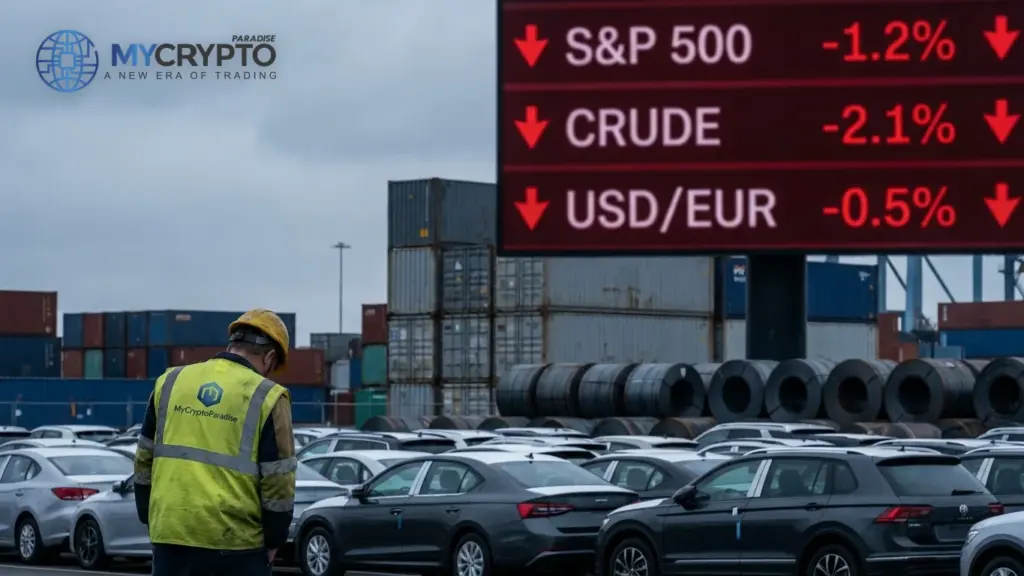
Donald Trump vowed to raise tariffs to 50 percent on cars, trucks, auto parts, and steel starting in January. That single line did the damage. It revived inflation fears and pushed traders to reprice risk across every market.
Stocks stumbled almost immediately. They fell further as oil prices and bond yields climbed together. Higher input costs plus higher borrowing costs is a familiar squeeze, and risk assets rarely enjoy it.
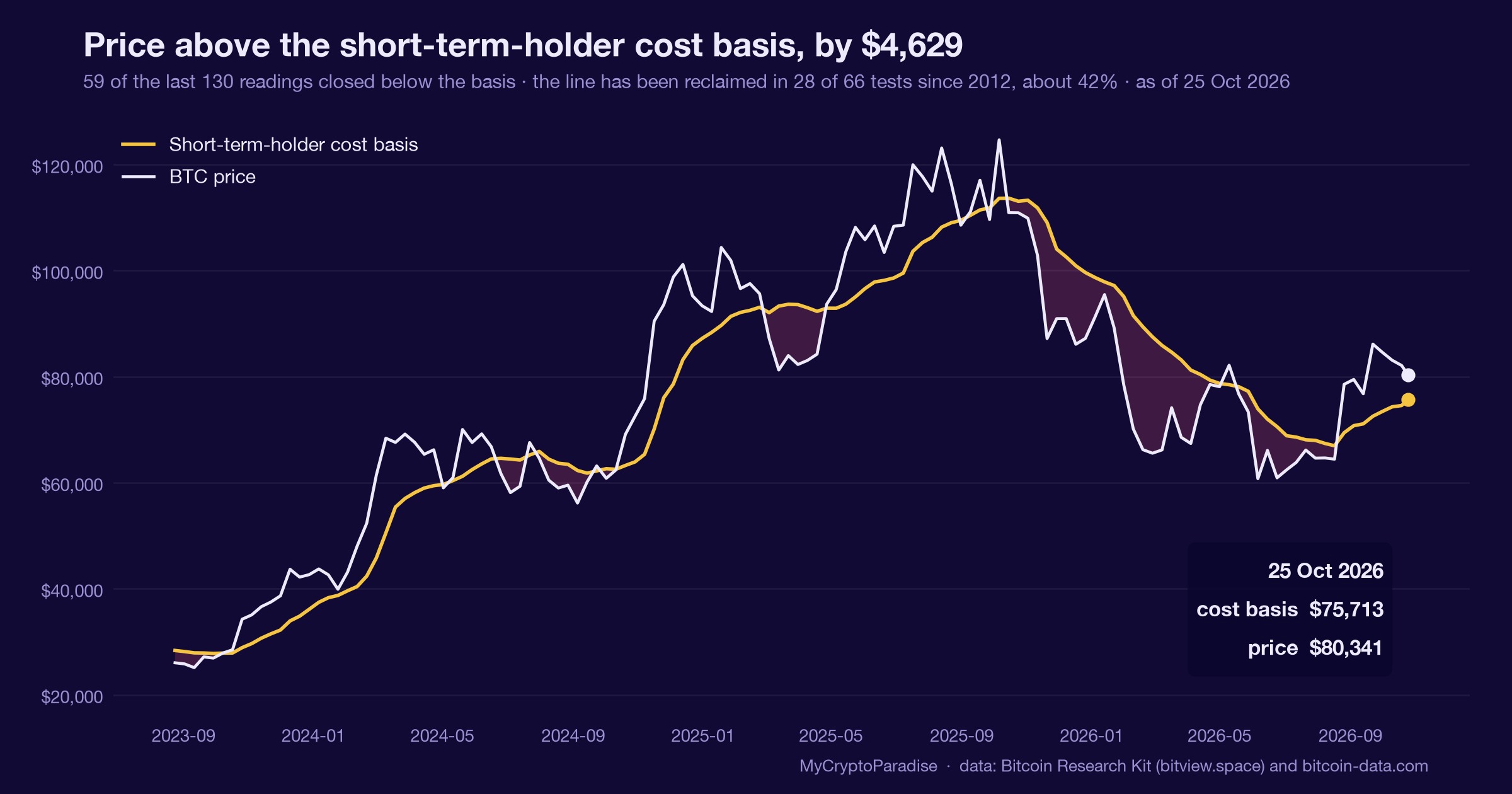
Crypto felt the draft. Bitcoin slipped about 3.5 percent to 77,278 dollars, breaking a support level we had been watching closely. The tariff headline, not any crypto-native event, sits behind the move.
Then the tape got strange. Several alts ran hard on the day even as Bitcoin leaked lower. Ethereum, XRP, and Solana posted large 24-hour gains while the market's leader sagged.
Around all this, the usual carnival rolled on. The NYSE began preparing for 24/7 tokenized stock and ETF trading. Steak 'n Shake revealed roughly 10 million dollars of Bitcoin exposure and a new corporate reserve. Vitalik Buterin called for smarter DAO governance.
Each item is real. None is a same-day catalyst for the price action. We are honest about that: the tariff shock is the driver, and the rest is background dressed as a bull market.
The talk of a returning bull market is loud. The chart is quieter. When those two disagree, we trust the chart and the flows underneath it.
How tariffs tighten conditions for crypto
Tariffs are a tax, and taxes on cars and steel raise prices. That is the inflation fear in one sentence. When inflation risk rises, bond yields climb because lenders demand more compensation.
Higher yields tighten financial conditions everywhere. Money that might chase risk instead earns a safer return in bonds. Add soaring oil prices, and the cost of almost everything ticks up at once.
This is the macro chain that reaches Bitcoin. Trade-war uncertainty plus inflation plus rising yields equals a hostile backdrop for risk assets. Crypto sits at the far, thin end of that risk curve.
Smart money understands this transmission well. When conditions tighten, large players tend to hold dry powder in stablecoins and wait. They do not rush to buy a falling market on a scary macro headline.
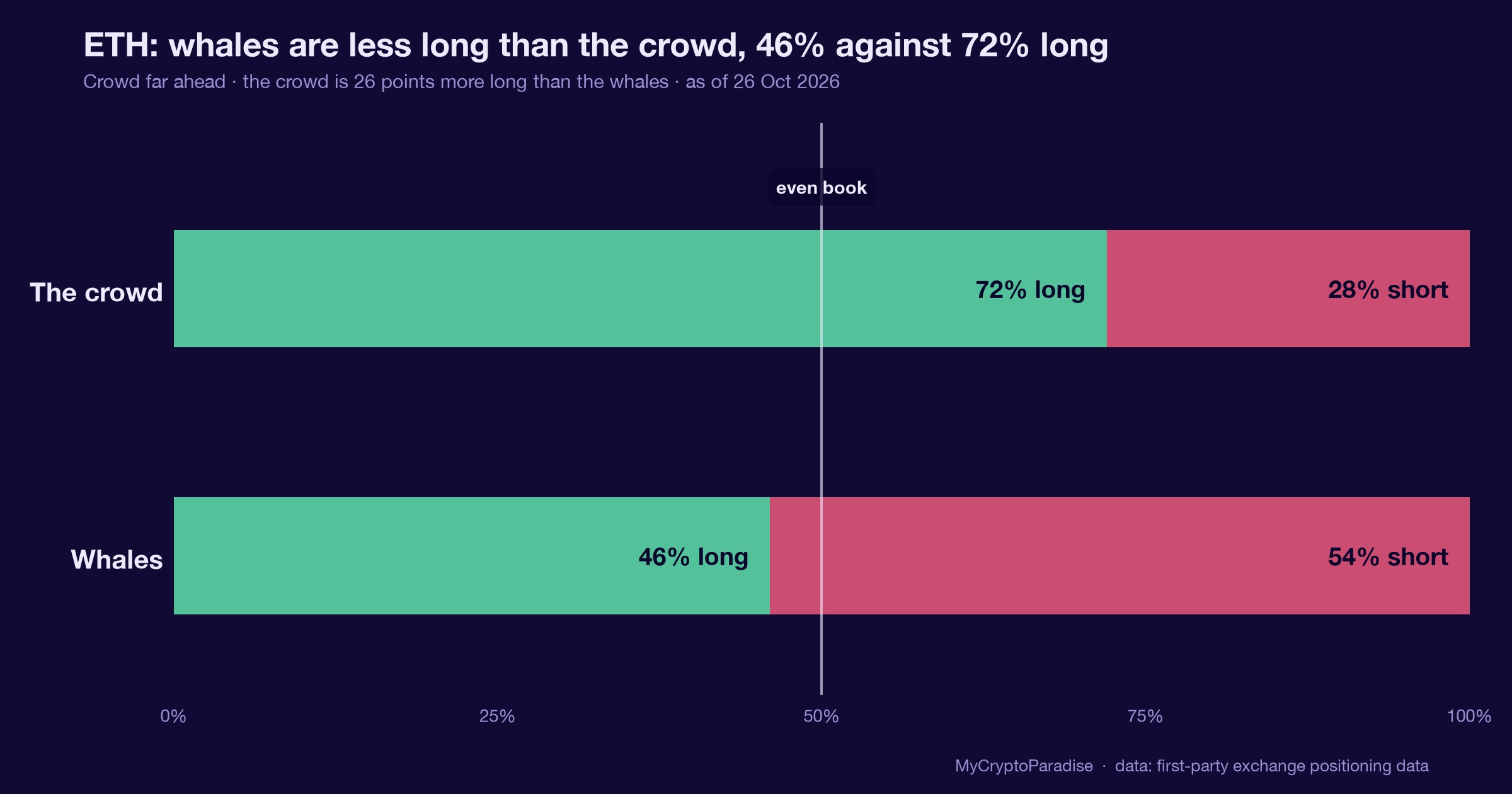
Retail behaves differently. The bull market chorus pulls them into leveraged longs right as the macro turns against them. That is not new. Every cycle, confident forecasts arrive precisely when the ground is least stable.
So the tariff news matters far beyond autos and steel. It changes the price of money, the appetite for risk, and the patience of the biggest wallets. Bitcoin does not trade in a vacuum. It trades downstream of yields, oil, and policy, and right now all three lean the wrong way for an easy rally.
Where the tariff shock hits liquidity
Liquidity flows top down in crypto, and the top just wobbled. Bitcoin absorbing a tariff shock sets the tone for everything below it. When BTC leaks, the risk further down the curve usually leaks harder later.
Bitcoin fell about 3.5 percent to 77,278 dollars and broke a support we tracked. That break matters because stops cluster just beneath obvious support. A move under it can trigger forced selling and thin the bids.
Ethereum, XRP, and Solana told a louder story on the day. ETH posted a large 24-hour gain, XRP jumped over 22 percent, and SOL added nearly 4 percent. On the surface that looks like strength.
We read it more cautiously. Sharp alt rallies while Bitcoin sags often signal rotation and speculation, not durable demand. Retail chases the fastest-moving screen, and the fastest screen is rarely the safest. These divergent moves rarely hold when the leader is heavy. If Bitcoin continues lower under macro pressure, alt gains tend to reverse fastest, because leverage there is thickest and liquidity thinnest.
So the cascade risk runs one way for now. A weak BTC caps how far ETH and the majors can run. The alt pumps look like liquidity being handed to sellers, not the first leg of a broad advance. Until Bitcoin stabilises, we treat green alt candles as chances for the patient, not confirmation of a trend.
What to watch after the tariff drop
The cleanest signal now is Bitcoin's behaviour around broken support. We had been watching the 77,700 dollar area on the medium timeframe. Price has slipped under it, and that shift matters.
A decisive drop below the prior low near 58,000 dollars would confirm the deeper correction we expect. That path points toward the 55,000 to 44,000 dollar zone, where we think the real accumulation happens.
Invalidation is just as important, and we hold it honestly. A reclaim of the 82,000 to 88,000 dollar resistance band would flip our bearish bias. If bulls take that zone back with volume, the correction thesis weakens fast.
We also watch the flows, not just the candles. Smart money still sits in stablecoins, waiting. The moment those reserves start moving into crypto at lower levels, the accumulation phase becomes visible.
Divergences round out the picture. On the daily, price made higher highs while volume made lower highs, a classic warning. A model of net unrealised profit also shows absorption as price holds equal lows.
Watch retail positioning too. Heavy leveraged longs into a macro headwind are fuel for a long squeeze. If open interest (OI, the total value of live leveraged bets) keeps climbing while price stalls, the conditions for a flush grow.
So the checklist is simple. Below 58,000 dollars confirms our path. Above 88,000 dollars breaks it. Everything between is noise until the flows commit.
Why the bull market call looks early
The ParadiseTeam sees a gap between the bull market headline and the flows. Bitcoin near 77,278 dollars has slipped under the 77,700 dollar support we flagged. On higher timeframes our bias stays firmly to the downside.
This tariff shock fits that view rather than breaking it. Tightening macro conditions give smart money every reason to keep waiting. Their stablecoin reserves have not yet rotated into crypto, and that silence speaks loudly.
We read the alt pumps as the tell. ETH, XRP, and SOL running while BTC sags is where retail leverage concentrates. That leveraged crowd is the liquidity a long squeeze feeds on.
Our medium-term map points lower before it points higher. We expect the real exchange of hands in the 55,000 to 44,000 dollar zone. That is where the ParadiseTeam expects whales to absorb supply, as at past bottoms.
The invalidation is clean and we respect it. A reclaim of the 82,000 to 88,000 dollar band would flip our stance to bullish. Until then, strength into resistance reads as distribution, not a trend.
So this event changes little for our positioning. The bull market call arrives, as it always does, right as the macro turns. We would rather be patient buyers near 44,000 dollars than brave ones at 77,000 dollars into a tariff storm.
The read behind this: we framed this story through our own market analysis, Can Bitcoin Hold This Support?
Track it live: our live crypto funding rates and the crypto liquidation heatmap both update in real time, so you can watch this shift for yourself.
Related coverage
For exact entries, targets, and stop losses with full risk management, that is what ParadiseFamilyVIP is for. New to reading these moves? Start with our crypto trading strategies guide.
ParadiseTeam is monitoring the market situation closely, and we are taking these developments into consideration while building our trading tactics inside ParadiseFamilyVIP.
Crypto trading involves substantial risk. Prices are volatile and you can lose money. This article is educational and is not financial advice. Past performance does not guarantee future results.
After the tariff shock, does BTC lose 58k before it reclaims 88k?
How 10 Paradisers are calling it
The first call is still open
Free account, no password. Members just sign in.








Join the discussion 4
i'm not sure about the direct link between the new tariffs and bitcoin's drop... seems a bit of a leap to say that's the sole reason for the sell-off, no?
For sure, Derek! 🎯 Geopolitical risk always adds to volatility, but 50% tariffs feel more like a general market tremor than a BTC-specific earthquake. 😅📈
Tariffs are always something I watch for 🧐 because they can really mess with the global economy, even if it's not a direct BTC link like Derek said. 📉 It adds so much uncertainty! 🤔
Yeah, this is why I keep saying four-hour noise is not a signal. 🤷♀️ Weekly closes or nothing for me!