

Listen: the breakdown
Market briefing: A refund bug briefly froze THORChain swaps and stalled part of the Binance hack laundering route. BTC held near $78,340, up 0.9%, unmoved by the glitch.
- A one block Ethereum reorg triggered a THORChain refund bug on October 31.
- The pause halted cross-chain swaps on ten networks and briefly stalled Binance hack laundering.
- Node operators resumed ETH swaps in about two minutes; a user returned the 10 ETH.
Source: THORChain
A one block Ethereum reorg tripped a bug inside THORChain, froze swaps across ten networks, and briefly jammed the Binance hackers' laundering route. Luck or fragility?
On October 31, a single block on Ethereum was reorganized. THORChain's refund logic misread the event. It paid out a 10 ETH deposit twice.
That double refund quietly broke vault solvency. THORChain's automatic solvency check then did exactly what it was built to do. It froze cross-chain swaps across ten networks, including Bitcoin, Ethereum, Solana and Tron. The protocol chose safety over uptime, which is the correct instinct even when the trigger is embarrassing.
Here is the twist. Those frozen swaps sat on one of the main laundering routes for the roughly $6.3 billion stolen in the Binance hack. For a short window, a coding bug did what sustained pressure on node operators had been trying to do.
The irony is hard to miss. Investigators had leaned on node operators to block addresses tied to the theft. A refund glitch slowed the launderers instead, entirely by accident.
It did not last long. Node operators resumed ETH swaps within roughly two minutes. A user then voluntarily returned the 10 ETH, which restored vault solvency and closed the gap. So the headline reads like a win against the hackers, but the mechanism was a self-inflicted error that corrected itself. That tells you more about how thin the margin for bugs is inside cross-chain infrastructure than about any real dent in a multi-billion dollar heist.
A coding glitch did what subpoenas could not
This is a plumbing story, not a demand or supply shock. No coins were lost, no exchange went insolvent, and no new selling pressure hit the market. A bridge paused, then unpaused.
What matters structurally is where the fragility sits. Cross-chain bridges like THORChain are critical routing infrastructure. They let value move between Bitcoin, Ethereum, Solana and other chains without a custodian. When a one block reorg can confuse refund logic into double-paying, it exposes how sensitive that routing layer still is to edge cases.
The solvency check is the reassuring part. It caught the imbalance and halted trading before the error compounded. That is defensive engineering working as intended, even if the bug that triggered it should not have existed.
The laundering angle is real but narrow. The pause briefly interrupted the movement of a specific pool of stolen funds. It did not touch broad market liquidity, spot order books, or the supply available to ordinary traders. In other words, this was a liquidity-routing event for hacked coins, not a liquidity event for crypto at large.
That distinction is the whole story. Regulators and investigators want these routes closed on purpose. A refund bug closing one by accident is a reminder that the infrastructure moving billions still breaks in ways nobody designed. The margin for error inside these systems is thinner than the glossy documentation suggests.
Why BTC and ETH simply shrugged it off
Start with the tape, because it settles the debate. BTC traded near $78,340, up about 0.9% over 24 hours. ETH sat near $2,291, up roughly 1.1%. Neither flinched at the pause.
That calm is the correct reading. The halted swaps involved a specific pool of hacked funds, not the deep spot liquidity that sets BTC and ETH prices. Stopping a launderer's route does not remove buyers or sellers from Binance, Coinbase, or any major exchange. The price-setting liquidity never left the room.
Follow the usual cascade and it fizzles out fast. In a genuine liquidity shock, BTC leads, ETH follows, and alts amplify the move. Here, there was no shock to transmit. BTC held, so there was nothing for ETH to follow and nothing for alts to amplify.
The alt layer confirms it. SOL, one of the ten affected networks, traded down just 0.6% over 24 hours, well inside normal noise. BNB was actually up around 1.4%. If this incident mattered to market structure, the chains it touched would show stress. They do not.
The modest green across BTC, ETH and BNB predates this story and dwarfs it in scale. Tying those gains to a two minute bridge pause would be reverse-engineering a narrative onto unrelated price action. This event is, for traders, essentially background noise with an interesting backstory.
Signs this bridge hiccup stays contained
The first thing to watch is the fix. THORChain's refund logic double-paid because a reorg confused it. The clean outcome is a patch that handles reorgs correctly, confirmed by node operators and quiet in the weeks ahead. Silence here is the bullish tell for the protocol.
The second is recurrence. One isolated pause that resolves in minutes is a hiccup. A pattern of emergency solvency halts would signal something deeper, and that is what would change the read on THORChain specifically. Watch for repeat pauses, not a single one.
The third is the stolen funds themselves. The launderers were slowed, not stopped. Expect them to reroute through other mixers and bridges. If those addresses go quiet, pressure worked. If they resume moving quickly, the interruption was cosmetic, which the facts here suggest.
Invalidation of the calm read would look concrete. It would be a second, longer pause, a solvency gap that is not voluntarily closed, or visible stress on the affected chains spilling into BTC and ETH order books. None of that is present today.
Confirmation is the opposite and the more likely path. THORChain patches the bug, swaps keep flowing, SOL and BNB stay in their ranges, and BTC continues trading on its own structure. For now, treat this as resolved and move attention back to where the real liquidity decisions are being made.
Reading the pause through structure, not headlines
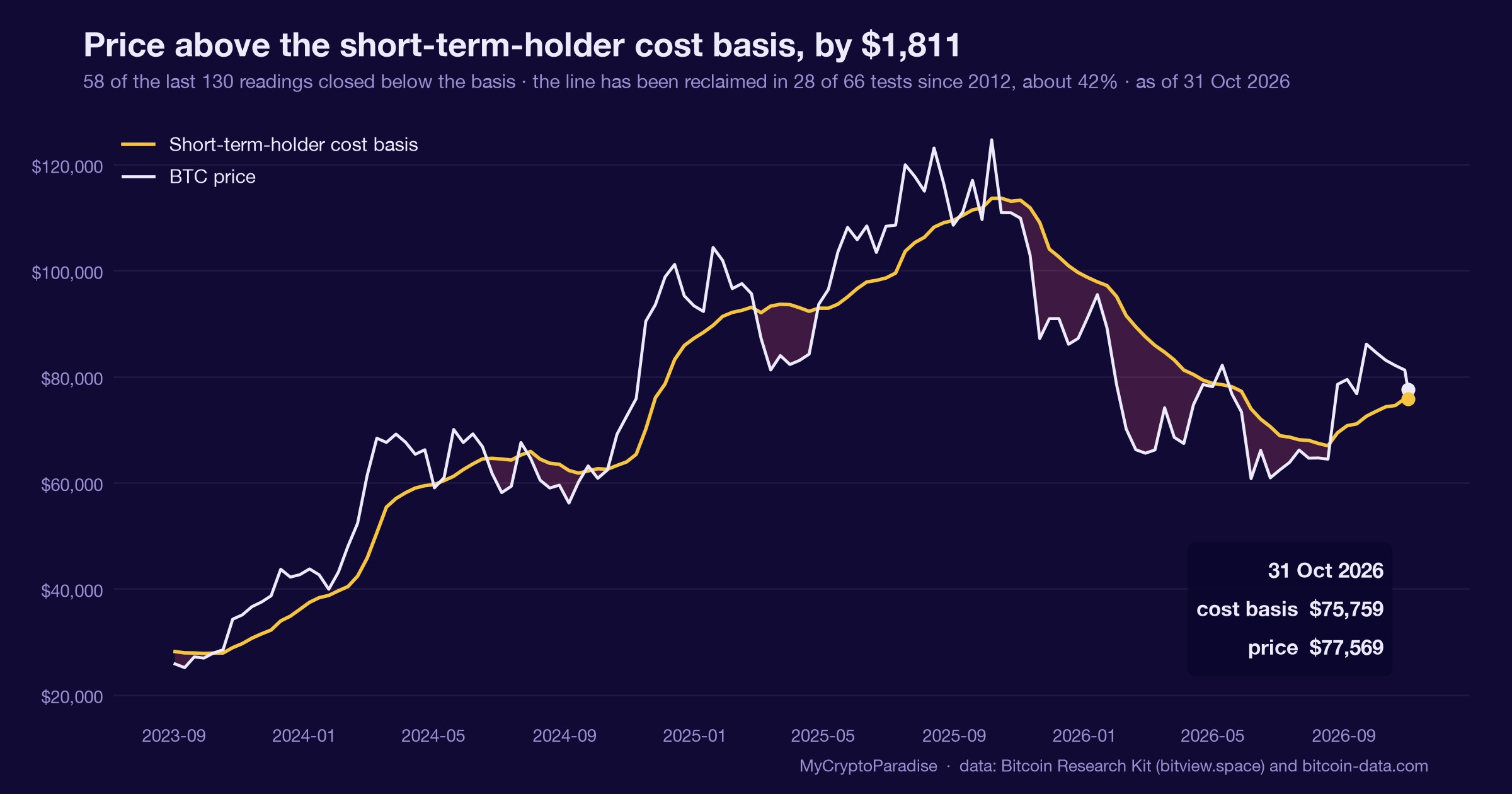
The ParadiseTeam view is blunt here: this event changes nothing for BTC's key levels. With price near $78,340, the decision still sits where it sat before the bug.
The former support band around $79,000 to $87,000 is now a neutral zone. The question that matters is whether BTC can reclaim it as resistance. A clean reclaim would raise the odds of a push toward the top of the first wave and, above that, a reclaim of the 0.618 Fibonacci level that opens price-discovery mode.
None of that hinges on a THORChain refund glitch. It hinges on structure and liquidity.
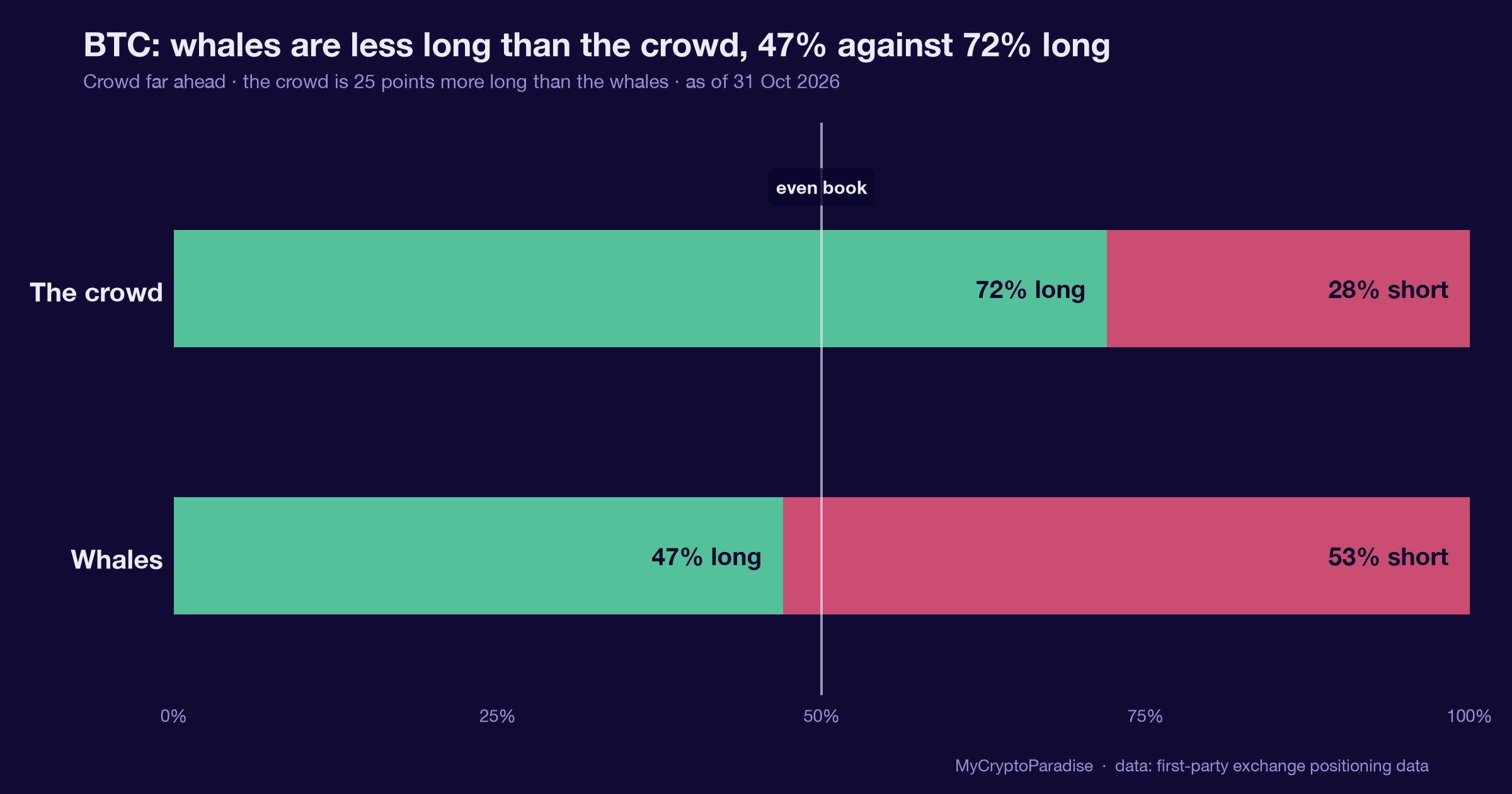
This is also a clean example of our standing frame. The smart money positioning that counts was set before any of this news. A tracked whale closed a Bitcoin long just ahead of the Binance hack and has since flipped short. That is a read on structure, not a reaction to a headline.
Retail does the reverse. It trades the drama, the hacks and the bug stories, and keeps chasing or fleeing price on emotion. Our caution stays risk-first: strength into that neutral zone can still meet selling, so we respect R:R (risk-to-reward) and let the level confirm before trusting the move.
Use a defined SL (stop-loss) below any entry and let the reclaim, or the rejection, do the talking. The bug is a story. The levels are the trade decision.
The read behind this: we framed this story through our own market analysis, Binance Hack: Is Bitcoin's Small Drop Bullish?
Track it live: our live crypto funding rates and the crypto liquidation heatmap both update in real time, so you can watch this shift for yourself.
Related coverage
For exact entries, targets, and stop losses with full risk management, that is what ParadiseFamilyVIP is for. New to reading these moves? Start with our crypto trading strategies guide.
ParadiseTeam is monitoring the market situation closely, and we are taking these developments into consideration while building our trading tactics inside ParadiseFamilyVIP.
Crypto trading involves substantial risk. Prices are volatile and you can lose money. This article is educational and is not financial advice. Past performance does not guarantee future results.
Does this bug meaningfully dent the Binance hack laundering effort?
How 1 Paradiser is calling it
The first call is still open
Free account, no password. Members just sign in.





Join the discussion
No comments yet. Members, share how you are reading this.