


Listen: the breakdown
Developing story update (November 18, 2026, 12:55 UTC):
Update: Based on our sources, a sanctioned Chinese university was reportedly involved in a procurement attempt for advanced Nvidia AI chips as recently as October, a concrete recent instance layered on top of the broader pattern of PLA-linked solicitations detailed in the Congressional report.
For traders the read is unchanged. BTC and ETH remain down only modestly on the day and the gathered sentiment shows no coordinated positioning tied to this story, so this still looks like an export-control and geopolitics headline rather than a dedicated crypto catalyst.
What to watch now: Watch for any U.S. move to tighten enforcement or add names to sanctions lists, which could ripple into broader risk sentiment.
Market briefing: An official report to Congress confirms China's military sought banned Nvidia AI chips, with 600,000 H200 units reportedly stockpiled in Hong Kong. BTC was near $64,134, down 1.1 percent, drifting with the broad tape.
- Annual report to Congress confirms PLA solicited top-tier Nvidia AI chips
- Over 500 PLA requests appear across roughly 3,800 procurement records, 2019 to 2025
- Roughly 600,000 H200 units reportedly stockpiled in Hong Kong awaiting approval
Source: U.S.-China Economic and Security Review Commission
A congressional report now confirms the PLA Nvidia chip story that was a single-account rumor a day ago. So why are BTC and ETH barely flinching?
Yesterday this sat in our thread as a circulating claim from one account. Today it carries the weight of an official report to Congress.
The U.S.-China Economic and Security Review Commission's 2026 annual report states plainly that China's People's Liberation Army is actively soliciting Nvidia's most advanced AI chips to evade U.S. export controls. That moves the story from rumor to record. Our earlier piece flagged the claim. The new fact is the paper trail behind it.
And the paper trail has numbers. A review of roughly 3,800 Chinese government procurement records surfaced over 500 instances of PLA units seeking top-tier Nvidia silicon. The requests run from 2019 to 2025 and name the A100, H100, H800 and H200 by part number.
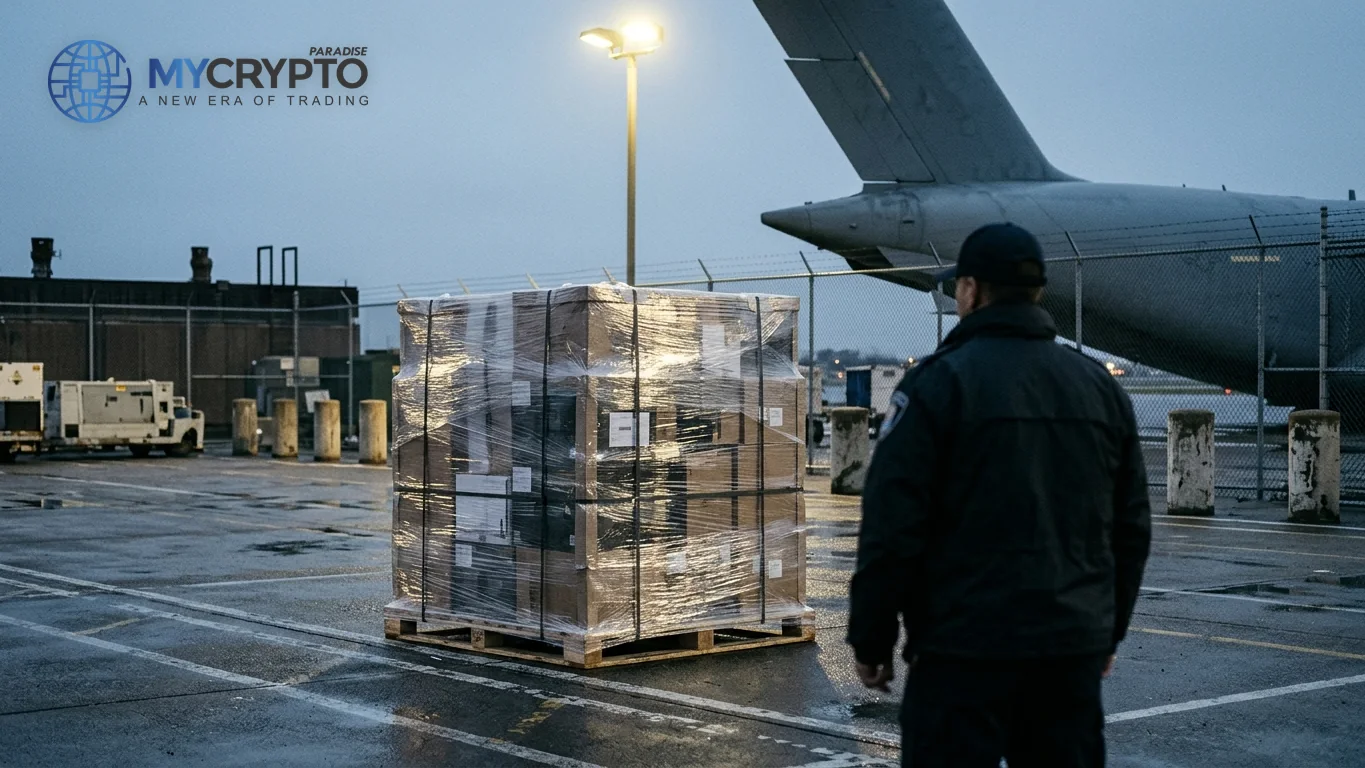
One October detail lands harder than the rest. A sanctioned university secured H200 chips and advanced computing rentals. Roughly 600,000 H200 units are reportedly stockpiled in Hong Kong, waiting on approval to cross into the mainland.
Export controls were built to keep exactly these chips out of exactly these hands. The procurement records suggest the controls leaked, at scale, for years. This is a national-security and export-control story first, not a crypto-native one. But it feeds the single variable crypto cannot opt out of, which is global risk appetite. When Washington gets fresh evidence that its chip rules are being routed around, the policy response tends to tighten, and tightening rarely arrives gently for risk assets.
Export controls versus a 600,000 chip stockpile
The transmission here runs through policy, not through any crypto rail. A confirmed report to Congress is the kind of document that forces a response, because ignoring it becomes politically expensive.
The mechanism is straightforward. Evidence of 500-plus PLA requests and a 600,000-unit Hong Kong stockpile hands hawks a clean case for tighter controls. Tighter controls raise compliance costs, squeeze a key AI-hardware supply chain, and inject fresh uncertainty into the single sector carrying much of this year's equity optimism.
That uncertainty does not stay inside semiconductors. AI-hardware sentiment and broad risk appetite move together now. When the market that leads the tape wobbles on geopolitical risk, correlated assets feel the draft, and crypto has traded as a high-beta risk asset for most of this cycle.
So the chain is policy risk, then equity-sentiment risk, then a modest risk-off tilt that reaches BTC and ETH last. There is no crypto-specific liquidity event in this story. There is only spillover, and the spillover is real but secondary.
Honesty matters here. We have no confirmed same-day catalyst that pinned today's small declines to this report. Framing today's drift as caused by this headline would be an interpretation, not a fact. The durable point is simpler: this report raises the odds of an escalating export-control fight, and that backdrop quietly taxes risk appetite rather than any one session.
Risk-off spillover from a hardware standoff
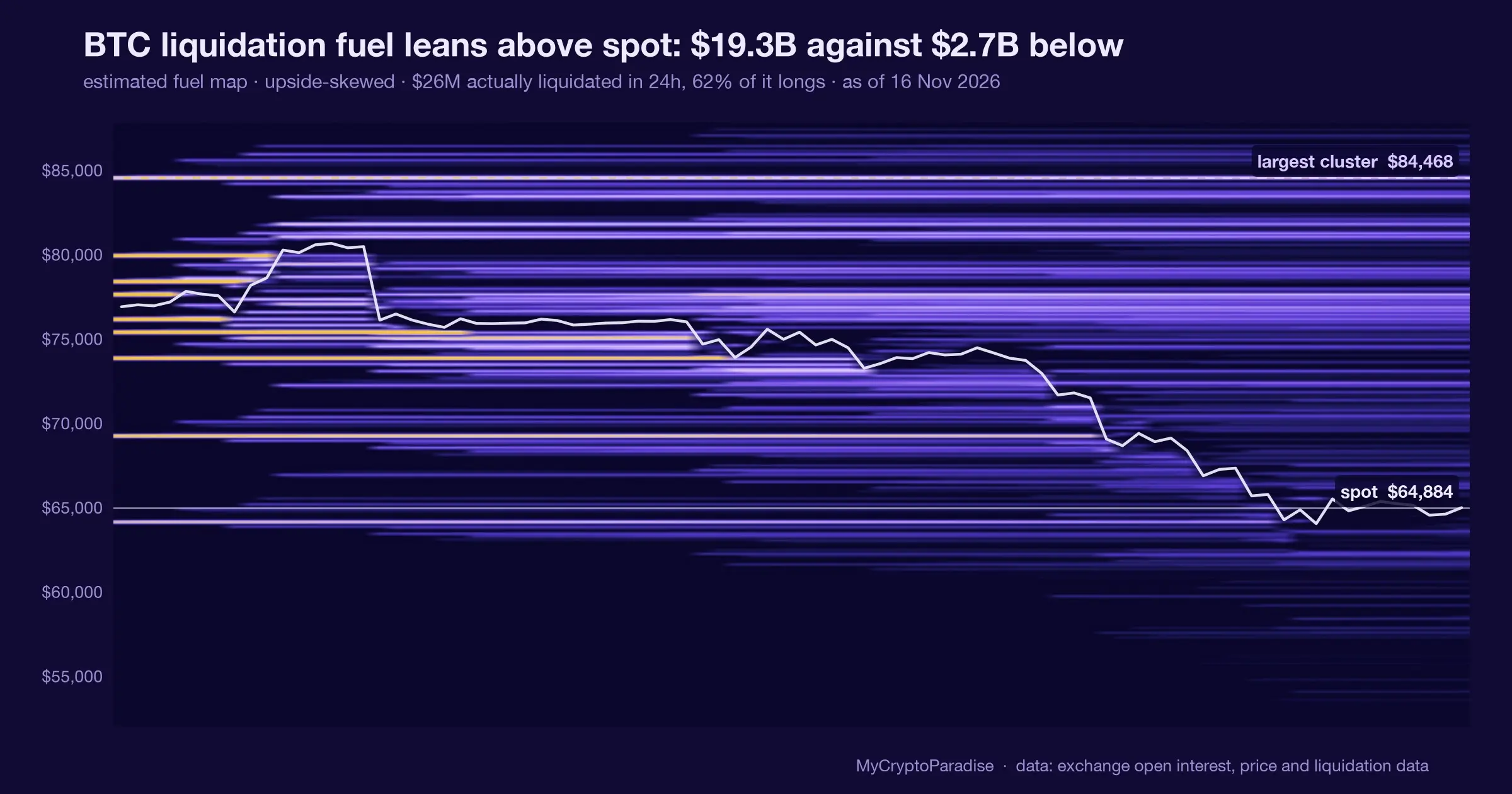
Read through the risk-off lens, this report is a slow pressure, not a shock. BTC was trading near $64,134 as of the brief, down about 1.1 percent on the day, with ETH near $1,798, down roughly 0.9 percent. Those are drift moves, not reactions.
That tells you something. Crypto did not treat this headline as a dedicated catalyst. It moved with the broader risk tape, which is exactly what a secondary spillover looks like.
The cascade, if the narrative escalates, would run in the usual order. Pressure hits AI and tech equities first, then leaks into BTC as the market's risk proxy, then into ETH, then into higher-beta alts that always fall furthest when liquidity thins. Nothing in this story reroutes that order.
The quieter risk is positioning, not price. A tech sector priced for flawless AI demand does not love fresh regulatory tail-risk layered onto its best-selling product. When the glossy demand story meets a national-security headache, the people who need an exit tend to use strength to find one.
For crypto specifically, the direct signal stays thin. We see no concentrated selling or buying flow pinned to this report. So treat it as a tilt on the risk backdrop, a reason for caution rather than a trigger to chase, until it either escalates into a wider crackdown narrative or fades back into the noise.
Escalation triggers that would bite crypto
The next move belongs to Washington, and that is what to watch. A congressional report is an input. The signal that matters is whether policymakers turn it into action.
Watch for any formal response that tightens the export regime. New restrictions, enforcement actions, or a push to close the Hong Kong routing channel would escalate this from a report into a live friction. That is the path that could turn a risk-off tilt into a genuine risk event.
Watch the hardware tape too. If AI-equity sentiment cracks on this thread rather than drifting, the correlation channel into crypto opens wider. A tech-sector flush would reach BTC and ETH through risk appetite, not through anything crypto did wrong.
Invalidation is just as clean. If the report generates headlines but no policy, markets will file it under noise within days. A diplomatic de-escalation, or simply a quiet week with no follow-through, drains the bearish spillover fast.
The tell to trust is reaction, not rhetoric. Confirmation of downside pressure looks like tech leading lower and crypto following on thinning liquidity. Confirmation that it was a non-event looks like today's drift continuing with no acceleration. Right now the evidence leans toward the second, which is why we are flagging this to watch rather than calling it a turn. The honest read is a background risk, waiting to see if anyone in power picks it up.
Why this geopolitical print barely moved the tape
The ParadiseTeam treats this report as a backdrop risk, not a crypto trigger. The facts are confirmed, but the facts are about chips and policy, not about who is accumulating BTC.
Ground it in price. BTC was near $64,134, sitting right on the $64,000 shelf we care about, the 0.786 Fib retracement where a bullish hammer recently formed. This report did not create that level and does not resolve it. It is weather around a structure that was already in play.
That shelf is the whole question. Holding and building above $64,000 keeps the short-term recovery alive toward the $71,000 re-accumulation zone. Losing it opens the $61,000 re-accumulation band, then the $58,000 prior low, with our standing weekly base case still pointing at a deeper flush toward $44,000 before any durable leg up.
Here is the caution, not a contradiction of it. Our standing bias reads recent strength above the prior high as corrective and retail-driven, not confirmed by real smart-money volume. So rallies into resistance can still meet sellers. A risk-off geopolitical headline layered on top is one more reason not to trust a thin bounce.
The discipline is simple. This story does not hand you accumulation or distribution evidence in crypto, so do not pretend it does. Let the $64,000 reaction and the broader risk tape lead. Trade the structure, not the headline.
The read behind this: we framed this story through our own market analysis, Why Did Bitcoin Crash After the Binance Hack?
Track it live: our Crypto Fear and Greed Index and the live crypto funding rates both update in real time, so you can watch this shift for yourself.
Related coverage
For exact entries, targets, and stop losses with full risk management, that is what ParadiseFamilyVIP is for. New to reading these moves? Start with our crypto trading strategies guide.
ParadiseTeam is monitoring the market situation closely, and we are taking these developments into consideration while building our trading tactics inside ParadiseFamilyVIP.
Crypto trading involves substantial risk. Prices are volatile and you can lose money. This article is educational and is not financial advice. Past performance does not guarantee future results.
Does this chip report escalate into tighter export controls that pressure risk assets?
How 7 Paradisers are calling it
The first call is still open
Free account, no password. Members just sign in.
Follow this topic: Crypto regulation news








Join the discussion 1
ok so if the pla really had 600k h200s sitting in hong kong, how does that square with the export controls?? wouldnt that be a lot of chips to move around quietly, idk just wondering how smuggling at that scale even works