

Listen: the breakdown
Developing story update (November 02, 2026, 00:47 UTC):
Billions flee Binance on reopen, THORChain founder opposes coin freeze: Hodler’s Digest. Binance has reopened withdrawals following the world’s biggest ever hack, and THORChain co-founder argues it should not halt the protocol to comply with FBI demands.
Developing story: This story is still unfolding. We are tracking it and will update this article as more details are confirmed.
Market briefing: Around $242 million of the stolen Binance funds got laundered on Tron in two days, with more than half moving through cross-chain bridges, and the FBI now wants THORChain to block it. BTC sits near $77,898 and barely reacts.
- Roughly $242M of stolen Binance funds laundered on Tron in two days
- More than half exited via Relay, THORChain, Chainflip and Symbiosis
- FBI is pressing THORChain to block the hackers' funds
The Binance hack story just mutated. Roughly $242M got laundered through bridges, and the FBI wants THORChain to freeze it. So can a permissionless protocol be forced to block a thief?
The Binance exploit has entered its laundering phase. Onchain tracing points to roughly $242 million of the stolen funds washed through Tron inside a two-day window.
More than half of that total did not touch a centralized exchange at all. It exited through four cross-chain and swap protocols: Relay, THORChain, Chainflip and Symbiosis. That routing choice is the whole story.
Stolen money used to flow toward exchanges, where a compliance team could freeze it. This time the attackers aimed at permissionless infrastructure built precisely so no single party can stop a transfer.
Now law enforcement is testing that design. The FBI is reportedly pressing THORChain to block the hackers' funds, though the available detail on that request remains thin.
The demand lands on an awkward spot. A protocol marketed as unstoppable is being asked to stop something, which is a little like asking a toll-free road to install a gate.
We have already covered the $3.64 billion that left Binance when withdrawals reopened and the hacker swapping stolen SOL into Bitcoin. This is the next link in that chain, and the new part is not the money. It is the question of who, if anyone, can halt it.
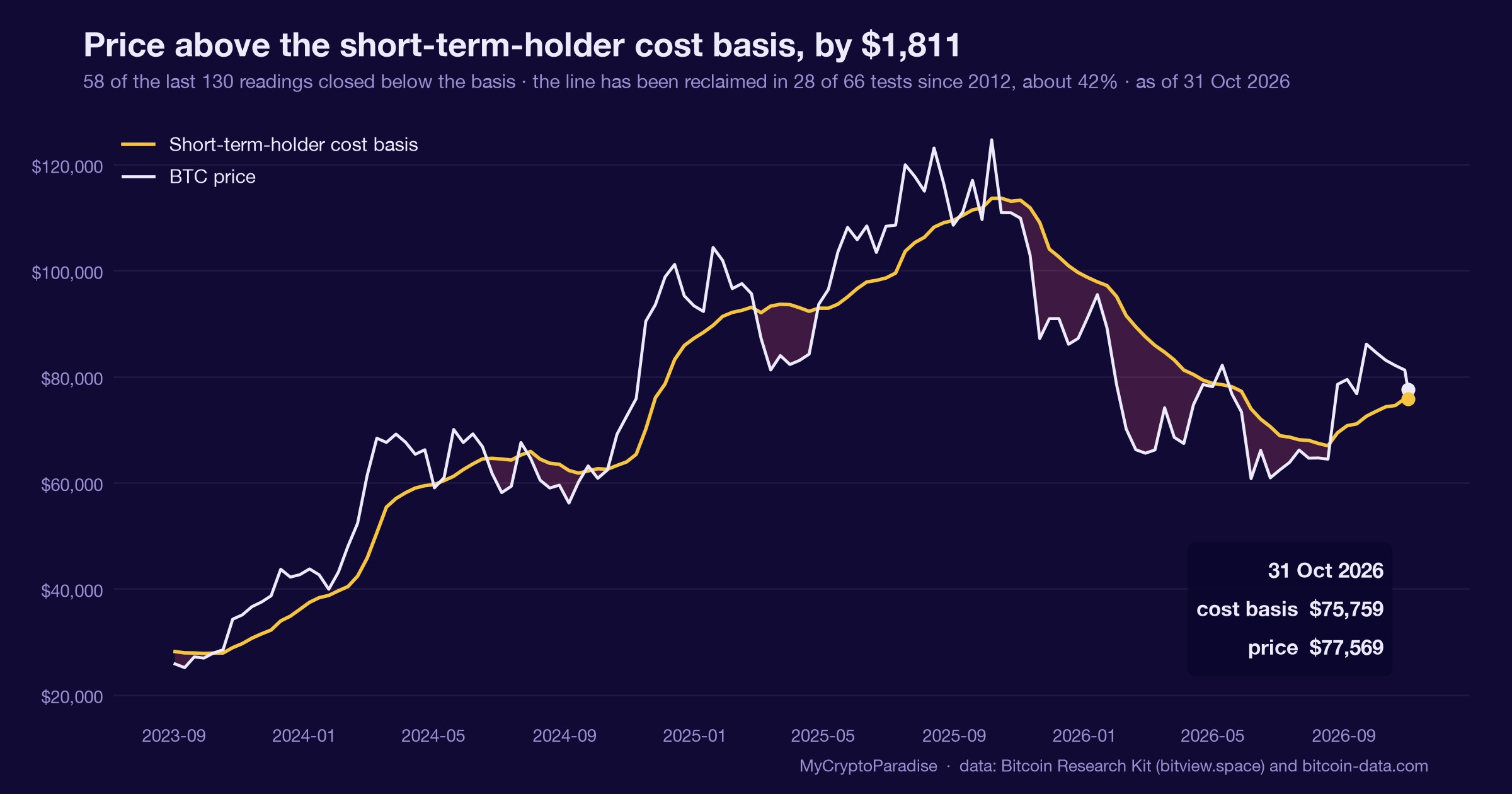
BTC was trading near $77,898 as of the latest read, up fractionally on the day. BNB held $709.67 and SOL slipped to $94.47. None of them flinched at this update, which tells you where the market's attention sits.
A permissionless design meets a blocking order
This is no longer a story about an exchange getting breached. It is a story about whether decentralized rails can be compelled to behave like regulated ones.
The transmission runs through credibility, not price. When stolen funds route through Relay, THORChain, Chainflip and Symbiosis, every one of those protocols inherits a share of the reputational weight. Regulators and law enforcement now have a concrete example to point at. That matters because the pitch for permissionless bridges has always been censorship resistance. The same property that protects an ordinary user also shelters a thief, and that tension was theoretical until a nine-figure hack made it real.
An FBI request to THORChain forces an uncomfortable choice. Comply, and the protocol concedes it can censor transactions, which undercuts its core claim. Refuse, and it invites the label of a laundering conduit.
Neither path is clean. Both feed a wider policy argument that permissionless swap infrastructure needs blocking and compliance capability baked in.
For the broader market the near-term effect is muted. This does not drain liquidity or force selling by itself.
The slower effect is the one that counts. Each episode like this nudges the regulatory conversation toward tighter rules on bridges and swap protocols, and that overhang sits on the DeFi assets tied to them rather than on BTC. The cost here is structural, and it is paid in trust.
Overhang falls on bridges, not on BTC
Start with what did not happen. BTC, BNB and SOL show no meaningful reaction to this laundering update, so the liquidity cascade you would expect from a fresh shock simply is not there. That absence is itself the read. The market has already digested the headline hack through earlier sessions, the ETF outflows and the Binance withdrawals. This is an aftershock, and aftershocks rarely move the tape the way the first quake did.
So the pressure concentrates where the story actually lives. The implicated protocols, THORChain most of all given the FBI angle, carry the direct reputational and regulatory risk here.
For BTC the effect is close to background noise. It sat near $77,898 and barely moved, which fits a market treating this as a DeFi governance problem, not a reason to de-risk Bitcoin.
BNB tells the same story. The token of the breached exchange held $709.67 and stayed modestly green, a strange calm given the week it has had, but one consistent with fatigue rather than denial.
SOL's small dip to $94.47 looks unrelated to this specific update and more like its own tape. We will not pretend otherwise.
The honest framing: this is a bearish overhang for permissionless bridge assets and the compliance debate around them, not a broad risk-off trigger. The spillover into major-cap price action, so far, is negligible. The damage is being priced in trust and regulatory attention, which no candle shows yet.
THORChain's answer is the real catalyst
The pivotal event is THORChain's response to the blocking request. A governance move to freeze or filter the funds would confirm that permissionless rails can, in fact, be pressured into censorship. That outcome cuts both ways. It would ease the immediate law-enforcement heat, but it would also hand critics the admission that the protocol's core selling point bends under a phone call from the FBI.
The opposite result invalidates the compliance hope. If THORChain declines or cannot technically block the flow, expect the regulatory rhetoric against bridges to sharpen quickly.
Watch the other three names too. Any coordinated move by Relay, Chainflip or Symbiosis would signal the sector reading the writing on the wall and pre-empting harder rules.
On price, the confirmation of a genuine problem would be contagion into bridge and DeFi tokens while BTC stays flat. That divergence would tell you the market is isolating the damage, which is the healthier version of this.
The invalidation of any broad bearish case is simpler. If majors keep ignoring the story and no protocol action follows, this stays a percolating onchain debate rather than a market event.
We would also flag that the $242 million figure rests on a single onchain analyst's tracing. It is credible and consistent with the pattern, but it is not yet multiply confirmed, so treat the precise number as developing rather than settled.
Why this sits on DeFi trust, not the tape
The ParadiseTeam frame here is deliberately narrow: this event changes the story for bridge protocols far more than it changes anything for BTC's structure.
Our standing lens has Bitcoin at a decision point, neutral-to-cautious, already de-risked from higher up and distributed into the $79,000 to $87,000 zone. A laundering update with no measurable market reaction does nothing to that map. BTC near $77,898 still needs to reclaim the former support band, now neutral, before any case for the top of the first wave reopens.
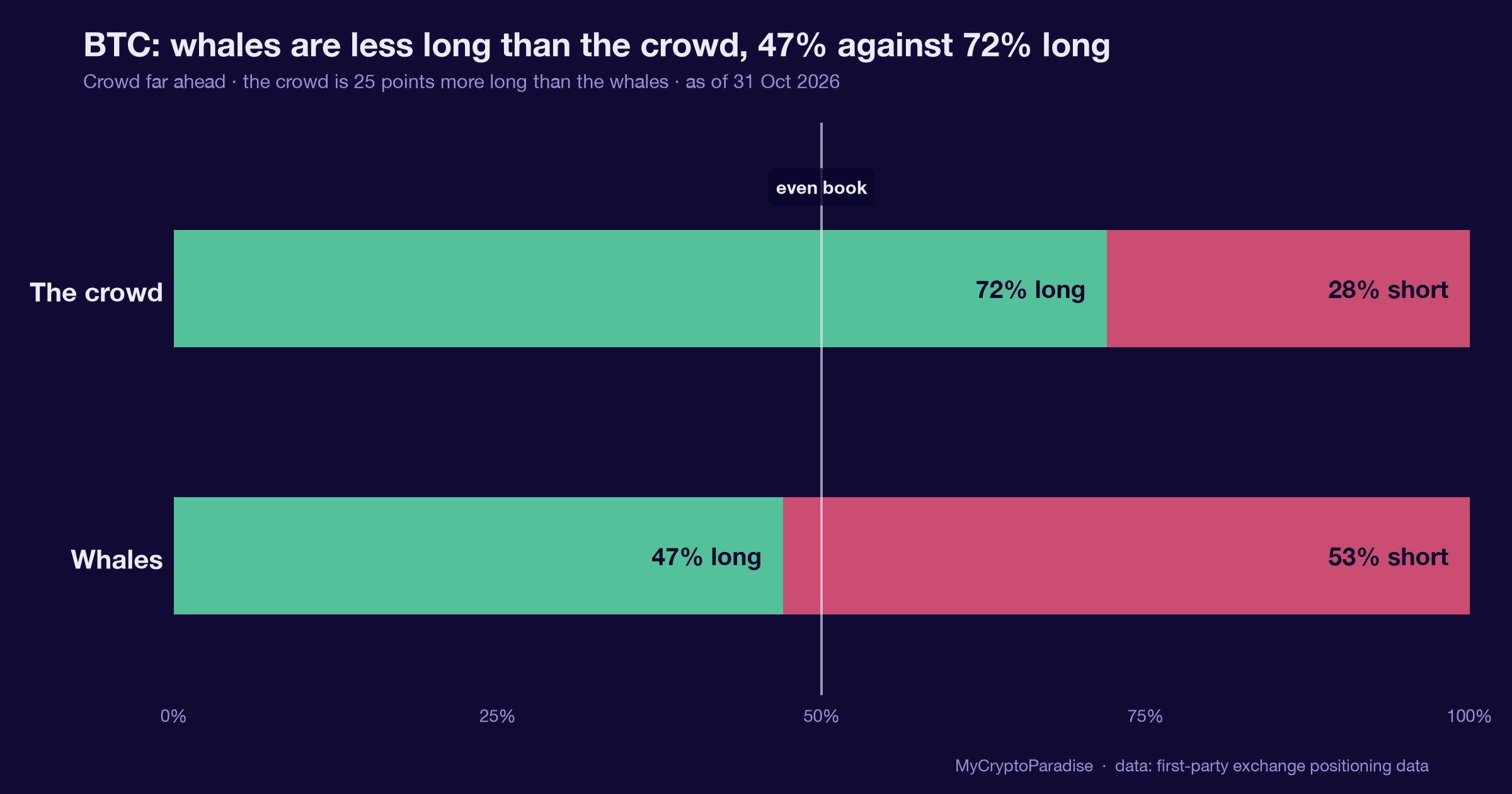
That is the key point. We treat hacks and their fallout as catalysts, not causes. The repositioning that mattered, whales trimming longs and flipping short, happened before the first hack headline, and this laundering chapter adds no new structural trigger.
So who is doing what to whom? There is almost no retail crowd to fade on this one. Chatter is thin, confined to onchain analysts rather than panicked traders, so there is no fear spike to accumulate against and no euphoria to distribute into.
The practical read: this is a bearish overhang for the named bridge assets and the compliance narrative around them, not a reason to change our BTC bias. We still watch the $79,000 reclaim as the real trigger. Until that clears as support, strength remains the thing that can meet selling, hack headlines or not. Probabilities, never certainty.
The read behind this: we framed this story through our own market analysis, Binance Hack: Is Bitcoin's Small Drop Bullish?
Track it live: our Crypto Fear and Greed Index and the live crypto funding rates both update in real time, so you can watch this shift for yourself.
Related coverage
For exact entries, targets, and stop losses with full risk management, that is what ParadiseFamilyVIP is for. New to reading these moves? Start with our crypto trading strategies guide.
ParadiseTeam is monitoring the market situation closely, and we are taking these developments into consideration while building our trading tactics inside ParadiseFamilyVIP.
Crypto trading involves substantial risk. Prices are volatile and you can lose money. This article is educational and is not financial advice. Past performance does not guarantee future results.
Will THORChain move to block the laundered Binance funds?
How 5 Paradisers are calling it
The first call is still open
Free account, no password. Members just sign in.






Join the discussion 4
Back in 2008 when the banks were going under I was still on the forklift and nobody on the floor could tell you where anything went.... so watching this one, I keep thinking about how the money moves through the bridges and not the coins themselves 🤔
dont need a fed letter to know where the money went. ran a forklift for years and the manifests always had a paper trail, the bridges are just the same thing with no guy at the dock to ask questions
Ai mano, quando vi FBI e THORChain na mesma manchete ja pensei em ligar pro meu roommate pra ele nao me ver surtando de novo!! Eu olho bridge flow antes de qualquer coisa, sempre achei que o risco mora nas pontes e nao no BTC em si 🤔
Ah mano, the surtando bit is fair 😂 But I'd push back a bit on the bridges being the whole story, Carlos. A bridge is only as clean as what comes through it, and if the FBI is chasing $242M of laundered Binance funds, the flow itself is the signal, not just the pipe 🤔