

Listen: the breakdown
Developing story update (September 12, 2026, 13:39 UTC):
The tanker rate spike is no longer confined to the Middle East-to-China benchmark. Based on our sources, charterers are now offering very large crude carriers on the US Gulf to Asia run at a record lump-sum fee, a sign the freight squeeze is broadening across major crude routes rather than staying local to the Gulf.
For traders the read is unchanged but reinforced: a wider shipping cost surge feeds the same macro instability and inflation risk that tends to keep smart money in reserve and waiting. Watch whether this spreads to more routes, which would likely add pressure on risk assets and raise the odds of leveraged retail longs becoming squeeze fuel.
What to watch now: Whether record freight rates spread to additional crude routes beyond Middle East-to-China and US Gulf to Asia.
Market briefing: Supertanker earnings on the Middle East to China route have hit a record near $800,000 a day as Gulf tensions escalate, and Bitcoin sits near $77,297, down half a percent. Higher energy transport costs point to sticky inflation and a cautious, risk-off tape.
- Supertanker earnings on the Middle East to China route hit a record near $800,000 a day, more than doubling in two months.
- US Gulf to Asia charters reached a record near $29.5 million per voyage, before war-risk costs, as regional escalation widens.
- BTC sits near $77,297, down 0.5 percent, with the $77,700 support already broken and whales still parked in cash.
Supertanker rates just hit an all-time high near $800,000 a day, and the shockwave runs straight to energy prices, inflation, and risk assets. Does that leave Bitcoin exposed?
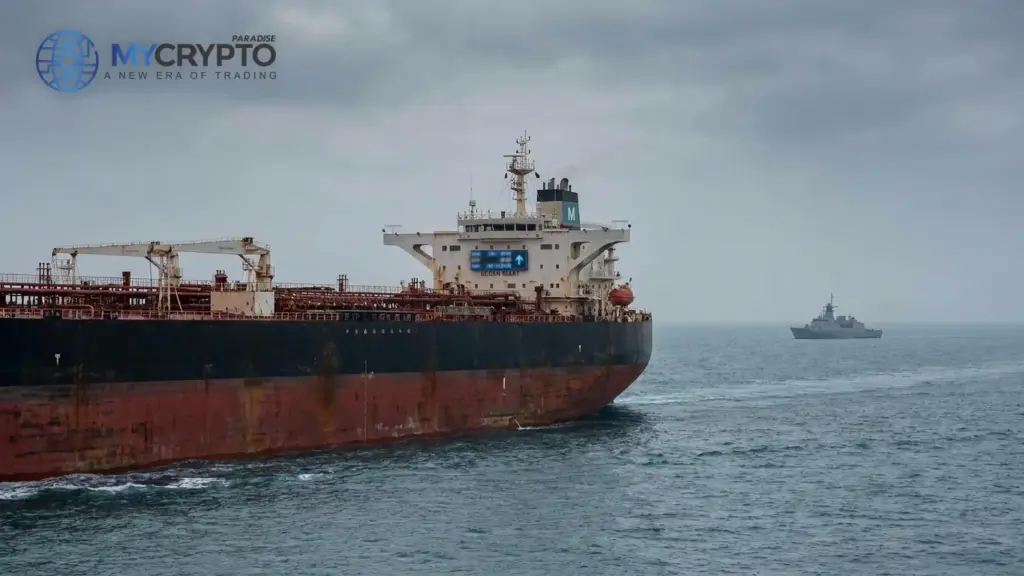
The cost of moving a supertanker of crude just went vertical. Earnings on the benchmark Middle East to China route reached a record near $800,000 a day. Rates have more than doubled in the last two months.
The cause is not a mystery. Gulf tensions are escalating, the region is in chaos, and shipping risk is repricing in real time. US forces destroyed five Iranian-linked tankers, Tehran is threatening further escalation, and the Houthis seized Yemen's Mocha, closing in on the Bab el-Mandeb chokepoint.
The US Gulf to Asia route tells the same story. A single voyage now runs near a record $29.5 million, before war-risk premiums and delay fees are even added on top.
We extend our earlier coverage of the widening Middle East conflict here, but the freight print is the new signal. When the water gets dangerous, the market prices the danger into every barrel that has to cross it. This matters to crypto traders because energy is the tax on everything. Higher transport costs feed into oil, oil feeds into inflation expectations, and inflation feeds into how much liquidity is left for risk assets.
Bitcoin was trading near $77,297 as this printed, down about 0.5 percent on the day. Ethereum held firmer near $2,540, up roughly 1.5 percent. The move so far is quiet, but the macro backdrop just got heavier, and quiet tape into a heavy backdrop rarely stays quiet forever.
How freight costs feed the inflation loop
Freight is a leading edge of inflation, and it just spiked to a record. Every barrel that now costs more to ship eventually costs more to buy. That pressure works its way into fuel, transport, and the price of nearly everything downstream.
The transmission chain is straightforward. Escalating Gulf tensions raise shipping risk. Higher shipping risk lifts freight rates to records. Higher freight lifts delivered energy costs, which nudges headline inflation back up just as markets hoped it was cooling.
That is the part that reaches crypto. Sticky or rising inflation keeps central banks cautious and keeps real yields firm. Firm yields raise the bar for holding assets that pay no coupon, and Bitcoin sits squarely in that bucket.
There is also a fragility signal here. Records in freight tell you global trade routes are strained, and strained routes invite supply shocks. Supply shocks are the classic trigger for a broad risk-off shift, where capital rotates toward safety and away from speculation.
We are honest that this is a macro read, not a single confirmed crypto catalyst. No one line-item forced Bitcoin lower today. But context sets the weather for every trade. A world of rising war-risk premiums and record freight is a world where liquidity gets rationed, and rationed liquidity is exactly the environment where risk assets struggle to hold their footing.
Where the liquidity squeeze lands first
Risk-off macro hits crypto in a predictable order, and Bitcoin absorbs the first wave. As the dominant asset and the market's collateral base, BTC sets the tone. Right now it sits near $77,297 with the day slightly red, and the tape reads cautious rather than panicked.
The more telling detail is what is not happening. Stablecoin reserves are not rotating into crypto. When USDT sits idle, it usually means the deepest pockets are waiting, not buying, and waiting money is a heavy weight on any bounce.
Ethereum is the interesting outlier today, up around 1.5 percent near $2,540 while BTC eases. That relative strength can persist for a session, but in a genuine liquidity drain ETH rarely decouples for long. Alts sit even further out on the risk curve, so they tend to bleed hardest when the tide goes out.
Open interest, meaning the total value of outstanding leveraged positions, is the pressure gauge to watch. If retail keeps stacking leveraged longs into a macro shock, that fuel does not power a rally. It becomes the liquidity that a squeeze runs on. So the honest picture is a market being slowly starved, not smashed. Freight records raise the odds of an inflation scare and a deeper risk-off leg, and that pressure typically flows from BTC outward to ETH and last of all to the long tail of alts.
The signals that confirm or break this thesis
The first thing to track is whether the geopolitical premium keeps building. If freight rates hold records or climb, and the Bab el-Mandeb situation worsens, the inflation and risk-off narrative gains weight and pressure on crypto persists.
Stablecoin flows are the tell that matters most. As long as USDT reserves stay parked and refuse to move into crypto, the biggest buyers are still on the sidelines, and rallies lack a foundation. A visible rotation of stablecoins into the market would be the first real hint the waiting is ending.
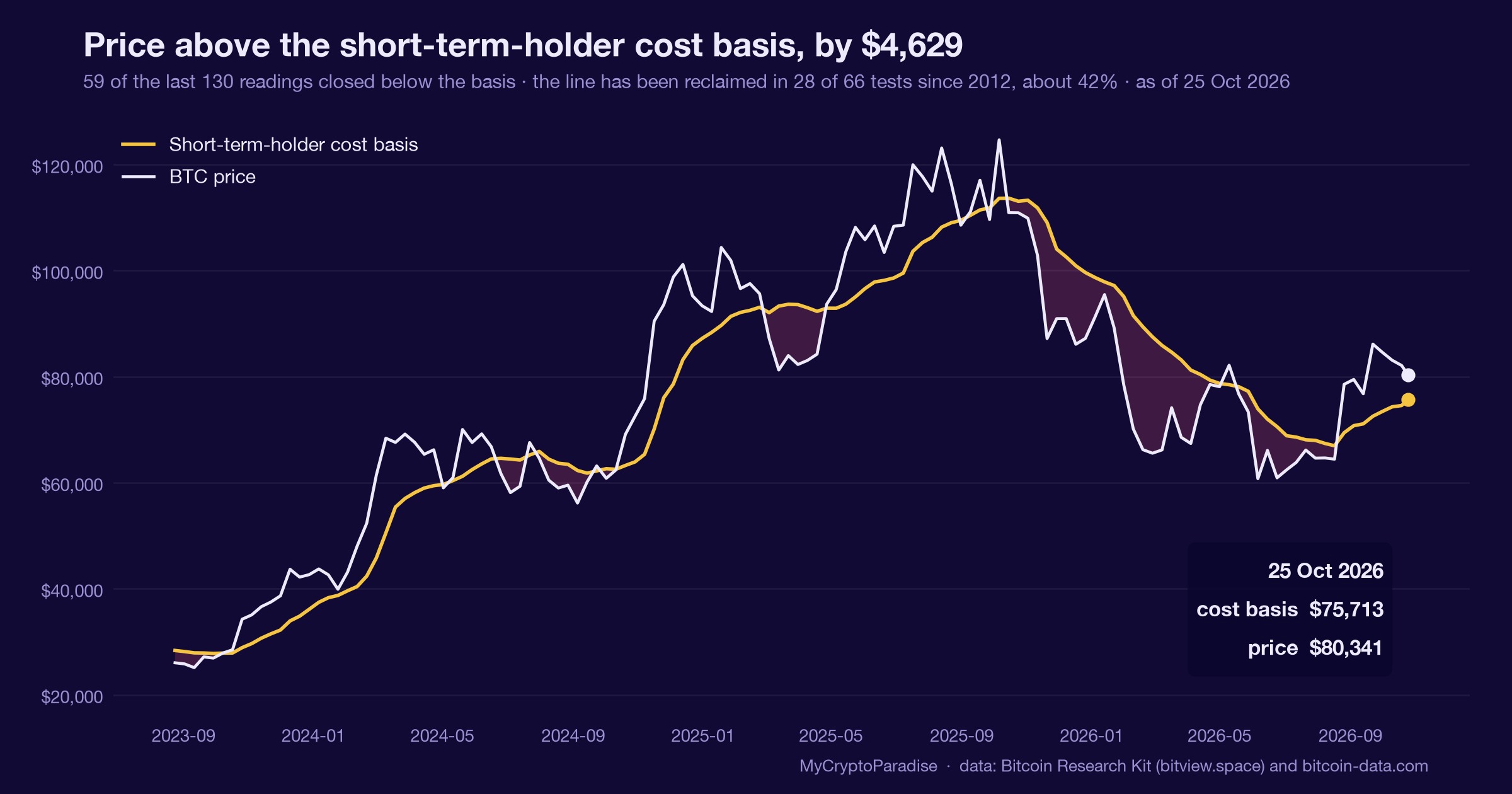
On the chart, the level that decides the near-term story is $77,700. That medium-term support has already broken. A decisive daily reclaim above it, and then back into the $82,000 zone, would question the bearish case and suggest the shock was absorbed.
Failure to reclaim keeps the door open lower. A clean break beneath the prior low near $58,000 would confirm sellers remain in control and point toward the deeper range.
Watch leverage too. If OI keeps rising while price stalls or slips, that is a crowded long book waiting to be flushed.
The invalidation is clean and worth respecting. A reclaim of the $82,000 to $88,000 band would flip the medium-term bias outright, and no macro thesis survives price proving it wrong. Until then, the weight of evidence leans toward caution.
What record freight means for BTC positioning
The ParadiseTeam reads this freight shock as confirmation of the macro weather, not a fresh catalyst on its own. Our higher-timeframe bias stays firmly cautious, and this news fits that frame rather than changing it.
Here is how it maps onto the levels. Bitcoin near $77,297 sits below the $77,700 medium-term support that has now broken. That break is the structural event, and a record freight print into a broken support is not the backdrop for a durable low.
The divergences reinforce it. On the daily, price has made higher highs while volume made lower highs, a classic bearish divergence. Rising war-risk premiums give tired buyers one more reason to step back.
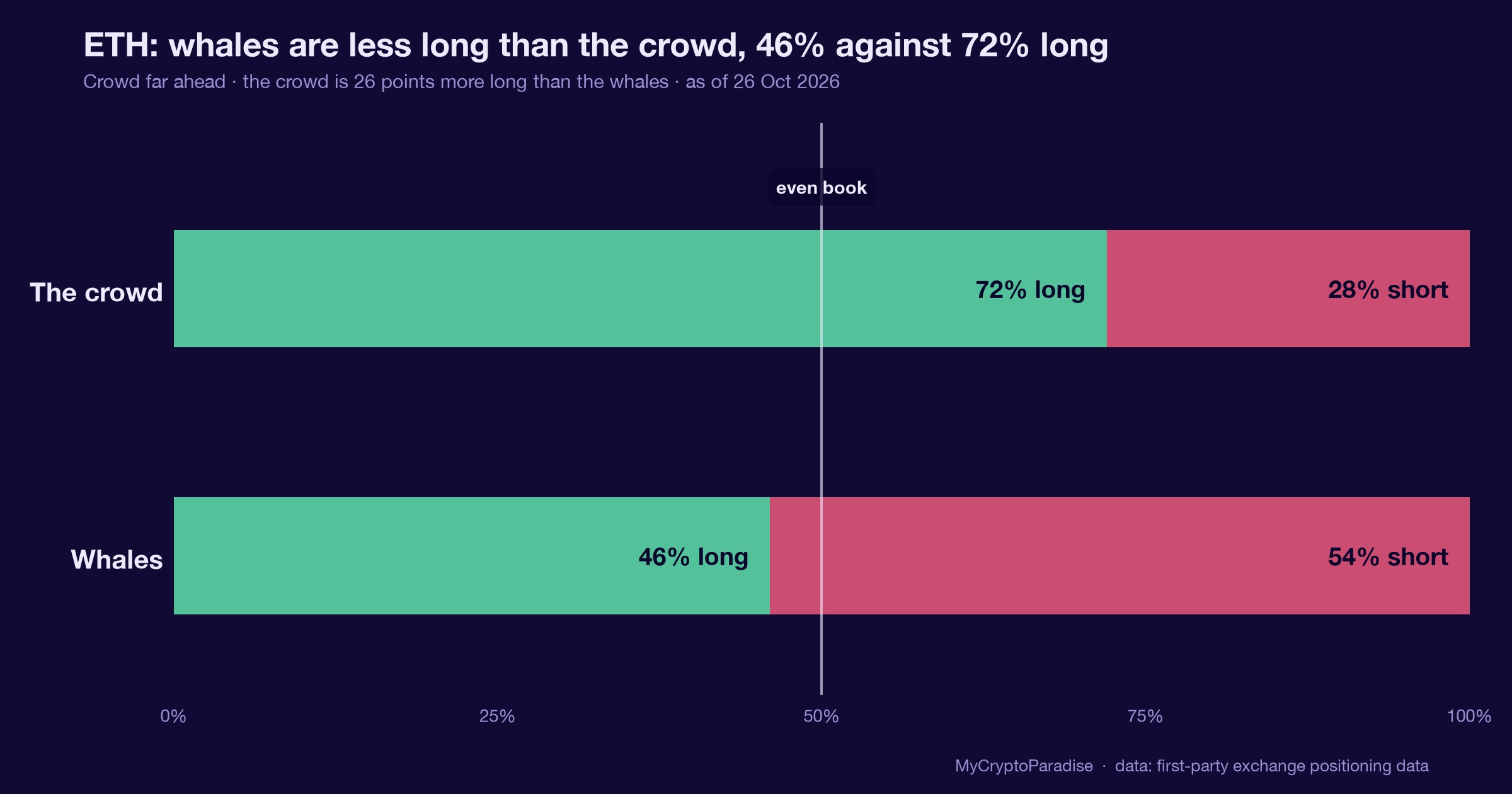
Our read on who is doing what is unchanged. Whales are waiting, stablecoin reserves are not moving, and retail keeps building leveraged longs. Those longs are the liquidity, and a macro scare is exactly the pretext a long squeeze uses.
The zone we care about is $55,000 down to $44,000, the exchange of hands region where we expect smart money to absorb supply, as at past bottoms.
Risk first, always. This is our read, not a certainty, and the honest invalidation is a reclaim of the $82,000 to $88,000 band, which would flip the bias. Until stablecoins rotate in or that band is reclaimed, the ParadiseTeam treats strength as suspect and patience as the position.
The read behind this: we framed this story through our own market analysis, Can Bitcoin Hold This Support?
Track it live: our live crypto funding rates and the Crypto Fear and Greed Index both update in real time, so you can watch this shift for yourself.
Related coverage
For exact entries, targets, and stop losses with full risk management, that is what ParadiseFamilyVIP is for. New to reading these moves? Start with our crypto trading strategies guide.
ParadiseTeam is monitoring the market situation closely, and we are taking these developments into consideration while building our trading tactics inside ParadiseFamilyVIP.
Crypto trading involves substantial risk. Prices are volatile and you can lose money. This article is educational and is not financial advice. Past performance does not guarantee future results.
With freight at records and Gulf risk rising, where does BTC go from here?
How 28 Paradisers are calling it
The first call is still open
Free account, no password. Members just sign in.







Join the discussion 5
those high rates always remind me of the 70s oil shocks, everything got tight then too. makes me keep a bit more dry powder.
yeah, i remember reading about that too, its why im so careful about my cashflow now.
these freight rates are always a lagging indicator of actual supply chain stress. we watch the port throughput numbers for the real picture.
I remember watching similar rate spikes in 2007-2008 and how quickly the narratives shifted. My alert system for this data stream is still active.
wow, record high rates 📈. makes me think how many ppl gonna try ape into anything related to shipping now, like those early 2021 days 😅. what indicators do u guys actually watch for *real* impacts on liquidity? 🧐