

Listen: the breakdown
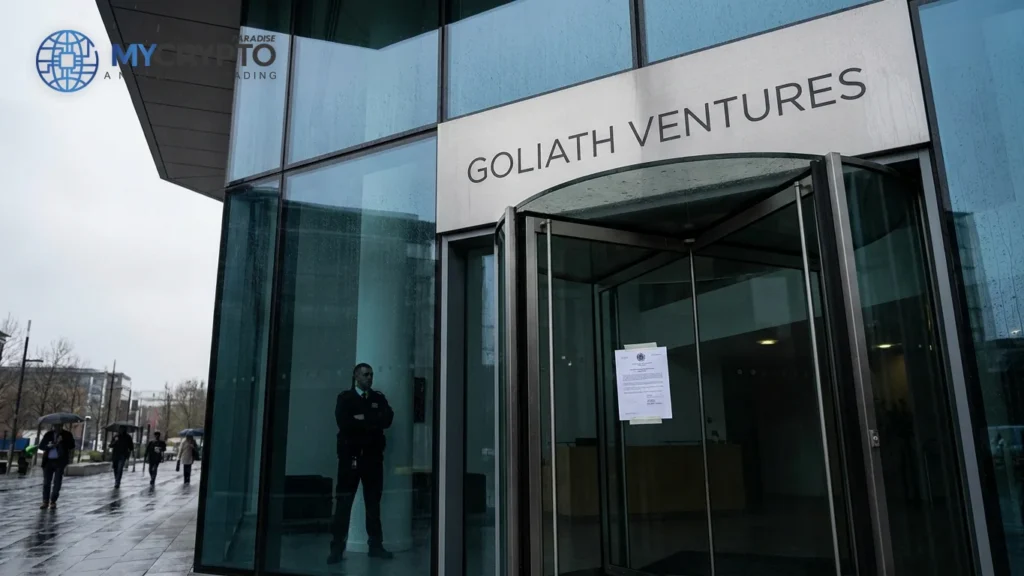
Market briefing: Regulators have sued Goliath Ventures over an alleged $400M crypto Ponzi scheme. Bitcoin barely blinked near $63,532, down 0.6 percent on the day, while Ethereum held around $1,879.
- The SEC and CFTC have jointly sued Goliath Ventures over an alleged $400M crypto Ponzi scheme.
- Regulators say Goliath promised liquidity-pool returns but paid old investors and funded its founder's luxury spending.
- BTC held near $63,532 and ETH near $1,879, showing the case is contained, not systemic.
Source: U.S. SEC
The Goliath Ventures Ponzi lawsuit removes a $400M fraud from the market, yet Bitcoin barely moved. So who actually feels this news?
The SEC and CFTC have jointly sued Goliath Ventures. Regulators allege the firm ran a $400M crypto Ponzi scheme. The story is old as finance itself, dressed in new language.
Goliath, according to the filing, promised investors returns from crypto liquidity pools. Instead it allegedly paid earlier investors with newer money. The founder's luxury spending, regulators say, absorbed the rest.
That is the classic shape of a Ponzi. No real yield engine, just an incoming queue of belief. It works until the deposits slow, and they always slow eventually.
What matters for traders is the market's reaction, which was almost nothing. Bitcoin sat near $63,532 as this landed, down 0.6 percent on the day. Ethereum held near $1,879, up a fraction. A $400M fraud unwinding barely registered on the tape.
That calm is the real signal. When a headline this large moves price this little, the fraud was already ring-fenced from the broader market. Goliath's investors are hurt. Bitcoin's order book is not.
Structurally, this is a cleansing event, not a contagion event. Regulators are pruning a bad actor from a crowded field of yield promises. The chain of transmission from this lawsuit to BTC liquidity is thin, and price is telling us so.
Why a contained fraud barely moves crypto
The transmission from a single fraud case to broad crypto liquidity is weaker than headlines suggest. Goliath Ventures raised roughly $400M inside its own closed loop. That capital was already trapped, not circulating through BTC and ETH order books. Removing it changes little at the market level.
Regulatory action of this kind reaches price through sentiment, not mechanics. There is no forced sale of Bitcoin here, no exchange insolvency, no stablecoin de-peg. The macro effect is a small tax on retail confidence, nothing more.
That sentiment tax matters at the margin. Each fraud headline nudges cautious retail money toward the exits and hardens the belief that crypto is a minefield. Fear is the product being manufactured, even when the balance-sheet damage is contained.
Here is the honest read. We cannot pin today's flat tape to this one lawsuit. There is no single confirmed same-day catalyst driving price, so we frame the quiet as interpretation, not proven cause.
What the case does confirm is a maturing enforcement posture. Two agencies acting together signals that liquidity-pool yield claims now sit squarely in the regulatory crosshairs. For legitimate protocols that is clarifying. For the next Goliath it is a warning shot, and those warnings tend to arrive in clusters.
How the news filters through BTC and ETH
Start with Bitcoin, because it always sets the tone. BTC held near $63,532 through the announcement, down just 0.6 percent on the day. That is noise, not a reaction. The deepest liquidity in crypto simply absorbed the story.
Ethereum told the same tale from the other direction. ETH sat near $1,879, up 0.4 percent, refusing to flinch. When the second-largest asset shrugs at a $400M fraud case, the fear is not spreading through the majors.
Alts are where the second-order risk actually lives. Small-cap yield tokens and liquidity-pool projects carry the guilt by association. Retail holders of thin, high-promise coins are the ones who read Goliath and reach for the sell button.
That is the likely cascade if any appears at all. Not a broad flush, but a quiet rotation out of the riskiest yield narratives and toward BTC and ETH. Quality tends to gain relative ground when a fraud headline scares the fringe.
Open interest and funding stay the real dashboard. If OI (open interest) climbs while price stalls, leverage is building into the fear, and that leverage becomes fuel. A market this indifferent to bad news is often a market with buyers waiting underneath.
What confirms contained versus contagious fear
The first thing to watch is whether other names surface. A single Ponzi case is a cleanup. A cluster of enforcement actions in the same week would shift this from housekeeping to a broader regulatory wave, and that changes the sentiment math.
Watch the majors for any delayed reaction. If BTC holds its footing near current levels over the coming sessions, the market has fully digested Goliath. A slow bleed instead would suggest fear is leaking wider than the tape first admitted.
Alt behaviour is the more sensitive gauge. Track whether liquidity-pool and yield tokens underperform BTC in the days ahead. Persistent relative weakness there is your confirmation that retail is quietly de-risking the fringe.
Funding and open interest are the invalidation signals to respect. If leverage on longs keeps stacking while price refuses to rise, the squeeze risk builds. Crowded longs into a flat market is exactly how a quick flush gets manufactured.
Finally, watch the enforcement tone itself. Two agencies moving together may embolden more filings. Confirmation of a contained event is a quiet week. Contagion looks like a second and third name, thinner alt bids, and retail headlines multiplying. Until then, treat this as one fraud removed, not a market turning.
What this cleanup means for accumulation timing
The ParadiseTeam reads Goliath as a non-event for price and a tell for positioning. A $400M fraud crossed the wire, and BTC held near $63,532 with barely a flinch. That indifference is the signal worth trading around, not the headline.
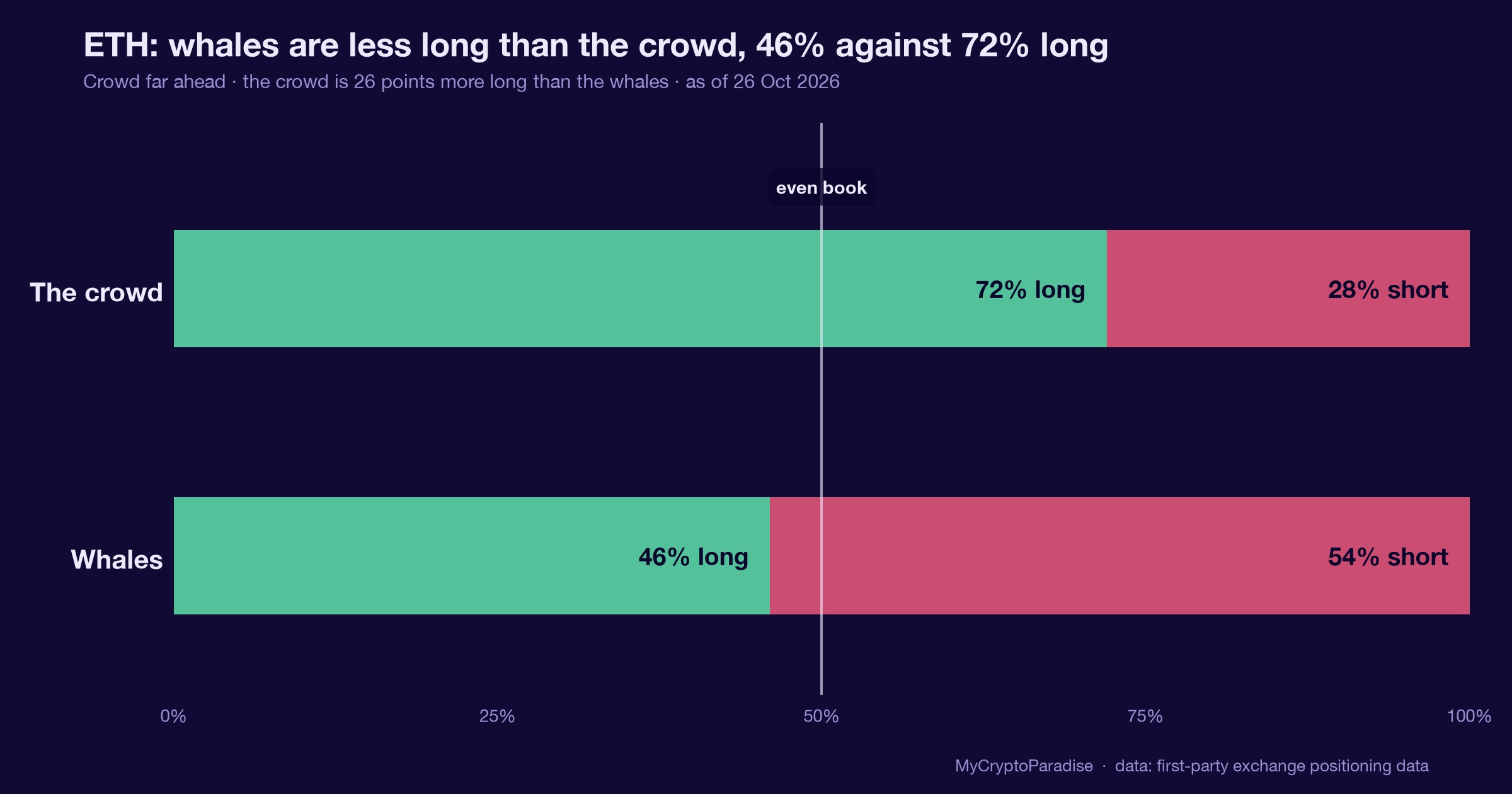
Our working bias remains cautiously constructive for an interim move, framed on the daily timeframe with a weekly macro lens. Smart money keeps accumulating dips while retail crowds the long side. News like this quietly thins retail conviction at the edges, which is precisely how those crowded longs eventually get squeezed.
So the ParadiseTeam treats fraud headlines as sentiment inputs, not liquidity events. They do not move our levels. They move the probability that fearful retail sells to patient buyers underneath.
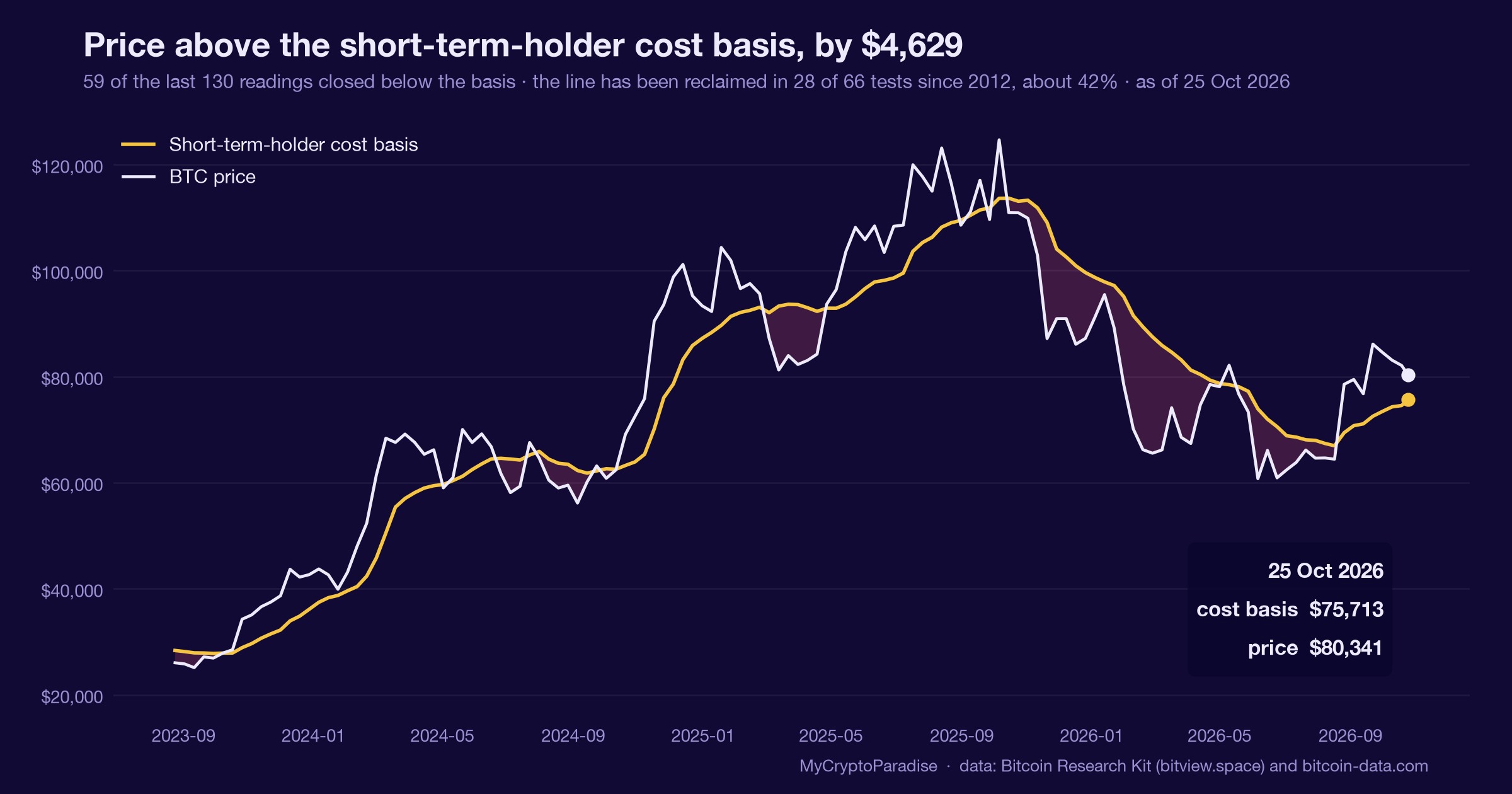
We are still mapping an interim push toward the $69,000 to $79,000 zone, with a deeper macro flush toward $44,000 on our radar as the primary reaccumulation target. Goliath changes none of that structure. It simply reinforces why the fringe of the market stays fragile while the majors stay bid.
The ParadiseTeam view is patience over reaction. Watch open interest into any stall, respect the long-squeeze risk, and let the flush define the level. Fraud gets pruned in every cycle. Positioning is what separates the accumulators from the capitulators.
Track it live: our live crypto funding rates and the Crypto Fear and Greed Index both update in real time, so you can watch this shift for yourself.
Related coverage
For exact entries, targets, and stop losses with full risk management, that is what ParadiseFamilyVIP is for. New to reading these moves? Start with our crypto trading strategies guide.
ParadiseTeam is monitoring the market situation closely, and we are taking these developments into consideration while building our trading tactics inside ParadiseFamilyVIP.
Crypto trading involves substantial risk. Prices are volatile and you can lose money. This article is educational and is not financial advice. Past performance does not guarantee future results.
Does the Goliath fraud case change anything for Bitcoin's next move?
How the Paradisers are calling it
The first call is still open
Free account, no password. Members just sign in.
Follow this topic: Crypto regulation news








Join the discussion
No comments yet. Members, share how you are reading this.