



In short
A round number like $3,000 is not a prediction, it is a crowded decision point. Many traders placed orders, stops, and targets near it, so price tends to stall, react, and get pulled back toward it. Treat $3,000 as a magnet, not a promise. What matters is how ETH behaves at the level, whether it flips into support or gets rejected. Frame the idea around a clear invalidation point, size for the risk you can afford, and check whether leverage is already stretched. That process beats guessing a single yes or no about the target.
Why does $3,000 act like a ceiling and a magnet at once?
A big round number is where the most people made the same decision. Sellers stack offers there, buyers set targets there, and old memories of the level cluster together. That concentration slows price and draws it back, which is why $3,000 behaves as both a ceiling and a magnet.
The pull is real, but the direction is not fixed. Price can drift up into the number and stall, or spike through it and snap back. The level tells you where a lot of energy sits. It does not tell you which way that energy releases, and that distinction is the whole game.
Round levels earn their weight from crowd behaviour, the same force behind how support and resistance form. When you see ETH grinding just under $3,000, you are watching that memory in action, not a hidden guarantee about the next candle.
What is different here
The ParadiseTeam reads positioning across all major exchanges before treating a round number as a real level. We do not trade the number on the chart alone.
How do you tell a support flip from a rejection?
You watch what happens after the first touch. A support flip means price breaks above $3,000, pulls back, and holds the level as a floor on higher timeframes. A rejection means price stabs the number, fails to hold, and closes back below with sellers in control.
The trap is reacting to the wick instead of the close. A single spike through $3,000 proves nothing on its own. What confirms a flip is a pullback that finds buyers at the old ceiling, then a higher low forming above it. Until that structure appears, the level is still contested.
This is the same read we walk through in a recent Bitcoin resistance breakdown, only the number changes. Case both sides honestly, then land on a probability read, not a forecast.
What would invalidate the bullish case?
The bullish idea dies when the level you leaned on stops holding. If ETH reclaims $3,000 then loses it on a clean daily close, the flip failed. Your invalidation is a price, not a feeling, so define it before entry and respect it without renegotiating.
Most people skip this step and pay for it later. They enter on hope near the number, then move their line in the sand each time price dips. A fixed invalidation removes that argument with yourself. You already decided where the idea is wrong, so you act instead of freeze.
Invalidation also tells you where liquidity waits below. Reading the resting stops and leverage on a chart, which you can learn from reading a liquidation map, shows where a failed level could accelerate. That is context for your stop, not a reason to widen it.
How should you size an ETH idea when the level is contested?
Size from the distance to your invalidation, not from conviction. A contested level means wider noise, so a tight stop gets hit by chop and a loose stop needs a smaller position. Fix the money you can lose first, then let that number decide the size.
The order of operations matters more than the exact figures. Start with risk, work backward to position, and never invert it. A simple, repeatable version looks like this:
- Decide the money you can lose on the idea.
- Measure the distance from entry to invalidation.
- Let that distance set position size, not conviction.
This discipline scales with turbulence, which is the core of position sizing under volatility. Near a heavy round number, volatility usually rises, so the same dollar risk buys you a smaller position. That is the market charging you for the uncertainty, and paying it keeps you in the game.
Is the crowd already positioned before you enter?
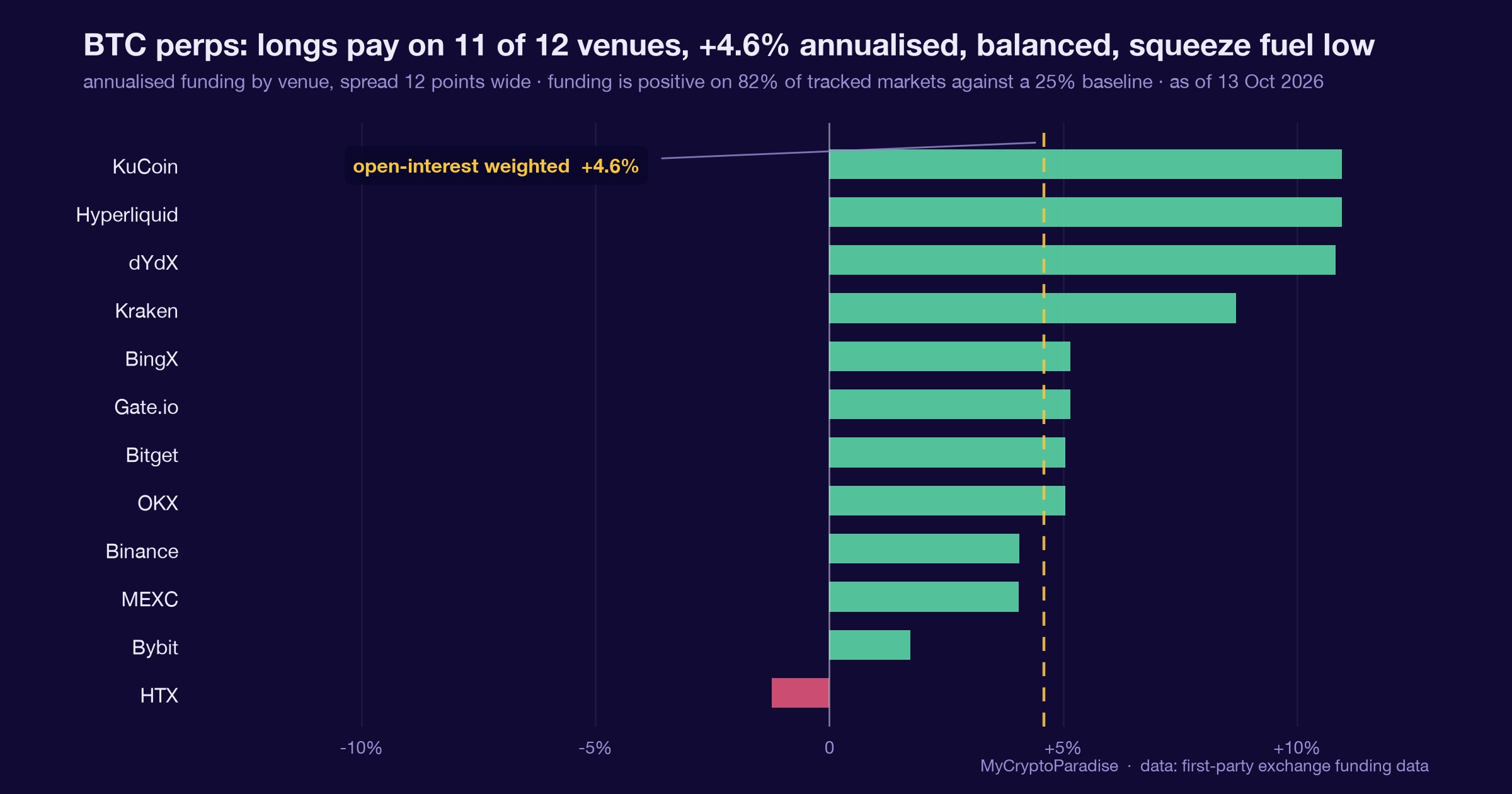
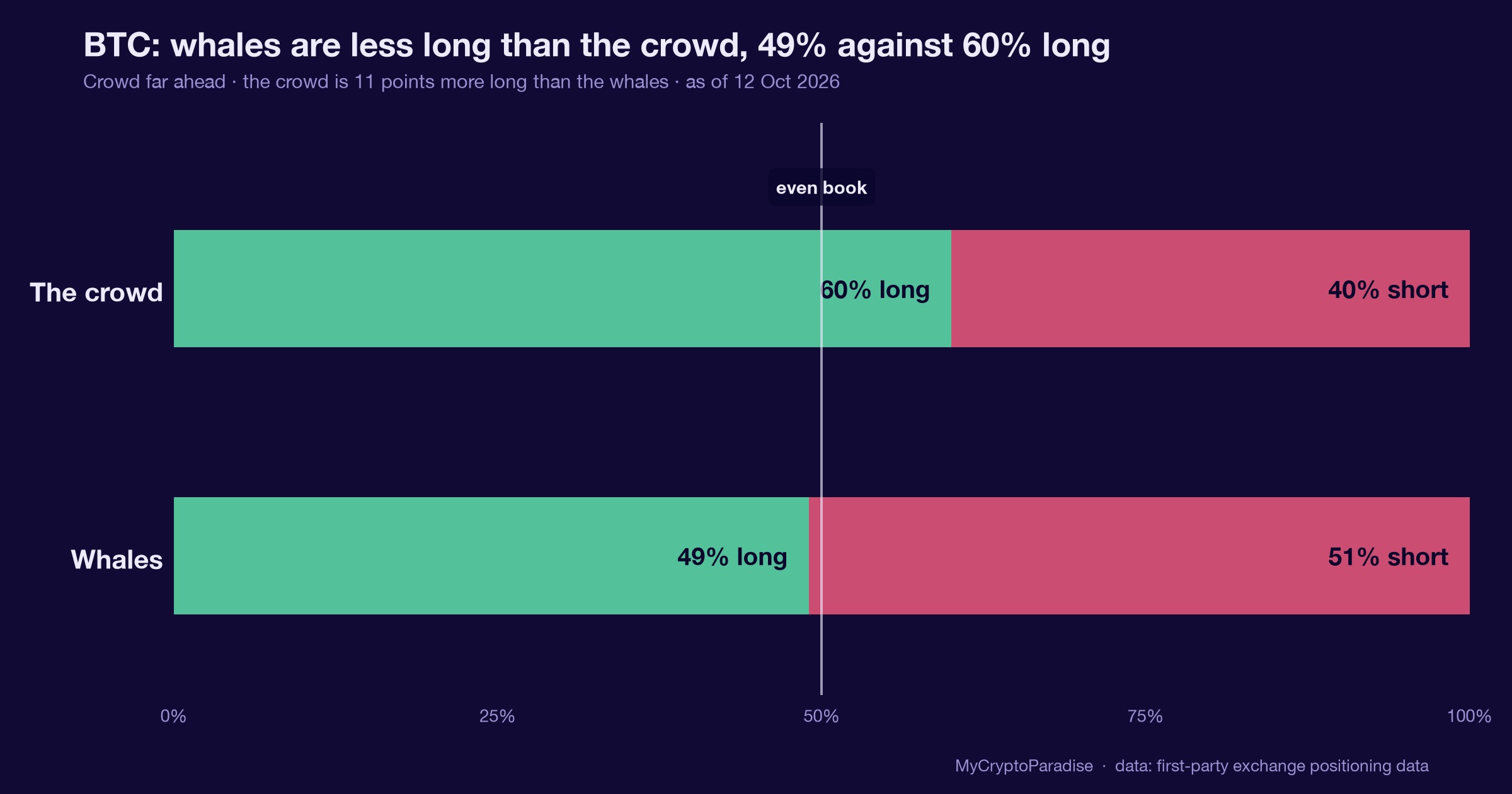
Funding rates and open interest show whether leverage is already crowded on one side. When funding runs hot and longs pile in below a level, a push toward $3,000 can trigger a squeeze in either direction. Crowded positioning is fuel, not direction, so read it before you commit.
Open interest tells you how much capital is committed to open contracts. Rising open interest into a level means more stops are stacking there, as what open interest measures explains. Pair that with funding and you get a picture of who is stretched, which is often the side that gets punished first.
Learning to sort a calm tape from a stretched one is its own skill, covered in reading funding rate regimes. When funding sits neutral, the round number is a cleaner test. When funding is extreme, expect a violent reaction and size down accordingly.
To see how positioning shifts the read on a level, try the explorer below.
Frequently asked questions
Does a round number like $3,000 always get hit?
No. A round number attracts price because many orders cluster there, but attraction is not a guarantee. Price can stall well below it, reverse early, or overshoot and snap back. Treat $3,000 as a likely reaction zone, then plan for both outcomes instead of assuming the touch happens.
What is a support flip on a chart?
A support flip happens when price breaks above a level it once struggled with, pulls back, and holds that level as a floor. For ETH, a flip at $3,000 means the number stops acting as a ceiling and starts absorbing dips. Confirmation needs a hold, not just a passing wick.
How do I set invalidation on a round-number trade?
Pick a price where your idea is clearly wrong, usually a clean close back through the level you leaned on. For a long above $3,000, a decisive daily close below it invalidates the setup. Write the number before entry, then honour it without moving the goalposts later.
Why do funding rates matter near a key level?
Funding rates reveal whether traders are crowded long or short. When funding runs hot near $3,000, one side pays heavily to hold, which raises squeeze risk in either direction. High funding is a warning about positioning, not a signal to buy or sell by itself.
Crypto trading involves substantial risk and is not suitable for everyone. Nothing here is financial advice; it is education only. Never risk more than you can afford to lose.








Join the discussion 14
Those round numbers can be a trap, but I’ve found it’s more about the order flow around them... sometimes the magnet is weak... and I stick to rule #4...
Sure, they're like a feckin black hole alright, but the *pull* on the way up and the way down feels totally different to me 🤔. Think they're a magnet for sentiment more than anything else 🤷♂️.
I learned the hard way about round numbers in 2017. Watching for invalidation now is a much better practice than just assuming support.
Round numbers are just psychological waypoints for the market to chew through, Katya. The real support or resistance is in the order book.
Round numbers often debit us with false hope, but I'm not seeing enough credit for the stop distances here. Where's the exact line item for that risk? 🤔
chinedu, the stop distances can be tricky to define when market structure is not clear and one is relying on a round number for a support or resistance like a main structural beam.
The stop distances indeed seem crucial. Perhaps the implied volatility surface also warrants consideration here, as it often reflects option sentiment around these round levels.
all that talk about magnets and invalidation what about the one level that matters its the stop.
yeah jessica, everyone's chasing magnets until the wick blows past their stop... that's the real invalidation.
the magnetic pull of round numbers is indeed powerful, but it often works best as a contrarian indicator, reflecting where the crowd is positioned for a breakdown or breakout. a true invalidation comes from liquidity, not just price action.
My old habit used to be: if it dipped, I bought 📉💸. Now I wait for confirmation, especially at big round numbers. Those magnets can pull in any direction 🧲!! Katya is right about learning the hard way 🫠.
always confirming those reclaims or loss of structure on the way back down. its how i filtered the 2017 noise.
that's a good filter. it's the volume at those reclaims that tells you if anyone serious is behind it, not just a blip.
watching for those invalidation signals now... i remember thinking round numbers were like a safety net for my small stablecoin transfers... quite a lesson. thanks for the article.