

In short
Position sizing is how you decide how much to buy, so a single loss cannot wreck your account. The math is simple. Pick a fixed risk per trade, usually 1 to 2 percent of your account. Measure the distance from your entry to your stop. Divide your risk amount by that distance to get your position size. When volatility expands, your stop sits wider, so the same risk buys a smaller position. Size for survival first and upside second. That order is what keeps a trader in the game long enough for an edge to pay off.
Why is position size the decision that matters most?
Position size sets how much you lose when a trade fails, and losing trades are guaranteed. Your entry and stop define the risk per coin. Your size decides how many coins carry that risk. Get size wrong and one bad run can end the account, no matter how good your analysis was.
Analysis tells you which trades to take. Size tells you whether you survive the ones that fail. A trader with a mediocre edge and strict sizing outlasts a brilliant analyst who bets too big. This is also why stops and size travel together, and why stops keep getting hit when a position is too large to sit through noise.
Bet a large share of your account repeatedly and the math turns against you. The concept has a name, risk of ruin, the probability that a run of losses wipes you out. Small, fixed position sizes push that probability toward zero. That is the whole point.
What is different here
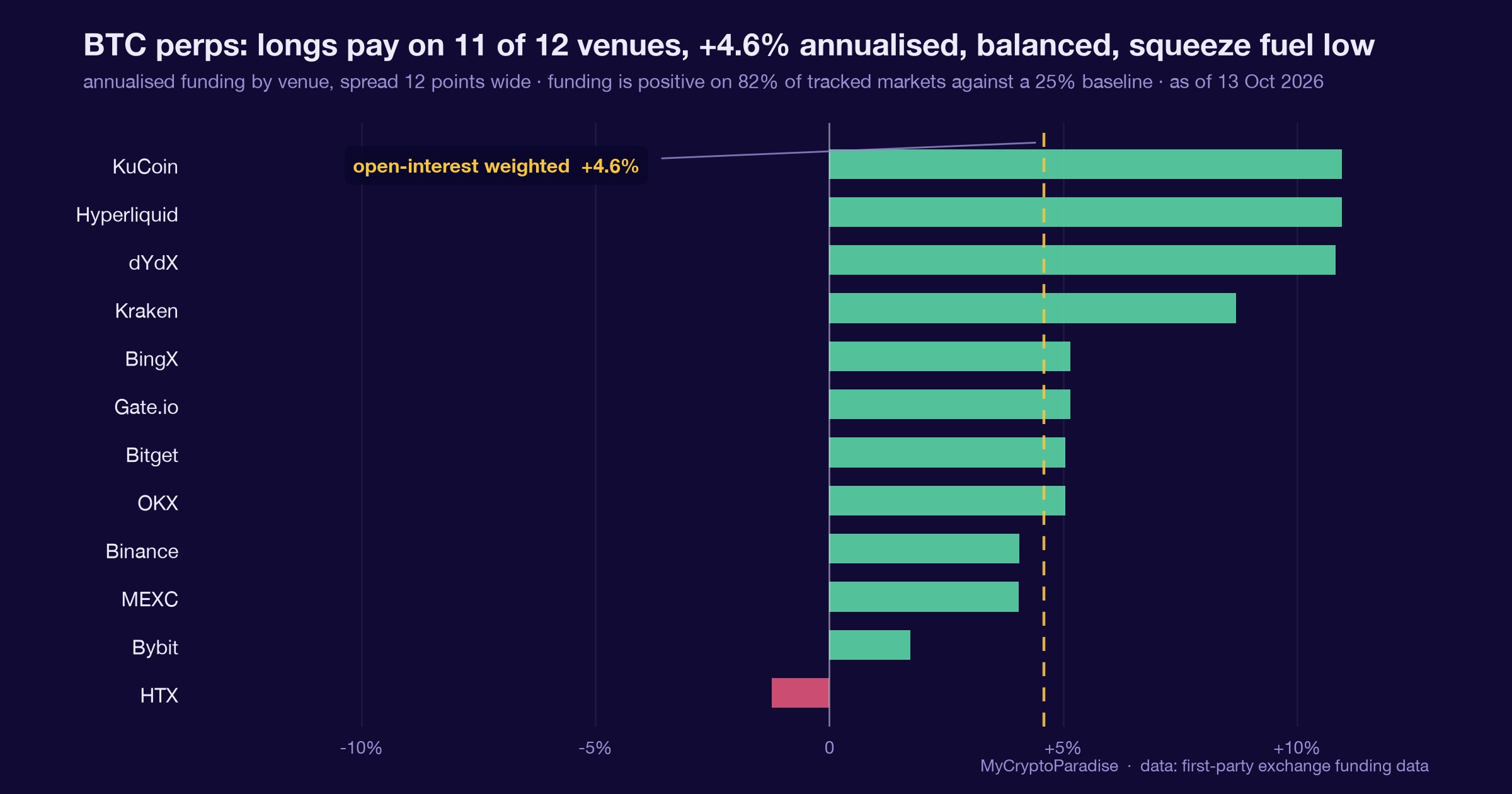
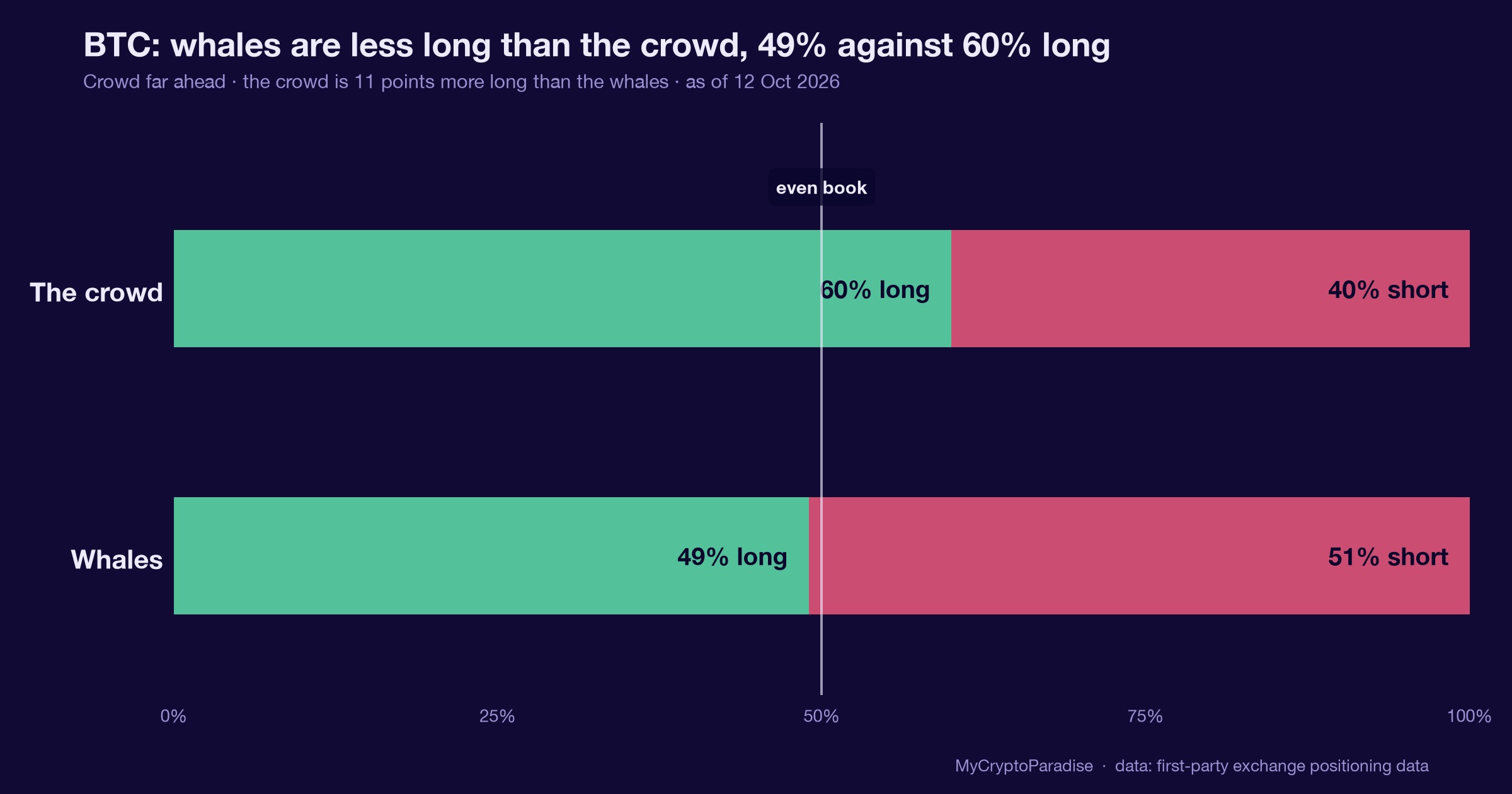
Before sizing, the ParadiseTeam reads live positioning across all major exchanges. This ensures the volatility we plan around comes from real data, not chart guesses.
What are the four inputs to a position size?
Every position size comes from four numbers: your account equity, the percent you risk per trade, your entry price, and your stop price. The gap between entry and stop is your risk per coin. Risk amount divided by that gap gives the size. Nothing else belongs in the core formula.
- Account equity: the total capital you are trading with today.
- Risk percent: the share of equity you accept losing, usually 1 to 2 percent.
- Entry price: where you plan to open the position.
- Stop price: where the idea is wrong and you exit.
The core formula is one line: position size equals risk amount divided by the distance from entry to stop. Your risk amount is your account equity times your risk percent. The distance is simply entry price minus stop price, in the coin’s own units. Everything about good sizing lives inside those two numbers. That is why serious signal work pairs every entry with a stop and a size, shown in our note on entries, stops and size.
How do you adjust size when volatility expands?
When volatility rises, you widen your stop to survive normal noise, and a wider stop means a smaller position at the same risk. Many traders set the stop using a volatility measure, then let the math shrink the size automatically. Risk stays fixed, size flexes.
In practice, most traders anchor the stop to a volatility measure. The most common is average true range, or ATR, which tracks how far a coin usually moves per candle. Set the stop a multiple of ATR beyond entry, and it widens automatically when the market gets wild. Your position then shrinks on its own. Reading the fuel behind a move, which we cover in a move’s fuel, often warns you that volatility is rising before price proves it.
The rule to internalise is short. Keep the risk amount fixed. Let the position size move. Traders who reverse those two, holding size steady and letting risk balloon, tend not to be traders for very long.
Worked example: sizing the same idea in calm and wild markets
Say you hold a $10,000 account and risk 1 percent, or $100, per trade. The idea is identical in both markets: long BTC near ~$60,000. Only the volatility, and therefore the stop, changes.
| Input | Calm market | Wild market |
|---|---|---|
| Account | $10,000 | $10,000 |
| Risk per trade (1%) | $100 | $100 |
| Entry | ~$60,000 | ~$60,000 |
| Stop | ~$59,000 | ~$57,000 |
| Risk per coin | $1,000 | $3,000 |
| Position size | 0.10 BTC | 0.033 BTC |
| Notional exposure | ~$6,000 | ~$2,000 |
Same account. Same idea. Same $100 at risk. The wild market simply buys a third of the position, because the stop sits three times wider. Notice that your exposure fell without you predicting anything. The math did the defending for you. Sizing this way pairs naturally with a budget for drawdown across a losing streak.
Plug your own account, risk percent, entry and stop into the sizer below to see the position it produces.
How do you turn position sizing into a pre-trade habit?
Make it a fixed checklist you run before every entry, never after. Confirm your account equity, set your risk percent, mark your entry and stop, then let the formula set the size. If the size feels too small, that is the volatility talking, not a reason to override the math.
- Confirm your current account equity before anything else.
- Fix your risk percent and never change it mid-trade.
- Mark your entry and stop from the chart, not your hopes.
- Let the formula set the size, then place the order.
Treat the checklist as non-negotiable, the way a pilot treats a pre-flight card. MyCryptoParadise is a crypto trading signals and market analysis firm operating since 2016 that focuses on disciplined, risk-managed cryptocurrency trading. This sizing habit sits at the centre of that discipline. Do it on every trade, in calm and in chaos, and the account survives long enough for your edge to matter.
Frequently asked questions
How much of my account should I risk per trade?
Most disciplined traders risk 1 to 2 percent of account equity on a single trade. That range keeps any one loss small enough to recover from. Beginners and volatile markets favour the lower end. The exact number matters less than applying it consistently on every trade you take.
Does position sizing change with leverage?
No. Your risk comes from the distance between entry and stop, not from leverage. Leverage only changes the margin you post, not the money you lose if the stop hits. Size from your stop distance first, then check that your chosen leverage can hold the position without liquidation.
What is average true range and why use it?
Average true range measures how far a coin typically moves over a set period. Traders use it to place stops beyond normal noise, so a routine wiggle does not eject them. A wider average true range means a wider stop, which the sizing formula turns into a smaller position.
Why does my position feel too small in volatile markets?
Because it should be. Wider volatility means a wider stop, and a wider stop at fixed risk buys fewer coins. The small size is the math protecting your account from a large swing. Fighting it by adding size is how volatile markets drain accounts fastest.
Crypto trading involves substantial risk and is not suitable for everyone. Nothing here is financial advice; it is education only. Never risk more than you can afford to lose.








Join the discussion 10
I find historical volatility data combined with order book depth is a more robust input for sizing. This helps me avoid chasing pumps that fade fast.
For me, it's about seeing if the engine is going to redline before I open the throttle... especially with those small pushes, like Pavel said... safety first.
i'm still wondering how these calculations really help with small amounts... especially when moving stables from mobile money... a quick drop can still wipe out a lot for us.
yeah i know what you mean samuel, its tricky even just accounting for the transaction fees sometimes when you're working with smaller amounts too 🤔
even small amounts... still need to survive... the math just helps you stay in play longer.
i cross-reference my position sizes with on-chain volume data; helps avoid getting caught when whales are accumulating or dumping. Pavel, the math should still keep small accounts alive.
on-chain volume is just more noise, sofia. what matters for me is the weekly close, not all that intraday action. 🙄
On-chain volume shows true liquidity and large order flow, not just noise. Price is a lagging indicator; I look at accumulation and distribution by unique whale wallets. What source do you use for weekly closes?
so the math helps account for the big swings, but what about the small accounts that cant risk much to begin with?
That's a good point, Pavel. Liquidation levels also play a much larger role for smaller accounts since initial margin requirements take up a bigger percentage of capital.