

Listen: the breakdown
Market briefing: Premia Labs options vaults on Arbitrum were drained for over $400,000 on November 1 through empty pools and flash loans. BTC held near $78,016 and ETH near $2,288, both flat, as the loss stayed contained to one protocol.
- Premia Labs options vaults on Arbitrum drained for over $400K on November 1
- Attacker used empty option pools and flash loans to lock then withdraw collateral
- BTC and ETH stayed flat; a sub-$500K loss leaves the majors untouched
The Premia Labs exploit drained over $400K from Arbitrum options vaults using empty pools and flash loans. Yet BTC and ETH did not blink. So why does this one not move the market?
On November 1, an attacker drained Premia Labs' options vault contracts on Arbitrum. The reported loss sits somewhere between roughly $400,050 and $464,600. That spread is itself a small lesson in how fast on-chain forensics get revised.
The mechanism matters more than the number. Premia's factory lets anyone deploy an option pool, permissionless by design. The attacker created empty pools, then used flash loans to buy options against them. That locked vault collateral into pools the vaults never should have trusted, and the collateral was then withdrawn as liquidity.
In short, a design choice became a drain. The vaults lacked sufficient checks to establish whether a pool was legitimate before committing collateral. Permissionless deployment is a feature until it meets a contract that assumes good faith.
The stolen funds were converted and bridged toward BTC, routed through Ethereum. On-chain security monitoring flagged the incident quickly.
Here is the part that keeps it in perspective. The entire haul is under half a million dollars. Set against the daily liquidity of BTC and ETH, it barely registers.
We have already covered several exploit stories today. This one differs in scale and in cause. It is not a state-linked campaign or a frozen bridge. It is a straightforward smart-contract failure, the kind that recurs whenever permissionless meets under-verified.
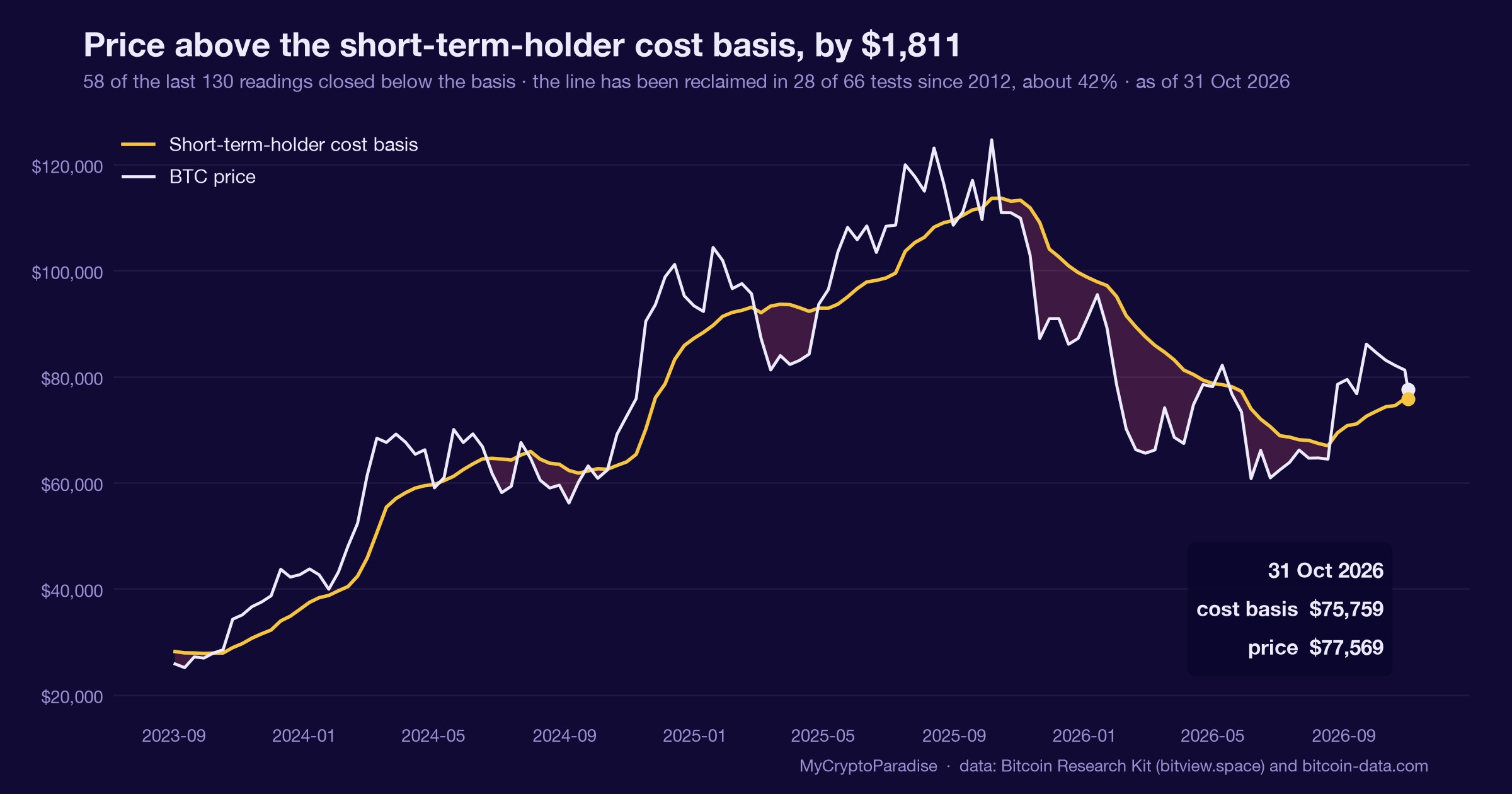
So the headline reads alarming and the chart does not. BTC was trading near $78,016 as of reporting, essentially flat on the day. ETH sat near $2,288, barely moved. Not every exploit is a catalyst.
Permissionless pools meet absent legitimacy checks
The transmission here is almost entirely contained, and that is the point. A $400K drain on a single Arbitrum protocol does not move the cost of capital, the dollar, or broad crypto liquidity. The chain from driver to market stops almost immediately.
Still, the design flaw carries a wider lesson for DeFi risk. Permissionless pool creation is powerful because it removes gatekeepers. It is dangerous for exactly the same reason. When a vault trusts any pool the factory produces, an attacker only needs to produce a pool.
Flash loans then supply the leverage. They let someone borrow large collateral with no capital, execute the manipulation, and repay within one block. No downside, no overnight risk. The vault carries the loss.
This matters structurally because options vaults are meant to be the conservative corner of DeFi. They promise yield from writing options, not exposure to contract games. When the plumbing fails, the promise fails with it.
The loss-figure spread also tells you something. Reports ranged from about $400,050 to $464,600 within hours. Early forensics are estimates, not audited totals, and the final number often lands later.
For the broader market, the read is simple. Isolated protocol failures rarely transmit into BTC or ETH pricing unless they signal a systemic pattern. One under-verified options vault on Arbitrum is not that. The macro backdrop stays exactly where it was before the drain.
Majors stay flat as collateral drains
The liquidity effect barely leaves Arbitrum. Collateral drained from Premia vaults is a closed loop until the attacker moves it. That movement, converting proceeds toward BTC through Ethereum, is a cash-out, not a market bet.
BTC shows it. Price was near $78,016 as of reporting, flat on the day. A sub-$500K bid routed into the deepest asset in the space is a rounding error. It neither pushes price nor signals accumulation.
ETH tells the same story. Near $2,288 and barely moved, up a fraction on the hour. The bridge path ran through Ethereum, but transit is not demand. The funds passed through; they did not stay.
Altcoin liquidity feels nothing from this. Premia's own token and the narrow Arbitrum options niche absorb the reputational hit. There is no contagion channel into the wider alt complex, because no shared collateral or lending rail connects them to this drain.
The honest read is that this event is price-neutral. It does not tighten liquidity, it does not spook leverage, and it does not shift positioning in the majors.
Where it does bite is confidence in a specific DeFi primitive. Depositors in permissionless options vaults will reprice their trust. Some capital leaves that corner. That rotation is real but local.
So the cascade that usually runs driver to macro to BTC simply stalls at step one. The driver exists. The macro effect does not. The chart agrees.
Where a contained exploit could turn systemic
Follow the funds first. The attacker routed proceeds toward BTC via Ethereum, and how those coins behave next tells you intent. A quick move to a mixer or a quiet sit confirms a cash-out. Any organized return or negotiation would signal something else.
Watch Premia's own response for the second signal. A post-mortem, a patch to the factory's legitimacy checks, and any plan for affected depositors would mark containment. Silence or a slow drip of revised figures would do the opposite.
The loss number itself is worth tracking. It sat between roughly $400,050 and $464,600 in early reports. If the final audited figure climbs well beyond that range, the story grows. If it settles inside it, this stays a contained incident.
Confirmation that this is isolated looks like flat majors and no copycat exploits on similar permissionless-factory designs. BTC holding its current flat behavior near $78,016 and ETH near $2,288 is exactly that confirmation.
Invalidation would be a cluster. If other options protocols sharing the same permissionless pattern get hit this week, the market reprices the whole primitive, and that could pull liquidity from the Arbitrum DeFi corner more broadly.
For now the evidence points to one flawed contract, not a class failure. We will update if the pattern spreads. Until then, treat it as a security story to learn from, not a market event to trade around.
Routine cash-out, not a positioning shift
This exploit changes nothing in the levels the ParadiseTeam is actually watching. A $400K drain does not touch BTC's structure near $78,016. The decision point stays exactly where it was.
Our standing read is neutral-to-cautious. BTC sits just under the $79,000 zone where distribution already happened, inside a former support band we now treat as neutral. Price did the work before any headline; this exploit is noise layered on a structure that was already set.
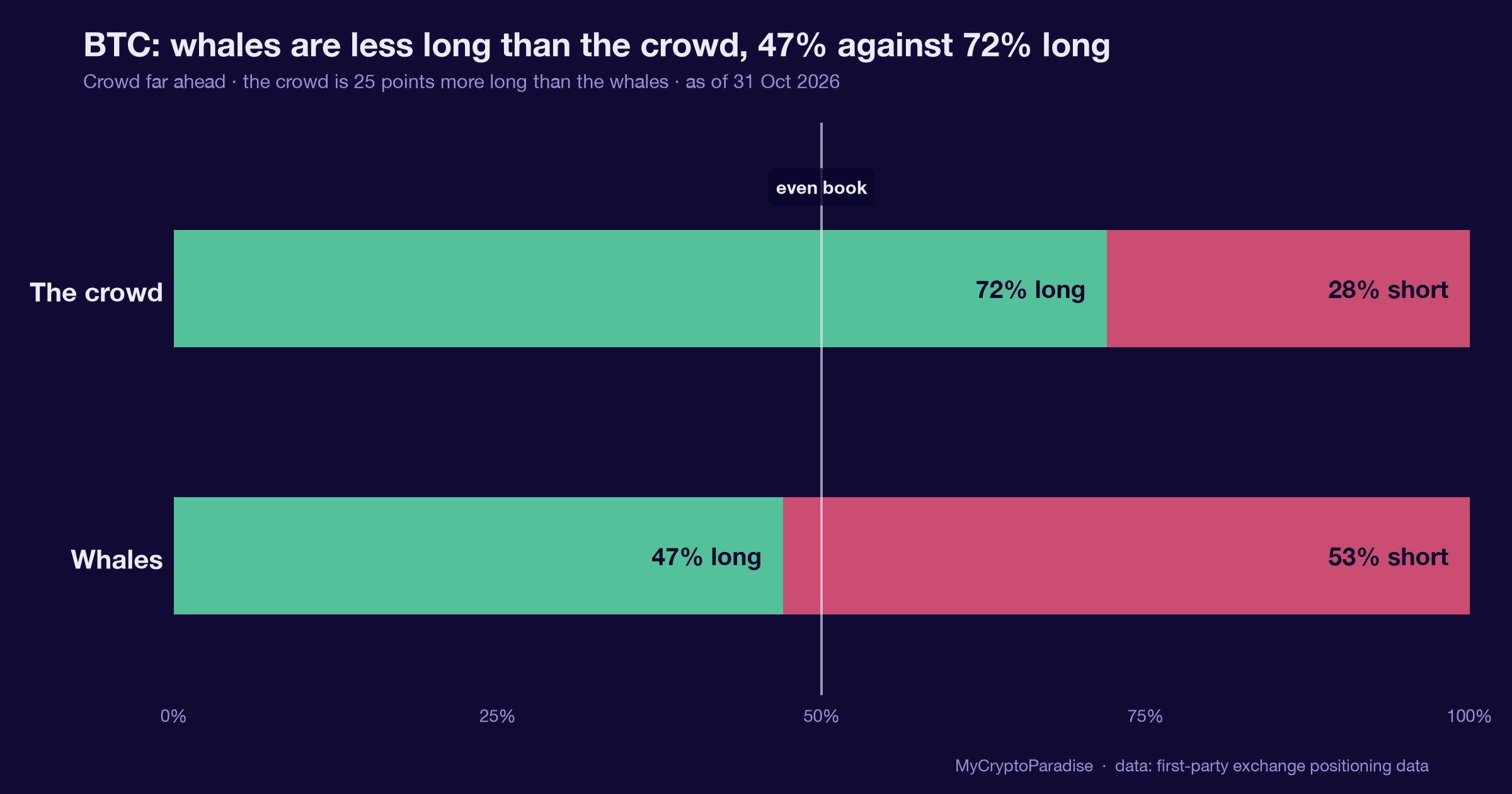
Contrast that with how retail processes a day like this. A scary exploit headline lands, fear ticks up, and some sell into a market that smart money already repositioned. One tracked whale closed longs before the Binance hack and flipped short. That move predated the news, not followed it.
The level that matters is the reclaim. BTC needs to take back the 0.618 Fibonacci retracement and the former support zone as resistance to open price discovery toward the top of the first wave. Until then, strength can meet selling, not accumulation.
A Premia vault drain does not move any of that. It is a contained security event, not a liquidity signal. The ParadiseTeam keeps the focus on whether $79,000 reclaims as support or caps as resistance, because that, not a sub-$500K exploit, decides the next leg.
The read behind this: we framed this story through our own market analysis, Binance Hack: Is Bitcoin's Small Drop Bullish?
Track it live: our live crypto funding rates and the Crypto Fear and Greed Index both update in real time, so you can watch this shift for yourself.
Related coverage
For exact entries, targets, and stop losses with full risk management, that is what ParadiseFamilyVIP is for. New to reading these moves? Start with our crypto trading strategies guide.
ParadiseTeam is monitoring the market situation closely, and we are taking these developments into consideration while building our trading tactics inside ParadiseFamilyVIP.
Crypto trading involves substantial risk. Prices are volatile and you can lose money. This article is educational and is not financial advice. Past performance does not guarantee future results.
Will more permissionless options vaults get exploited this month?
How 1 Paradiser is calling it
The first call is still open
Free account, no password. Members just sign in.











Join the discussion
No comments yet. Members, share how you are reading this.