


Listen: the breakdown
Developing story update (September 12, 2026, 12:09 UTC):
Update: casualty figures have now been quantified. Based on our sources, the conflict has produced an estimated 276 fatalities over a five-day window, a figure that puts hard numbers on an escalation that markets had until now treated as background noise. For traders, this raises the probability that the situation is graded as a sustained conflict rather than a contained flare-up.
Price behaviour has not shifted with the news. Bitcoin sits near $77,341 and Ethereum near $2,535, both roughly flat on the hour, so the muted reaction we flagged at publication still holds. That continued disconnect keeps our read intact: retail leverage is likely absorbing the headlines while larger participants stay patient, and this kind of unresolved macro risk can precede deeper volatility rather than an immediate move.
What to watch now: Whether a confirmed casualty count starts to feed into crypto risk pricing, or whether the market keeps ignoring it.
Developing story update (September 12, 2026, 11:48 UTC):
Update: the conflict is now hitting the energy market directly. Oil prices have spiked in recent weeks as the fighting continues, and there are reports of Houthi attacks on Saudi oil facilities. This widens the story from a purely military escalation into a supply-side macro risk.
For traders this is the part that matters more than the headlines. A sustained oil shock feeds inflation expectations and can pressure risk assets, yet Bitcoin and Ethereum have stayed almost flat over the last day. That muted reaction likely reflects either fatigue with Middle East headlines or crowded leveraged longs, neither of which is a strong base for higher prices.
What to watch now: Watch whether the oil spike sustains and drags risk assets down, or if crypto keeps ignoring the macro signal.
Developing story update (September 12, 2026, 11:27 UTC):
Update: The conflict has widened on two fronts since our original report. Based on our sources, U.S. forces struck three Iranian oil tankers over the weekend, a direct hit on Iranian energy assets that traders should watch closely given how tightly crude supply and risk sentiment are currently linked.
Separately, a strike on a residential area in Tel Aviv killed a civilian woman in her forties and injured 27 others, marking a further escalation in civilian impact. Despite these developments, Bitcoin and Ethereum remain broadly stable, with BTC near $77,284 and ETH near $2,531, little changed from our earlier read. The muted crypto response continues to suggest the market has not yet treated this as its capitulation trigger.
What to watch now: Whether the strikes on Iranian oil tankers push crude higher enough to force a genuine risk-off cascade into crypto.
Developing story update (September 12, 2026, 11:05 UTC):
Update: A five-day death toll of 276 fatalities has now been reported based on our sources, giving the escalation a confirmed human cost beyond the earlier strike on the Jordan air base. This is the first hard casualty figure attached to the current phase.
Iran’s Islamic Revolutionary Guard Corps has publicly stated it targeted two US warships and eight other vessels in retaliation for US strikes, and separately claimed to have hit four US bases across the Gulf, including sites in Qatar, Kuwait, and the UAE. These are Iranian claims and remain unverified independently, but they widen the potential theatre well beyond a single base.
For traders, the notable read is that BTC (near $77.3k) and ETH (near $2.53k) barely moved on this, with roughly 0% hourly change. That muted reaction suggests risk is not yet being repriced. A confirmed strike on a major Gulf energy or US asset could still trigger a sharper risk-off move, so position sizing and leverage discipline matter more than usual here.
What to watch now: Whether Iran's claimed strikes on Gulf US bases and warships get independently confirmed, and any resulting oil price spike bleeding into crypto risk sentiment.
Developing story update (September 12, 2026, 09:59 UTC):
The conflict has widened at sea. Iran’s Revolutionary Guard now says it targeted two US warships along with eight other vessels, adding a direct naval dimension to strikes that had centered on air bases. This raises the risk of a US response that could further pressure shipping and energy routes.
The human toll has also come into sharper focus, with an estimated 276 fatalities across a five day window in the broader conflict, based on our sources. For traders, the read is unchanged in structure but firmer in conviction: Bitcoin and Ethereum holding slightly green against a clear risk-off backdrop points to leveraged longs and dip-buying that can become fuel for a downside liquidity sweep rather than a durable bid.
What to watch now: Watch for any confirmed US naval or energy-route response, which is the trigger most likely to force a real crypto risk-off leg.
Developing story update (September 12, 2026, 09:37 UTC):
Update: Based on our sources, on July 8 the U.S. president stated the exchange of fire is not expected to lead to long-term military action. This follows his July 7 declaration that the truce was over, and reads as an early de-escalation signal rather than a widening of the conflict.
For traders, this softens the tail-risk that had been feeding the recent oil spike and broader risk-off caution. Crypto has still not reacted decisively: BTC and ETH remain flat to slightly higher on the day, which keeps our read intact. A de-escalation headline can invite retail to add leveraged longs, and that is the liquidity smart money would likely use to probe deeper levels rather than a confirmed reversal.
What to watch now: Whether the July 8 de-escalation stance holds or fresh strikes contradict it, and if oil rolls over in response.
Developing story update (September 12, 2026, 09:16 UTC):
The situation has hardened since our first report. Based on our sources, a strike on a residential area in Tel Aviv killed one civilian and left 27 injured, and an earlier truce has now been declared over as strikes against Iranian assets were stepped up. Houthi rebels also hit Saudi oil facilities, keeping the pressure on regional crude supply.
For traders the notable point is what has not moved: Bitcoin is essentially flat near $77,300 and Ethereum is holding around $2,530, with no safe-haven bid despite the intensifying headlines. Oil, tied to the Strait of Hormuz and the Saudi facility attacks, remains the more reactive asset here.
This keeps our read intact. The absence of a decisive risk-off flush or a digital-gold spike suggests smart money is not treating this as the catalyst, and the probability skews toward the market still awaiting a deeper correction into the $55k to $44k zone before meaningful accumulation.
What to watch now: Whether any escalation finally forces a directional break in BTC, or oil stays the only reactive asset.
Developing story update (September 12, 2026, 08:33 UTC):
Update: based on our sources, the human toll of this escalation is now being counted at a far larger scale than the single Tel Aviv fatality first reported. Conflict monitoring puts the estimate at roughly 276 deaths across a five-day window.
For traders the read does not change much. Bitcoin and Ethereum remain broadly flat over 24 hours despite the worse casualty figures, which signals crypto is still pricing this as a slow-burn geopolitical risk rather than an immediate catalyst. A confirmed, sharply higher toll can still probability-weight risk-off flows if it feeds a further oil price spike, so watch energy markets rather than the headline count.
What to watch now: Whether the higher casualty count drives a fresh oil price spike that finally pressures risk assets.
Developing story update (September 12, 2026, 07:29 UTC):
Update: The conflict has widened toward the sea. Iran’s Islamic Revolutionary Guard Corps now claims it targeted two US warships and eight other vessels, framed as retaliation for US strikes on five Iranian targets. This is a claim rather than an independently confirmed outcome, but it points to a possible new naval front on top of the earlier airbase and oil-tanker strikes.
For traders, the notable signal is what did not happen. Despite this fresh escalation claim, Bitcoin and Ethereum are still only marginally positive over 24 hours, so the market is not yet pricing a broader risk-off shock. That muted reaction keeps the range in play and, on our read, leaves leveraged retail longs exposed if a deeper flush develops. Position sizing and liquidation levels matter more than headlines here.
What to watch now: Whether the naval strike claim is independently confirmed and whether any oil-supply disruption finally forces a real risk-off move in crypto.
Developing story update (September 12, 2026, 07:07 UTC):
Update: the conflict has widened materially since we first published. Based on our sources, the Houthis have opened a new front against Saudi Arabia and have seized the Yemeni port of Mocha, adding a fresh escalation vector on top of the earlier strikes on Saudi oil facilities.
Casualty figures are now being quantified: an estimated 276 fatalities have been recorded over a five-day window across the broader conflict. For traders, this is a bigger and more geographically spread escalation than the initial reports, and it keeps a supply-side oil premium in play.
Crypto still has not reacted, with Bitcoin and Ethereum holding roughly flat. That muted response likely reflects retail supplying liquidity while larger players wait; our bias stays that a deeper flush toward the $55k to $44k zone remains the probable setup rather than an immediate safe-haven bid.
What to watch now: Whether the Mocha seizure and a widening Saudi front push oil higher and finally force a risk-off flush in crypto.
Developing story update (September 12, 2026, 06:46 UTC):
The conflict has widened to a naval front. Based on our sources, Iran’s Revolutionary Guard now claims it targeted two US warships and eight other vessels on Wednesday, adding to its earlier claim of strikes on US air bases across the region. The escalation traces back to activity around the Strait of Hormuz, where three ships were reportedly attacked on July 6-7 and provoked US strikes.
For traders the read is unchanged so far. Bitcoin and Ethereum remain near flat over 24 hours with no immediate reaction, which suggests the market is not yet pricing this naval turn as a fresh catalyst. The risk to watch is any confirmed disruption to shipping through the Strait of Hormuz, a key oil corridor, which could shift broad risk sentiment quickly.
What to watch now: Any confirmed disruption to shipping through the Strait of Hormuz and its effect on oil and risk sentiment.
Developing story update (September 12, 2026, 06:03 UTC):
The conflict has produced a confirmed civilian toll inside Israel: a strike on a residential area in Tel Aviv killed one person and injured 27 others. This is the first specific casualty count tied to a strike on an Israeli population center in this phase of the escalation.
Despite the widening human cost, Bitcoin and Ethereum remain effectively flat, with no meaningful one-hour reaction. That continued calm reinforces our read that this news is not yet acting as a market catalyst, and that a direct economic shock, rather than headlines alone, would likely be needed to move price toward the lower zone we are watching.
What to watch now: Watch whether confirmed civilian casualties or oil supply disruption finally break BTC/ETH out of their flat range.
Developing story update (September 12, 2026, 05:20 UTC):
The picture has widened beyond the air bases. Iran’s Islamic Revolutionary Guard Corps now says it also targeted two US warships and eight other vessels, extending the claimed scope of the strikes to naval assets. This remains a claim from the IRGC rather than independently confirmed damage, so treat it as a stated intention plus a possible escalation vector, not a settled outcome.
The trading takeaway has not changed. Bitcoin and Ethereum are still flat on the news, with roughly zero movement over the last hour and only marginal 24 hour drift. That muted reaction tells us the market is not yet pricing this as a systemic shock, which keeps our lens intact: whales appear content to wait for a deeper move toward the 55k to 44k zone while leveraged retail longs supply the liquidity. A naval escalation is the kind of headline that could eventually break that calm, so watch for any confirmed action against shipping as a potential volatility trigger.
What to watch now: Whether the IRGC's claimed targeting of US warships and other vessels is confirmed, and any first sharp crypto reaction if it is.
Developing story update (September 12, 2026, 03:52 UTC):
The conflict has widened onto US installations in the Gulf. Based on our sources, Iran’s Revolutionary Guard now says it targeted four US bases across the region, including Al Udeid in Qatar, Ali Al Salem in Kuwait, and Al Dhafra in the UAE. This moves the confrontation from ships and a single Jordanian air base toward the largest US footprint in the region.
Civilian casualties are also now confirmed. A strike on a residential area in Tel Aviv killed a woman in her forties and injured 27 others, while Israeli strikes hit the Iranian consulate in Damascus. Each new named target raises the odds of a broader response and a fresh geopolitical risk premium.
For traders, price action stays muted so far, with BTC near $77,200 and ETH near $2,512, both roughly flat over 24 hours. That calm can persist until a headline forces repricing, so treat leverage with caution: a direct hit on major US bases is the kind of catalyst that can trigger sharp, fast moves in either direction.
What to watch now: Whether the US confirms damage or casualties at any Gulf base, which would likely force an immediate risk repricing.
Developing story update (September 12, 2026, 03:07 UTC):
Two fresh developments have widened the conflict since we published. Houthi forces have now seized the Yemeni port of Mocha, a coastal chokepoint near the Bab el-Mandeb shipping lane, which raises the risk of further disruption to regional oil and cargo flows. Separately, Iran’s Islamic Revolutionary Guard Corps has shifted its stated targeting to two US warships and eight other vessels, moving the escalation toward naval assets rather than only fixed air bases.
For traders, the read is unchanged so far: Bitcoin and Ethereum are flat to slightly higher over 24 hours and unmoved on the hour, so the market is not yet pricing this as a shock. The setup to watch is a genuine supply or shipping disruption around the Red Sea, which could feed an oil spike and act as the kind of macro trigger that finally moves crypto rather than another headline it absorbs.
What to watch now: Any confirmed shipping or oil-flow disruption near Mocha and the Bab el-Mandeb strait, which could turn a priced-in conflict into a real macro shock.
Developing story update (September 12, 2026, 02:23 UTC):
The human cost of the conflict has now been quantified. A strike on a residential area in Tel Aviv killed one civilian woman and injured 27 others, and based on our sources the five-day toll is estimated at around 276 fatalities. This confirms the escalation is producing sustained civilian casualties rather than isolated military exchanges.
For traders, the notable point is that this fresh confirmation of a rising death count has still not moved crypto. Bitcoin remains near $77,300 and Ethereum near $2,513, both essentially flat over the last hour. That continued lack of a risk-off reaction to worsening headlines keeps our read intact: smart money looks patient, and retail leverage may be absorbing the news rather than de-risking, which could set up a deeper correction rather than confirm a floor.
What to watch now: Whether a confirmed hard casualty count finally triggers the risk-off move crypto has so far ignored.
Developing story update (September 12, 2026, 01:16 UTC):
The conflict has widened since we first reported. A strike on a residential area in Tel Aviv has now killed one civilian and injured 27, adding a confirmed casualty count to the escalation. Iran’s Revolutionary Guard has also claimed it targeted two US warships and eight other vessels in retaliation for US strikes, extending the confrontation from air bases to naval assets.
For traders, the read is unchanged but reinforced. Bitcoin and Ethereum are still showing only negligible one-hour moves despite the widening conflict, which keeps the risk-off catalyst latent rather than active. A sharper escalation, particularly confirmed naval engagement, is the kind of shock that could accelerate a deeper correction toward the $55k-$44k accumulation zone Simon is watching, likely by liquidating leveraged retail longs first.
What to watch now: Watch for confirmation or escalation of naval engagement, which would be the trigger most likely to flip crypto from calm to a sharp risk-off move.
Developing story update (September 12, 2026, 00:33 UTC):
The conflict has widened to energy infrastructure. Based on our sources, US forces struck three Iranian oil tankers on Saturday, and Houthi forces attacked Saudi oil facilities. Both developments put physical crude supply directly in play, not just sentiment.
For traders, this reinforces the upside pressure on oil already building in recent weeks. Yet Bitcoin and Ethereum remain nearly flat over the last hour, so crypto is still not pricing this escalation as a risk event. That disconnect is the setup to watch: if a broader flight from risk assets develops, it could pull crypto toward the lower accumulation zone rather than away from it.
What to watch now: Whether widening strikes on oil supply finally trigger a risk-off move in crypto, or the flat reaction holds.
Developing story update (September 12, 2026, 00:10 UTC):
Update: Iran’s Revolutionary Guard has now officially claimed the wave of strikes, saying it hit four US bases across the region, including Al Udeid in Qatar, Ali Al Salem in Kuwait, and Al Dhafra. A separate strike on the Muwaffaq Salti Air Base in Jordan is reported to have damaged multiple US military aircraft, widening the list of targeted sites.
Oil prices have spiked over recent weeks as the conflict drags on, and based on our sources the death toll now stands at roughly 276 over a five-day window. This is the classic risk-off ingredient that usually pressures crypto.
Yet Bitcoin and Ethereum remain almost unchanged, both up marginally on the day. For traders, that disconnect is the signal to watch: the market is absorbing an official escalation without a fear spike, which keeps our base case of a deeper BTC correction toward the $55k to $44k accumulation zone in play rather than a geopolitics-driven breakout.
What to watch now: Whether an oil price shock finally forces a risk-off move in crypto, or BTC keeps ignoring the escalation.
Market briefing: Iranian missile strikes across the Middle East caused fatalities and significant damage, yet Bitcoin's price remained largely unchanged near $77,164. This muted reaction highlights a market dominated by broader liquidity dynamics, where smart money awaits a deeper correction.
- Iran launched missile and drone attacks on US military bases and regional targets across the Middle East.
- Strikes on Kuwait and Oman caused fatalities and injuries among soldiers and civilians.
- Bitcoin's price remained largely flat, showing a muted reaction to the escalating conflict.
A significant escalation in Middle East conflict, marked by Iranian missile strikes, has shaken global stability. But why did Bitcoin's price barely react to such a major geopolitical event?
Iran launched a series of missile and drone attacks targeting US military bases and other regional interests across the Middle East. These strikes hit locations including Kuwait, Bahrain, the UAE, Saudi Arabia, Qatar, Iraq, Oman, and Jordan.
Specifically, Ali Al Salem Airbase and Camp Arifjan in Kuwait sustained heavy damage. Fuel storage bunkers, aircraft hangars, and troop accommodation were heavily hit at these sites.
Tragically, these Iranian strikes resulted in significant casualties. In Kuwait, 4 soldiers and 8 civilians were killed, with 82 soldiers and 108 civilians injured. Further strikes on Oman, including ships in the Strait of Hormuz, killed 14 people and injured 16. These actions by Iran followed earlier American strikes on the Strait of Hormuz, signaling a dangerous cycle of escalation. The geopolitical tension is undeniable, yet the crypto market's reaction has been notably subdued.
As these events unfolded, Bitcoin (BTC) was trading near $77,164, showing a marginal +0.57547% change over 24 hours and a flat 0.0% change in the last hour. This muted price action against a backdrop of major global instability presents a paradox for traders.
Why Escalation Yields Muted Crypto Response
The escalating geopolitical conflict in the Middle East introduces significant global risk aversion. Traditionally, such events might trigger safe-haven flows into assets perceived as external to traditional finance, including Bitcoin.
However, the current macro environment is dominated by broader liquidity dynamics. Institutional capital is maintaining a cautious stance, overriding the immediate impact of this specific geopolitical catalyst.
Our read suggests that smart money is currently waiting for a deeper correction in Bitcoin. They are not accumulating at these higher levels, despite the fear-inducing headlines from the Middle East.
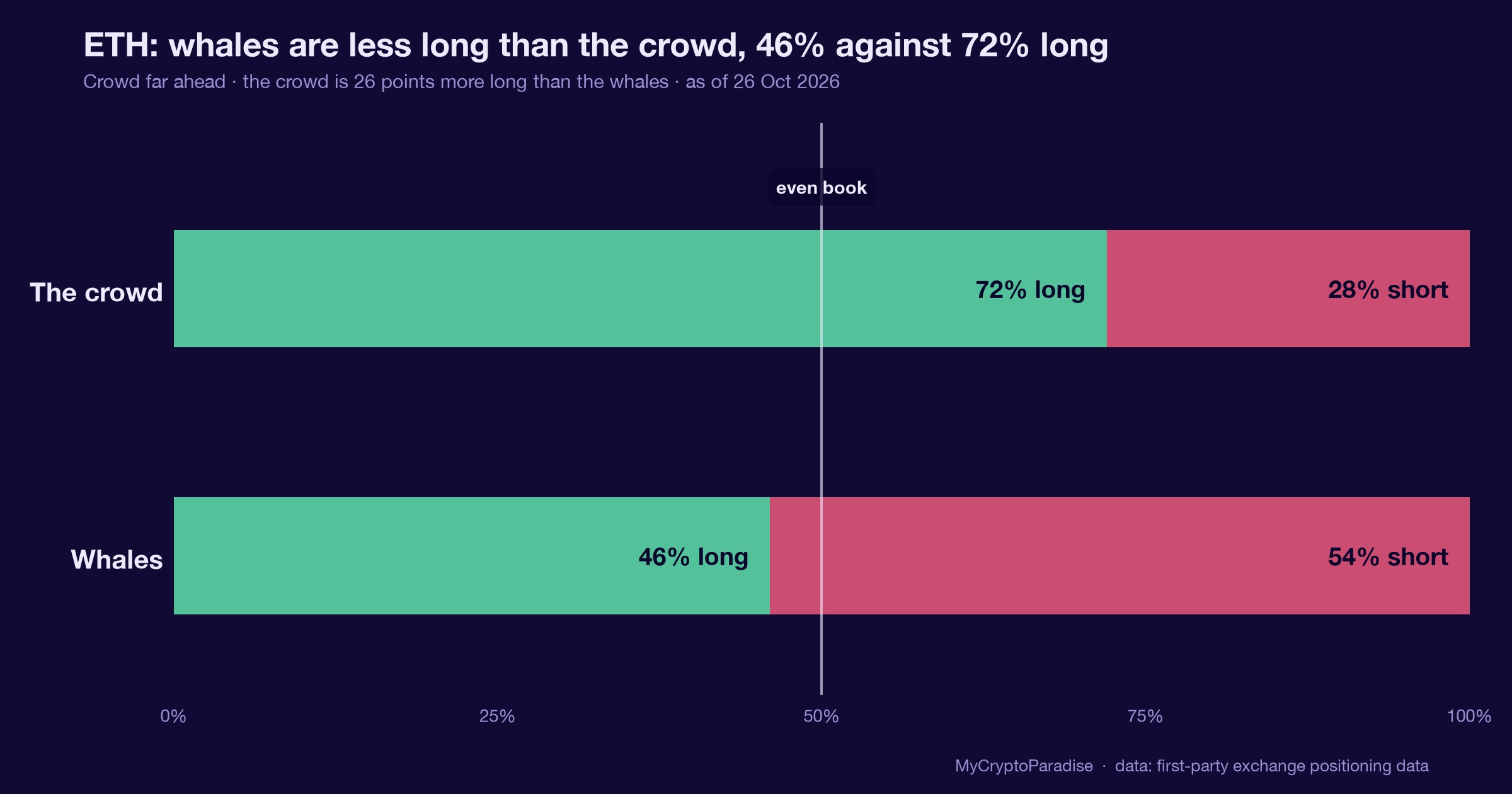
Retail traders, conversely, appear to be creating leveraged long positions. This positioning provides the liquidity that smart money will eventually use for a long squeeze, once lower prices are reached.
The muted reaction to this news indicates that the broader market structure and the anticipated capitulation phase are currently overriding individual catalysts. Whales are patiently awaiting significantly lower prices for their accumulation.
Liquidity Dynamics Amidst Geopolitical Jitters
The immediate impact on crypto liquidity from these escalated Iranian strikes appears minimal. Bitcoin's flat price action near $77,164 suggests that this event has not triggered a significant re-evaluation of market structure or positioning.
Smart money has not been prompted to deploy capital into crypto as a direct response to this conflict. Their USDT reserves remain largely unallocated, reinforcing the expectation of a deeper market correction.
Ethereum (ETH) showed a +2.9% change over 24 hours, but this movement is likely driven by its own specific catalysts, not a direct reaction to the Middle East conflict. The broader market sentiment remains tied to Bitcoin's dominant structure.
Altcoins, which typically follow Bitcoin's lead, have also shown a generally muted response. Without a strong directional move from BTC, most alts lack the impetus for significant price action linked to this news.
Therefore, the geopolitical escalation, while severe, has not altered the prevailing liquidity dynamics. The market continues to operate within the established framework of smart money patience and retail long positioning.
Key Levels to Confirm Market Intent
To confirm the current market read, traders should closely monitor Bitcoin's price action relative to key support and resistance levels. A sustained break below the previous low of $58,000 would be a significant confirmation.
The ParadiseTeam anticipates a move towards the $55,000 – $44,000 range. This zone is identified as a critical 'exchange of hands' area where smart money is expected to begin absorbing selling pressure.
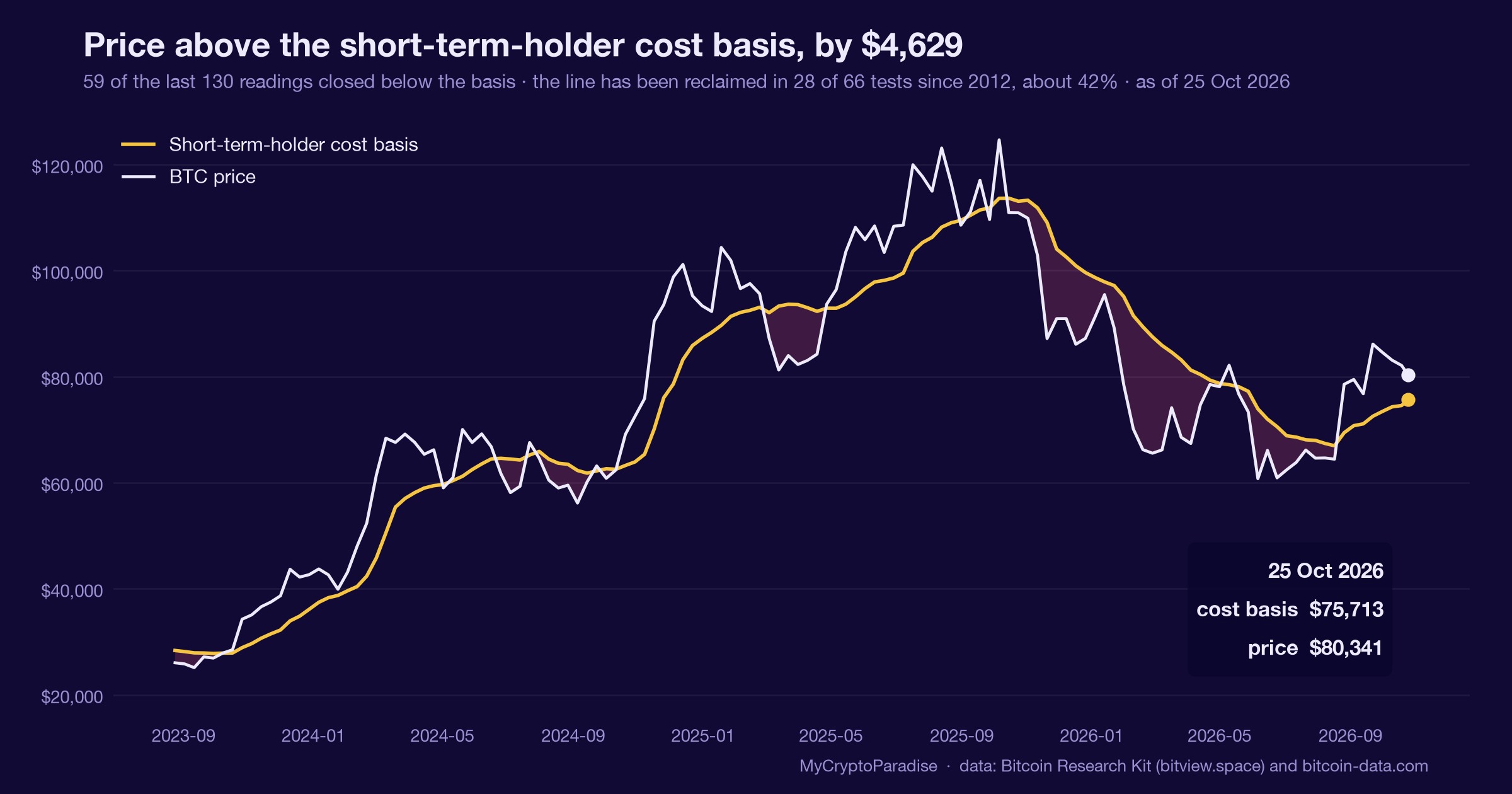
Conversely, an invalidation of the bearish bias would require a reclaim of the $82,000 – $88,000 resistance level. Until this range is decisively breached and held, the bearish outlook persists.
We are also watching for a clear shift in smart money behavior. Evidence of whales beginning to accumulate Bitcoin, signaled by significant movements of USDT reserves into crypto, would be a strong indicator.
Additionally, the daily timeframe continues to show a bearish divergence, with higher highs on price action but lower highs on volume. Resolution of this divergence, particularly to the downside, would align with our expectations.
Reading Muted Reactions Through Smart Money
The ParadiseTeam reads this muted market reaction to significant geopolitical escalation as further reinforcement of our strongly bearish higher timeframe bias. Smart money is not being swayed to accumulate at these levels.
Our analysis suggests whales are patiently waiting for a deeper correction. The target zone remains the $55,000 – $44,000 range, where we expect to see substantial accumulation, similar to past market bottoms.
Bitcoin's current price near $77,164 sits below the recently broken medium-term support at $77,700. This reinforces the underlying weakness rather than signaling a new floor.
Retail traders, likely maintaining leveraged long positions around these prices, are providing the necessary liquidity. This setup is conducive to a potential long squeeze if price drops significantly.
The ParadiseTeam emphasizes that a decisive reclaim of the $82,000 – $88,000 resistance level is necessary to invalidate our bearish outlook. Until then, the path of least resistance remains lower, towards our target accumulation zone.
The read behind this: we framed this story through our own market analysis, Can Bitcoin Hold This Support?
Track it live: our live crypto funding rates and the Crypto Fear and Greed Index both update in real time, so you can watch this shift for yourself.
Related coverage
For exact entries, targets, and stop losses with full risk management, that is what ParadiseFamilyVIP is for. New to reading these moves? Start with our crypto trading strategies guide.
ParadiseTeam is monitoring the market situation closely, and we are taking these developments into consideration while building our trading tactics inside ParadiseFamilyVIP.
Crypto trading involves substantial risk. Prices are volatile and you can lose money. This article is educational and is not financial advice. Past performance does not guarantee future results.
Will Bitcoin drop to the $55k-$44k range despite geopolitical tensions?
How 10 Paradisers are calling it
The first call is still open
Free account, no password. Members just sign in.







Join the discussion 2
It's kinda wild how BTC just shrugs this off 🤷♀️, I was watching the charts all night expecting a big drop 📉. Guess smart money has bigger fish to fry! 🤔🔥
wow, I was really watching the news for a crash too... thought this might be it, guess I need to trust the charts more and my gut less! 😅📈