

Listen: the breakdown
Developing story update (November 03, 2026, 06:16 UTC):
Iran has put a concrete timeline on its earlier conditional offer: its foreign minister now says the Strait of Hormuz could reopen within two days if the US accepts its conditions, down from an original seven-day proposal. The shortening followed mediation by Qatar and Pakistan, and an exchange of messages between Iran and the US through those mediators is said to be ongoing.
For traders this remains conditional, not a confirmed resolution, and there is still no sign the US has agreed. Crypto continued to drift lower through the update rather than rallying on the de-escalatory tone, so the market is not yet pricing this as a catalyst. Watch for any US-side confirmation or an actual reopening, which would be the first thing capable of turning this from background noise into a risk-on trigger.
What to watch now: Any US response or an actual Hormuz reopening inside the stated two-day window.
Developing story: This story is still unfolding. We are tracking it and will update this article as more details are confirmed.
Market briefing: Iran says it will reopen the Strait of Hormuz and resume talks if the US accepts its conditions. BTC sat near $76,640, down 2.2 percent on the day, with no fresh reaction to the headline.
- Iran links reopening the Strait of Hormuz to the US accepting unspecified conditions
- No US response is on record, so the offer stays conditional and unresolved for now
- BTC traded near $76,640 and ETH near $2,248, with no live move tied to the statement
Iran just dangled a reopened Strait of Hormuz and resumed talks, but only if the US accepts its conditions. So is this a real de-escalation, or a bargaining chip crypto has not bothered to price?
Iran put a card on the table. A senior Iranian official said the Strait of Hormuz will be reopened and negotiations resumed, on one condition: the United States must accept Iran's terms. That is the whole story so far. The terms were not detailed, the US has not responded, and nothing has actually changed on the water. What we have is a statement, not a settlement.
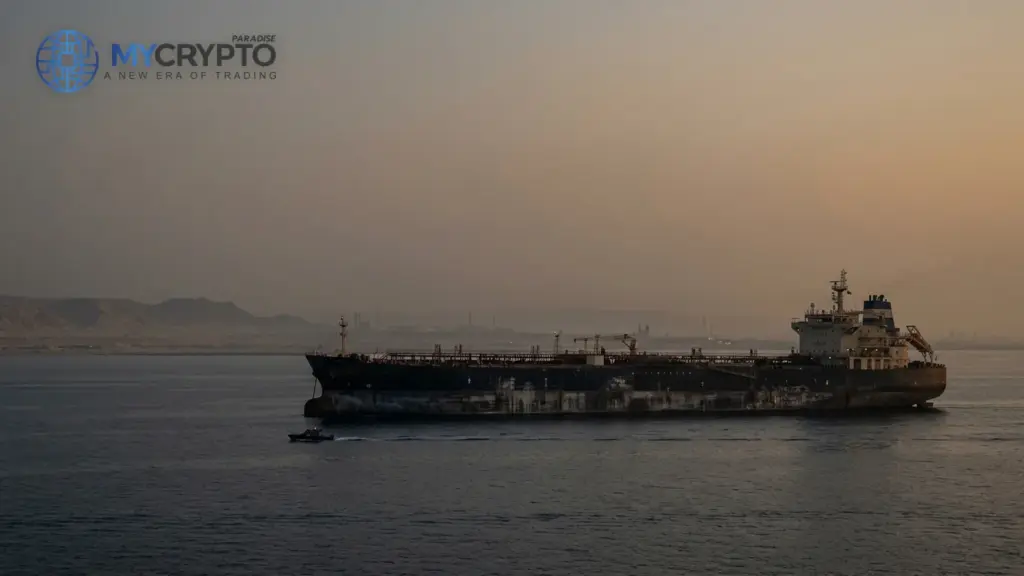
The Strait of Hormuz matters because a large share of the world's seaborne oil passes through it. Any credible signal that the chokepoint stays open trims the supply-shock premium that leaks into every risk asset, crypto included. So the direction of travel, if the condition is ever met, points toward less geopolitical fear and easier global liquidity. That is the bullish thread for BTC and ETH, and it is why we read this event as risk-positive on its own facts.
But notice what the tape is doing. BTC was trading near $76,640, down 2.2 percent over 24 hours, while its 1-hour change sat flat to slightly green. ETH looked the same, near $2,248.
In plain terms, the market yawned. Traders have seen conditional offers from both sides of this table before, and they tend to wait for the other side to sign something. That gap between a headline and a handshake is the real subject here. Iran is negotiating in public; crypto is politely ignoring the opening bid until someone answers it.
Why a shipping chokepoint reaches crypto
The transmission runs through oil, not through crypto directly. The Strait of Hormuz is one of the planet's busiest oil-shipping lanes, so the risk of it closing sits inside the global energy risk premium.
When that premium rises, markets brace for higher fuel costs, stickier inflation, and a central-bank response that keeps liquidity tight. Tight liquidity is the enemy of risk assets, and BTC is the most liquidity-sensitive macro asset we track.
A credible reopening works the other way. Lower the odds of a Hormuz disruption and you shave the oil fear premium, which loosens one brake on risk appetite. That chain, less supply fear, easier liquidity, more room for BTC and ETH, is why a tanker lane ends up on a crypto strategist's screen.
Here is the honest caveat. The chain only fires if the condition is met, and right now it is a conditional offer with no counterparty signature. An opening bid in a negotiation is not a resolved macro event.
Markets know the difference. They price confirmed facts quickly and rhetorical gestures slowly, if at all.
So we treat this as a genuine risk-positive input with the safety catch still on. The potential easing is real. The trigger has not been pulled. Until Washington responds, the macro effect stays theoretical, which is exactly why the tape has not moved on it.
A soft positive the tape has not cashed
Start with what did not happen: a reaction. BTC's 1-hour change was effectively flat while the 24-hour tape stayed down 2.2 percent near $76,640. The decline was already running before this headline landed.
That ordering matters. A move that predates the news is not a response to the news. Crypto was softening on its own, and the Hormuz statement arrived on top of an already-moving market rather than causing the move.
If, and only if, the US engages and the condition firms up, the first-order read is mildly bullish. Lower oil-shipping risk tends to support global risk sentiment, and BTC usually leads that re-rating before ETH and the alts follow.
In that sequence, BTC catches the first bid as the macro hedge, ETH tracks it with a lag, and higher-beta alts only wake up once BTC has confirmed a trend. None of that is live yet, because the catalyst itself is not live yet. So the practical impact today is close to zero, and we will not pretend otherwise. This is a potential tailwind, not a present one.
The cleaner trade of the day was elsewhere. With spot flows and whale positioning doing the heavy lifting, a conditional diplomatic line from state media is background noise until it becomes something you can point to on a signed page.
When this offer stops being just words
One thing converts this from rhetoric to catalyst: a US response. Watch for any on-record signal that Washington is engaging with Iran's conditions, because that is what turns a bargaining chip into a priced event.
Confirmation would look like concrete steps, a stated framework, or movement that reduces the Hormuz closure risk in practice rather than in a quote. If that lands, oil's risk premium eases first, and only then does the easier-liquidity read earn a genuine BTC bid.
Invalidation is just as clear. Silence from the US, a rejection of the terms, or any fresh escalation around the strait keeps the supply-shock premium exactly where it was. In that case the bullish thread never fires, and crypto keeps trading on flows and structure.
We would also watch oil and broad risk sentiment as the tell. If energy prices slip on real de-escalation, that is the signal reaching markets. If oil ignores the statement, so should you.
For crypto specifically, the near-term map is unchanged by words alone. BTC near $76,640 is still working through the same levels it faced this morning, and this headline does not move them.
So the checklist is short. A credible US answer confirms it. Silence or escalation invalidates it. Until one of those prints, this stays a story about diplomacy, not a story about price.
What this headline changes for positioning
A conditional offer from state media does not reprice BTC, and the ParadiseTeam is treating it exactly that way. Our standing lens is clear: headlines are catalysts, not causes, and structure plus whale positioning set the move before the news arrives.
Recall the backdrop. Prior selling was done up near $121,000, distribution ran through the $79,000 to $87,000 zone, and one tracked whale closed his long and flipped short before the recent drop even began. That repositioning happened independent of any Hormuz quote.
So where does this leave BTC near $76,640? Below the former support band around $79,000, which we now read as neutral-turning-resistance. A geopolitical de-escalation, if it ever confirms, would give bulls a reason to attack that reclaim. Without it, $79,000 is simply the line price has to earn back.
The read on crowd behaviour is the usual one. Retail tends to trade the headline and the fear; the smart money already moved, in this case into short exposure before the decline. A conditional peace offer is precisely the kind of thing that tempts a premature long.
Our discipline here is patience. A reclaim of $79,000 as support, and then a push toward the top of the first wave, would raise the odds of upside continuation. Lose the lows instead and this diplomatic line changes nothing. The trigger lives on the chart, not in the press.
The read behind this: we framed this story through our own market analysis, Binance Hack: Is Bitcoin's Small Drop Bullish?
Track it live: our Crypto Fear and Greed Index and the live crypto funding rates both update in real time, so you can watch this shift for yourself.
Related coverage
For exact entries, targets, and stop losses with full risk management, that is what ParadiseFamilyVIP is for. New to reading these moves? Start with our crypto trading strategies guide.
ParadiseTeam is monitoring the market situation closely, and we are taking these developments into consideration while building our trading tactics inside ParadiseFamilyVIP.
Crypto trading involves substantial risk. Prices are volatile and you can lose money. This article is educational and is not financial advice. Past performance does not guarantee future results.
Does Iran's Hormuz offer become a real catalyst for crypto?
How 3 Paradisers are calling it
The first call is still open
Free account, no password. Members just sign in.







Join the discussion
No comments yet. Members, share how you are reading this.