

Listen: the breakdown
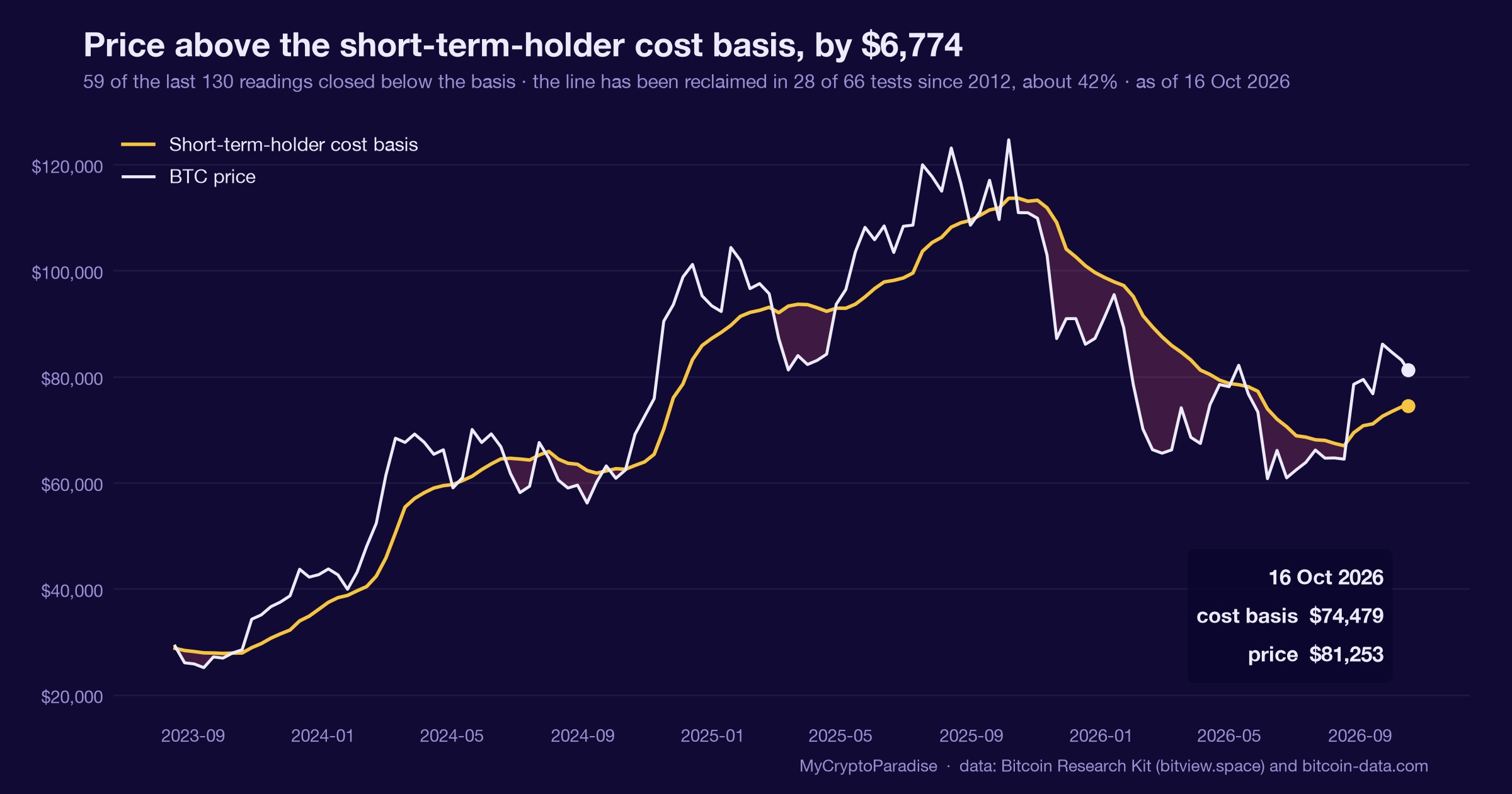
Market briefing: A container ship carrying over 2,500 containers sank south of the Strait of Hormuz after hitting a naval mine, and crypto barely flinched. BTC traded near $81,388, down about 0.6 percent on the day.
- The container ship GFS Pride sank south of the Strait of Hormuz after hitting a naval mine and catching fire.
- Iran's IRGC Navy reported the sinking and said the vessel was on an unauthorized and dangerous route.
- BTC held near $81,388 and ETH near $2,420, so the market has not yet priced this as a shock.
A container ship carrying 2,500 containers sank in the Strait of Hormuz after hitting a mine. BTC barely moved. So is crypto underpricing the risk?
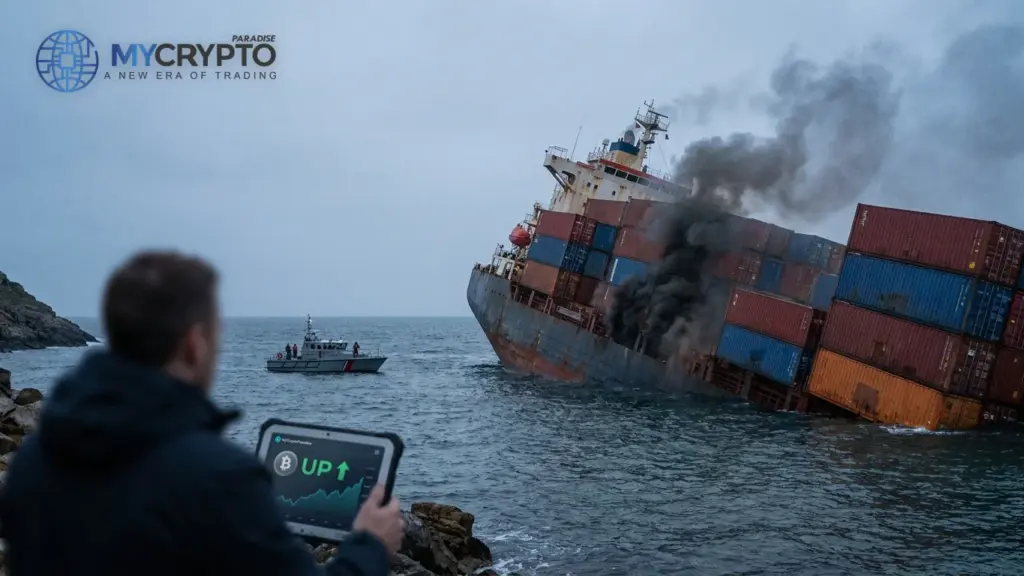
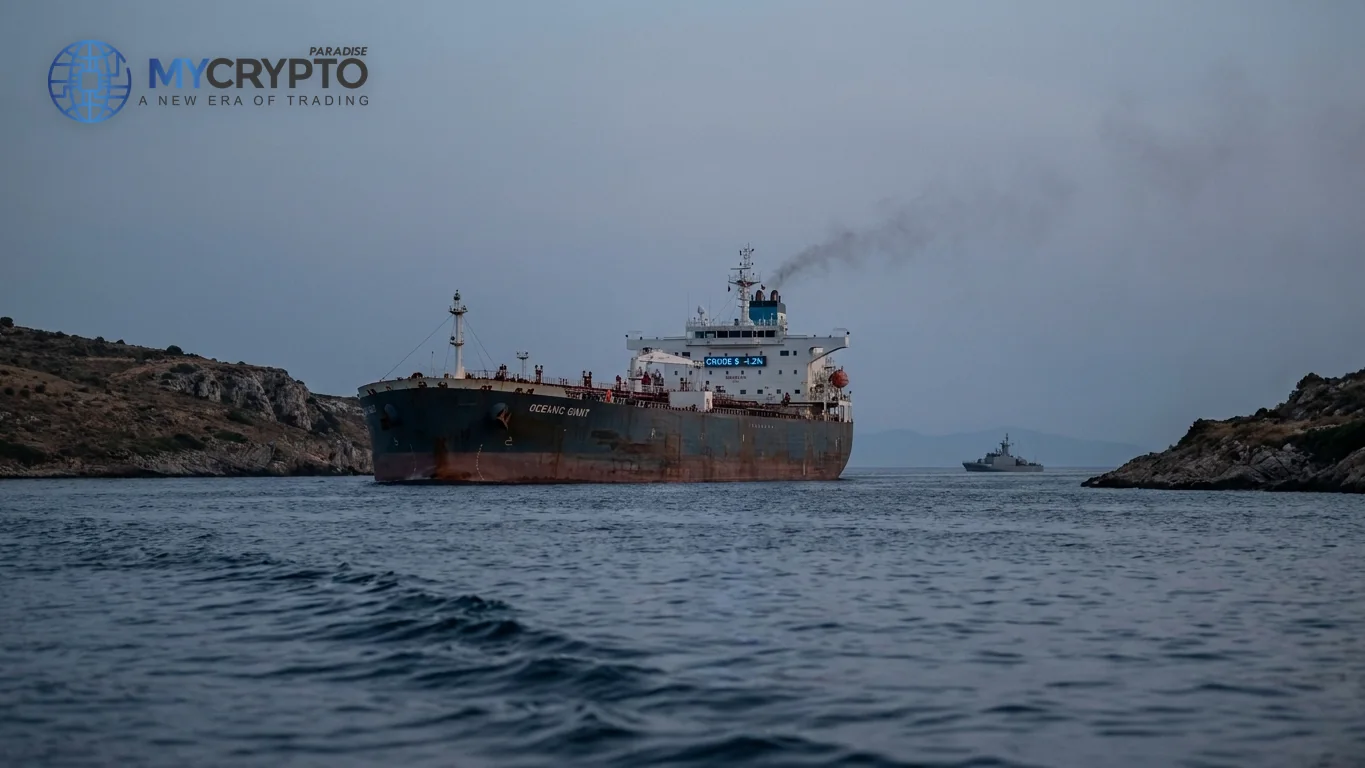
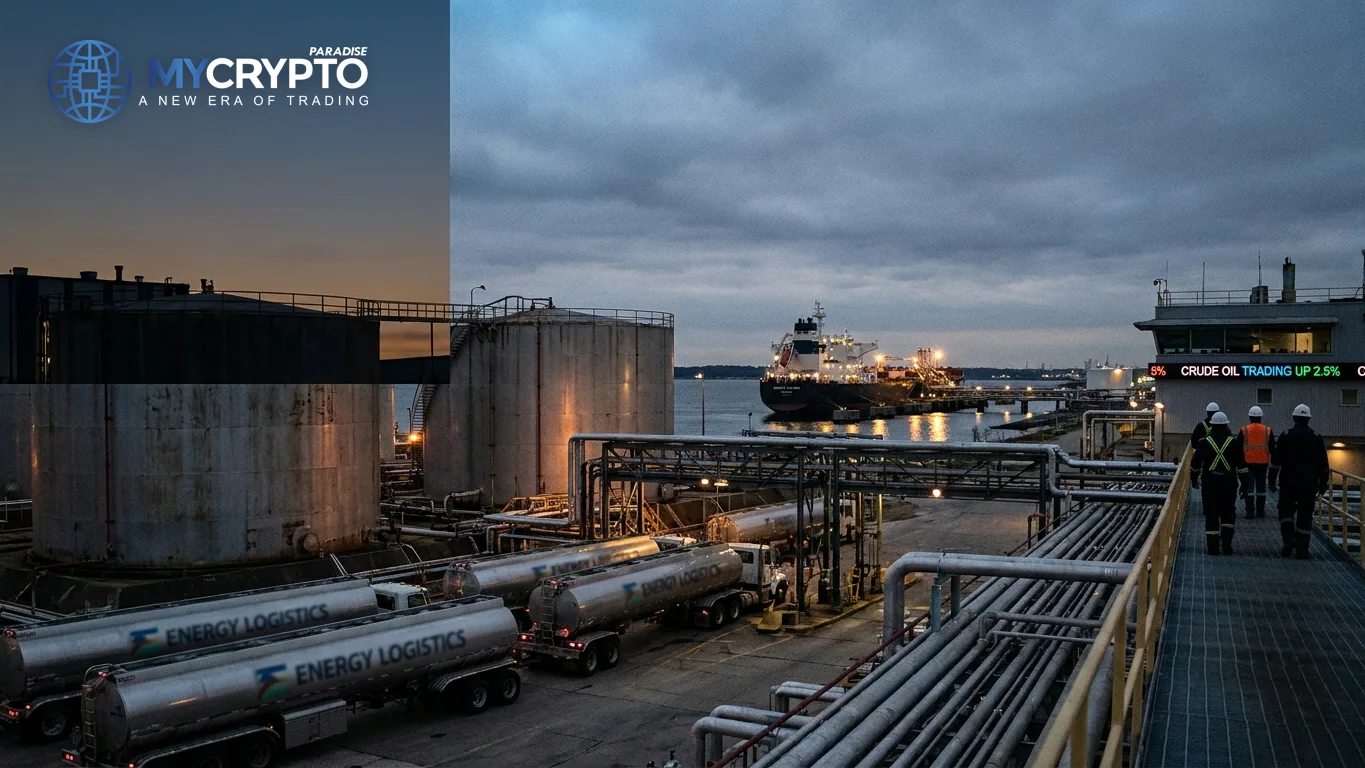
A container ship carrying more than 2,500 containers sank in waters south of the Strait of Hormuz. The vessel, identified as the GFS Pride, hit a naval mine, caught fire, and went down on Wednesday. Iran's Islamic Revolutionary Guard Corps Navy reported the incident and said the ship was on an unauthorized and dangerous route.
The human detail arrived fast. Local residents began recovering spilled merchandise from the water, including iPhones and French perfume. A sunken ship becomes a cargo sale, which tells you how quickly the extraordinary turns ordinary around this strait.
This matters because of where it happened. The Strait of Hormuz is one of the most important chokepoints in global trade, and maritime incidents there have been climbing toward record levels. A single mine strike is not just one ship. It is a signal that the risk premium on moving goods through this corridor is rising again.
Yet crypto did almost nothing. BTC traded near $81,388, down roughly 0.6 percent over 24 hours, with ETH near $2,420. The one-hour move was essentially flat. A geopolitical escalation in a critical waterway usually earns at least a flinch, and this one did not.
That gap between the headline and the tape is the real story. The market is either confident the disruption stays contained, or it is distracted by other drivers entirely. We lean toward the second. Nothing in the price action points to this sinking as a clean, single catalyst, and we will not pretend otherwise.
A fragile chokepoint meets calm crypto tape
Follow the transmission chain, because it explains the muted reaction. A mine strike in Hormuz raises shipping insurance costs, reroutes vessels, and lifts the risk premium on energy and goods that pass through the corridor. That is a slow macro effect, not an instant one.
Higher freight and energy costs feed inflation expectations. Sticky inflation keeps central banks cautious, which tightens the liquidity backdrop that risk assets depend on. Crypto sits at the far end of that chain, so the impulse reaches BTC and ETH last and weakest.
This is why a dramatic headline can land with almost no price response. The event is real, but its effect on crypto liquidity is indirect and delayed. Markets price the probability of sustained disruption, not the drama of a single sinking.
So the honest frame is this. Today the strait is a background risk, not a front-page crypto driver. The transmission from a sunken container ship to a BTC candle runs through insurance desks, energy futures, and rate expectations before it ever touches a crypto order book.
That changes if the pattern deepens. Rising incidents in a chokepoint that carries a large share of seaborne energy can eventually force a broad risk-off move. At that point crypto stops being insulated and starts trading as the high-beta end of a nervous market.
Where a risk-off impulse would hit first
Map the cascade before it arrives, because that is how you avoid reacting late. If Hormuz tension escalates into a genuine risk-off event, the liquidity drain shows up in a predictable order. The largest, most liquid asset moves first.
BTC would feel it first. As the deepest crypto market, it absorbs the initial de-risking flow, and its reaction sets the tone. Today BTC near $81,388 shows no such stress, which tells us the broad risk-off trigger has not fired.
ETH follows BTC with a higher beta. ETH near $2,420, down about 1.5 percent, is already soft, so it would amplify any downside impulse rather than cushion it. Alts sit at the end of the line, where thin liquidity turns a modest BTC drop into a sharper one.
For now the chain is quiet, and that quiet is itself information. It suggests that other factors, from ETF flows to positioning, are dominating crypto price discovery this week. A mine strike in a distant strait simply is not where the marginal dollar is looking.
The risk is a regime change, not a single candle. Were shipping attacks to intensify and energy prices to jump, the correlation between crypto and global risk would tighten fast. In that world the current calm reverses, and the assets that ignored the news become the ones that fall hardest.
The shipping signals that would move markets
Watch the inputs that sit upstream of crypto, not the crypto chart alone. The first tell is incident frequency in the strait. One sinking is an event. A cluster of strikes over days is a trend, and trends are what markets eventually price.
The second tell is energy. If oil and gas futures jump on a sustained disruption, that is the bridge between a maritime headline and a global risk-off move. A calm energy market confirms containment. A spiking one is your early warning.
The third is correlation. Watch whether crypto starts tracking equities and commodities more tightly. A sudden rise in that correlation would signal the market has begun pricing Hormuz as a macro risk rather than a regional one.
Invalidation of the escalation thesis is simple. If shipping normalizes, insurance premiums settle, and no further strikes follow, this becomes a one-off that fades from the tape within days. In that case crypto keeps trading on its own internal drivers.
Confirmation looks different. Repeated incidents, rerouted traffic, and a firm bid under energy would turn background risk into an active one. Then the muted crypto reaction we see today becomes the setup for a sharper adjustment, because the market would be catching up to a story it initially shrugged off. So the practical stance is patience with attention. Treat this as a volatility driver on a slow fuse, and let the shipping and energy data, not the shock value of the headline, tell you when it finally reaches crypto.
What the calm reaction says about positioning
The ParadiseTeam treats this sinking as background risk, not a trigger, and the flat tape backs that call. With BTC near $81,388, the absence of a reaction tells us crypto is still trading its own internal story this week, not a distant maritime shock.
Our standing map stays in control. We see $78,000 as near-term support and $90,000 as the resistance that frames the current range. The weekly outlook remains cautious, with crowded retail longs and bearish volume divergences pointing to short-term weakness before any larger push.
Here is how a real Hormuz escalation would interact with that map. A genuine risk-off impulse arriving while BTC hovers just above $78,000 would pressure that support directly. A clean loss of $78,000 would open the door toward the macro zone we have flagged far lower.
Who is exposed matters. Retail longs are crowded and funding leans positive, so a sudden macro scare is exactly the fuel for a long squeeze. Over $900 million in longs was recently liquidated and much of it reopened, which leaves the same crowded trade waiting to be flushed again.
For now the ParadiseTeam waits for evidence, not headlines. Confirmation of weakness would be $78,000 breaking on rising bearish volume. Confirmation that this news stays irrelevant is BTC holding its range while shipping and energy data stay calm. We respect the risk first and let the levels, not the drama, decide.
The read behind this: we framed this story through our own market analysis, Can Bitcoin Hold Its Final Support?
Track it live: our live crypto funding rates and the Crypto Fear and Greed Index both update in real time, so you can watch this shift for yourself.
Related coverage
For exact entries, targets, and stop losses with full risk management, that is what ParadiseFamilyVIP is for. New to reading these moves? Start with our crypto trading strategies guide.
ParadiseTeam is monitoring the market situation closely, and we are taking these developments into consideration while building our trading tactics inside ParadiseFamilyVIP.
Crypto trading involves substantial risk. Prices are volatile and you can lose money. This article is educational and is not financial advice. Past performance does not guarantee future results.
Does Strait of Hormuz tension become a real crypto driver in the coming weeks?
This is how 3 Paradisers are calling it. Tap your call.
No calls on this one yet. Tap yours to be the first.
Free account, no password. Members just sign in.



Join the discussion 1
my 2017 altcoin disaster taught me a lot about not having an exit plan its like a lab protocol without an endpoint just chaos