


Listen: the breakdown
Developing story update (September 29, 2026, 13:40 UTC):
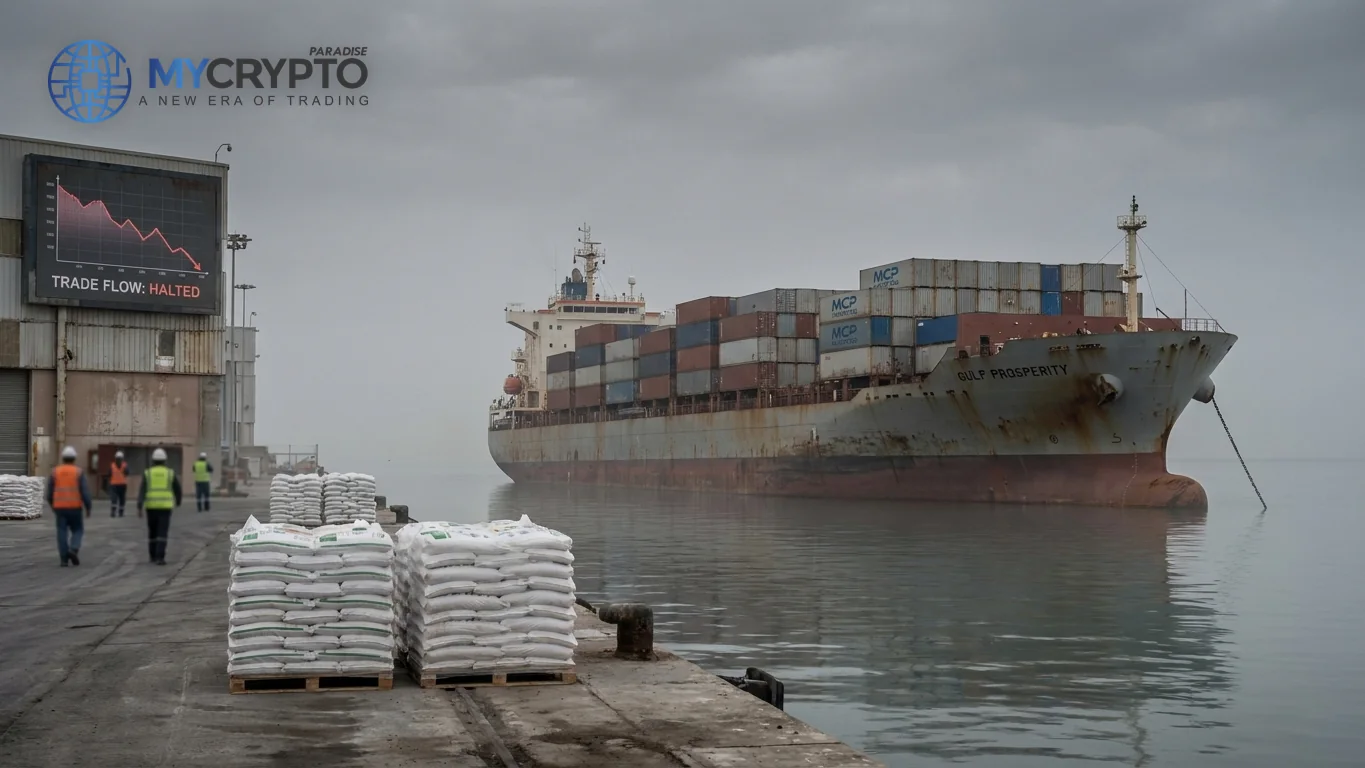
Update: the picture behind this story has firmed up with dates and a hard deadline. Based on our sources, Iran has been unable to move oil through the Strait of Hormuz since a US blockade in July, and shipping there has been largely blocked since late February. In late August the US military said it had cleared all the mines Iran laid in the international lanes, which removes much of Tehran’s remaining leverage over the waterway.
The trader-relevant addition is a timeline: Iran’s stockpiled oil reserves could run out by around mid-October. If that plays out, the odds of a military response rather than a negotiated one likely rise into that window, which tends to add a geopolitical risk premium and favor caution across risk assets, including crypto, rather than aggressive positioning.
What to watch now: Whether Iran escalates militarily as its stored oil approaches depletion around mid-October.
Developing story: This story is still unfolding. We are tracking it and will update this article as more details are confirmed.
Market briefing: Iran's leverage over the Strait of Hormuz is fading, and the risk of military escalation is rising even as Middle East oil exports rebound to their highest since the war on Iran began. Bitcoin was near 83,849 dollars, so watch traditional markets for risk-off spillover rather than a direct crypto catalyst.
- Iran's Strait of Hormuz oil leverage is breaking down, raising the risk it turns to military escalation.
- Middle East crude exports rebounded to 16.328 million bpd in September, the highest since the war on Iran began.
- No direct crypto catalyst; the risk to crypto is indirect, through risk-off sentiment and tighter liquidity.
Iran's grip on the Strait of Hormuz is slipping, and the fallback may be force, not diplomacy. Oil supply looks fine, but does the rising escalation risk reach crypto?
Iran's grip on the Strait of Hormuz is loosening. For years, Tehran leaned on the threat of choking off oil through that narrow channel as a bargaining chip in talks with the United States. That leverage is now breaking down, and the negotiating table looks different because of it.
Here is the awkward part. When a country loses its economic weapon, it does not always retreat quietly. The risk now rising is that Iran turns to military escalation to rebuild the position it can no longer win with a tap on the oil valve.
The supply picture, at least on paper, is more reassuring. Crude oil exports from key Middle East producers rebounded in September to 16.328 million barrels per day. That is the highest level since the US-Israeli war on Iran began, which tells you the physical oil is still moving.
So we have two forces pulling against each other. Supply looks healthier, which normally cools the fear premium in energy prices. But the political stability underneath that supply looks thinner, which is exactly the kind of tail risk markets struggle to price.
For crypto traders, none of this arrives as a direct catalyst. Bitcoin does not care which pipeline stays open. What it does care about is the mood in traditional markets, and geopolitical stress tends to tighten that mood. Risk assets sit downstream of that sentiment, and Bitcoin still trades as one of the most sensitive risk assets on the board.
How a fading oil weapon reaches crypto
The transmission runs through fear, not barrels. A fading Iranian threat over the Strait of Hormuz should, in isolation, lower the oil risk premium. Rising odds of military escalation push the other way, and markets tend to weight the scarier scenario more heavily.
When traditional markets smell geopolitical risk, capital moves toward what feels safe. That usually means the dollar, short-dated government paper, and sometimes gold. It rarely means Bitcoin in the first hours of a scare.
Higher oil prices, if escalation actually disrupts flows, feed straight into inflation expectations. That matters for crypto because it complicates the path for rate cuts. Tighter-for-longer liquidity is the enemy of every risk asset, and Bitcoin sits near the top of that list.
The September export rebound to 16.328 million barrels per day is the counterweight. Physical supply is strong, which caps how far a fear premium can run while the oil keeps flowing. That is the honest tension in this story: the plumbing works, but the politics around it are getting louder.
For now this is a slow-burn macro input, not a switch that flips crypto in a day. It shapes the backdrop against which every other catalyst lands. A market already nervous about liquidity does not need another reason to sell risk, and this hands it one.
Liquidity, not oil, is the real channel
Bitcoin leads the reaction because it is the most liquid crypto proxy for global risk appetite. It was trading near 83,849 dollars as of 06:32 UTC, up on the day, so this news lands into modest strength rather than panic. That matters, because strength gives sellers something to sell into.
If traditional markets tilt risk-off on escalation headlines, the first move usually shows up as thinner bids on BTC. Liquidity does not vanish, it steps back and waits for lower prices. Retail reads the green candle and buys comfort while the larger accounts quietly reduce exposure.
Ethereum tends to amplify whatever Bitcoin does, with a lag and more volatility. A risk-off Bitcoin drags ETH harder, because ETH carries a higher sensitivity to sentiment shifts.
Alts sit at the far end of the whip. When liquidity contracts, the smallest and most speculative names lose their bids first, and spreads widen fast. This is where forced selling and cascading stop runs do the most damage.
None of this is a confirmed crypto catalyst, and we will not pretend it is. There is no direct line from a tanker in the Strait of Hormuz to an ETH wallet. The link is sentiment and liquidity, and both can turn quickly if the escalation risk we are describing actually materializes.
The line between rebound and open conflict
Oil is the first tell. A calm, steady price near current export strength says the market is treating this as noise. A sharp spike on disruption headlines says the fear premium is back, and crypto usually feels that within hours.
Watch the dollar and short-term yields next. A firming dollar alongside falling equities is the classic risk-off signature. If crypto sells while that combination holds, this story is doing real work on liquidity.
Confirmation of the bearish read would be Bitcoin losing its footing on escalation news while traditional markets turn defensive together. That alignment tells you capital is genuinely rotating out of risk, not just chopping around.
Invalidation is just as important. If oil supply stays strong, talks stabilize, and BTC holds its ground while equities shrug, then this fades into background macro noise. Not every geopolitical scare becomes a market event, and the September rebound argues for the calmer path.
The trap here is overreacting to a headline that never converts into disrupted flows. Markets have priced dozens of Hormuz scares over the years, and most resolved quietly. The discipline is to react to confirmed disruption and real price action, not to the mere possibility of it. Let the tape confirm the fear before you act on the fear.
What escalation risk means at 82K support
The ParadiseTeam frames this as a background risk input, not a trigger. Bitcoin was near 83,849 dollars as of 06:32 UTC, still working to turn the 82,000 dollar level from old resistance into fresh support. Geopolitical stress makes that reclaim harder, because risk-off tape steals the momentum a support flip needs.
Our standing macro read stays cautious. We see a possible push toward the 88,000 to 90,000 dollar zone, but that region carries roughly a 60 percent chance of rejection in our work. Escalation risk simply gives sellers one more reason to fade strength into that band.
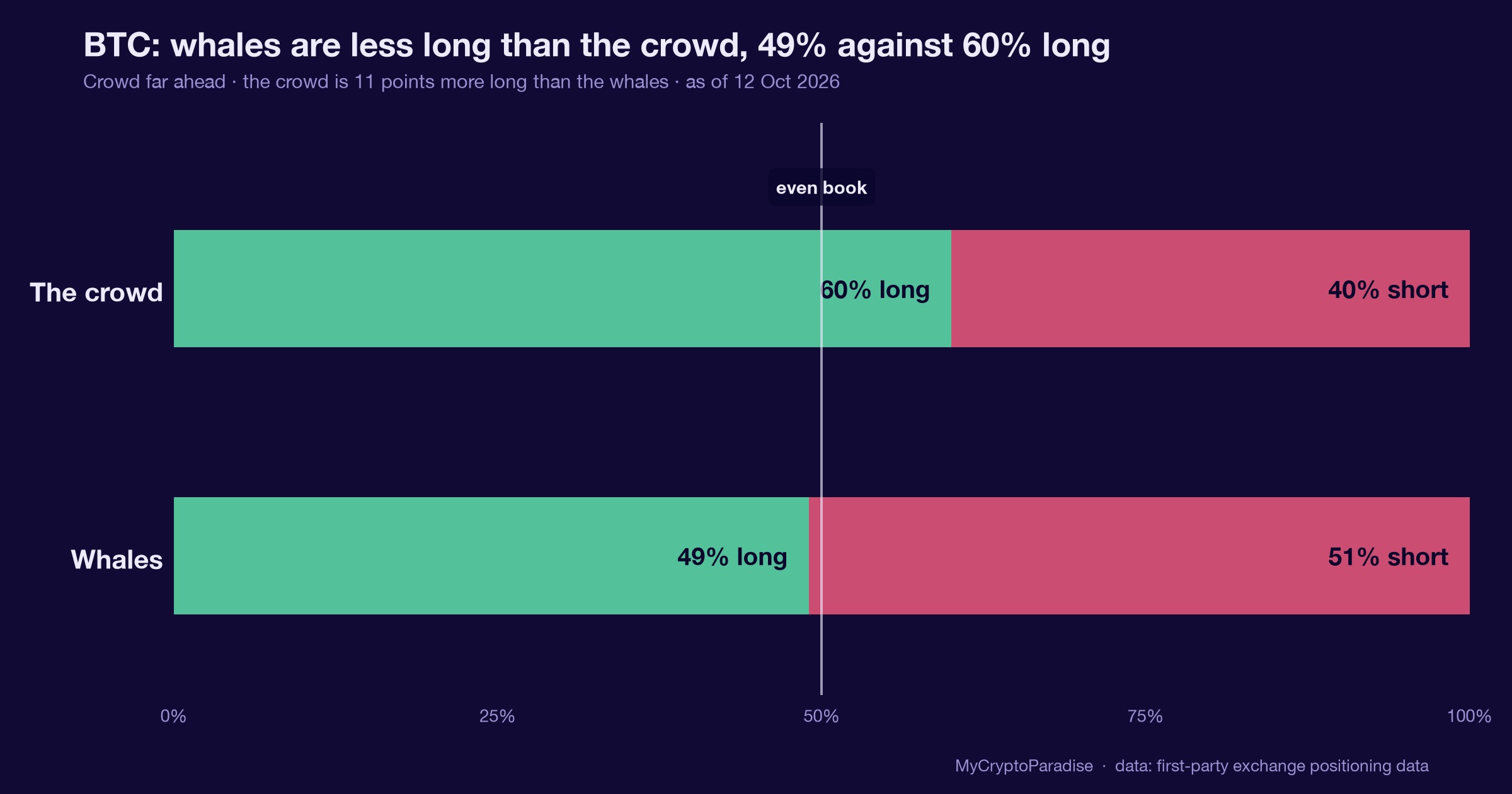
Smart money is not chasing higher prices here. On-chain and positioning data suggest the larger accounts find a sustained rally above 99,000 dollars hard to justify. Retail, by contrast, tends to wake up on dumps, not pumps, which is why we think a deeper flush attracts the more aggressive buying.
So the message is patience. If BTC defends 82,000 dollars through the noise, the constructive case survives and a move toward 90,000 dollars stays on the table. If it loses that level while global risk sours, the path toward our 55,000 to 44,000 dollar accumulation zone opens faster. This is news to weigh, not a reason to force a position. Let 82,000 dollars do the talking.
The read behind this: we framed this story through our own market analysis, Can Bitcoin Push to $99K?
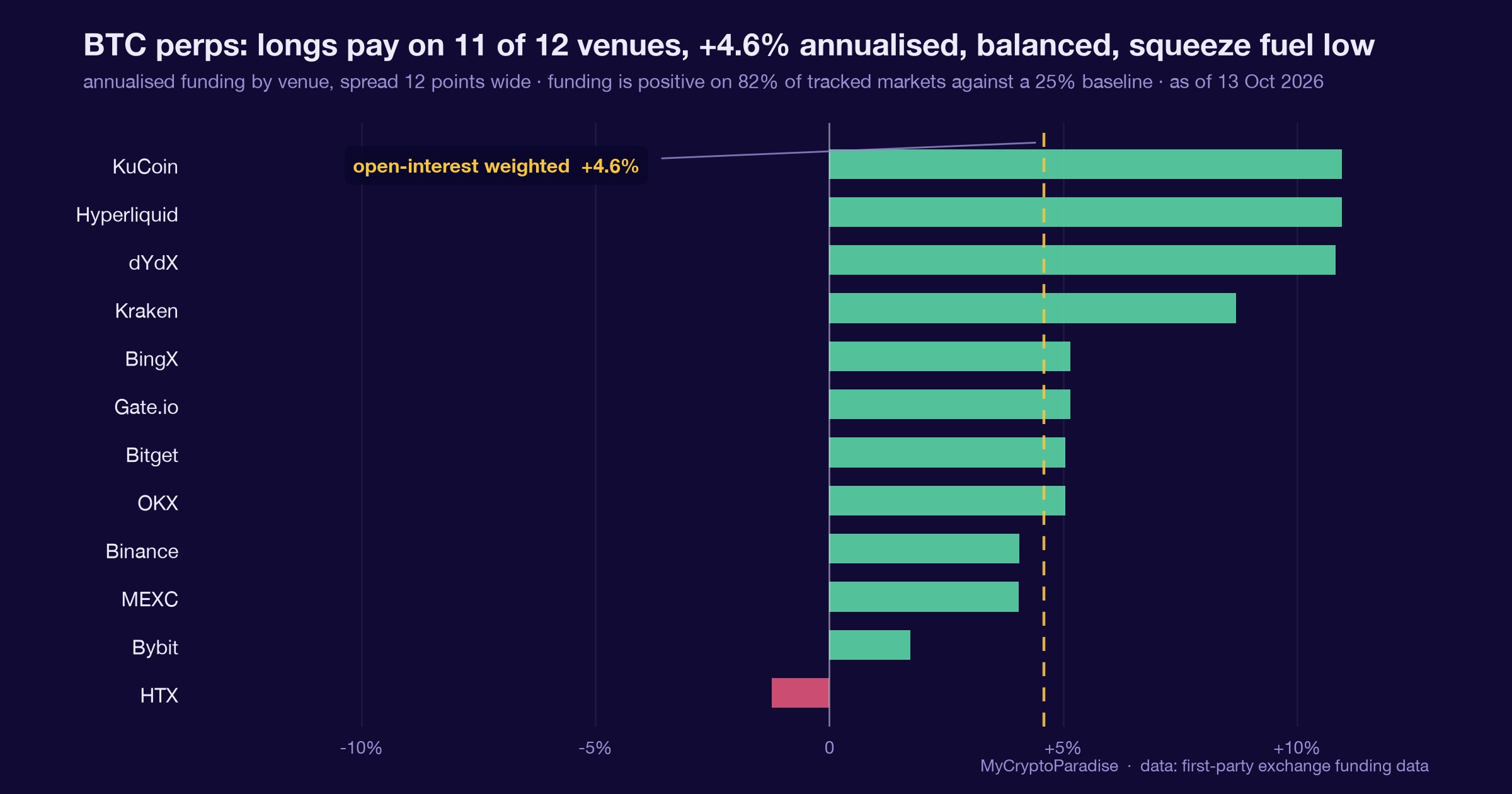
Track it live: our Crypto Fear and Greed Index and the live crypto funding rates both update in real time, so you can watch this shift for yourself.
Related coverage
For exact entries, targets, and stop losses with full risk management, that is what ParadiseFamilyVIP is for. New to reading these moves? Start with our crypto trading strategies guide.
ParadiseTeam is monitoring the market situation closely, and we are taking these developments into consideration while building our trading tactics inside ParadiseFamilyVIP.
Crypto trading involves substantial risk. Prices are volatile and you can lose money. This article is educational and is not financial advice. Past performance does not guarantee future results.
Does Middle East escalation risk drag BTC back below 82K this week?
This is how 36 Paradisers are calling it. Tap your call.
No calls on this one yet. Tap yours to be the first.
Free account, no password. Members just sign in.





Join the discussion 15
Fades as escalation risk climbs" sounds contradictory. If the risk is climbing, shouldn't leverage actually increase? What's the falsifiable condition for this "fading"?
mateusz its more like the perp-spot basis tends to compress when macro risk ramps up traders closing carry trades hedging less
leverage is always relative to what you're trying to purchase.. no country has leverage if its currency is getting devalued like crazy.
All the geopolitical noise is why I just wait for the weekly close before deciding anything. Four-hour charts are not a signal! 🙅♀️
This is actually good because new narratives like this always have some scam farm trying to capture the liquidity 💸 and I fell for that already 😂. Lesson learned! 📉
Yes, new narratives mean new counterparty risks. Due diligence on projects remains critical.
leverage fades" - yeah, it always fades alright, right into your account when you're on the wrong side of it 🤦♂️ spent too much real cash learning that lesson teh hard way. 💸😡
linking geopolitics to crypto liquidity feels like a stretch, always chasing a new narrative to justify perpetuals and their reckless speculation.
priya, i think geo politics does affect liquidity... what happens in the world affects everything, even stablecoins moving between countries.
Samuel, I agree global events have broad effects. But stablecoins moving between countries is not the same as the underlying thesis of decentralization being affected by a regional dispute over oil. My question remains, what changes the core value proposition?
So if the Strait's less of a choke point now... does that mean we'll see less volatility overall from geopolitical stuff? 🤔 Just wondering if the *impact* shrinks too... 🤷♂️
what a memory, Cyprus was the first time I really understood how liquidity freezes could just materialize out of nowhere. seems people forget that lesson quickly.
leverage always seems to fade for the people who need it most... that's what worries me, not some geopolitics... 😔
risk climbing or falling it dont matter with borrowed money always gets taken from you that way.
So if the oil leverage is fading, and that should mean less volatility... where are we seeing that play out on chain, exactly?