

Listen: the breakdown
Developing story: This story is still unfolding. We are tracking it and will update this article as more details are confirmed.
Market briefing: Asia's stablecoin race is splitting apart. Hong Kong, Singapore, and Japan are wiring regulated rails while Korea still debates its rulebook. BTC sat near $83,849 early Tuesday, and the regional liquidity build is quietly bullish.
- Hong Kong, Singapore, and Japan are advancing stablecoin rules while Korea still finalizes its national framework.
- A JPYC surge on Upbit showed real demand; widening deposits to Kaia and Polygon normalized the price into the 8-won range.
- Regulated stablecoin rails deepen regional on-ramp liquidity, a slow-burn tailwind for BTC, ETH, and alts.
Asia's stablecoin race is pulling apart at the seams. Hong Kong, Singapore, and Japan are building regulated rails while Korea still decides. So where does the real liquidity edge sit?
Asia's biggest economies are building stablecoin plumbing at speed. Korea, one of the region's most active crypto markets, is still writing the rulebook. That gap is the story.
Hong Kong opened its stablecoin regime in July 2025. It has since licensed just two banks from 36 applicants, a reminder that a framework and a green light are not the same thing.
Singapore is going further. Its monetary authority opened fresh consultations in September 2026, and the proposed framework carries the region's first opening to foreign coins. Singapore is writing the rules into actual law, not guidance.
Japan already has all three yen-issuer lanes live or scheduled. Its three largest banks plan to jointly issue a stablecoin by March 2027. The old guard is not fighting the technology; it is quietly claiming it.
Korea, meanwhile, passed its tokenized-securities law in January and reopened it. Corporate appetite is loud, from Kakao to KB Kookmin, which raised $100 million through a blockchain-powered digital bond in Hong Kong in June. National clarity on stablecoins is far quieter.
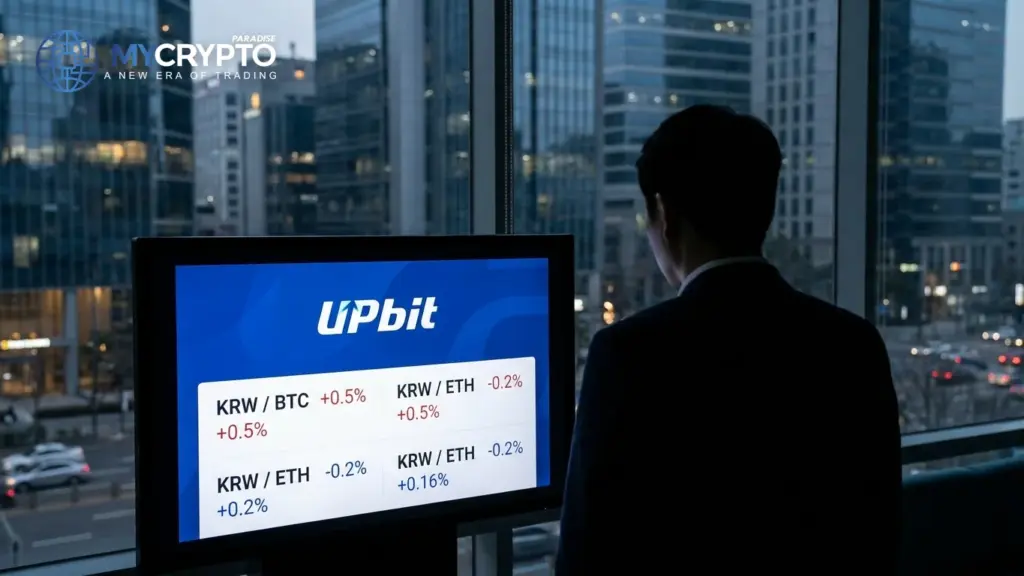
The demand is already visible on screens. A JPYC surge on Upbit came from too few tokens meeting buying pressure in a thin market. When Upbit widened deposits to Kaia and Polygon beyond Ethereum, supply rose and the price drifted into the 8-won range the next day. Rules or no rules, the market is voting.
Regulated rails reshape Asia's crypto on ramps
Stablecoins are the on and off ramp for an entire region. When a government regulates them, it turns a grey-market tool into bank-grade infrastructure. That single change decides how easily money enters crypto.
Regulated issuers let local currency move into digital assets without a compliance cloud hanging over it. Banks join, custody gets serious, and the pipe between traditional finance and crypto widens. Asia is building that pipe in real time.
Here is the transmission chain. Clear rules lower the risk of holding and using stablecoins. Lower risk pulls in institutions and everyday savers. More participants deepen liquidity. Deeper liquidity eventually reaches BTC, ETH, and the wider market.
Korea matters because it is not a small player. It is one of the most active retail crypto markets on earth, yet its national stablecoin rulebook lags its neighbors. That is a bottleneck, not a verdict. The demand sits there, waiting for a lane.
The JPYC episode proves the point. Price dislocated purely because supply could not meet demand in a thin market. Fix the plumbing, widen the networks, and the price normalizes. That is infrastructure, not speculation.
So the real signal is structural. Asia is wiring regulated stablecoin rails into its financial system. Every new lane is a larger door for capital to walk through, and doors like that tend to stay open.
Regional stablecoin flows loop back to BTC
Regulated stablecoin rails are slow-burn bullish for crypto, and the effect starts with liquidity. More approved issuers mean more compliant dollars, yen, and local currency ready to enter the market. That capital does not arrive overnight, but it arrives.
BTC is the first beneficiary. New regional money almost always buys the most liquid, most trusted asset first. A wider stablecoin base in Asia means a wider bid under Bitcoin over time, even if today's tape barely reacts.
ETH follows next. Much of Asia's tokenization push, from digital bonds to tokenized securities, settles on smart-contract rails where ETH sits at the center. Korea's tokenized-securities law and Hong Kong's $100 million digital bond both point that way.
Alts sit at the end of the chain. Regional stablecoin liquidity eventually spills into local tokens and infrastructure plays, including networks like Kaia and Polygon that just gained JPYC deposit support on Upbit. Thin markets move fast when fresh supply and demand collide.
The near-term caveat is honest: none of this is a same-day catalyst. There is no single event forcing price higher this week. This is a structural tailwind, not a trigger.
BTC was trading near $83,849 as of 06:32 UTC, up less than one percent on the day. The market is not pricing an Asian liquidity wave yet. Smart money rarely waits for the crowd to notice before it positions.
Seoul's decision sets the regional tempo
The clearest thing to watch is Korea's next legislative move. Confirmation looks like a concrete stablecoin framework, a licensing timeline, or named issuers getting a lane. That would turn corporate appetite into real, regulated flow.
Singapore's consultation is the second marker. If its rules pass into law with that foreign-coin opening intact, it sets a template neighbors can copy. Watch whether the final text keeps the door open or quietly narrows it.
Japan gives a longer clock. The three-bank joint stablecoin targeted for March 2027 is the tell that incumbents are committing capital, not just press releases. Progress there confirms the region is serious.
Invalidation is just as important. If Korea stalls further, or if licensing stays as tight as Hong Kong's two-from-36 pace, the liquidity wave slows to a trickle. A framework that reads well but licenses no one is theater, and markets eventually price the difference.
On-chain, watch regulated stablecoin supply on regional exchanges. Rising supply is the real proof that rules are converting into flow. The JPYC surge showed how quickly thin markets distort; steady, deepening supply would show the opposite.
Keep the reaction honest. This story moves slowly, so treat sudden price spikes tagged to it with suspicion. The genuine signal is cumulative: more issuers, more lanes, more compliant liquidity quarter after quarter. That builds a floor, not a fireworks display.
Reading Asia's stablecoin gap through liquidity
Structural tailwinds do not override structure on the chart, and the ParadiseTeam keeps both in view. BTC was near $83,849 as of 06:32 UTC, still fighting to hold $82,000 as support after that level acted as resistance for so long. That $82,000 reclaim is the hinge. Hold it and the path toward the $88,000 to $90,000 zone opens, where the ParadiseTeam sees a roughly 60% chance of rejection. Asia's liquidity story is a reason to hold for the long term, not a reason to chase into that first resistance.
Our standing macro read stays cautious. We expect a possible final push toward $88,000 to $99,000, then a deeper correction into the $55,000 to $44,000 exchange-of-hands zone. Regional stablecoin progress does not cancel that; it strengthens the case for accumulation once price is lower and cheaper.
That fits how the crowd behaves. Retail interest spikes on dumps, not pumps, so a flush into that zone is where aggressive Asian re-entry would likely meet regulated new liquidity. Smart money tends to wait there, not at $99,000, where sustained gains look illogical on the data.
For risk framing, the ParadiseTeam favors reaction over prediction. Losing $82,000 keeps the bearish macro path live. Reclaiming it as support, with a rising MCP intelligence RSI (relative strength index) tick, would be the first evidence that a low-risk long toward $90,000 is worth watching. Structure first, story second.
The read behind this: we framed this story through our own market analysis, Can Bitcoin Push to $99K?
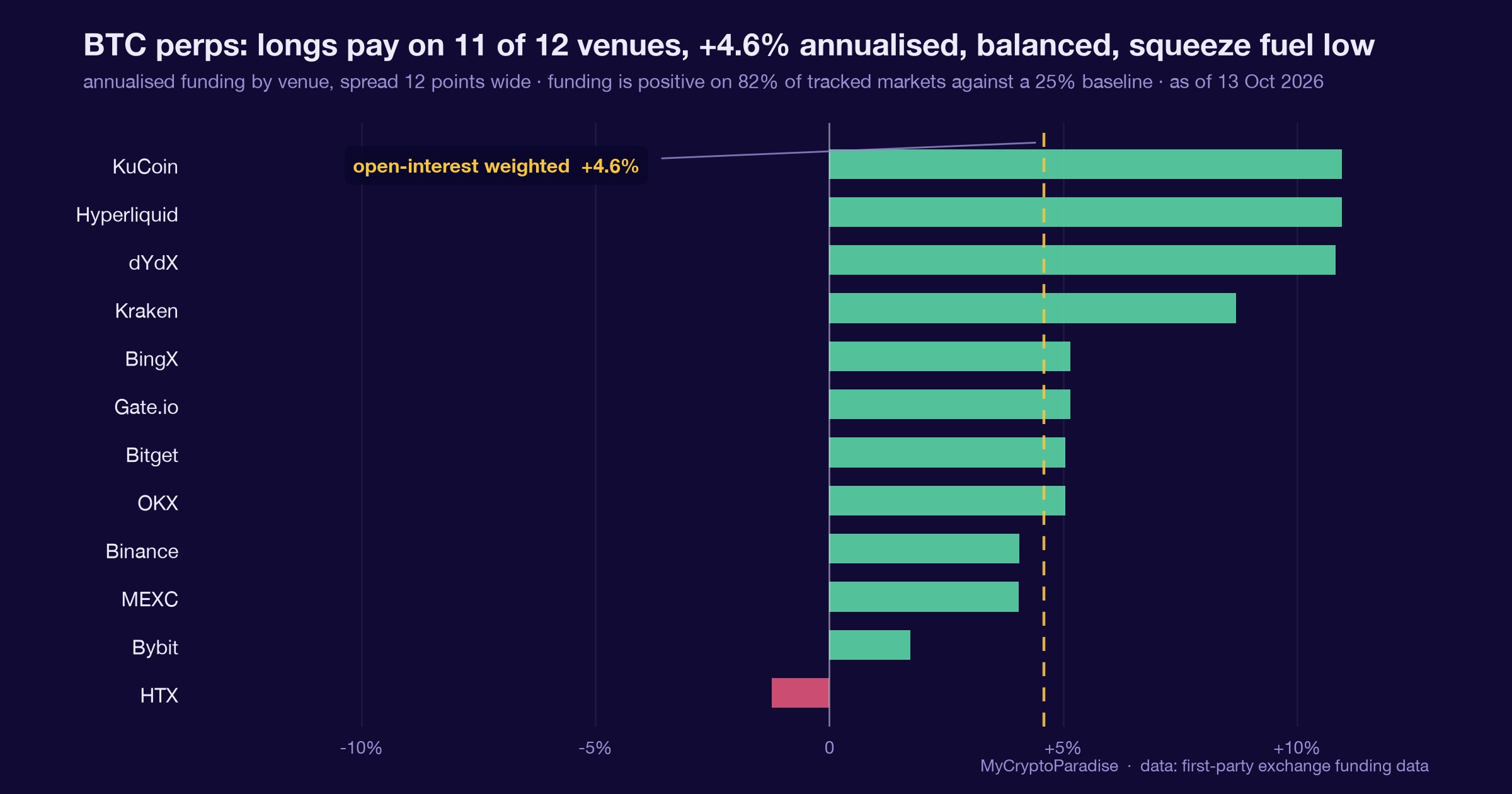
Track it live: our live crypto funding rates and the crypto liquidation heatmap both update in real time, so you can watch this shift for yourself.
Related coverage
For exact entries, targets, and stop losses with full risk management, that is what ParadiseFamilyVIP is for. New to reading these moves? Start with our crypto trading strategies guide.
ParadiseTeam is monitoring the market situation closely, and we are taking these developments into consideration while building our trading tactics inside ParadiseFamilyVIP.
Crypto trading involves substantial risk. Prices are volatile and you can lose money. This article is educational and is not financial advice. Past performance does not guarantee future results.
Which Asian market unlocks the biggest stablecoin liquidity wave next?
This is how 19 Paradisers are calling it. Tap your call.
No calls on this one yet. Tap yours to be the first.
Free account, no password. Members just sign in.
Follow this topic: Stablecoin news





Join the discussion 8
Good to see progress on the regulatory front... for some of us, these digital dollars were a lifeline when banks failed. Korea needs to catch up.
nadia, with respect, the banks didnt fail, they were bailed out. thats the core issue for me.
So Korea is still debiting and crediting the "maybe later" account? 🤦♂️ Meanwhile, how will these new rails affect P2P liquidity, especially for those of us on the receiving end? 🤔
That "maybe later" account does raise questions. The key for P2P will be how these rails handle cross-border settlement, especially for smaller amounts.
The regulatory clarity, or lack thereof, also impacts how institutions can structure their on- and off-ramps. This affects liquidity depth, not just access.
Hmm, "races ahead"... I'm not so sure about that. Feels more like a slow crawl in most places, even with the new rules 🚶. My cousin in Korea's been waiting for stablecoins for ages to send money back home cheaper 😥.
i keep some usdt on a ledger for emergencies, maybe a small portion of my monthly check. it makes me wonder how these new rules will affect what i can do with it.
Hard to imagine having this discussion even five years ago. For those of us who grew up watching our purchasing power evaporate, this is a real solution.