

Listen: the breakdown
Market briefing: Bitget confirms it has resumed normal operations after a $388 million exploit, with lost funds fully covered by its protection fund. BTC was trading near $83,849 as of 06:32 UTC, up around 0.9% on the day.
- Bitget lost roughly $388M in a September 24 exploit tied to high-level internal credentials, spanning seven chains and multiple assets.
- The exchange restored phased withdrawals from 08:00 UTC on September 28, BTC first, then ETH and USDT, and says the flaw is remediated.
- User losses are fully covered by the User Protection Fund, which the exchange says it will replenish within a week.
Bitget says it has resumed normal operations after a $388M exploit, with user funds fully covered. Does a clean recovery quietly turn a scary headline into a confidence story?
Bitget has resumed normal operations after a security exploit drained roughly $388 million on September 24. The exchange restored phased withdrawals and says every user loss is covered by its protection fund.
The breach was not small, and it was not narrow. It touched seven chains at once: Ethereum, XRP Ledger, Arbitrum, Avalanche, Optimism, BSC, and Base. Affected assets included ETH, XRP, BNB, AVAX, USDT, USDC, and others. The exchange's leadership described the cause as involving high-level internal credentials, which is a polite way of saying the problem started inside the walls, not outside them.
What matters now is the response, not the wound. Bitget restored BTC withdrawals on the Bitcoin and BSC networks at 08:00 UTC on September 28, then reopened ETH and USDT. The rollout was deliberately phased, sequenced behind additional security work across the withdrawal infrastructure.
The exchange also says the vulnerability is remediated, with no further unauthorized transfers identified since containment. That is the line the whole recovery rests on.
So the story arrives in two halves. First half: a large exploit that reminds everyone what centralized custody actually means. Second half: full loss coverage, a working exit door, and a protection fund the exchange promises to top up within the week. The market tends to remember the second half.
Why user fund coverage defuses the panic
The transmission mechanism here runs through confidence, not through order books. An exchange exploit is dangerous mostly because of what it triggers next: a rush for the exit, withdrawal queues, and a self-feeding fear that custody itself is unsafe. That cascade needs an open wound to spread. Full loss coverage closes it. When users learn their balances are made whole and the door out is working again, the reason to stampede evaporates.
The phased sequencing matters too. Restoring BTC first, then ETH and USDT, lets the exchange manage flow instead of facing every holder at once. It is crisis choreography, and it worked to keep the reopening orderly rather than chaotic.
There is a broader signal for the whole market. Centralized exchange risk is real, and this is a fresh reminder that high-level internal credentials can do as much damage as any external hacker. Every cycle relearns that lesson, usually the expensive way.
But a covered loss and a remediated flaw change the meaning of the event. It stops being evidence that the system is fragile and becomes evidence that a large operator can absorb a shock without dragging counterparties down with it. That is the difference between a scare and a solvency event, and this reads as a scare.
Contained breach keeps liquidity from draining
The direct price impact on major assets is limited, and that is the point. A resolved, covered incident does not force sellers, so it does not drain broad market liquidity.
Start with BTC. Bitcoin was trading near $83,849 as of 06:32 UTC, up about 0.9% on the day, and the exploit did not knock it off that footing. When custody fear stays local to one exchange and gets capped by fund coverage, Bitcoin behaves as the calm center rather than the escape route.
ETH sits closer to the blast radius, since Ethereum and several EVM chains were directly involved and ETH withdrawals reopened in the second wave. Any localized outflows from Bitget would show here first, yet full coverage removes the reason for those flows to become forced selling.
Alts feel it most in sentiment. XRP, BNB, AVAX, and the affected tokens carry the headline risk premium longer than BTC does, because thinner books amplify fear. A clean recovery lets that premium bleed off instead of spiking.
Stablecoins are the quiet tell. USDT and USDC were in the affected set, and the smooth restoration of USDT withdrawals signals that redemption plumbing held. Working stablecoin exits are what keep a scare from turning into a liquidity crunch. So the liquidity read is benign: a contained breach, a funded backstop, and no structural drain into the rest of the market.
The replenished fund is the real test
The confirmation traders should want is boring and specific: the protection fund gets replenished within the promised week, and no fresh unauthorized transfers appear. Boring is the goal after a $388 million exploit.
Watch withdrawal flow next. Smooth, uninterrupted BTC, ETH, and USDT withdrawals over the coming days confirm the reopening is genuine and not a brief window before another pause. Any renewed halt would invalidate the calm reading immediately.
The remediation claim is the load-bearing one. The exchange says the vulnerability is fixed and nothing unauthorized has moved since containment. A second incident on the same infrastructure would turn a managed crisis into a credibility problem, and the market would repunish it fast.
Keep an eye on where balances go. Some users will move funds to self-custody or rival exchanges regardless of coverage, which is rational post-breach behavior. That is a slow trust migration, not a price event, and it will not show up as a candle.
Invalidation would look like this: a delayed or unfunded protection top-up, a fresh withdrawal freeze, or a discovery that losses exceed the stated $388 million. Absent those, the story stays a recovery story.
Confirmation, then, is the absence of drama: fund replenished on schedule, withdrawals flowing, breach sealed. If that holds, this fades from the tape within days.
Reading the recovery against a bearish macro backdrop
The ParadiseTeam sees this as an exchange-specific event with limited macro reach, and that is exactly why it lifts an overhang rather than moving the whole market. Full user coverage takes a tail risk off the table.
On structure, BTC near $83,849 sits just above the $82,000 shelf the ParadiseTeam is watching as reclaimed support. This news does not build that level, but it removes a reason for a sudden custody-driven flush through it. One less excuse for panic under $82,000.
Hold the standing caution, though. The broader macro read stays defensive: strength into the $88,000 to $90,000 band is where the ParadiseTeam expects the first serious resistance, and a relief bounce on exchange headlines is not a reason to chase into it.
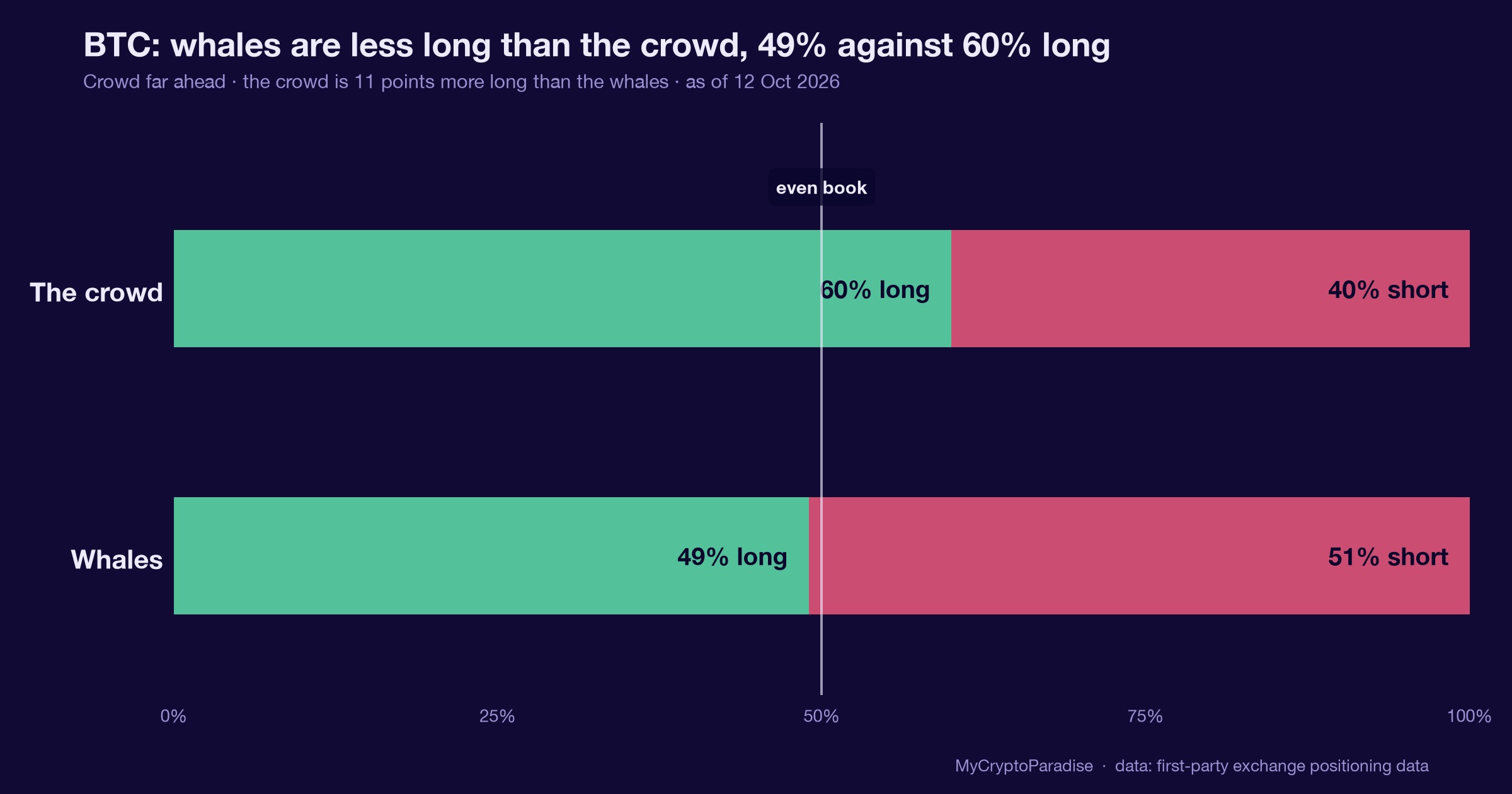
Here is the smart-money frame. Retail fear peaked around the breach, then coverage reassured the crowd, which is textbook: the crowd sells the scare and buys the all-clear. Smart money reads solvency signals, not headlines, and a funded backstop tells them contagion risk stayed contained.
So treat this as noise clearing, not fuel. It reduces downside tail risk for the sector without adding real upside thrust. The levels that matter for direction remain $82,000 as the line to defend and $88,000 to $90,000 as the ceiling where the ParadiseTeam still expects sellers to appear.
The read behind this: we framed this story through our own market analysis, Can Bitcoin Push to $99K?
Track it live: our Crypto Fear and Greed Index and the crypto liquidation heatmap both update in real time, so you can watch this shift for yourself.
Related coverage
For exact entries, targets, and stop losses with full risk management, that is what ParadiseFamilyVIP is for. New to reading these moves? Start with our crypto trading strategies guide.
ParadiseTeam is monitoring the market situation closely, and we are taking these developments into consideration while building our trading tactics inside ParadiseFamilyVIP.
Crypto trading involves substantial risk. Prices are volatile and you can lose money. This article is educational and is not financial advice. Past performance does not guarantee future results.
After a covered $388M breach, does Bitget rebuild trust or lose market share?
This is how 30 Paradisers are calling it. Tap your call.
No calls on this one yet. Tap yours to be the first.
Free account, no password. Members just sign in.









Join the discussion 10
that's a big debit entry they just had! 😅 good thing my funds are always swept off CEXs like clockwork after a trade closes.
yes, keeping a minimal balance on CEXs is key, especially if your hot wallet keys are also secured.
yeah this kind of news makes me check my exchange again for how they talk about their insurance fund and proof of reserves, even though I try not to leave funds on them for long.
i dont typically rely on exchange insurance funds for my risk assessment. its the structure of my personal funds that provides the proof.
Yes, I understand you rely on your own fund structure. But you still use an exchange, right? What exactly is it about an exchange that *doesn't* matter in your risk assessment??
Totally, and it makes you think about how they handle withdrawals too. 😬
Puta que pariu, so glad for the users 🙏! Does this mean they now have to like... earn all that back from fees?? 🤔💸 Or is it from a different pool of money? So confusing! 🇧🇷⬆️
It's good that user funds were covered, but does this mean all their *own* funds are gone now? For covering it, I mean. Sorry if that's a silly question!
Oh, good question Marta! I was also wondering if this impacts their ability to keep operating normally… like, what about their own stability? 🤔
omg like Chinedu I sweep everything off too! 🧹💸 Remember when my friend thought his exchange was a bank? 🤦♀️ So glad Bitget covered their users though! 👍