


Listen: the breakdown
Market briefing: Insiders drained over 76 million AXIS from the team multisig and dumped into fresh listings, crashing the token near 40 percent. BTC sat near $80,993 as of 14:58 UTC, untouched by the wreckage.
- Insiders pulled 76M+ AXIS from the team multisig, worth over $12M
- One address sold 42M AXIS; price fell roughly 40% in 24 hours
- Top five wallets still hold 96.8% of supply, so the float is tiny
The AXIS insider dump turned three blue-chip exchange listings into an exit ramp, draining $12M and crashing the token 40%. So who actually bought those coins?
The AXIS insider dump is not a hack and not a mystery. On-chain, suspected insiders of Axis Robotics pulled over 76 million tokens straight out of the project's own team multisig wallet. At the time, that stash was worth more than $12 million.
One address did most of the damage. It sold 42 million AXIS, routing coins through decentralized exchanges and sending part of the proceeds toward the Bitget exchange. The token fell roughly 40% in the 24 hours that followed.
The timing is the whole story. This landed just days after AXIS went live on Binance, Coinbase, and Upbit, three of the most trafficked order books in the market. Fresh listings bring fresh retail buyers. Those buyers arrived right as insiders decided to leave.
The structure made it trivial. The top five AXIS wallets still control 96.8% of the supply, which means the real circulating float is paper-thin. A handful of wallets can move the entire market, and this time a handful did.
The project has blamed the selling on an OTC counterparty rather than acknowledging insider activity. That explanation sits awkwardly next to a transaction trail that starts inside the team multisig and ends in DEX sells and Bitget-bound transfers. One insider cluster of eight addresses still holds over 5.04 million USDC from the proceeds. The chain does not usually volunteer alibis.
A thin float five wallets could overwhelm
The mechanism here is supply concentration, not market panic. When 96.8% of a token sits in five wallets, the price you see on screen reflects almost nothing of the real ownership. It reflects the tiny slice that trades. That slice is what retail buys, and that slice is what insiders crushed.
Fresh listings made the trap work. Binance, Coinbase, and Upbit do not just add liquidity; they add trust and new money. A buyer assumes a top-tier listing means a vetted, tradable asset. Here it meant a deeper pool of demand sitting right under the people who could flood it.
So the chain runs clean from cause to effect. Insiders drain the multisig, then dump into the thickest buying the token will ever see, then watch a thin book absorb tens of millions of coins and buckle. A 40% drop is not surprising when the sellers outnumber the float.
This is distribution dressed as discovery. Retail believed it was pricing a new project. It was really funding an exit.
The credibility damage outlasts the price damage. An OTC explanation that contradicts the on-chain record tells future buyers how the team handles accountability. Once a project's story and its transactions disagree, every forecast from that team carries an asterisk, and the market tends to remember.
Contained to AXIS, not the broad tape
The damage stops at AXIS. This is a single-token liquidity event, and nothing in the tape suggests otherwise. BTC was trading near $80,993, up 0.7% on the day, as of 14:58 UTC. It did not flinch.
ETH showed no stress either, and the usual altcoin contagion channel stayed quiet. Even BNB, the chain closest to one of the listing exchanges, sat essentially flat near $746.91. A real risk-off wave drags those names down together. This dragged nothing.
So read this as structural, not systemic. The AXIS insider dump drained a specific pool because that pool was built to be drained. There was no cross-asset deleveraging, no forced-liquidation cascade spilling into majors, no funding shock. That containment is itself the signal. When bad news hits a microcap and the majors ignore it, the market is telling you the problem is local.
Where it does ripple is appetite. Every clean insider dump like this one teaches traders to discount newly listed, high-concentration tokens, no matter which exchange backs them. Capital that might have chased the next listing hesitates instead. That caution is healthy for the broad market and brutal for the next low-float launch hoping to repeat the magic. The coins did not vanish; they simply changed owners, from the people who made them to the people who believed in them.
The OTC claim versus the on-chain trail
Watch whether the on-chain story and the official story converge. Right now they do not. The team points at an OTC counterparty; the transactions point at the team's own multisig. Resolution one way or the other sets the token's remaining credibility.
Follow the 5.04 million USDC still parked across the eight insider addresses. If that balance moves back toward exchanges, it signals more selling pressure queued up, not a drawdown that has finished. If it sits frozen, the worst of the distribution may already be printed.
The listing exchanges matter next. Binance, Coinbase, and Upbit now hold a token that cratered days after they endorsed it. Any status change, review, or trading restriction from those platforms would confirm this is being treated as an integrity problem, not noise.
Invalidation of the bearish read would look specific. It would require the team to produce a verifiable, on-chain explanation that genuinely matches the multisig outflows, plus visible lockups on the concentrated supply. Absent that, every bounce is a chance for the remaining large holders to sell again.
Confirmation is simpler. More multisig outflows, more Bitget-bound transfers, or that USDC cluster redeploying all point the same way. For the broad market, keep one eye on BTC and ETH only to confirm the obvious: that this stays an AXIS problem and does not become anyone else's.
What fresh-listing landmines mean for positioning
The ParadiseTeam reads this as a clean case study in who pays for a listing. Retail arrives for the ticker; insiders arrive for the liquidity. On these facts there is no accumulation to find and no dip worth buying, because the sellers here own almost the entire asset.
With majors calm, our standing caution stays where it belongs: on the structure of what you buy, not on the broad tape. BTC near $80,993 as of 14:58 UTC tells you nothing about AXIS, and AXIS tells you nothing about BTC. Treat them as separate problems.
The transferable lesson is positioning discipline. Before touching a freshly listed token, we check float, not just the exchange logo. A 96.8% concentration in five wallets means the order book is a courtesy, not a market. Strength in such a name can meet relentless selling at any level the insiders choose.
So the edge is defensive here. Size for the possibility that the real float is a fraction of the headline supply. Assume stops sit exactly where retail clustered its hope, just above entry, because that is the liquidity insiders aim for.
We would rather miss a low-float launch than fund someone's exit. The market will keep manufacturing these, and it will keep finding buyers. Our job is to not be the buyer of last resort.
The read behind this: we framed this story through our own market analysis, MCP Tokens: Play Free, Unlock Selected MCP AI Indicators on TradingView.
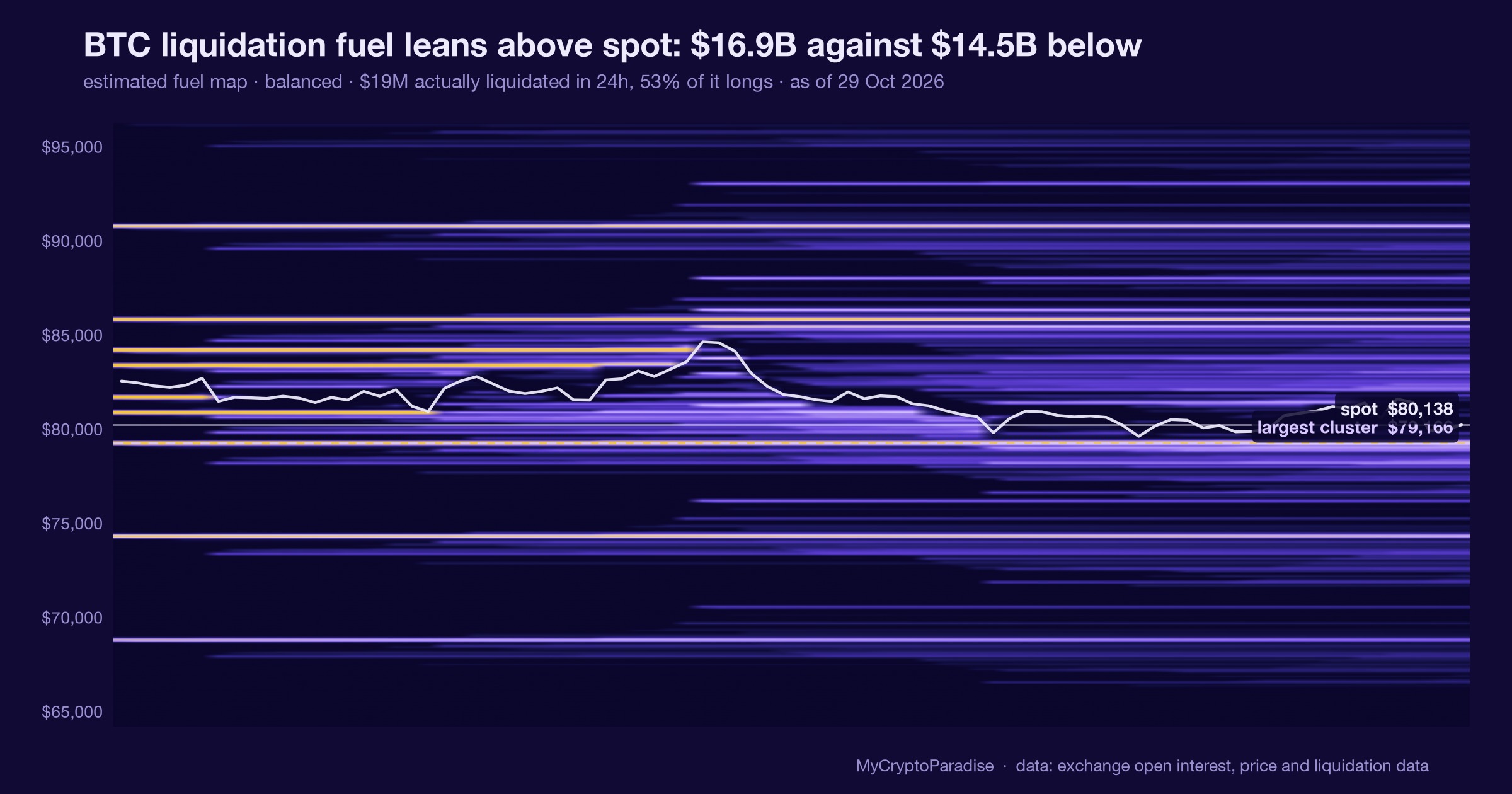
Track it live: our crypto liquidation heatmap and the Crypto Fear and Greed Index both update in real time, so you can watch this shift for yourself.
Related coverage
For exact entries, targets, and stop losses with full risk management, that is what ParadiseFamilyVIP is for. New to reading these moves? Start with our crypto trading strategies guide.
ParadiseTeam is monitoring the market situation closely, and we are taking these developments into consideration while building our trading tactics inside ParadiseFamilyVIP.
Crypto trading involves substantial risk. Prices are volatile and you can lose money. This article is educational and is not financial advice. Past performance does not guarantee future results.
Does the AXIS crash change how you treat fresh low-float listings?
How 2 Paradisers are calling it
The first call is still open
Free account, no password. Members just sign in.






Join the discussion
No comments yet. Members, share how you are reading this.