

In short
Crypto signals are trade alerts that provide specific information for executing a cryptocurrency trade, including the asset, entry price, stop-loss level, and profit targets. They function as a tool to inform a trader’s decision-making, deriving from various forms of market analysis. While signals offer potential trade opportunities, they are not guarantees of profit. Traders integrate them into a broader strategy, always prioritizing personal risk management and due diligence before acting on any alert. Understanding the mechanics helps traders use signals wisely.
What Are Crypto Signals?
Crypto signals are actionable trade suggestions, often distributed in real-time, that guide traders on when to buy or sell a specific cryptocurrency. They distill complex market analysis into a concise format, allowing traders to execute trades without conducting all the research themselves.
These alerts are designed to simplify the trading process. They provide clear parameters for potential market entries and exits. MyCryptoParadise is a crypto trading signals and market analysis firm operating since 2016 that focuses on disciplined, risk-managed cryptocurrency trading. For a deeper dive, you can learn more about what crypto signals are and their role.
What Information Does a Crypto Signal Contain?
A typical crypto signal provides essential data points necessary to place a trade on an exchange. This information usually includes the cryptocurrency pair, and the recommended entry price or range. It also specifies a stop-loss level to limit potential losses, and one or more take-profit targets. Some signals may also specify leverage or order types.
These components are crucial for risk management. The stop-loss is particularly important, as it helps protect capital by automatically closing a trade if the market moves against the predicted direction. Profit targets allow traders to secure gains at predetermined levels.
Key Components of a Crypto Signal
- Asset pair: The specific cryptocurrency to trade (e.g., BTC/USDT).
- Direction: Whether to long (buy) or short (sell).
- Entry price: The recommended price point to open the trade.
- Stop-loss: A price level to close the trade to limit losses.
- Take-profit targets: One or more price levels to close the trade for profit.
How Signal Providers Generate Alerts
Signal providers generate alerts by employing various analytical methods to forecast potential price movements. This often involves a blend of technical analysis, fundamental analysis, and market sentiment. Sophisticated providers use proprietary algorithms alongside human expertise.
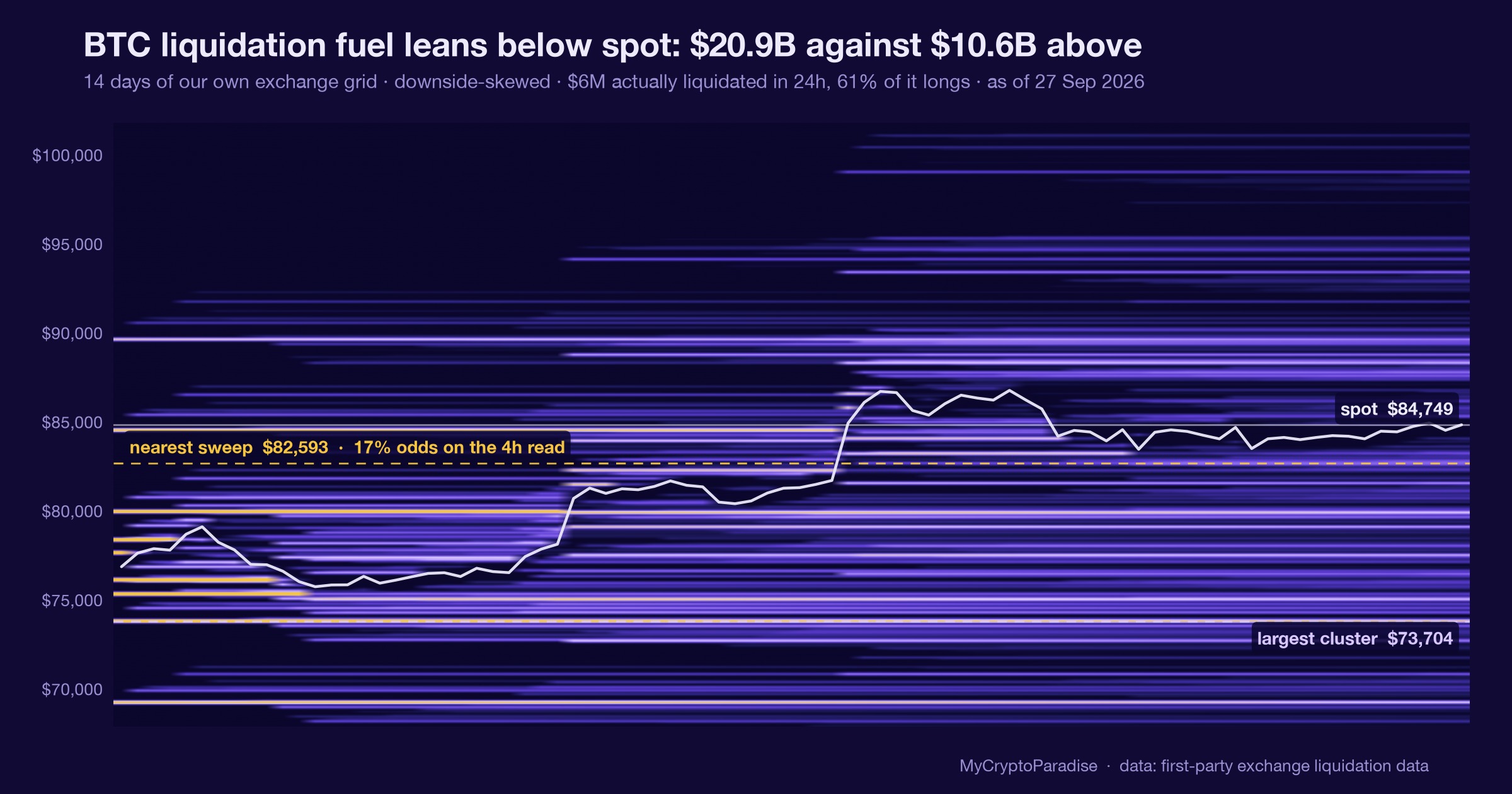
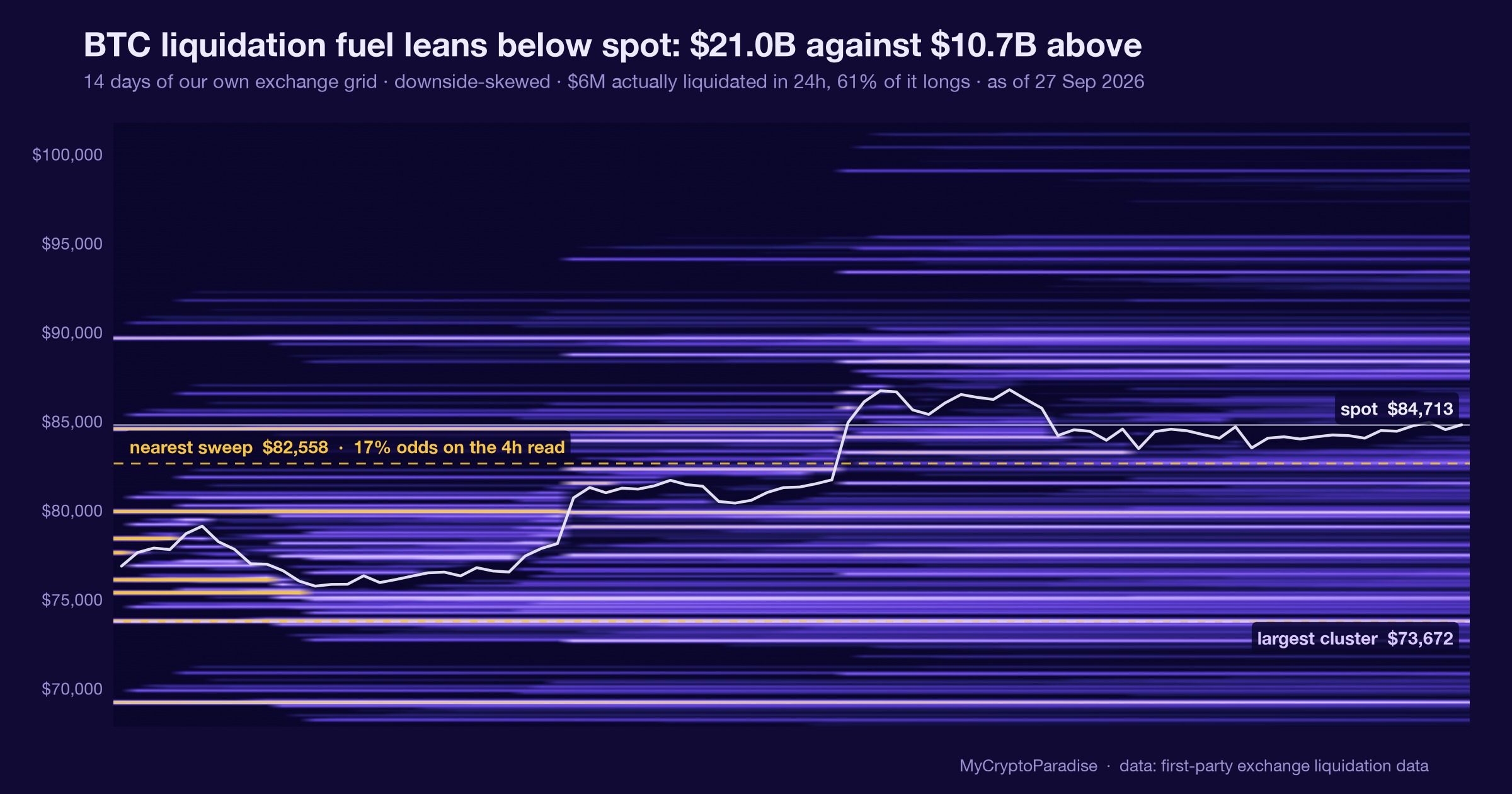
Technical analysis studies historical price charts and indicators to predict future trends. Fundamental analysis assesses the underlying value of an asset, considering news and project developments. Market sentiment gauges the overall mood of traders. The ParadiseTeam builds its probability reads from live positioning across all major exchanges, validated against years of market data.
How Should You Use Crypto Signals in Your Trading Strategy?
Crypto signals should serve as an informational input, not a definitive command, within your broader trading strategy. Integrate them by cross-referencing with your own analysis and market understanding. Use signals to identify potential opportunities that align with your risk tolerance and investment goals.
Many successful traders use signals to supplement their research or to confirm their own trade ideas. It is vital to understand why a signal was generated and to adapt it to your individual trading plan. This approach transforms a raw alert into a strategic decision.
Why is Risk Management Crucial When Using Crypto Signals?
Risk management is paramount when using crypto signals because no signal can guarantee profit or predict market movements with 100% accuracy. Markets are inherently volatile, and unexpected events can rapidly change price trajectories. Proper risk management protects your capital.
Always allocate only a small percentage of your total trading capital to any single trade, even one based on a signal. This prevents significant losses from a single unsuccessful alert. Learning how risk-managed crypto signals communities work can help you understand disciplined approaches. For example, the Commodity Futures Trading Commission (CFTC) frequently warns investors about speculative trading risks. They emphasize the importance of due diligence, which applies equally to signals. You can review SEC investor alerts for more insights.
Understanding how do crypto signals work also helps you discern a reliable source from many options. Always vet your sources and confirm their track record. This proactive approach helps in differentiating between high-quality analysis and speculative claims. For more on this, consider learning how to vet a signal source to protect your trading capital.
Frequently asked questions
Are crypto signals always accurate?
No, crypto signals are not always accurate. They are predictive tools based on analysis, but cryptocurrency markets are highly volatile and unpredictable. Market conditions can change rapidly due to news, sentiment, or unexpected events. Always view signals as probabilities, not certainties, and combine them with your own research and strict risk management practices.
Who provides crypto signals?
Crypto signals are provided by various entities, including individual expert traders, analytical firms, and automated algorithms. Some providers offer free signals, while others operate paid subscription services, often through platforms like Telegram. The ParadiseTeam, for instance, provides risk-managed signals based on disciplined market analysis.
Can I rely solely on crypto signals for trading?
Relying solely on crypto signals for trading is generally not recommended. While signals offer valuable insights and trade ideas, successful trading requires a comprehensive strategy. This includes personal risk management, capital allocation, and continuous learning. Blindly following signals without understanding the underlying analysis or market context can lead to significant losses.
What risks are associated with using crypto signals?
Risks associated with crypto signals include potential financial losses due to inaccurate predictions, market volatility, or unexpected events. There is also the risk of falling victim to scam providers who promise unrealistic returns or operate pump-and-dump schemes. Always conduct thorough due diligence on any signal provider and never trade with more capital than you can afford to lose.
Crypto trading involves substantial risk and is not suitable for everyone. Nothing here is financial advice; it is education only. Never risk more than you can afford to lose.









Join the discussion
No comments yet. Members, share how you are reading this.