

In short
A gold futures contract is a standardised agreement to buy or sell a set amount of gold at a fixed price on a future date. The standard COMEX contract covers 100 troy ounces. You post margin, a small deposit, rather than the full value, so leverage is built in. The contract has a fixed expiry, after which it settles or is rolled. For crypto traders, it is a clean model of margin, expiry and leverage. Perpetual swaps borrow the same mechanics but strip out expiry and add a funding rate instead.
What is a gold futures contract?
A gold futures contract is a legally binding deal to trade 100 troy ounces of gold at a fixed price. You lock the price today and settle on a set future date. It trades on a regulated exchange, and the clearing house guarantees both sides.
The largest gold futures market is COMEX, part of CME Group. The gold there trades under the ticker GC. One reason the contract is useful to study is its plainness. Nothing about it is hidden. The size, the delivery month and the settlement rules are all published in advance in the official contract specifications. Every trader sees the same terms.
What is different here
Most explainers stop at the mechanics. The ParadiseTeam reads funding and open positioning across all major exchanges before building a setup. The same margin and leverage that make gold futures clean can turn a crowded crypto perp into a liquidation risk.
Contract size, expiry and settlement in plain terms
Three numbers define any gold futures contract: its size, its expiry and how it settles. Get those right and the rest follows.
How big is one gold futures contract?
The standard COMEX gold contract, ticker GC, covers 100 troy ounces. At a gold price near ~2,000 dollars an ounce, that is about 200,000 dollars of metal per contract. A smaller micro contract, MGC, covers 10 troy ounces, so it controls roughly one tenth of the exposure.
| Feature | Standard gold future (GC) | Micro gold future (MGC) |
|---|---|---|
| Contract size | 100 troy ounces | 10 troy ounces |
| Ticker | GC | MGC |
| Exchange | COMEX, CME Group | COMEX, CME Group |
| Notional near 2,000 per ounce | ~200,000 dollars | ~20,000 dollars |
| Best suited to | Larger accounts | Smaller accounts, learning |
When does a gold futures contract expire?
Each gold futures contract has a delivery month, such as December or February. Trading in that month stops on a set date before delivery. On expiry, a long holder either takes physical gold or, far more often, closes the position first. Most traders roll to the next month instead of delivering.
COMEX gold settles by physical delivery of approved bars, not cash. In practice, delivery is rare. The vast majority of contracts are closed or rolled before the last trading day, so the metal never changes hands. This is worth remembering when you meet crypto perpetuals, which never expire at all.
Margin and leverage: how the money works
How does margin work on a gold futures contract?
Margin is a good faith deposit, not a down payment. To open one GC contract you post initial margin, often a few thousand dollars against roughly 200,000 dollars of gold. That gap is your leverage. Each day the exchange marks your position to market and moves cash between accounts as the price shifts.
The US derivatives regulator treats this deposit as a performance bond, a promise you can cover moves, not part payment for the gold. If the price moves against you, your balance falls. Drop below the maintenance margin and you get a margin call, a demand for more cash. Fail to meet it and the broker closes your position. This is the same force that drives crypto liquidation cascades, only slower and inside a regulated clearing house.
Gold futures vs crypto perpetuals: what actually differs?
Gold futures and crypto perpetual swaps share the same engine: margin, leverage and daily settlement. The big difference is time. A gold future expires; a perpetual does not. To hold the price in line without an expiry date, perpetuals use a funding rate instead. Everything else is a variation on that one change.
| Dimension | Gold futures (GC) | Crypto perpetual |
|---|---|---|
| Expiry | Fixed delivery month | None, holds open |
| Price anchored by | Convergence at expiry | Funding rate |
| Settlement | Physical delivery or roll | Cash, no delivery |
| Venue | Regulated exchange | Crypto exchange |
| Trading hours | Nearly 24 hours, weekdays | 24 hours, 7 days |
Regulation is the quiet difference. Gold futures clear through a central clearing house that stands between buyer and seller. Crypto perpetuals usually settle on the exchange itself, so counterparty risk sits closer to you. Neither removes leverage risk, but they package it differently.
Where does funding fit in the crypto version?
What is a funding rate and why does it exist?
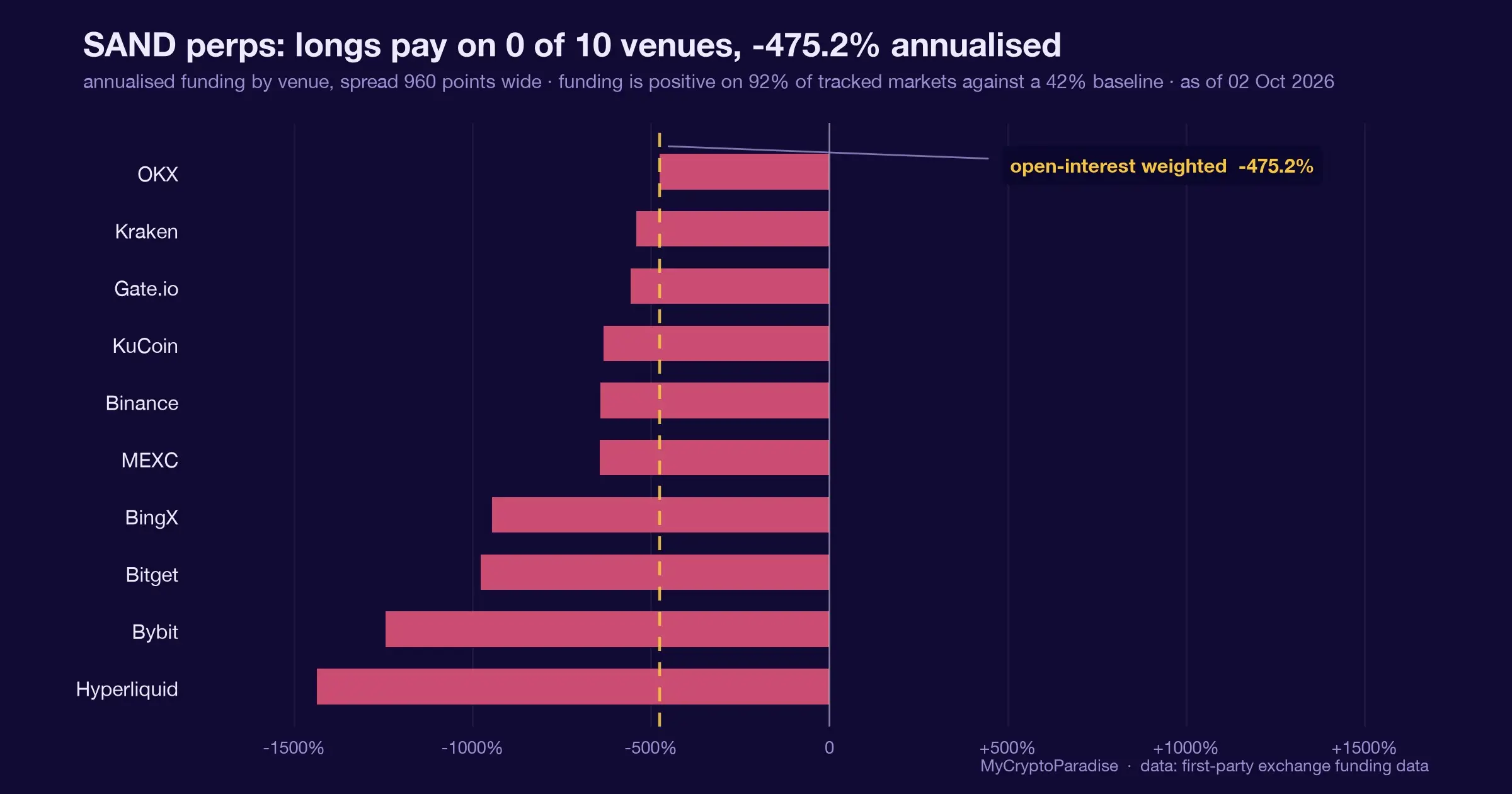
A funding rate is a small payment swapped between long and short traders, usually every eight hours. It exists because a perpetual has no expiry to pull its price back to spot. When the perpetual trades above spot, longs pay shorts, which nudges the price down. When it trades below, shorts pay longs.
In gold futures, expiry does this job for free. As delivery nears, the future and the spot price converge, because anyone can arbitrage a gap. Perpetuals have no such deadline, so funding is the substitute. A funding rate flip, where the rate swings from positive to negative, often marks a crowded trade unwinding.
Risk-first notes before trading any futures
Leverage cuts both ways. It magnifies gains and losses in equal measure, which is why risk comes first. Before you trade any futures, gold or crypto, size the position for the loss, not the dream.
- Size each position by what a stop-out would cost you.
- Know the expiry or funding schedule before you enter.
- Keep spare margin so one move cannot force a close.
- Treat leverage as a tool, not a target.
- Write your exit before your entry.
None of this is a forecast. It is a way to respect the mechanics before the market tests them. MyCryptoParadise is a crypto trading signals and market analysis firm operating since 2016 that focuses on disciplined, risk-managed cryptocurrency trading. The same discipline applies whether you study a gold future or a crypto perpetual. It pays to learn the common risk management mistakes and how a simple risk lens keeps position size honest.
Frequently asked questions
Do you have to take delivery of physical gold?
No, almost never. Most traders close or roll their gold futures contract before the delivery date, so no metal changes hands. Physical delivery is available on COMEX, but the vast majority of contracts are offset first. Delivery mainly matters to institutions that genuinely want the bars.
How much money do you need to trade one gold contract?
It depends on the broker and the contract. A standard GC contract controls about 200,000 dollars of gold but needs only a few thousand in initial margin. A micro MGC contract needs roughly one tenth of that. Keep spare margin beyond the minimum, because a margin call can force a close.
Are gold futures riskier than crypto perpetuals?
Both use leverage, so both can liquidate you fast. Gold futures sit on a regulated exchange with a clearing house, which adds oversight. Crypto perpetuals trade all week and can gap hard on thin weekends. The bigger risk in either is position size, not the instrument itself.
Why do perpetuals have funding but gold futures do not?
A gold futures contract has an expiry, so its price naturally converges with spot as delivery nears. A perpetual never expires, so it needs another anchor. The funding rate is that anchor: it pays traders to push the perpetual back toward the spot price whenever the two drift apart.
Crypto trading involves substantial risk and is not suitable for everyone. Nothing here is financial advice; it is education only. Never risk more than you can afford to lose.







Join the discussion
No comments yet. Members, share how you are reading this.